Interrogatories For Wrongful Death
Description
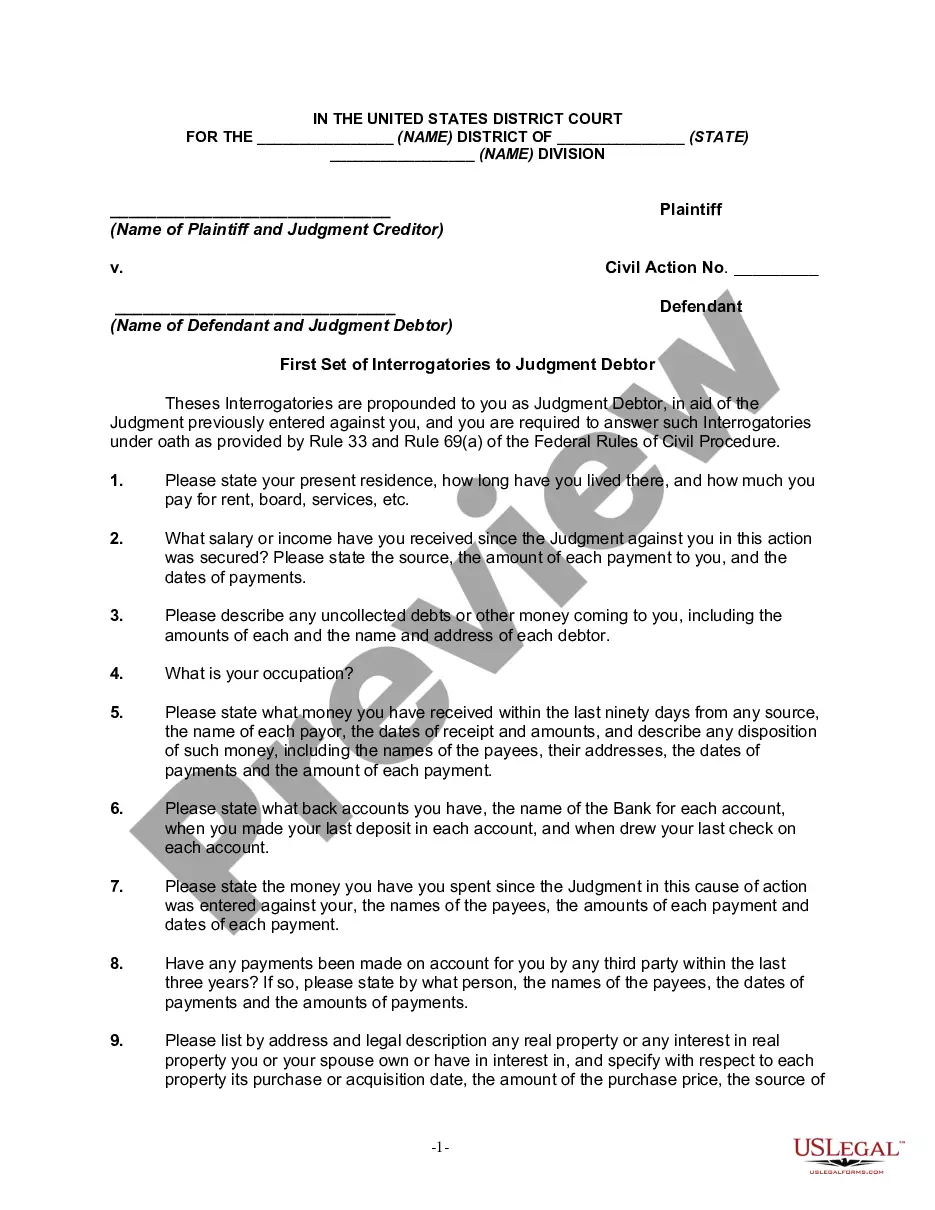
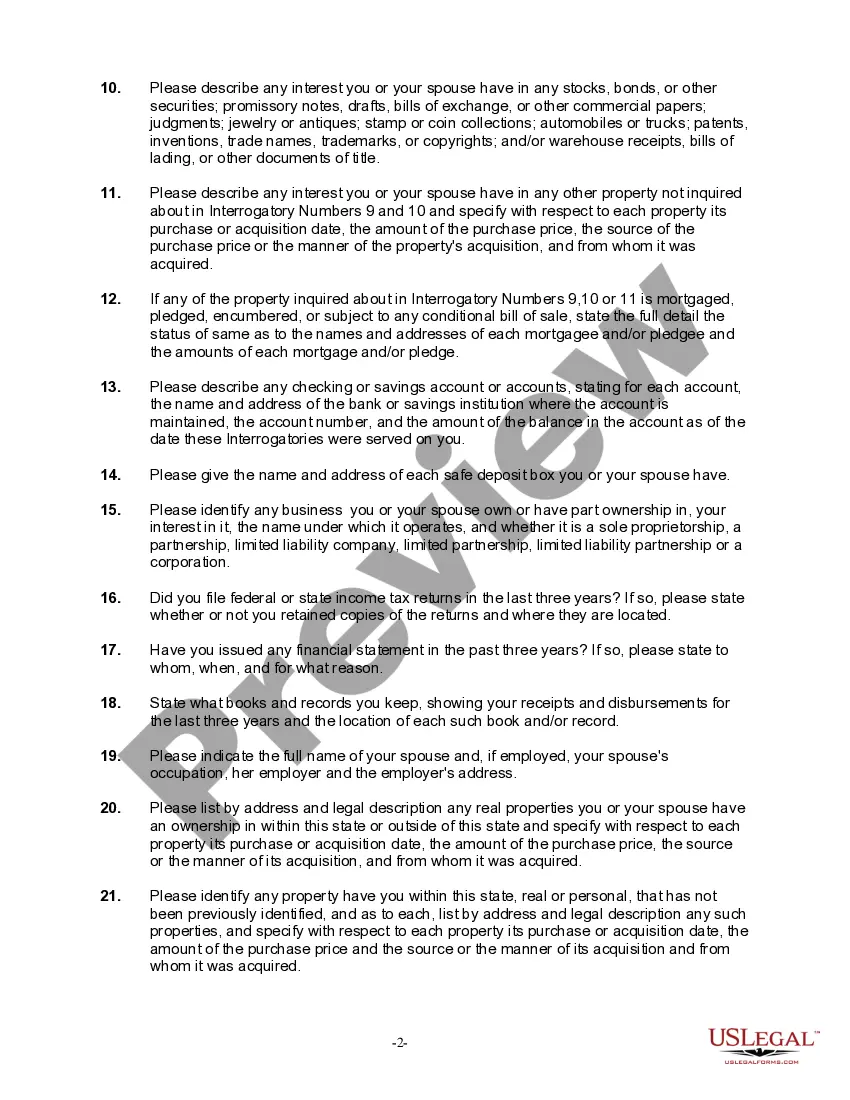
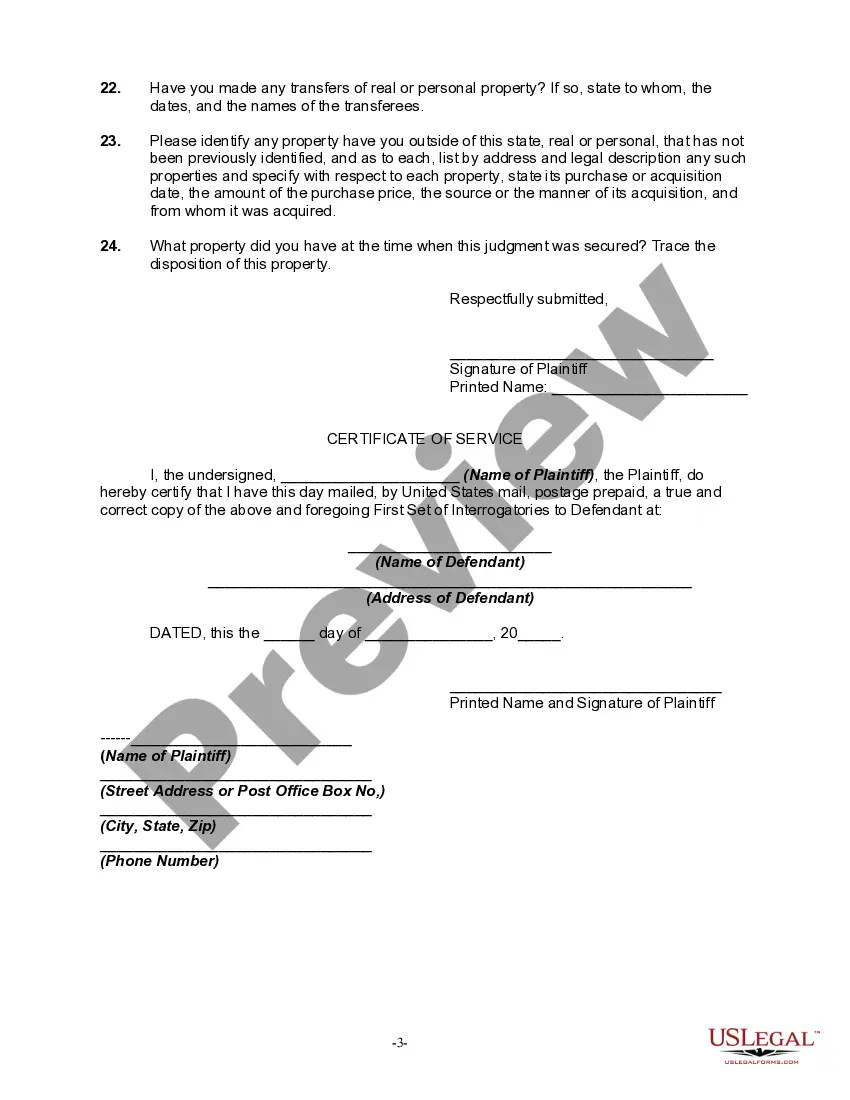
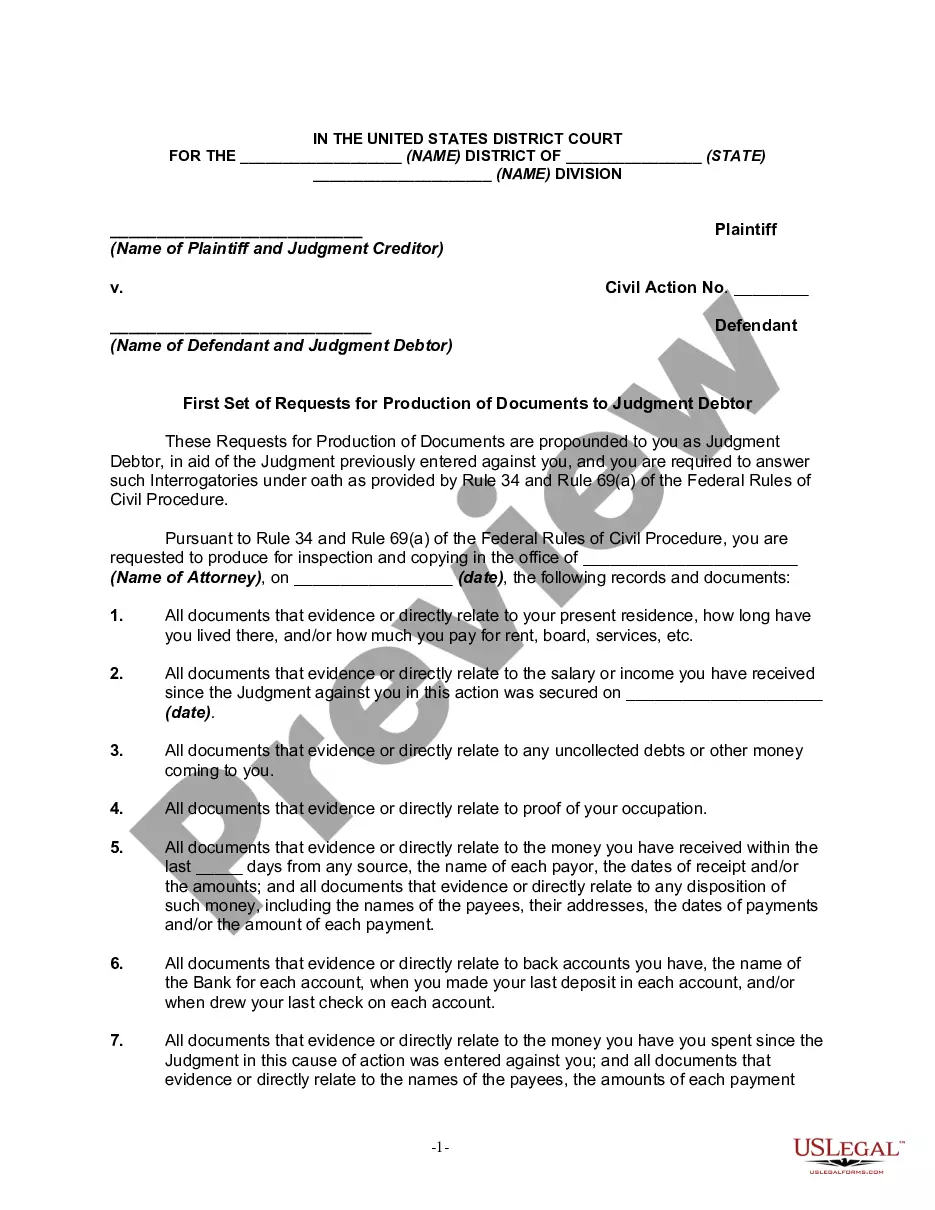
Get your form ready online
Our built-in tools help you complete, sign, share, and store your documents in one place.
Make edits, fill in missing information, and update formatting in US Legal Forms—just like you would in MS Word.
Download a copy, print it, send it by email, or mail it via USPS—whatever works best for your next step.
Sign and collect signatures with our SignNow integration. Send to multiple recipients, set reminders, and more. Go Premium to unlock E-Sign.
If this form requires notarization, complete it online through a secure video call—no need to meet a notary in person or wait for an appointment.
We protect your documents and personal data by following strict security and privacy standards.

Make edits, fill in missing information, and update formatting in US Legal Forms—just like you would in MS Word.

Download a copy, print it, send it by email, or mail it via USPS—whatever works best for your next step.

Sign and collect signatures with our SignNow integration. Send to multiple recipients, set reminders, and more. Go Premium to unlock E-Sign.

If this form requires notarization, complete it online through a secure video call—no need to meet a notary in person or wait for an appointment.

We protect your documents and personal data by following strict security and privacy standards.
Looking for another form?

How to fill out Interrogatories In Federal Court To Judgment Debtor In General And?
It’s clear that you cannot become a legal authority instantly, nor can you quickly understand how to prepare Interrogatories For Wrongful Death without possessing a specific set of abilities.
Drafting legal documents is a lengthy undertaking that demands specialized training and expertise.
So why not entrust the drafting of the Interrogatories For Wrongful Death to the experts.
Examine it (if this option is available) and read the accompanying description to ascertain whether Interrogatories For Wrongful Death is what you require.
Initiate your search again if you need another template. Sign up for a complimentary account and select a subscription plan to buy the template. Click Buy now. Once the payment is completed, you can obtain the Interrogatories For Wrongful Death, complete it, print it, and send or mail it to the appropriate individuals or organizations.
- With US Legal Forms, one of the most extensive legal document repositories, you can find everything from court filings to templates for internal business communication.
- We recognize how crucial compliance and adherence to federal and local statutes and regulations are.
- That’s why, on our platform, all forms are location-specific and current.
- Here’s how to get started with our platform and acquire the form you need in just minutes.
- Locate the form you seek by utilizing the search bar at the top of the page.
Form popularity
FAQ
How to Write Draft Interrogatories Brainstorm questions to ask the non-party related to the issues in the case. Identify relevant documents, witnesses, or other evidence that will be needed to answer the interrogatories. Draft the interrogatories in written form. Ensure the interrogatories are clear, concise and specific.
You can use interrogatories to find out facts about a case but they cannot be used for questions that draw a legal conclusion.
Read each question (interrogatory) very carefully. Answer only the question that is asked, and avoid the temptation to over-explain your answer. If the question contains several parts, you may break your answer into parts as well. It is also possible that you might object to the question.
Interrogatories are lists of questions sent to the other party that s/he must respond to in writing. You can use interrogatories to find out facts about a case but they cannot be used for questions that draw a legal conclusion.
What types of questions can I ask in interrogatories? Questions about the other party's position or arguments in the case. Questions about the facts of the case. Questions about the other party's knowledge or understanding of relevant events or circumstances. Questions about the other party's witnesses or experts.