Agreement Artist Contract With Record Label
Description

Get your form ready online
Our built-in tools help you complete, sign, share, and store your documents in one place.
Make edits, fill in missing information, and update formatting in US Legal Forms—just like you would in MS Word.
Download a copy, print it, send it by email, or mail it via USPS—whatever works best for your next step.
Sign and collect signatures with our SignNow integration. Send to multiple recipients, set reminders, and more. Go Premium to unlock E-Sign.
If this form requires notarization, complete it online through a secure video call—no need to meet a notary in person or wait for an appointment.
We protect your documents and personal data by following strict security and privacy standards.

Make edits, fill in missing information, and update formatting in US Legal Forms—just like you would in MS Word.

Download a copy, print it, send it by email, or mail it via USPS—whatever works best for your next step.

Sign and collect signatures with our SignNow integration. Send to multiple recipients, set reminders, and more. Go Premium to unlock E-Sign.

If this form requires notarization, complete it online through a secure video call—no need to meet a notary in person or wait for an appointment.

We protect your documents and personal data by following strict security and privacy standards.
Looking for another form?







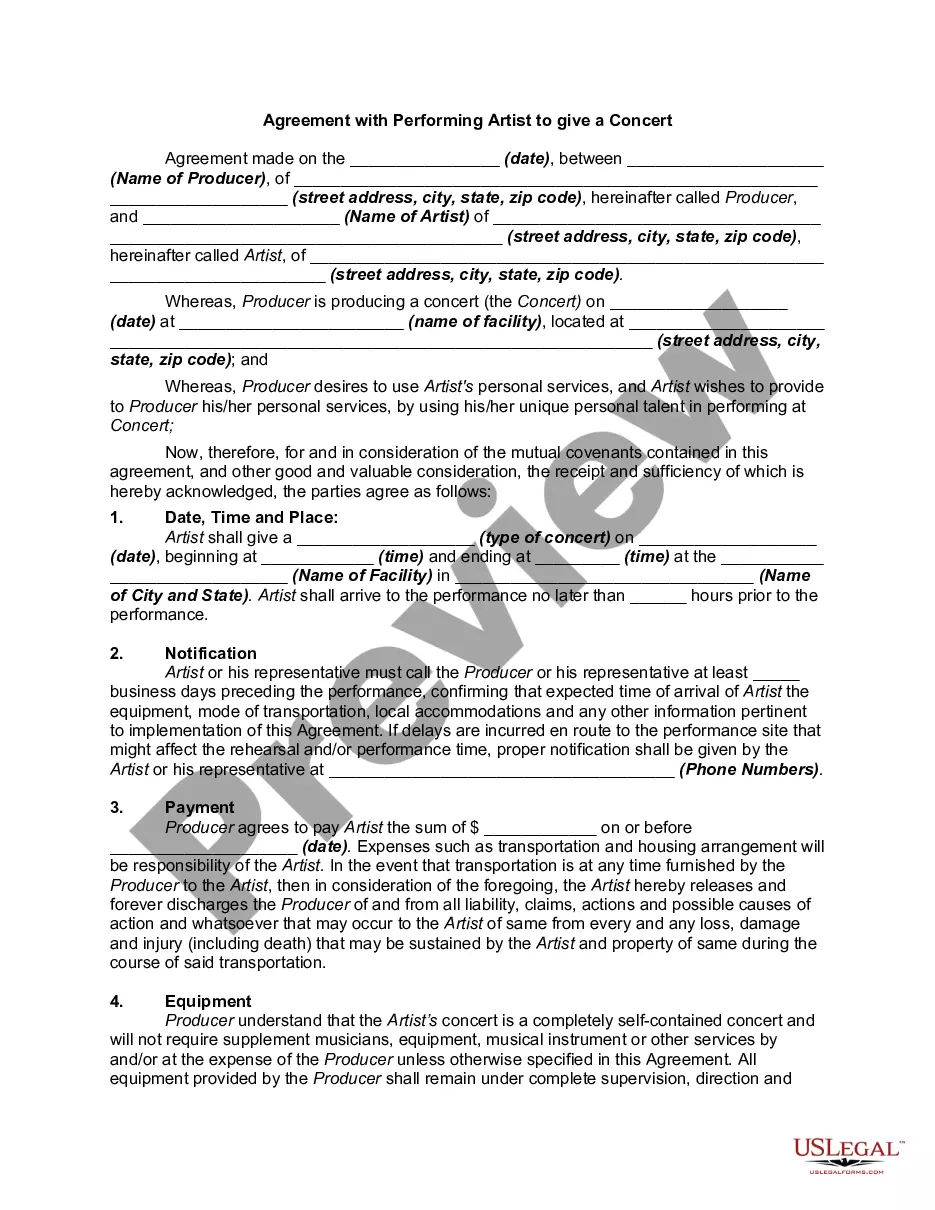
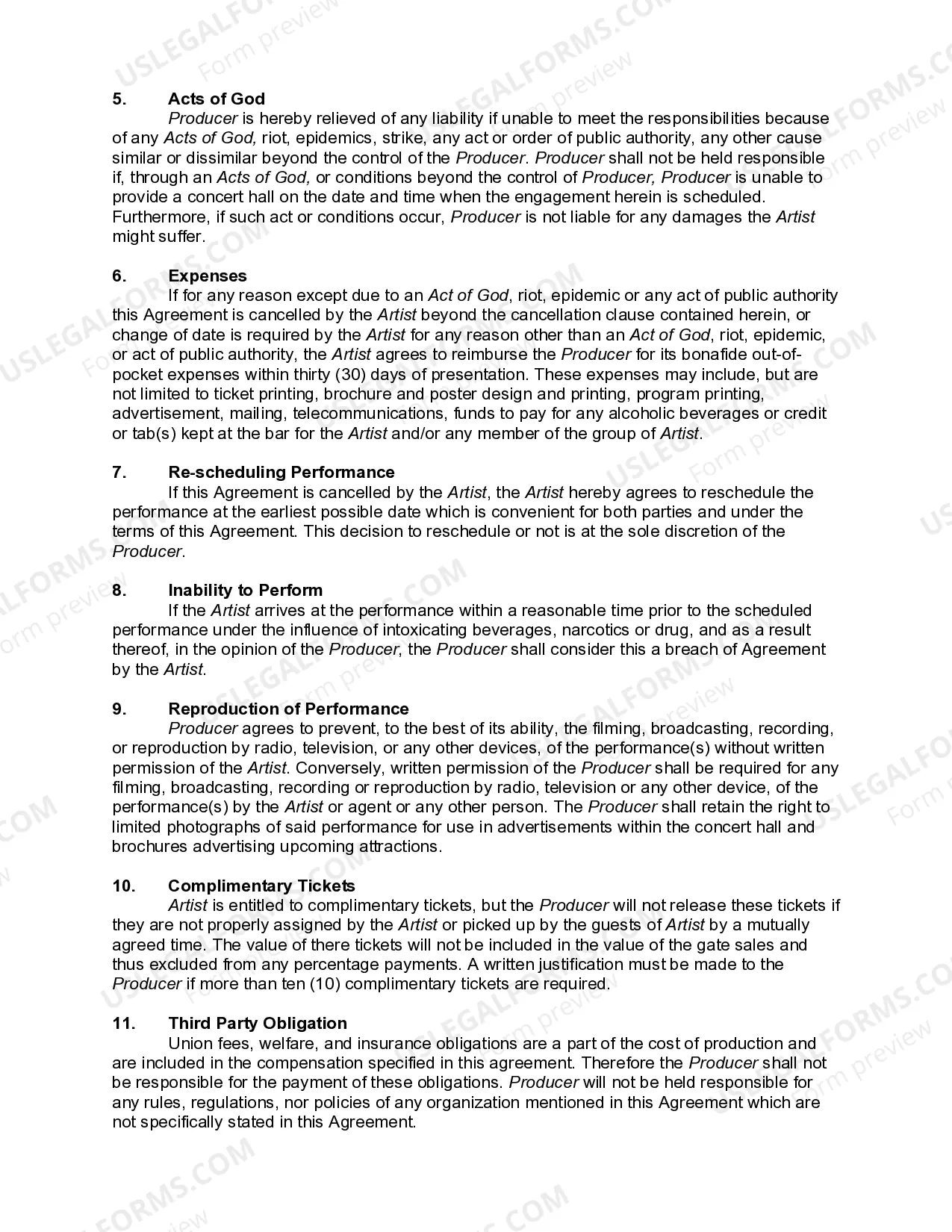
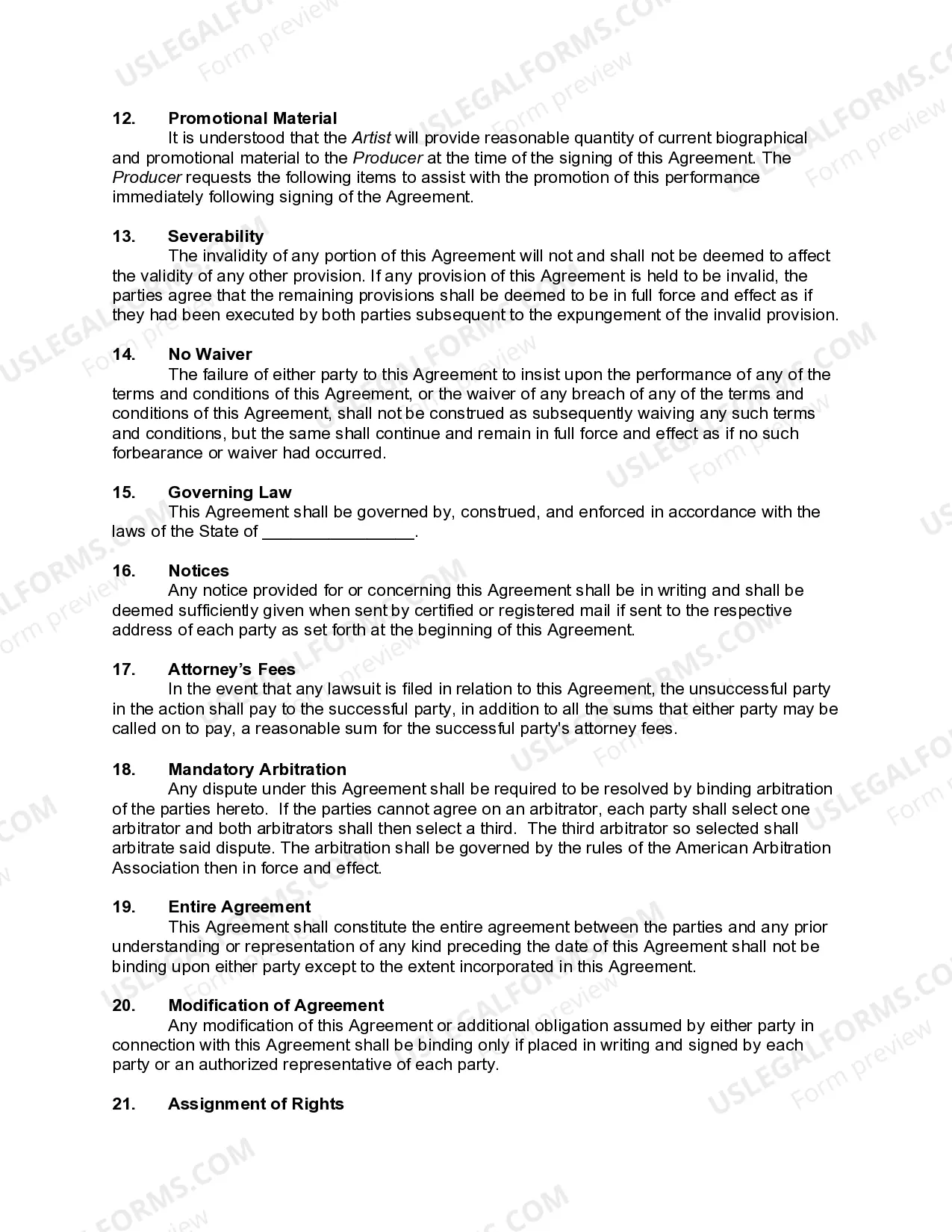
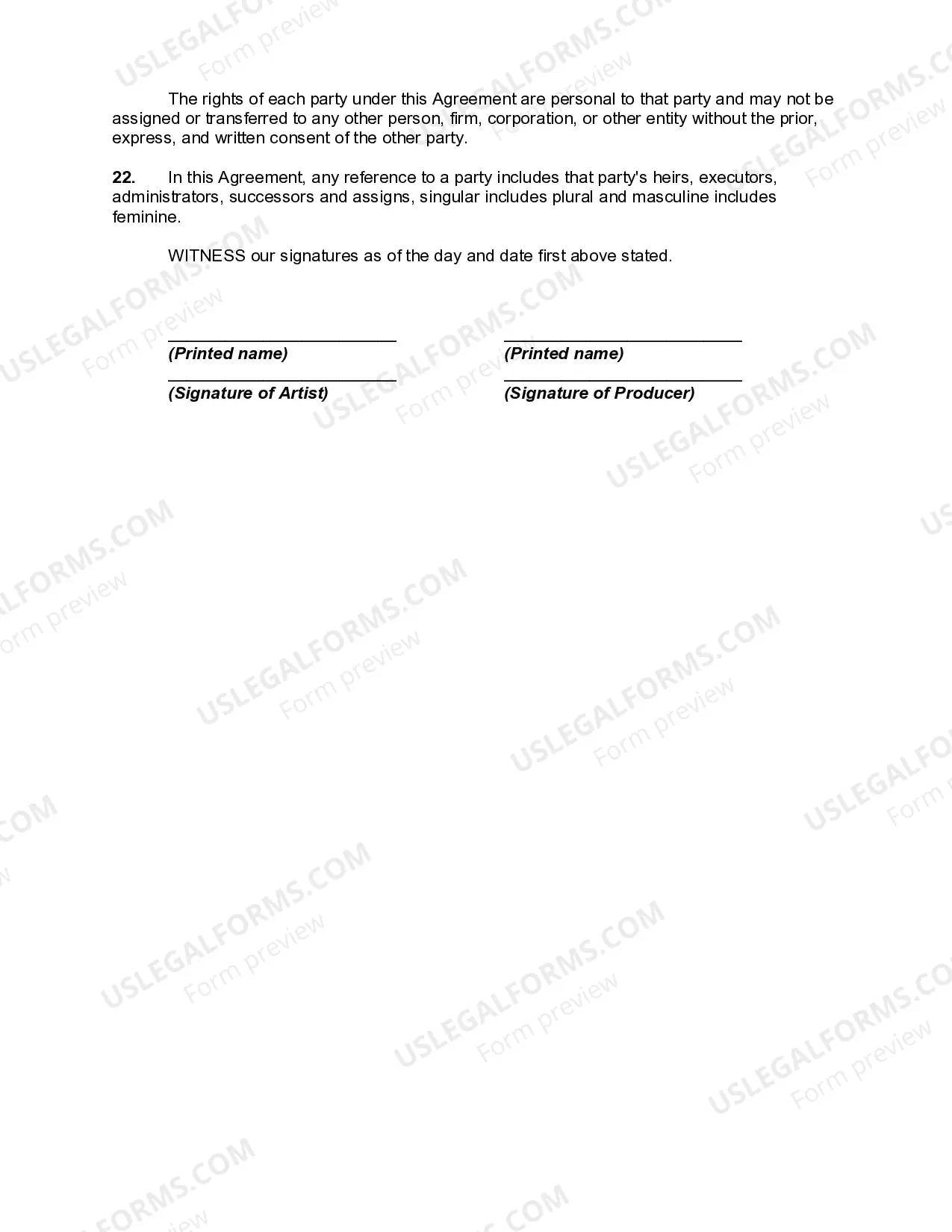
How to fill out Agreement With Performing Artist To Give A Concert?
There's no longer a necessity to squander hours seeking legal documents to comply with your local state statutes.
US Legal Forms has gathered all of them in one location and simplified their availability.
Our site offers over 85,000 templates for any corporate and personal legal matters categorized by state and usage.
Utilize the Search bar above to look for another template if the current one does not suit you.
- All documents are properly drafted and verified for legitimacy, so you can be assured of obtaining a current Agreement Artist Contract With Record Label.
- If you are already acquainted with our platform and possess an account, ensure that your subscription is active prior to downloading any templates.
- Log In to your account, select the document, and click Download.
- You can also revisit all stored documents at any time by accessing the My documents tab in your profile.
- For first-time users, the process will require a few additional steps to complete.
- Here is how new users can find the Agreement Artist Contract With Record Label in our catalog.
- Examine the page content carefully to confirm it contains the sample you need.
- Utilize the form description and preview options if available.
Form popularity
FAQ
To help you get started, take a look at a few basic components to include in your contract so you can better protect your art business.Client Info.Project Info and Terms.Project Timeline.Costs and Payment Terms.Itemization.Artist's Rights.Cancellation Terms.Acceptance of Agreement.
It's standard for acts to receive around 15% of revenue in traditional deals, 50% with indie labels, and generally between 65% and 85% with AWAL, depending on our level of involvement and the resources we provide. Industry legalese for sales is Exploitations, btw.
To Sum Up: In the most basic sense, a label pays an artist an advance, works their album, gets a team behind the album, and tries to sell the album. In exchange, the artist gives up a percentage of their royalties for as long as the contract lasts, and gives up 100% of their royalties until the advance is recouped.
Think of it like a loan. The label invests in your music and development, then you pay them back a set amount from your earnings. The label also agrees to pay you a set share of money from recording sales known as the royalty rate.