Towing Unauthorized Vehicles For Horse Trailers
Description
Get your form ready online
Our built-in tools help you complete, sign, share, and store your documents in one place.
Make edits, fill in missing information, and update formatting in US Legal Forms—just like you would in MS Word.
Download a copy, print it, send it by email, or mail it via USPS—whatever works best for your next step.
Sign and collect signatures with our SignNow integration. Send to multiple recipients, set reminders, and more. Go Premium to unlock E-Sign.
If this form requires notarization, complete it online through a secure video call—no need to meet a notary in person or wait for an appointment.
We protect your documents and personal data by following strict security and privacy standards.

Make edits, fill in missing information, and update formatting in US Legal Forms—just like you would in MS Word.

Download a copy, print it, send it by email, or mail it via USPS—whatever works best for your next step.

Sign and collect signatures with our SignNow integration. Send to multiple recipients, set reminders, and more. Go Premium to unlock E-Sign.

If this form requires notarization, complete it online through a secure video call—no need to meet a notary in person or wait for an appointment.

We protect your documents and personal data by following strict security and privacy standards.
Looking for another form?







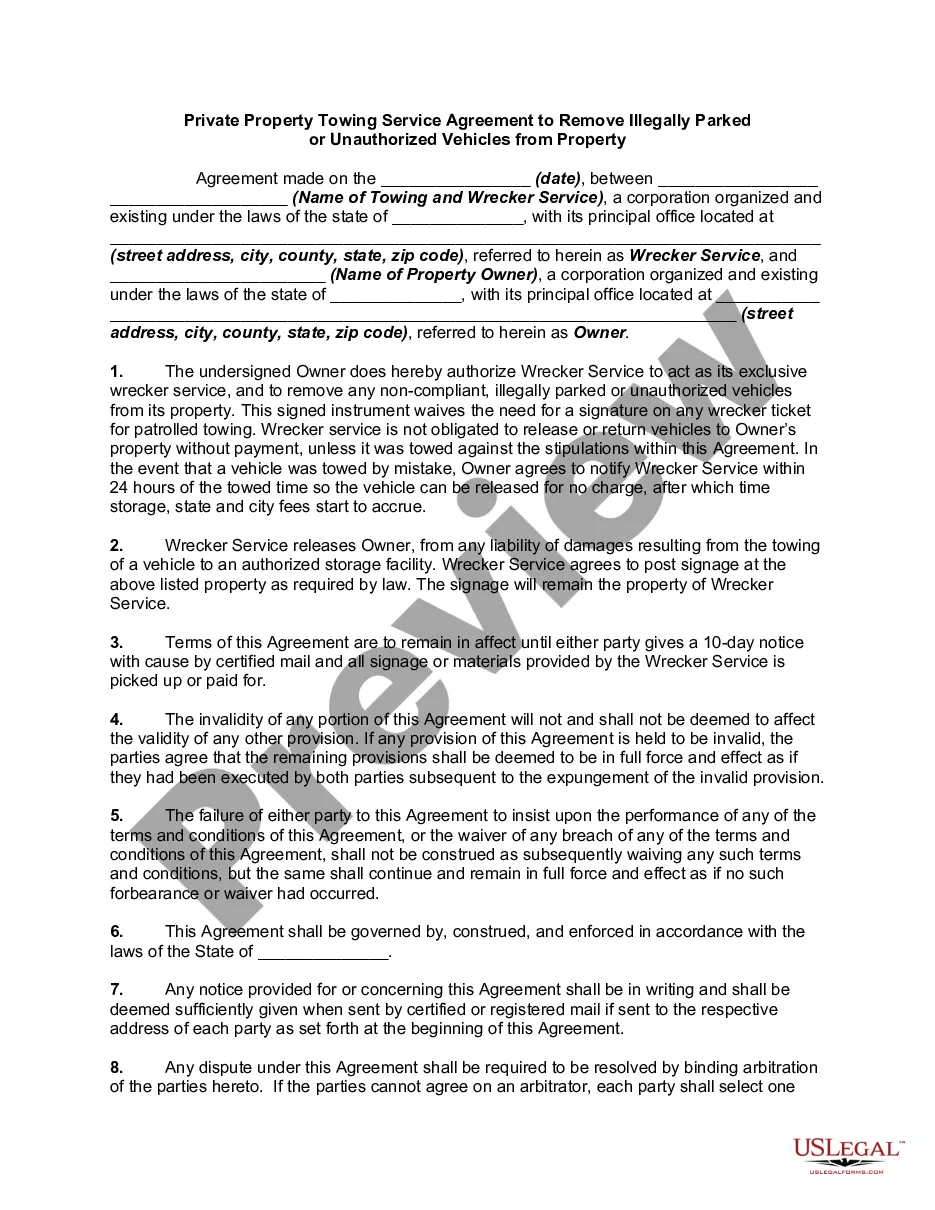
How to fill out Private Property Truck Towing Service Agreement To Remove Illegally Parked Or Unauthorized Vehicles From Property?
Securing a reliable source for the most up-to-date and suitable legal templates is a significant part of navigating bureaucratic processes.
Finding the correct legal documents requires accuracy and meticulousness, which is why it is essential to obtain samples of Towing Unauthorized Vehicles For Horse Trailers solely from trustworthy providers, such as US Legal Forms.
Eliminate the hassle associated with your legal paperwork. Explore the extensive US Legal Forms catalog to locate legal templates, verify their applicability to your situation, and download them instantly.
- Use the catalog navigation or search bar to find your document.
- Check the form’s description to verify it meets the needs of your state and locality.
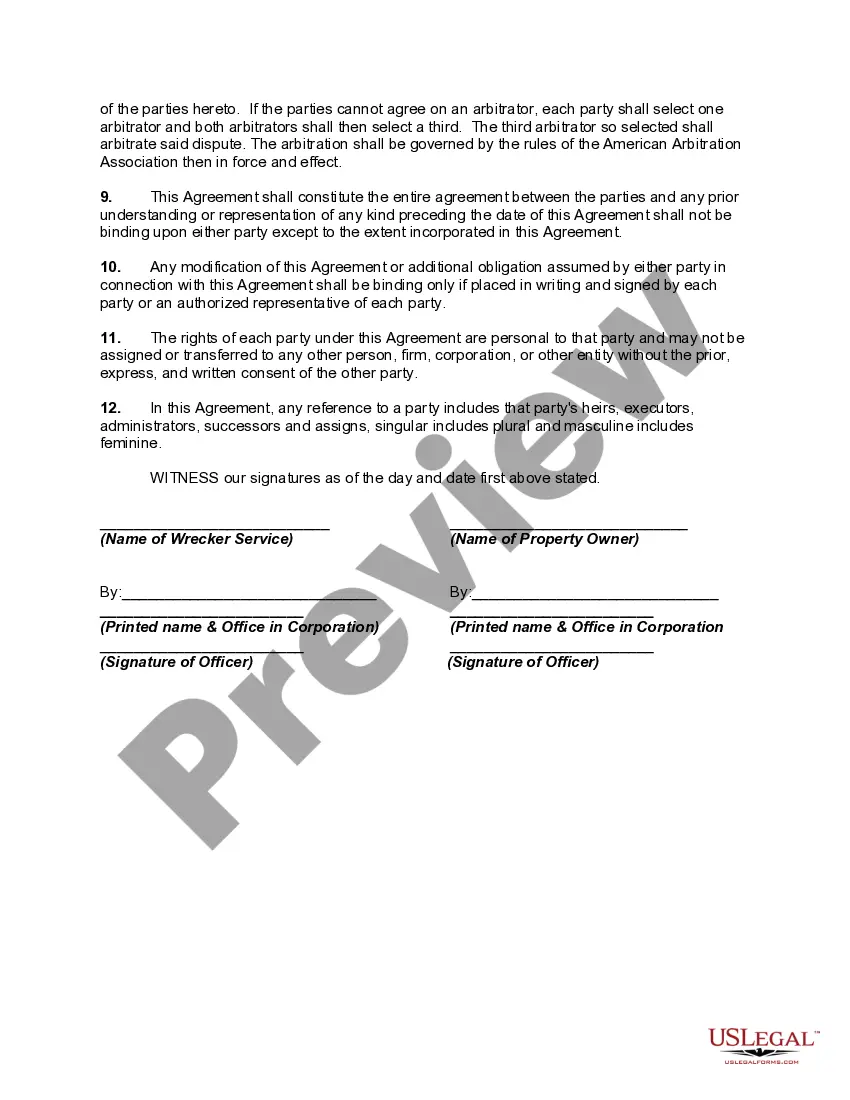
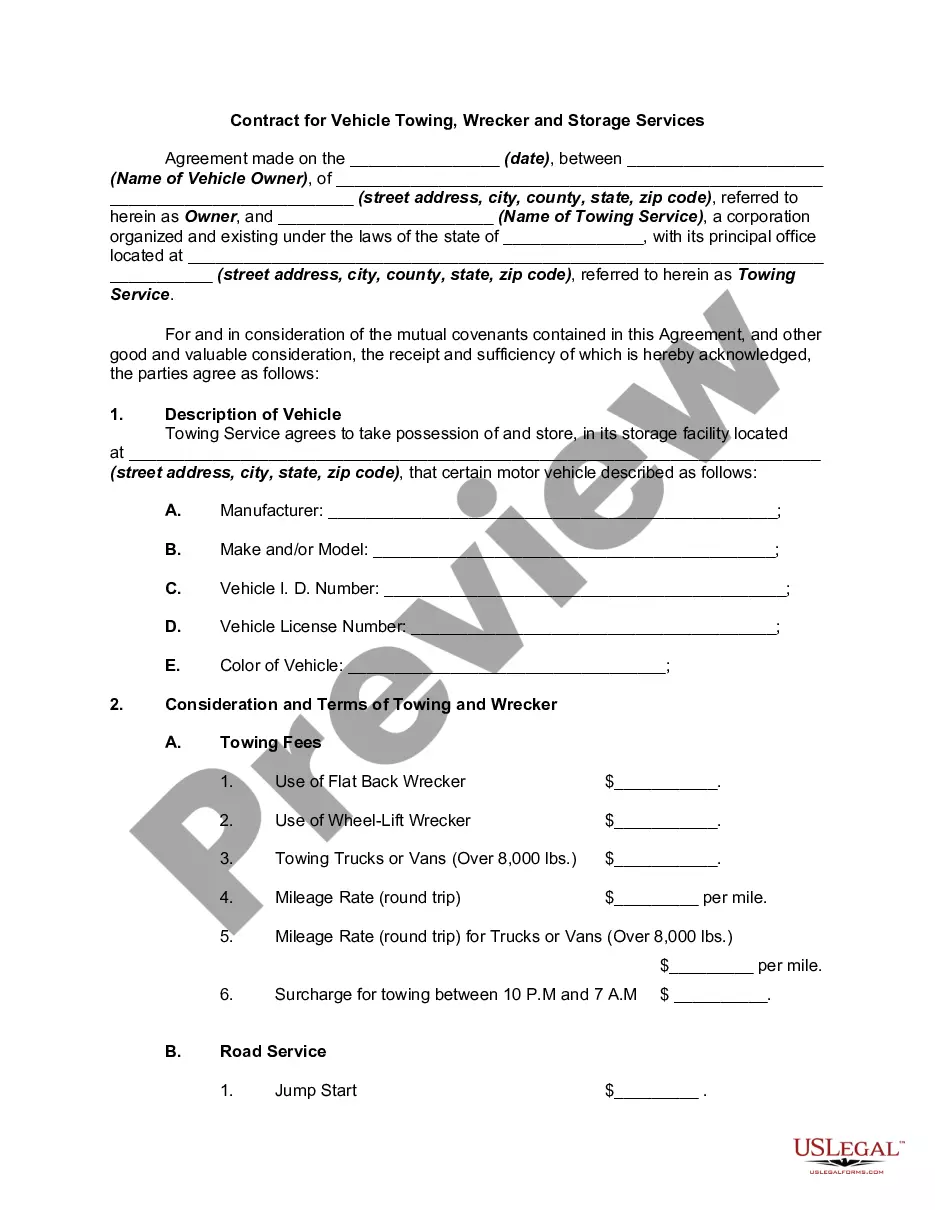
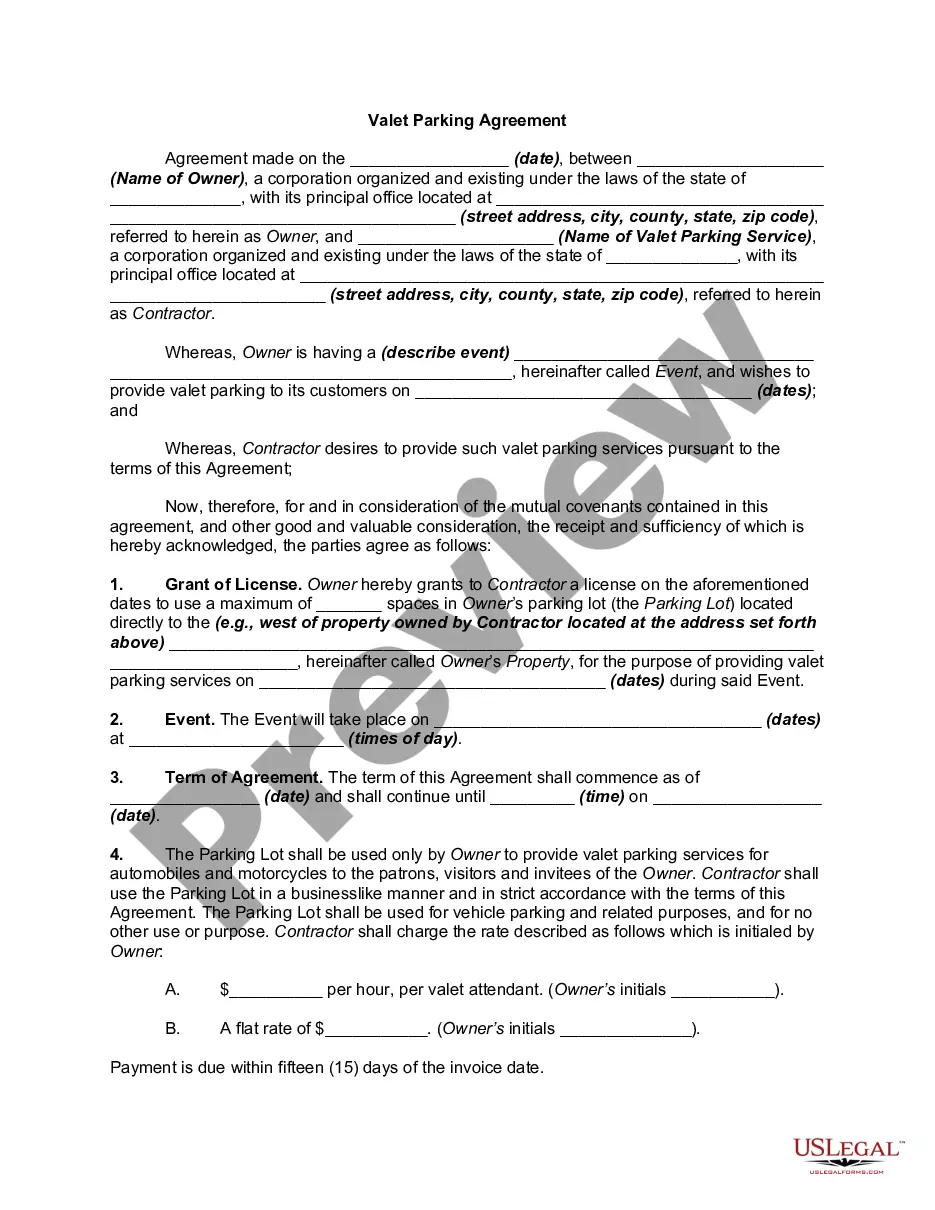
- View the form preview, if available, to confirm that the template is indeed what you are looking for.
- If the Towing Unauthorized Vehicles For Horse Trailers doesn’t meet your specifications, continue searching for the appropriate template.
- Once you are confident about the form’s relevance, download it.
- If you are a registered user, click Log in to validate and access your selected forms in My documents.
- If you don’t have an account yet, click Buy now to purchase the form.
- Select the pricing package that fits your requirements.
- Proceed to the registration to finalize your purchase.
- Complete your transaction by choosing a payment option (credit card or PayPal).
- Select the file format to download Towing Unauthorized Vehicles For Horse Trailers.
- Once the form is on your device, you can edit it with the editor or print it out to fill it in manually.
Form popularity
FAQ
Unlawful towing refers to the practice of removing vehicles from private property without proper authorization. This often involves towing unauthorized vehicles for horse trailers that are parked where they should not be, such as in a designated area for trailers. It is essential to understand that only licensed towing companies can perform this service legally, and they must follow specific regulations in your area. For those dealing with unauthorized vehicles, US Legal Forms offers resources to ensure you understand your rights and the legalities surrounding towing.
While anyone can technically tow a horse trailer, it requires a certain level of responsibility and knowledge. You need to ensure your vehicle is suitable for towing and that you understand basic towing practices. Being informed is essential, especially in the context of towing unauthorized vehicles for horse trailers.
The 80/20 rule for towing suggests that you should load your trailer to 80% of its maximum capacity. This approach helps maintain stability and maneuverability while towing. Always consider this rule, particularly when towing unauthorized vehicles for horse trailers, to ensure safe and efficient transport.
Yes, informing your insurance company if you tow a trailer is important. This ensures that you are adequately covered in case of an accident or damage while towing. Additionally, it can help you avoid complications related to towing unauthorized vehicles for horse trailers.
Yes, you are generally allowed to tow a trailer if you comply with state laws regarding towing capacity, trailer brakes, and lighting requirements. Each state has specific regulations, so it’s best to familiarize yourself with them. This knowledge is crucial, especially when it comes to towing unauthorized vehicles for horse trailers.
Yes, you can legally tow a horse trailer as long as you follow your state's towing regulations. Ensure your vehicle is equipped to handle the trailer's weight and that you have the proper hitch setup. It is also wise to check for any restrictions related to towing unauthorized vehicles for horse trailers in your area.
In most states, you do not need a special license to pull a horse trailer, but there are weight and size regulations to consider. Always check your local laws to ensure compliance, as these regulations often vary. Understanding the requirements will help you avoid issues, especially when towing unauthorized vehicles for horse trailers.
Yes, you can sue for false towing if your vehicle was towed without proper justification. The law protects vehicle owners from unauthorized towing, especially when it comes to towing unauthorized vehicles for horse trailers. Document your case thoroughly to strengthen your claim and consider seeking legal advice to navigate the process effectively.
The phrase 'unauthorized vehicles will be towed at owner's expense' indicates that vehicles parked without permission may be removed and the owner will be responsible for all towing fees. This often applies to private properties or restricted areas. If you are concerned about towing unauthorized vehicles for horse trailers, it’s important to familiarize yourself with local signage and regulations to avoid unexpected costs.
Laws regarding towing a car vary widely across different jurisdictions. Typically, towing laws cover aspects such as who can tow, under what conditions, and notification requirements for vehicle owners. When towing unauthorized vehicles for horse trailers, understanding these laws helps ensure compliance and protects your rights.