Condo Association Pet Rules
Description
Get your form ready online
Our built-in tools help you complete, sign, share, and store your documents in one place.
Make edits, fill in missing information, and update formatting in US Legal Forms—just like you would in MS Word.
Download a copy, print it, send it by email, or mail it via USPS—whatever works best for your next step.
Sign and collect signatures with our SignNow integration. Send to multiple recipients, set reminders, and more. Go Premium to unlock E-Sign.
If this form requires notarization, complete it online through a secure video call—no need to meet a notary in person or wait for an appointment.
We protect your documents and personal data by following strict security and privacy standards.
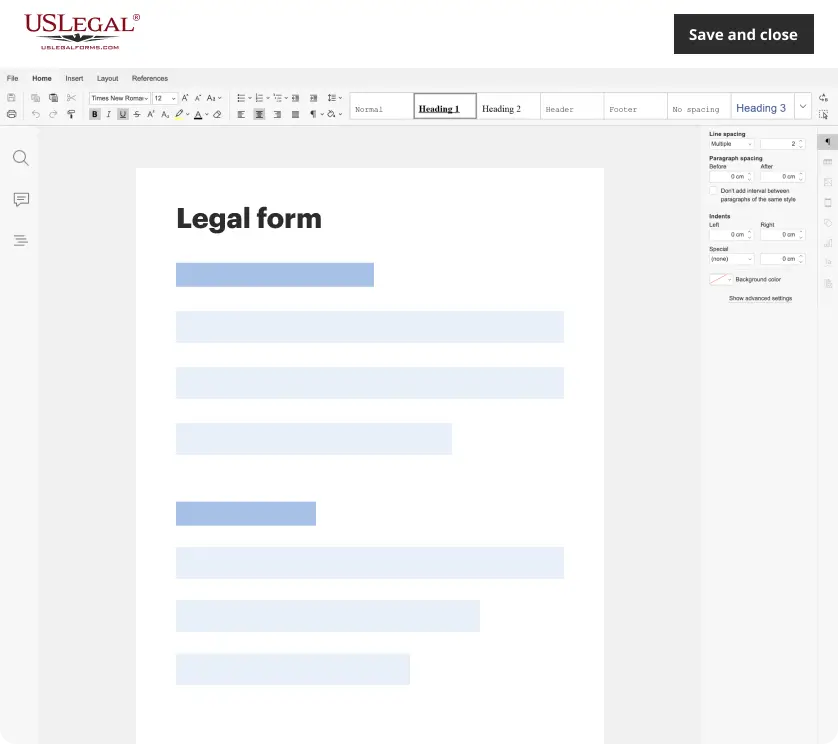
Make edits, fill in missing information, and update formatting in US Legal Forms—just like you would in MS Word.
Download a copy, print it, send it by email, or mail it via USPS—whatever works best for your next step.
Sign and collect signatures with our SignNow integration. Send to multiple recipients, set reminders, and more. Go Premium to unlock E-Sign.

If this form requires notarization, complete it online through a secure video call—no need to meet a notary in person or wait for an appointment.
We protect your documents and personal data by following strict security and privacy standards.
Looking for another form?
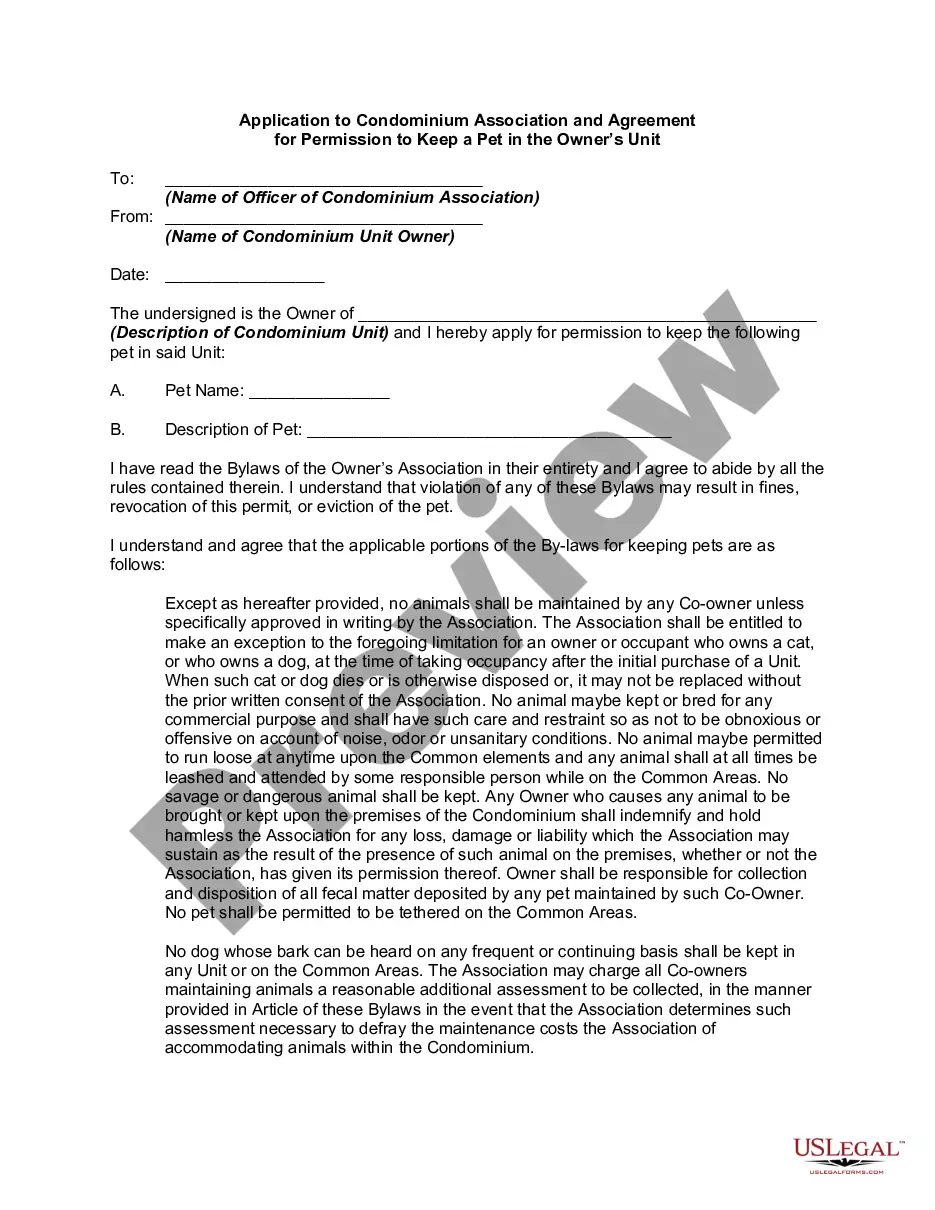
How to fill out Application To Condominium Association And Agreement For Permission To Keep A Pet In The Owner's Unit?
Regardless of whether for commercial reasons or personal issues, every individual eventually has to navigate legal circumstances in their lives.
Filling out legal paperwork demands meticulous care, starting from selecting the correct template sample.
With an extensive catalog of US Legal Forms available, you won’t need to waste time searching for the right sample online. Use the library’s straightforward navigation to find the appropriate template for any circumstance.
- Locate the sample you require using the search bar or catalog navigation.
- Review the form details to ensure it aligns with your situation, jurisdiction, and county.
- Click on the form’s preview to examine it.
- If it is the incorrect document, return to the search function to locate the Condo Association Pet Rules sample you need.
- Download the template once it fits your specifications.
- If you have an existing US Legal Forms profile, click Log in to access previously saved documents in My documents.
- If you do not yet have an account, you can acquire the form by clicking Buy now.
- Select the suitable pricing option.
- Fill out the profile registration form.
- Choose your payment method: you can utilize a credit card or PayPal account.
- Select the document format you desire and download the Condo Association Pet Rules.
- Once downloaded, you can complete the form using editing software or print it and finish it manually.
Form popularity
FAQ
Yes, condo association pet rules often include specific restrictions regarding pets. These rules may limit the types of pets allowed, their sizes, and the number of pets per unit. It's essential to review your condo's bylaws and any additional guidelines provided by the association. For assistance in understanding these rules or drafting an agreement, platforms like US Legal Forms can be a valuable resource.
In Michigan, condo associations must adhere to fair housing laws regarding emotional support animals. This means that an ESA cannot be denied unless the condo association has valid reasons based on specific criteria. It's essential to present the necessary documentation about your emotional support animal to support your case. If you encounter challenges, platforms like USLegalForms can help you understand your rights under condo association pet rules, allowing you to navigate the process with confidence.
In Utah, emotional support animals fall under specific guidelines that relate to condo association pet rules. According to Utah law, individuals with disabilities may have the right to live with an ESA in housing that otherwise prohibits pets. However, it is crucial to provide proper documentation showing the need for an emotional support animal to your condo association. Always check local regulations and your HOA's rules to ensure compliance.
In many cases, emotional support animals, or ESAs, may not have the same rights as service animals when it comes to condo association pet rules. Homeowners' associations (HOAs) often have specific policies regarding pets, and while ESAs can be helpful, they must comply with those established rules. However, some states offer protections that could allow ESAs to reside in communities that otherwise restrict pets. It's essential to understand the local laws and your condo association's policies.
Yes, HOAs typically have rules concerning dogs to ensure the safety and comfort of the community. Such rules may include breed restrictions, leash policies, and noise control measures. Familiarizing yourself with the specific condo association pet rules can help you understand these regulations. Engaging with your HOA can also provide insights into any changes or updates to these rules.
Bylaws of a condo association outline the governing rules for the community, including regulations related to pets. These bylaws detail the rights and responsibilities of residents and the association itself. Understanding these regulations, particularly as they relate to condo association pet rules, is crucial for all pet owners. Familiarizing yourself with the bylaws a avoids potential misunderstandings and conflicts.
Homeowners' Associations (HOAs) can inquire about the breed of your dog to ensure compliance with their pet rules. This inquiry is often part of the registration or approval process for pet ownership in the community. By sharing this information, you support the HOA in managing safety and harmony among residents. Always check the condo association pet rules for specific requirements.
Yes, condo associations may request information about the kind of dog you have as part of their pet registration process. Providing this information helps the board enforce condo association pet rules effectively. Transparency about your dog's breed and behavior enhances community trust and can ease concerns among residents. Always ensure to keep your details up to date.
Rules for pets in a condo setting generally aim to maintain a harmonious living environment. Common rules may include leash requirements, designated pet areas, and noise restrictions. It is important for pet owners to familiarize themselves with the condo association pet rules to avoid disputes. Adhering to these guidelines can create a pleasant atmosphere for all residents.
Yes, condo associations can set specific rules regarding dog breeds. These restrictions often arise from concerns about safety and liability. It is essential to review your condo association pet rules to understand any limitations on certain breeds. Communicating with your condo board can clarify these restrictions and ensure compliance.