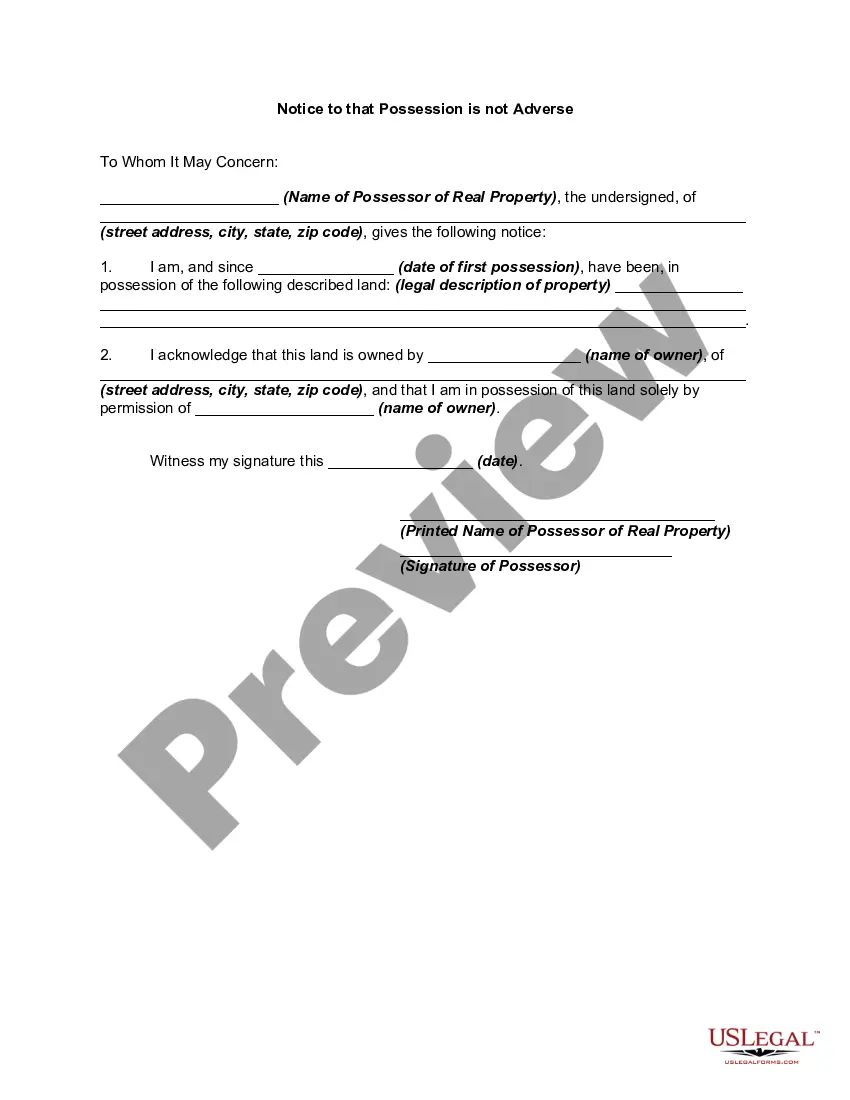
Squatters Rights In California
Description
Get your form ready online
Our built-in tools help you complete, sign, share, and store your documents in one place.
Make edits, fill in missing information, and update formatting in US Legal Forms—just like you would in MS Word.
Download a copy, print it, send it by email, or mail it via USPS—whatever works best for your next step.
Sign and collect signatures with our SignNow integration. Send to multiple recipients, set reminders, and more. Go Premium to unlock E-Sign.
If this form requires notarization, complete it online through a secure video call—no need to meet a notary in person or wait for an appointment.
We protect your documents and personal data by following strict security and privacy standards.

Make edits, fill in missing information, and update formatting in US Legal Forms—just like you would in MS Word.

Download a copy, print it, send it by email, or mail it via USPS—whatever works best for your next step.

Sign and collect signatures with our SignNow integration. Send to multiple recipients, set reminders, and more. Go Premium to unlock E-Sign.

If this form requires notarization, complete it online through a secure video call—no need to meet a notary in person or wait for an appointment.

We protect your documents and personal data by following strict security and privacy standards.
Looking for another form?







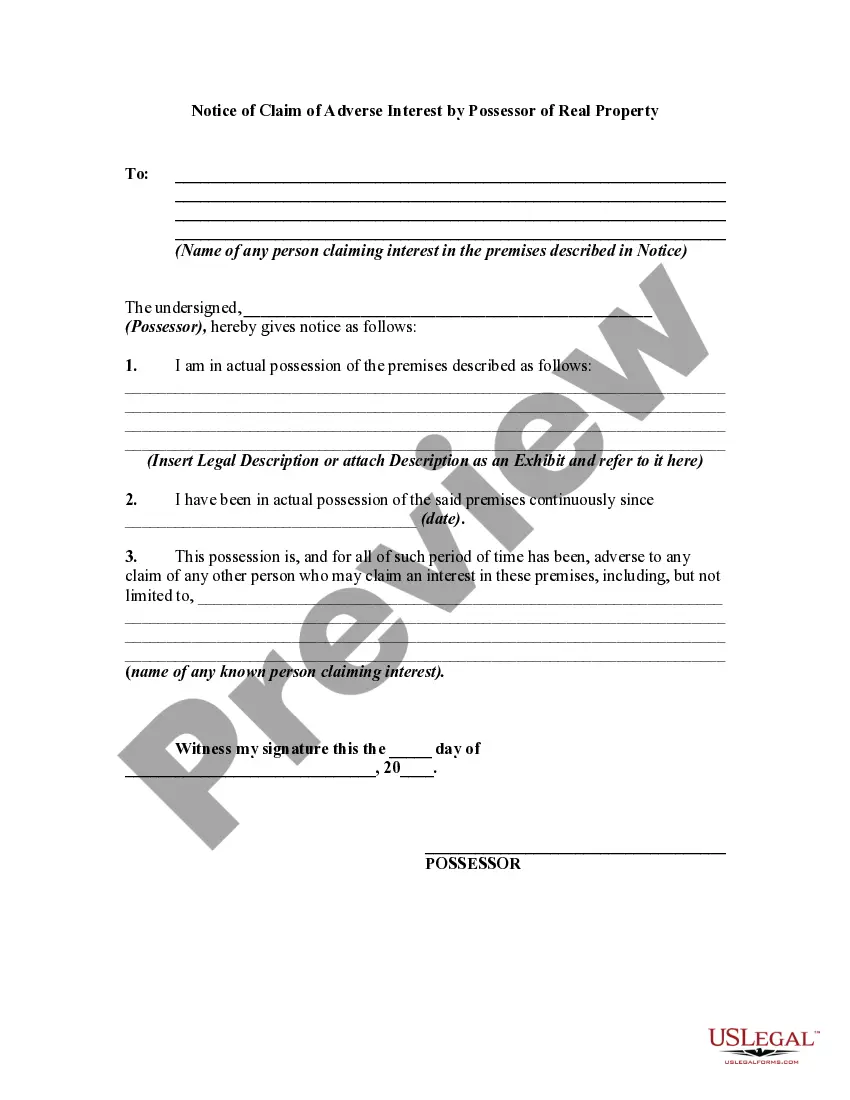
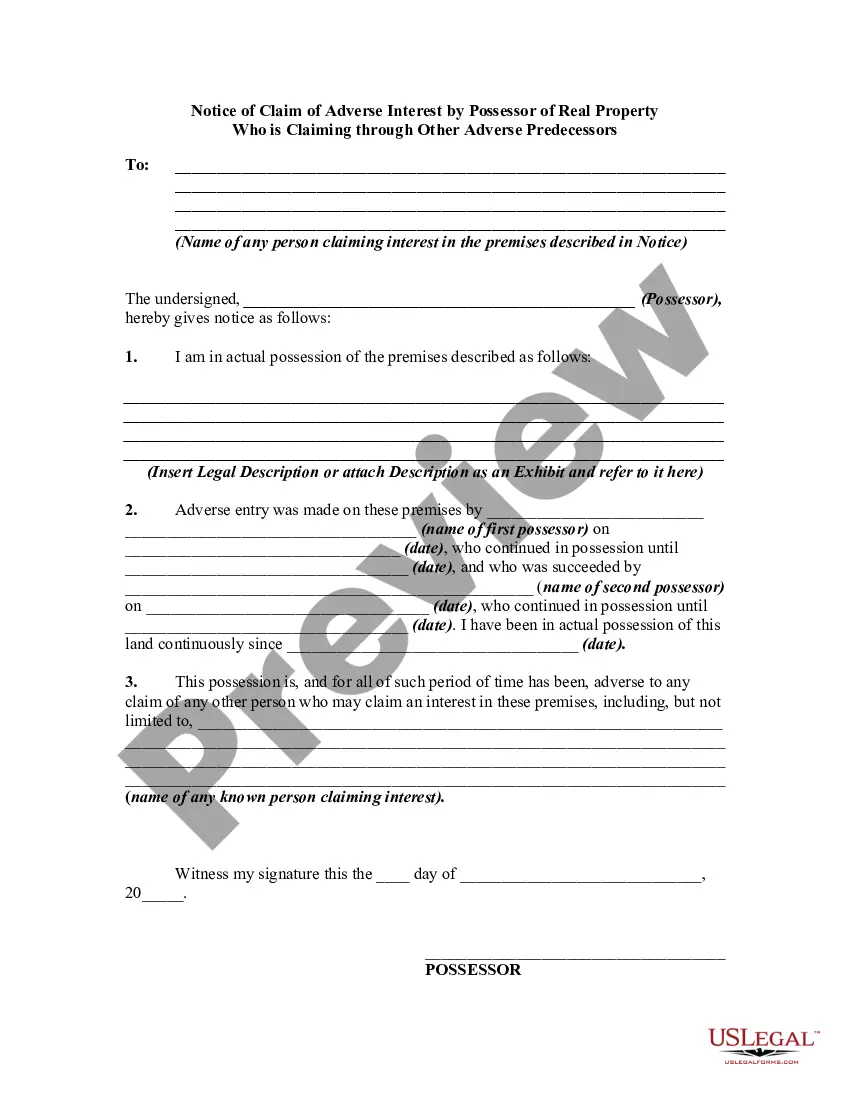
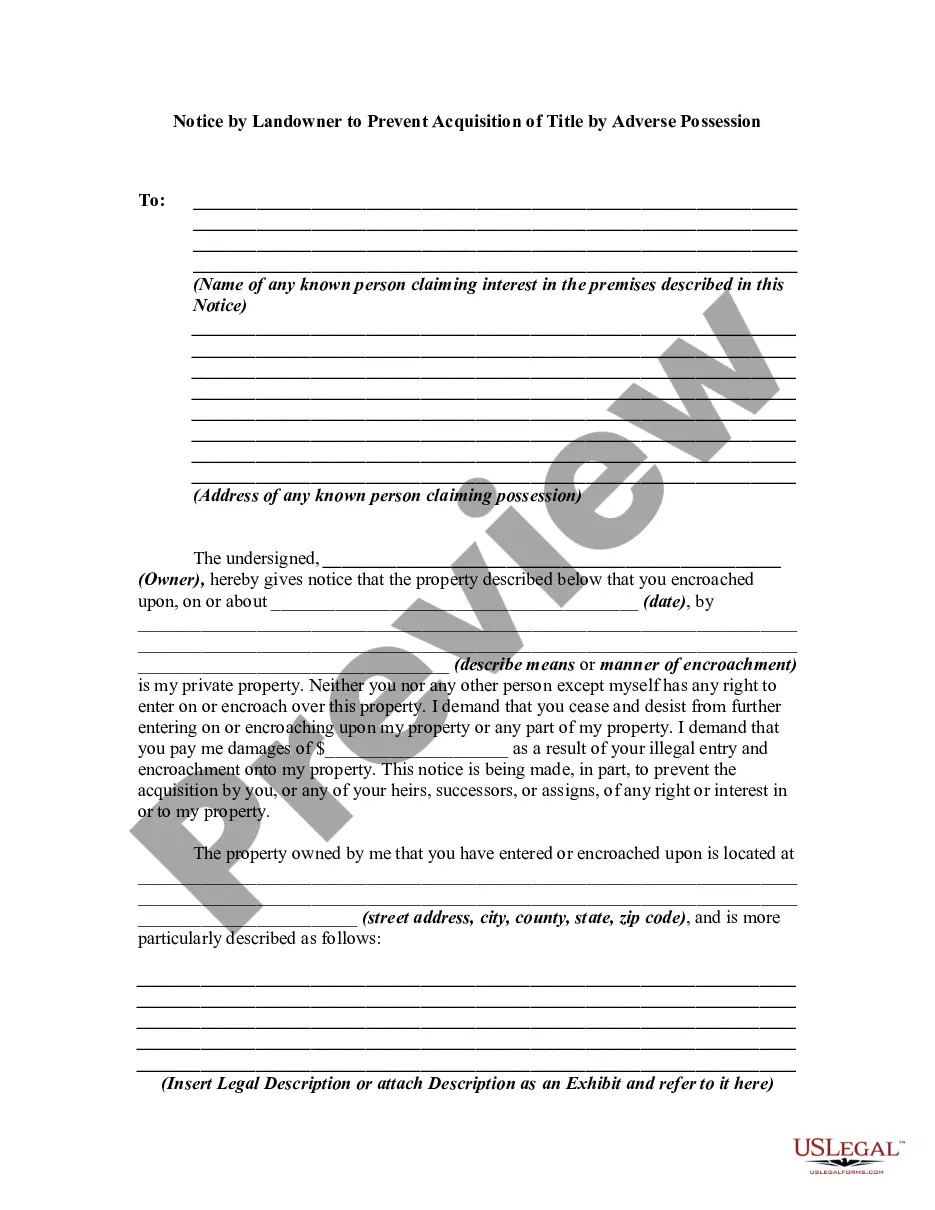
How to fill out Notice To That Possession Is Not Adverse - Squatters Rights?
Handling legal documents and processes can be a lengthy addition to your daily routine.
Squatter Rights in California and similar forms typically necessitate that you search for them and comprehend how to fill them out correctly.
For this reason, whether you are managing financial, legal, or personal issues, having a comprehensive and functional online collection of forms readily available will be highly beneficial.
US Legal Forms is the premier online resource for legal templates, providing over 85,000 state-specific forms along with various tools to help you complete your documentation with ease.
Simply Log In to your account, search for Squatters Rights in California, and obtain it immediately from the My documents section. You can also retrieve previously downloaded forms.
- Browse the database of relevant documents accessible to you with just one click.
- US Legal Forms supplies you with state- and county-specific forms that can be downloaded anytime.
- Safeguard your document management processes with superior services that enables you to prepare any form in minutes without extra or concealed fees.
Form popularity
FAQ
In California, squatters can assert their rights after occupying a property continuously for five years. This duration is significant as it allows squatters to claim legal ownership under adverse possession laws. It's essential to note that during this time, they must demonstrate continuous and open use of the property without permission from the original owner. Understanding squatters rights in California can be complex, but platforms like US Legal Forms provide valuable resources and tools to help navigate these situations effectively.
To become a squatter in California, you would typically occupy a property with the intention of claiming it as your own. This process can involve moving into an uninhabited home and living there without permission. It is important to be aware of the legal implications, as squatters rights in California allow individuals to gain ownership under specific conditions. If you're considering this, seeking legal guidance can help you navigate the complexities involved.
In California, a squatter is someone who occupies a property without the owner's permission. They often move into abandoned or vacant buildings and claim rights to them over time. Under California law, after a certain period, these individuals may acquire legal rights to the property. Understanding squatters rights in California is crucial for both property owners and those considering these actions.
Yes, property owners can remove a squatter in California, but they must follow legal procedures to do so. This typically involves filing an unlawful detainer action in court to formally evict the squatter. Attempting to forcibly remove a squatter can lead to legal complications, so it is essential to follow the proper channels. Utilizing services like US Legal Forms can simplify this process and ensure property owners take the correct steps.
To claim squatter's rights in California, a person must establish certain conditions, such as occupying the property continuously for five years. They should also demonstrate that their occupancy was open and notorious, meaning it was visible and obvious. This process often requires adherence to specific legal requirements. For those looking to navigate this complex situation, US Legal Forms offers valuable resources to assist in the process.
Squatters rights in California can become valid after five years of continuous residence without the owner’s permission. It is important for property owners to be aware of this time frame to take action sooner rather than later. Early intervention often leads to better outcomes for property owners. Using platforms like US Legal Forms can provide essential tools and templates for addressing these situations.
In California, squatters may establish their rights after a period of continuous residence, typically five years. This means if they occupy a property without permission for this duration, they might gain legal rights. However, owners can challenge these claims through legal action before this time frame elapses. Knowing how to respond is vital, and US Legal Forms can help property owners understand their options.
The new squatters law in California reinforces property owner rights while detailing the legal processes regarding squatters. It emphasizes the need for formal eviction procedures, even if a property owner believes occupancy is unauthorized. Understanding this law is crucial for property owners to protect their interests effectively. For detailed guidance and resources, consider using US Legal Forms to navigate the legal landscape.