Civil Trial Motion In Limine
Description

Get your form ready online
Our built-in tools help you complete, sign, share, and store your documents in one place.
Make edits, fill in missing information, and update formatting in US Legal Forms—just like you would in MS Word.
Download a copy, print it, send it by email, or mail it via USPS—whatever works best for your next step.
Sign and collect signatures with our SignNow integration. Send to multiple recipients, set reminders, and more. Go Premium to unlock E-Sign.
If this form requires notarization, complete it online through a secure video call—no need to meet a notary in person or wait for an appointment.
We protect your documents and personal data by following strict security and privacy standards.

Make edits, fill in missing information, and update formatting in US Legal Forms—just like you would in MS Word.

Download a copy, print it, send it by email, or mail it via USPS—whatever works best for your next step.

Sign and collect signatures with our SignNow integration. Send to multiple recipients, set reminders, and more. Go Premium to unlock E-Sign.

If this form requires notarization, complete it online through a secure video call—no need to meet a notary in person or wait for an appointment.

We protect your documents and personal data by following strict security and privacy standards.
Looking for another form?





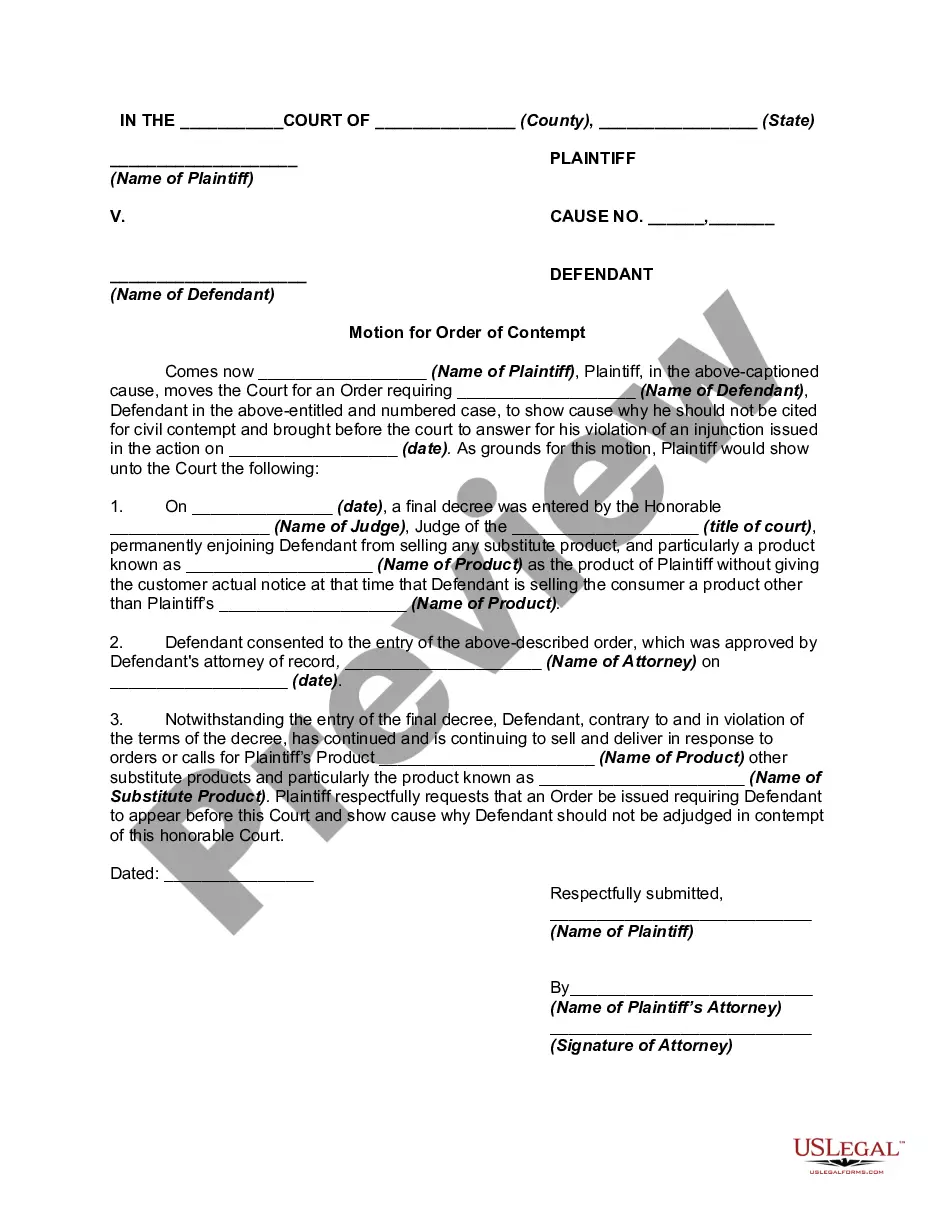
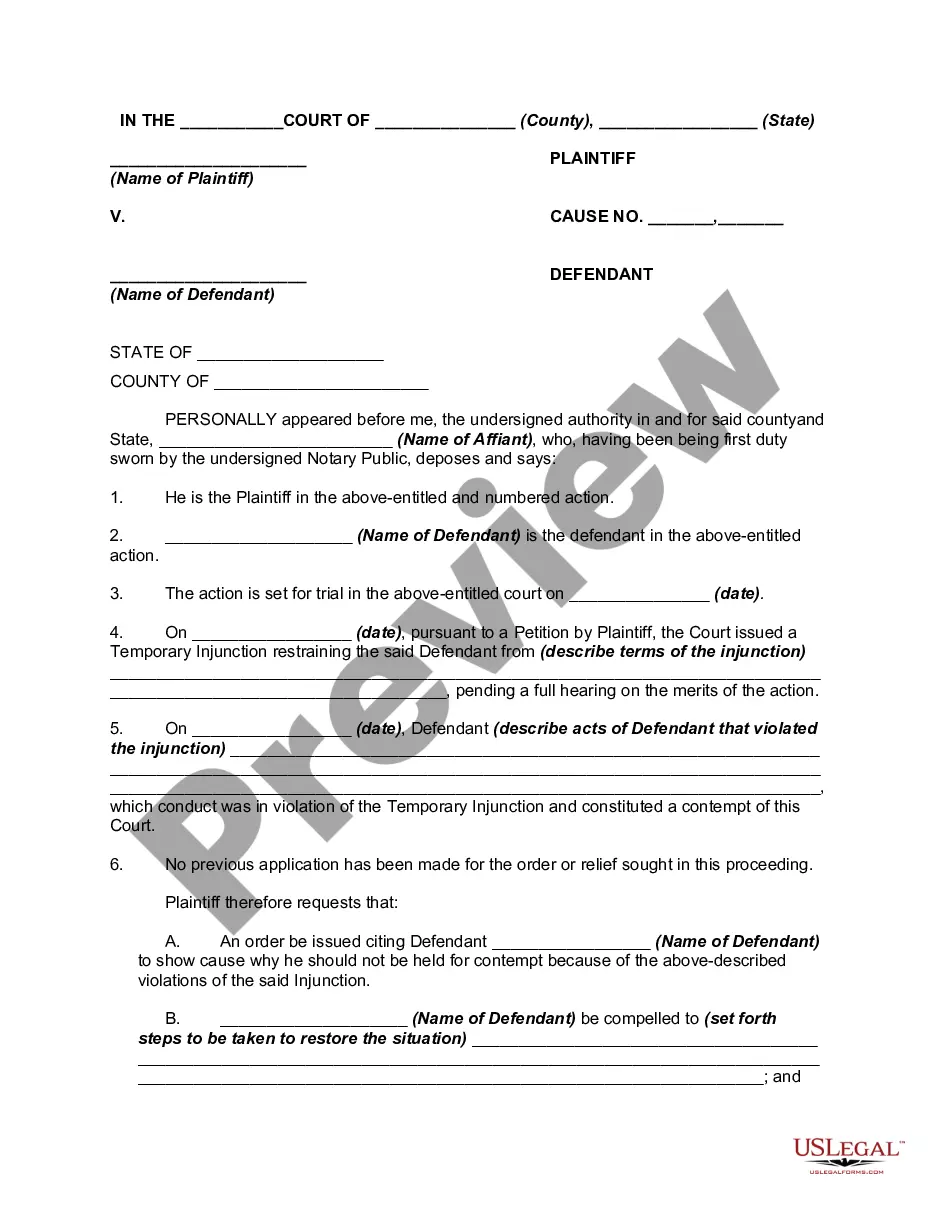
How to fill out Motion For An Order Of Contempt For Violation Of Injunction?
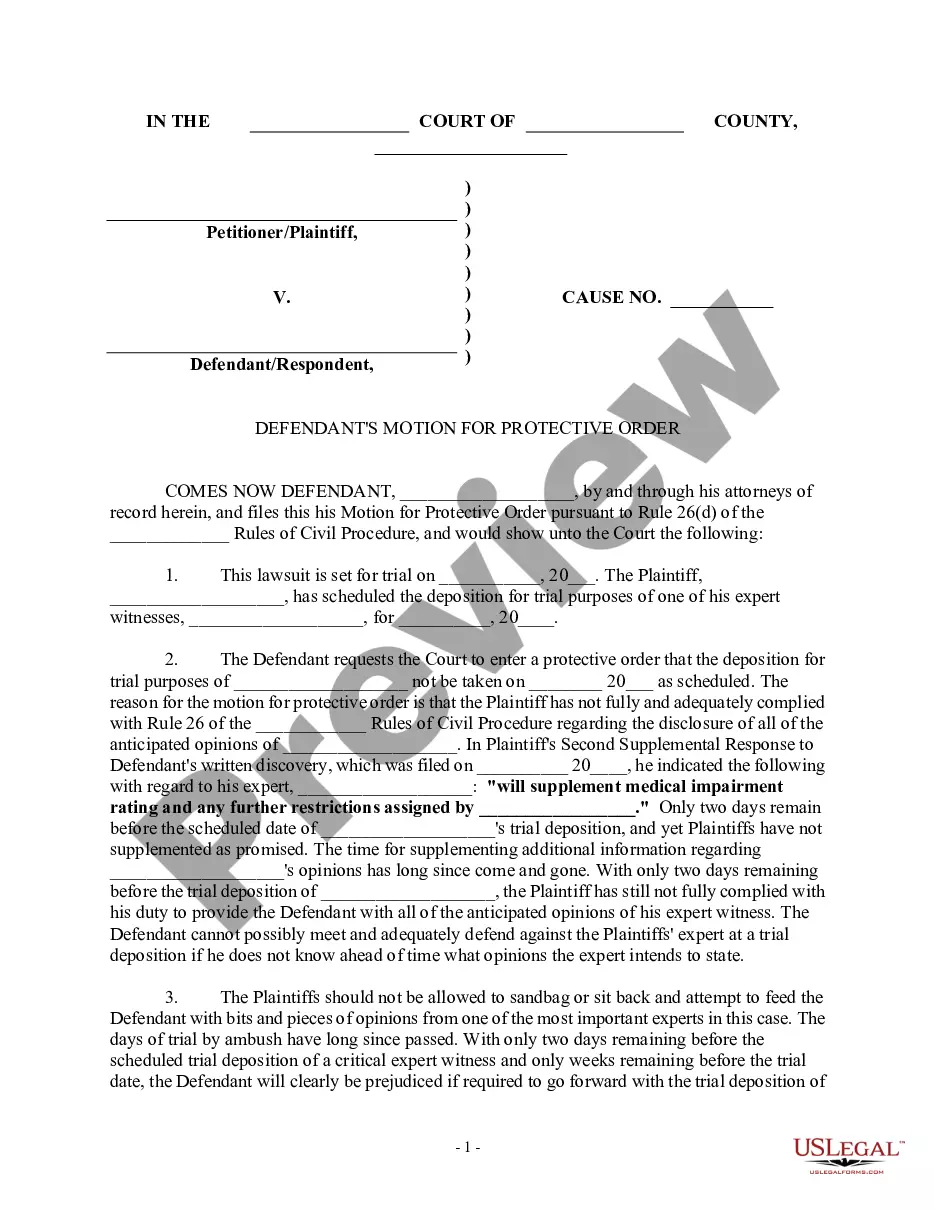
The Civil Trial Motion In Limine you see on this page is a reusable legal template crafted by experienced attorneys in accordance with federal and local regulations.
For over 25 years, US Legal Forms has supplied individuals, enterprises, and lawyers with more than 85,000 authenticated, state-specific documents for any business and personal occasion. It’s the quickest, most direct, and most dependable method to acquire the materials you need, as the service guarantees bank-level data security and anti-malware safeguards.
Choose the format you desire for your Civil Trial Motion In Limine (PDF, DOCX, RTF) and download the document onto your device.
- Search for the document you require and examine it.
- Browse the sample you requested and preview it or review the form description to ensure it meets your needs. If it doesn’t, utilize the search bar to find the correct one. Click Buy Now when you have found the template you need.
- Register and Log In.
- Select the pricing plan that fits your needs and create an account. Use PayPal or a credit card to ensure a speedy transaction. If you already possess an account, Log In and verify your subscription to proceed.
- Acquire the editable template.
Form popularity
FAQ
The most common use of the in limine motion is to exclude irrelevant and/or prejudicial evidence.
Most motions in limine are filed by a party to limit or prevent certain evidence from being presented by opposing counsel at the time of trial. The purpose of a motion in limine is to prevent the introduction of matters at trial which are irrelevant, inadmissible or prejudicial.
A motion in limine is decided by the judge outside of the presence of the jury. The purpose of a motion in limine is to address potentially prejudicial, irrelevant, or inadmissible information that could unduly influence a jury or hinder the fair administration of justice.
For example, if you are involved in a DUI accident and discover that there is a witness who is inflating the details of the case, then your attorney may create a motion in limine that requests that that witnesses' testimony be thrown out before the case proceeds.
You should explain why the other side's motion in limine should be denied and why you should be free to introduce the evidence at trial if you choose. Try to support your argument with citations to court rules or to case opinions which support your argument.