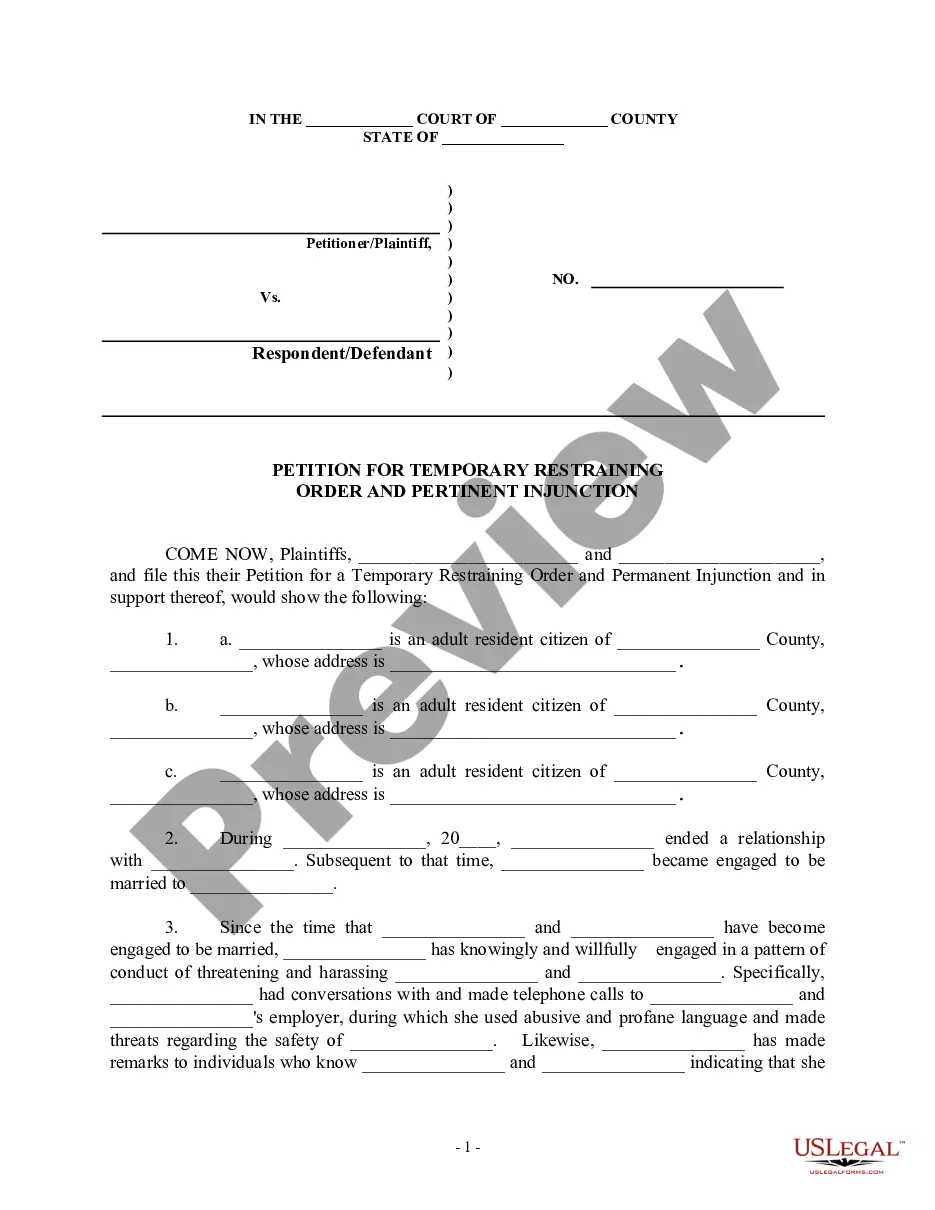
Dismissal Of Restraining Order For Harassment
Description

Get your form ready online
Our built-in tools help you complete, sign, share, and store your documents in one place.
Make edits, fill in missing information, and update formatting in US Legal Forms—just like you would in MS Word.
Download a copy, print it, send it by email, or mail it via USPS—whatever works best for your next step.
Sign and collect signatures with our SignNow integration. Send to multiple recipients, set reminders, and more. Go Premium to unlock E-Sign.
If this form requires notarization, complete it online through a secure video call—no need to meet a notary in person or wait for an appointment.
We protect your documents and personal data by following strict security and privacy standards.

Make edits, fill in missing information, and update formatting in US Legal Forms—just like you would in MS Word.

Download a copy, print it, send it by email, or mail it via USPS—whatever works best for your next step.

Sign and collect signatures with our SignNow integration. Send to multiple recipients, set reminders, and more. Go Premium to unlock E-Sign.

If this form requires notarization, complete it online through a secure video call—no need to meet a notary in person or wait for an appointment.

We protect your documents and personal data by following strict security and privacy standards.
Looking for another form?


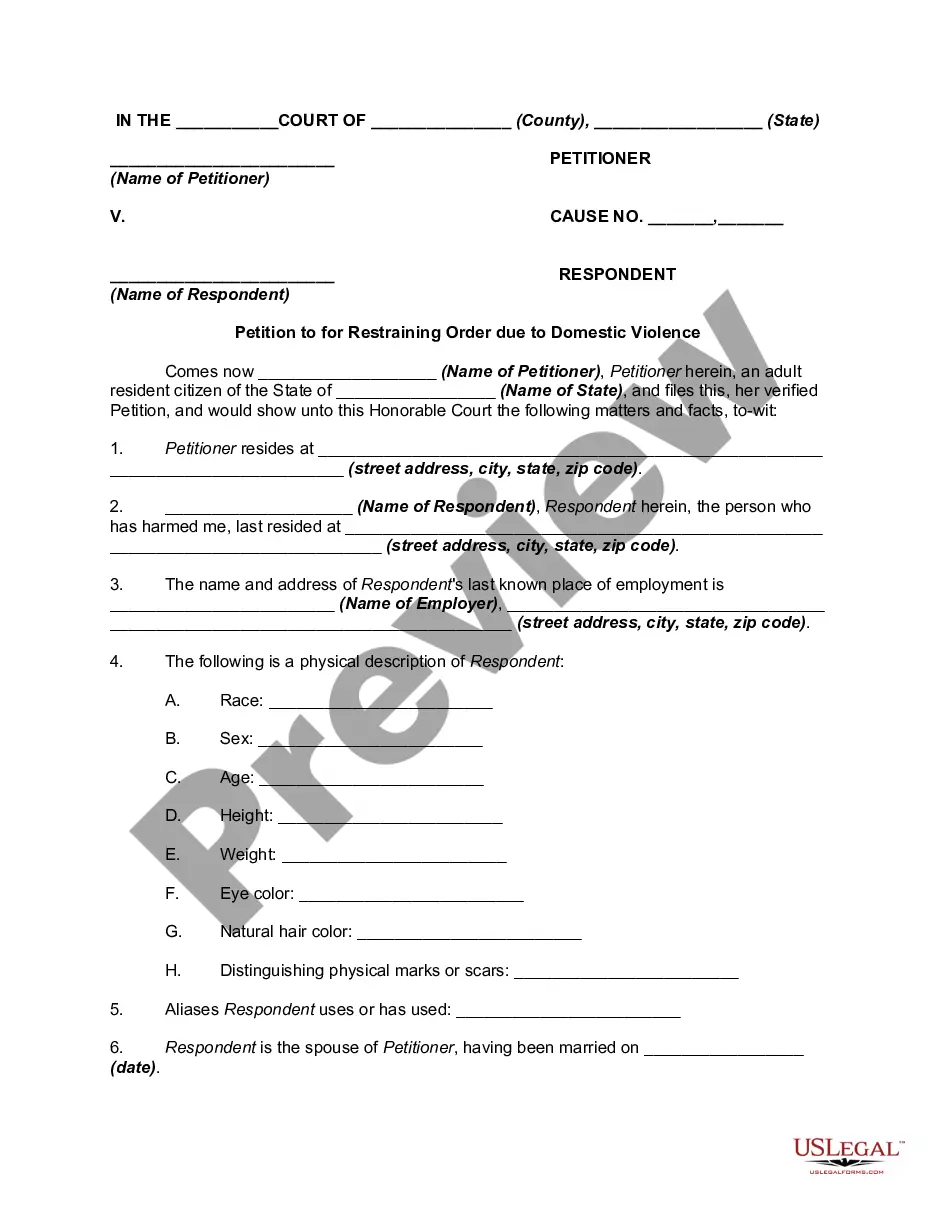
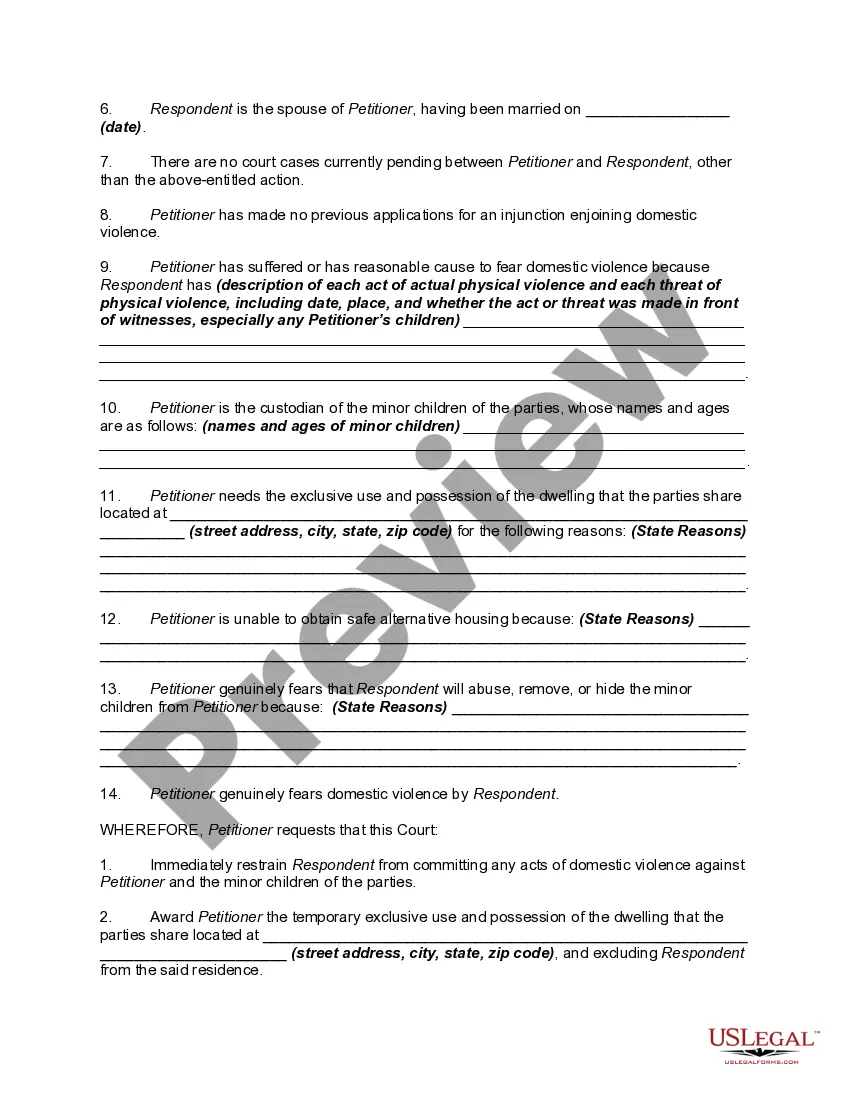
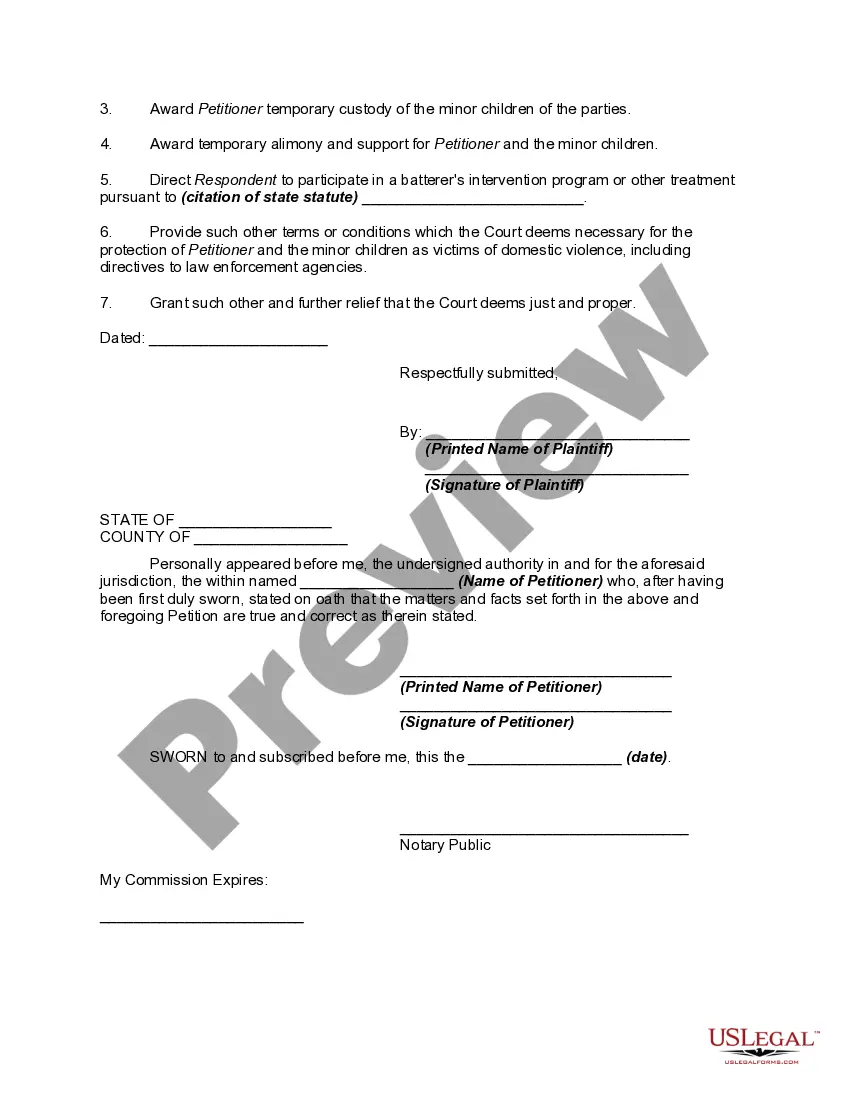
How to fill out Petition To For Restraining Order Due To Domestic Violence?
Whether for professional reasons or personal matters, everyone must handle legal issues at some point in their lives.
Completing legal documents necessitates meticulous care, starting from selecting the appropriate form template. For example, if you select an incorrect variant of the Dismissal Of Restraining Order For Harassment, it will be rejected upon submission.
Once downloaded, you can fill out the form using editing software or print it and complete it by hand. With a comprehensive US Legal Forms catalog available, you don’t have to waste time searching for the correct template online. Utilize the library’s user-friendly navigation to find the right template for any circumstance.
- Locate the template you need by utilizing the search bar or catalog navigation.
- Review the form’s description to confirm it matches your situation, state, and county.
- Click on the form’s preview to inspect it.
- If it is the incorrect form, return to the search feature to find the Dismissal Of Restraining Order For Harassment template you need.
- Download the document if it satisfies your criteria.
- If you already possess a US Legal Forms account, simply click Log in to access previously saved templates in My documents.
- If you do not yet have an account, you can acquire the form by clicking Buy now.
- Select the correct pricing option.
- Complete the account registration form.
- Choose your payment method: you can use a credit card or PayPal account.
- Select the document format you prefer and download the Dismissal Of Restraining Order For Harassment.
Form popularity
FAQ
To write an impactful letter to a judge, start with a respectful greeting and clearly state your case. Use specific examples to illustrate your points and demonstrate why the restraining order should be dismissed. Platforms such as USLegalForms provide templates that can help you effectively convey your arguments while adhering to formal court expectations.
A dismissal letter to the judge should be concise and direct. Begin by stating your request for dismissal of the restraining order for harassment, followed by the reasons supporting your case. Including relevant details and facts can help substantiate your request, and using resources like USLegalForms can streamline this process.
When writing a letter to remove a restraining order, clearly express your intent and the reasons for your request. Include details about any significant changes in your situation, such as improved relationships or evidence of reconciliation. Using USLegalForms can provide you with structured guidance to craft an effective letter tailored to your needs.
Writing a successful motion to dismiss involves clearly articulating the grounds for your request. Focus on specific facts and legal precedents that highlight why the restraining order is no longer necessary or valid. USLegalForms offers templates that can help you frame your motion effectively and increase your chances of a favorable outcome.
To secure a dismissal of a restraining order for harassment, you need to file a motion with the court. This motion should clearly state your reasons for seeking dismissal, including any changes in circumstances or evidence that supports your case. You may want to consult with an attorney or use platforms like USLegalForms to ensure your documentation meets legal standards.
To write a letter to a judge requesting the dismissal of a restraining order for harassment, clearly state your reasons and any changes in circumstances since it was issued. Be concise and respectful in your approach, and provide any supporting evidence that can strengthen your case. Utilizing templates from platforms like US Legal Forms can assist you in crafting a formal and effective letter.
Yes, a harassment case can be dropped at any time by the individual who filed it, often through a formal legal process. However, it's important to consider the implications of such a decision, especially if harassment continues. Seeking legal advice ensures you understand your rights and any future steps you may need to take.
If someone is harassing you, document all incidents thoroughly and seek support from trusted friends or family. It's advisable to consult with legal experts who can guide you through the process of obtaining a restraining order for harassment. Taking early action can help establish your case more effectively if the need arises.
When an order of protection is dismissed, the restrictions that were in place no longer apply. The individuals involved can resume normal interactions unless other legal actions are taken. It is crucial to understand that dismissal does not erase the history of harassment, and taking further legal steps may be necessary.
A harassment order specifically addresses behavior that causes emotional distress to the victim, while a restraining order is broader and may also prevent physical contact. Both aim to protect individuals, but harassment orders are typically granted in response to ongoing, threatening actions. Understanding these distinctions helps in navigating legal options.