Lease Term
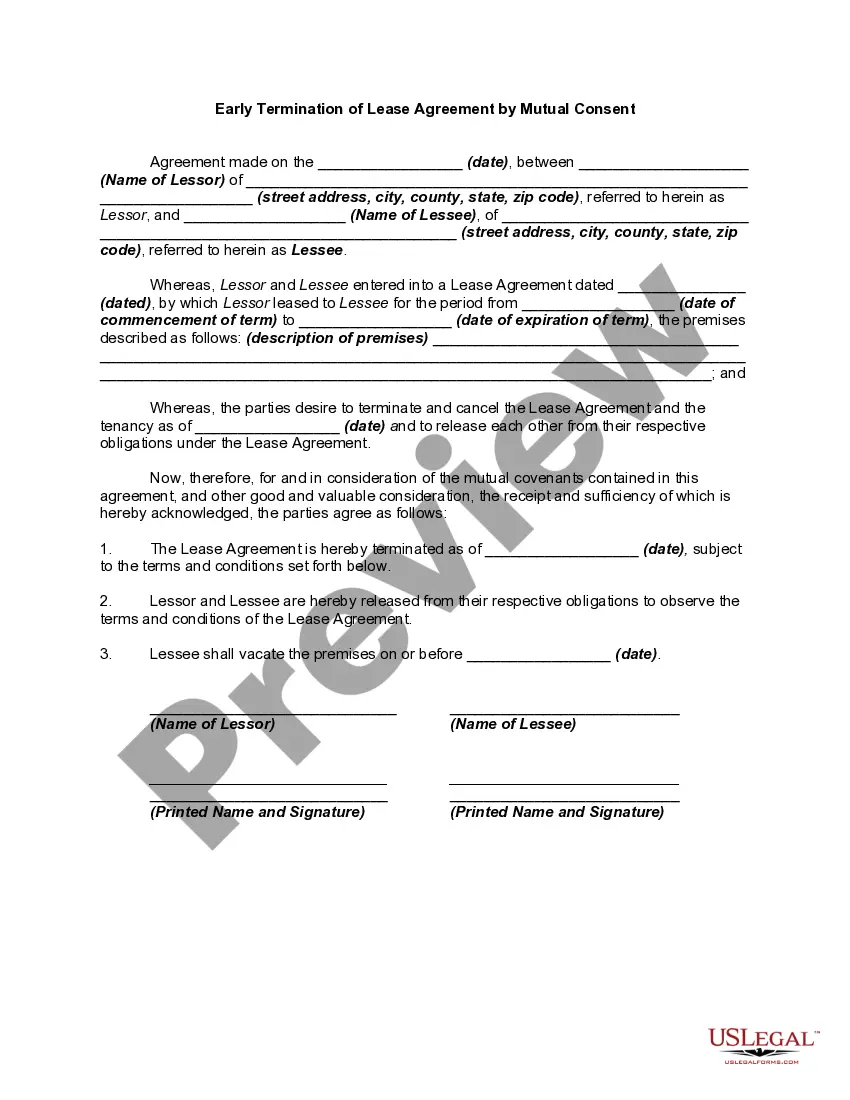
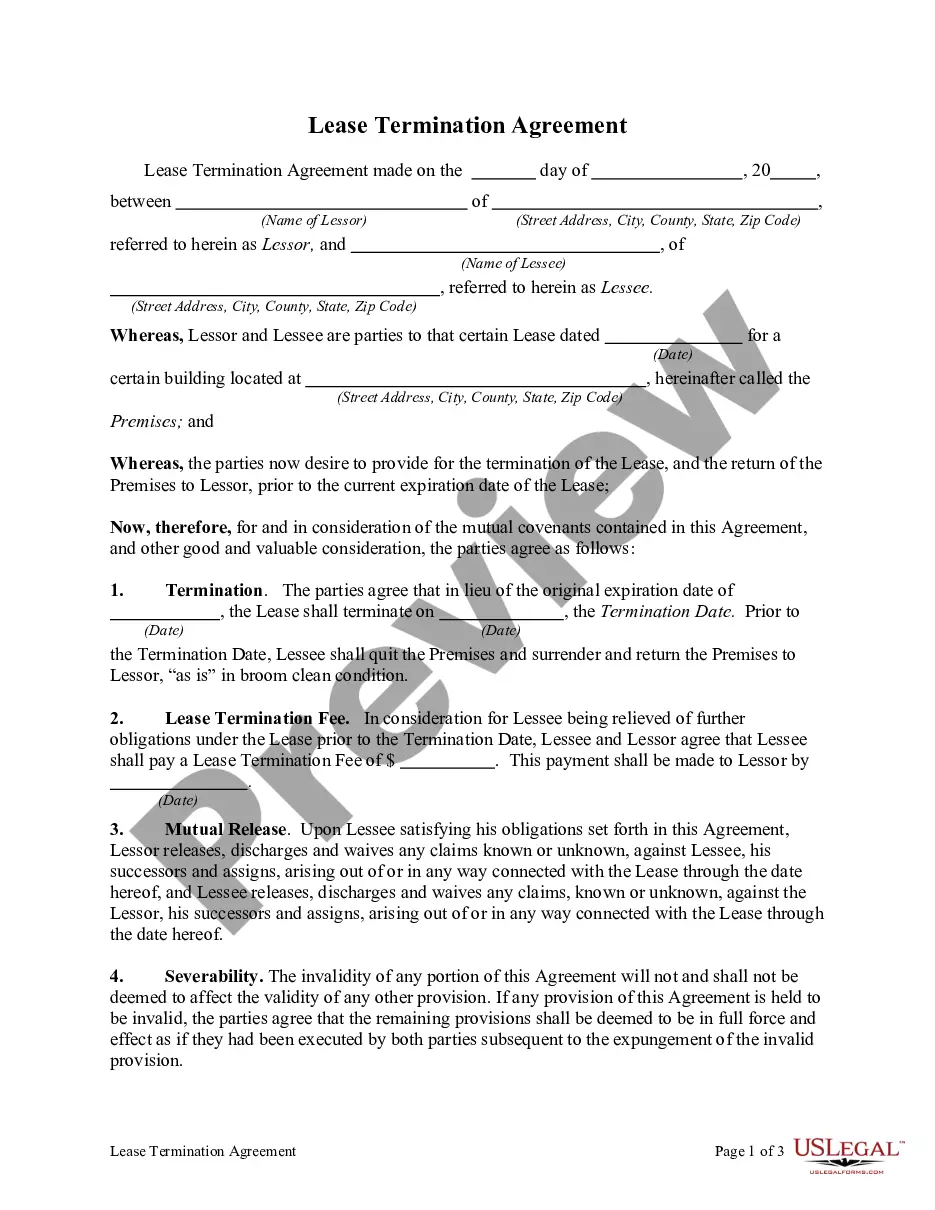
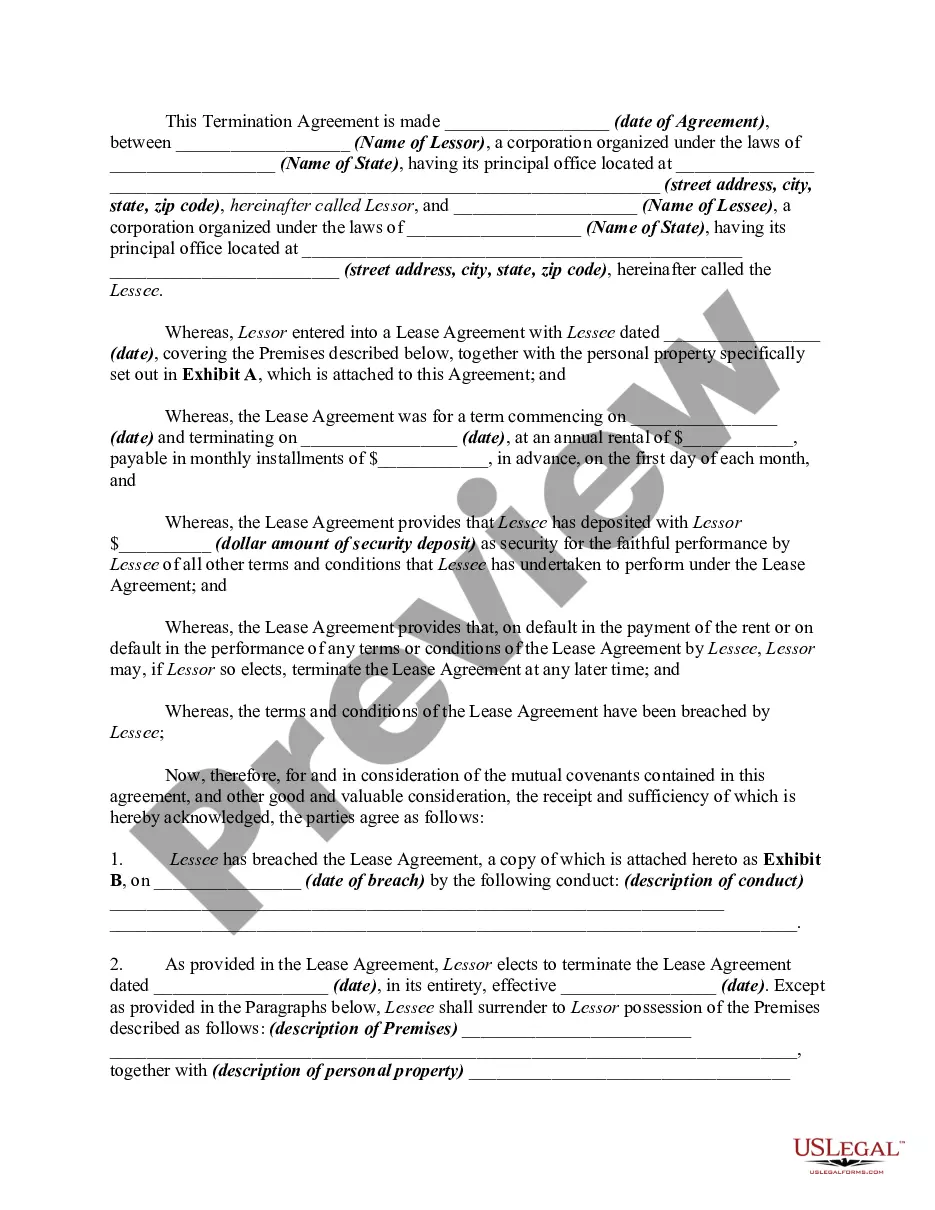
Description
Get your form ready online
Our built-in tools help you complete, sign, share, and store your documents in one place.
Make edits, fill in missing information, and update formatting in US Legal Forms—just like you would in MS Word.
Download a copy, print it, send it by email, or mail it via USPS—whatever works best for your next step.
Sign and collect signatures with our SignNow integration. Send to multiple recipients, set reminders, and more. Go Premium to unlock E-Sign.
If this form requires notarization, complete it online through a secure video call—no need to meet a notary in person or wait for an appointment.
We protect your documents and personal data by following strict security and privacy standards.

Make edits, fill in missing information, and update formatting in US Legal Forms—just like you would in MS Word.

Download a copy, print it, send it by email, or mail it via USPS—whatever works best for your next step.

Sign and collect signatures with our SignNow integration. Send to multiple recipients, set reminders, and more. Go Premium to unlock E-Sign.

If this form requires notarization, complete it online through a secure video call—no need to meet a notary in person or wait for an appointment.

We protect your documents and personal data by following strict security and privacy standards.
Looking for another form?









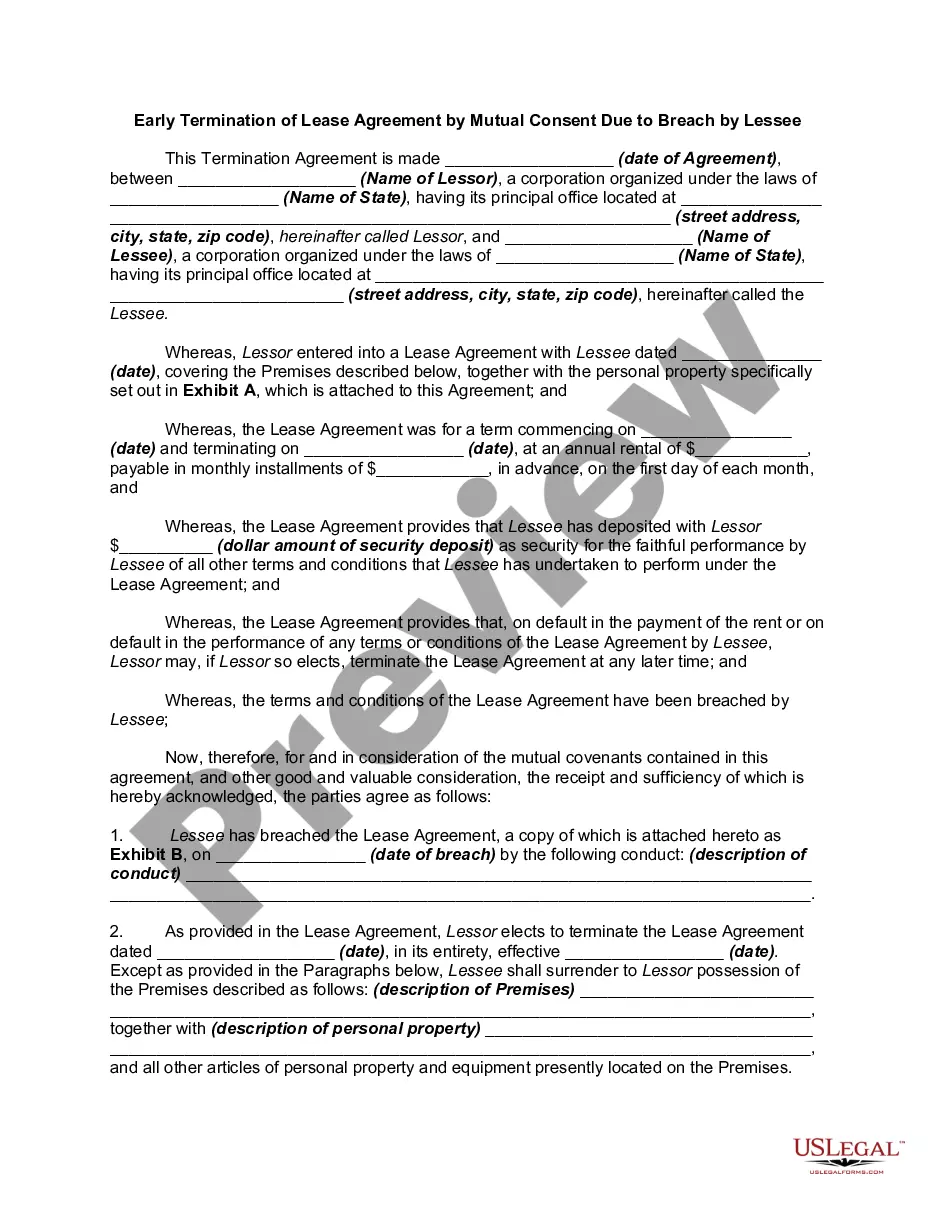
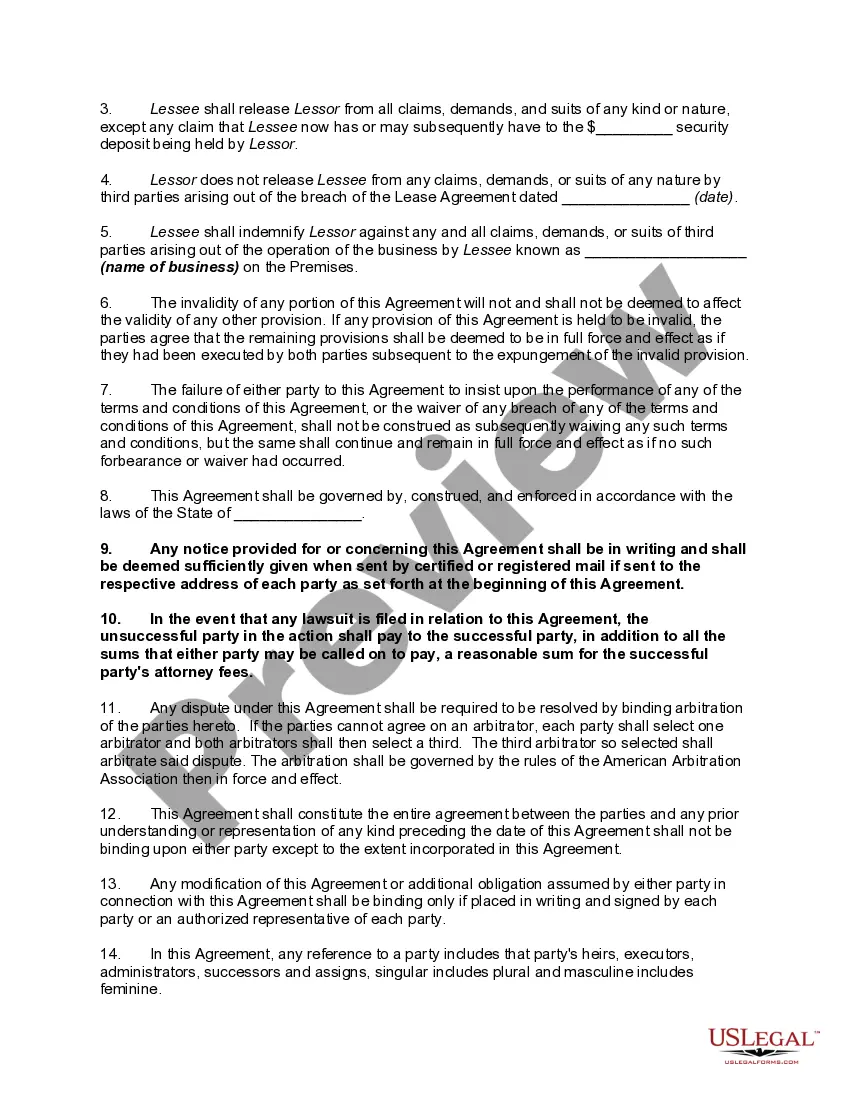
How to fill out Early Termination Of Lease Or Rental Agreement By Mutual Consent Due To Breach By Lessee?
- Log in to your account if you’re a returning user. Make sure your subscription is active or renew it if necessary.
- For new users, start by browsing the extensive legal library. Utilize the Preview mode to confirm you've selected the correct form that aligns with your local requirements.
- Should you need a different template, use the Search tab to find one that better suits your needs.
- Once you’ve found the appropriate document, click the Buy Now button and select your preferred subscription plan. You'll need to create an account for full access.
- Complete your purchase by entering your payment details, either via credit card or PayPal.
- Finally, download your completed form directly to your device. You can always revisit it later from the My Forms menu in your profile.
In conclusion, using US Legal Forms not only simplifies your document preparation but also ensures you have access to a remarkable collection of resources.
Start your journey with US Legal Forms today and make the legal form process a breeze!
Form popularity
FAQ
Filling an agreement form requires careful attention to detail and clarity. Start by reviewing the entire form to understand its structure, then populate the fields with the correct information, including the lease term and specifics about the parties involved. Always double-check for accuracy before finalizing the document with your signature.
Yes, you can write your own lease agreement, but it is essential to include all necessary components to ensure legality and clarity. Be sure to specify the lease term, payment details, and any rules they must follow. Using US Legal Forms can help guide you in drafting a compliant and comprehensive lease agreement tailored to your needs.
To fill a lease agreement form in PDF format, first, download the PDF file and open it using a PDF reader that allows editing. Begin by inputting the required information into the appropriate fields, ensuring accuracy in details like the lease term and contact information. After completing the form, save the document and consider printing it for signatures.
A lease agreement should be a clearly structured document that outlines the lease term, rent amount, property details, and responsibilities of tenants and landlords. It typically includes sections for the names of both parties, the lease duration, payment terms, and any conditions regarding property maintenance. A well-designed agreement enhances clarity and protects all parties involved.
To fill a lease agreement, begin by gathering all necessary information, such as the names of the parties involved, the property address, and the lease term. Clearly outline the terms, including rent amount, payment due dates, and any specific rules. Review the document thoroughly, ensuring all sections are completed, and both parties sign it to make it legally binding.
To request a short term lease, start by clearly stating your needs to your landlord. Explain why a shorter lease term works better for you and how it can benefit both parties. It’s essential to express your flexibility and willingness to negotiate terms. Using platforms like USLegalForms can help you find the right lease template to propose, showcasing your commitment and providing a clear outline of your desired lease term.
A lease term can indeed be one year, but it may not always be the most common choice. Many residential leases are structured for 12 months, offering both landlords and tenants a solid foundation for their agreement. However, leases can also be shorter or longer, depending on the parties' needs and local market conditions. Be sure to assess your situation to find the right lease term for you.
When deciding whether to lease a car for 24 or 36 months, think about your driving habits and financial situation. If you drive a lot or want a new model sooner, a 24-month lease may be your best bet. Conversely, if you prioritize lower monthly payments and are comfortable with the same car for a bit longer, opt for a 36-month lease. Either choice has its merits, so weigh them against your lifestyle.
Whether it's better to lease for 24 or 36 months ultimately depends on your preferences and priorities. A 24-month lease generally offers a fresh vehicle sooner and may result in fewer maintenance issues. However, a 36-month lease often has lower monthly payments. Consider your budget and how often you like to change vehicles when making this decision.
The best lease length varies depending on the type of asset you are leasing and your specific requirements. For housing, a one-year lease is often ideal as it provides ample time without long-term commitment. In contrast, a shorter lease term may suit those who prefer flexibility. Evaluating your lifestyle and plans can guide you to the lease length that best satisfies your needs.