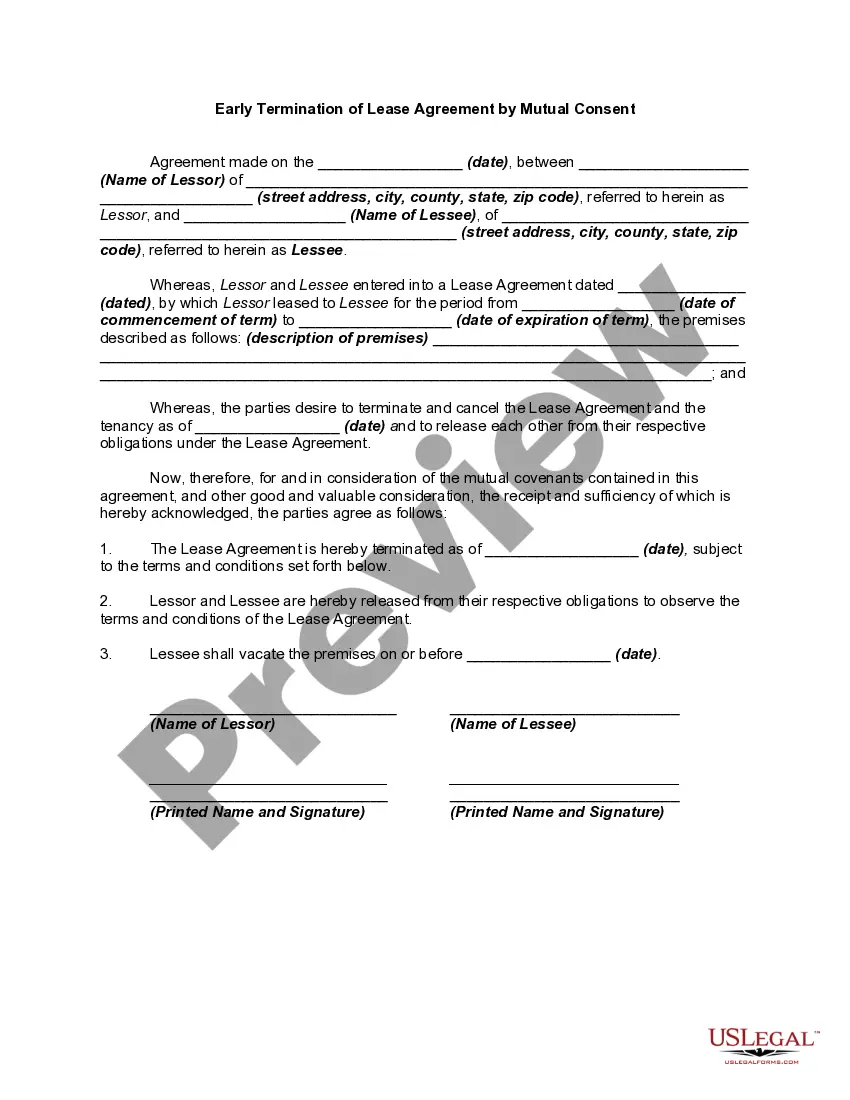
What Is Early Lease Termination
Description
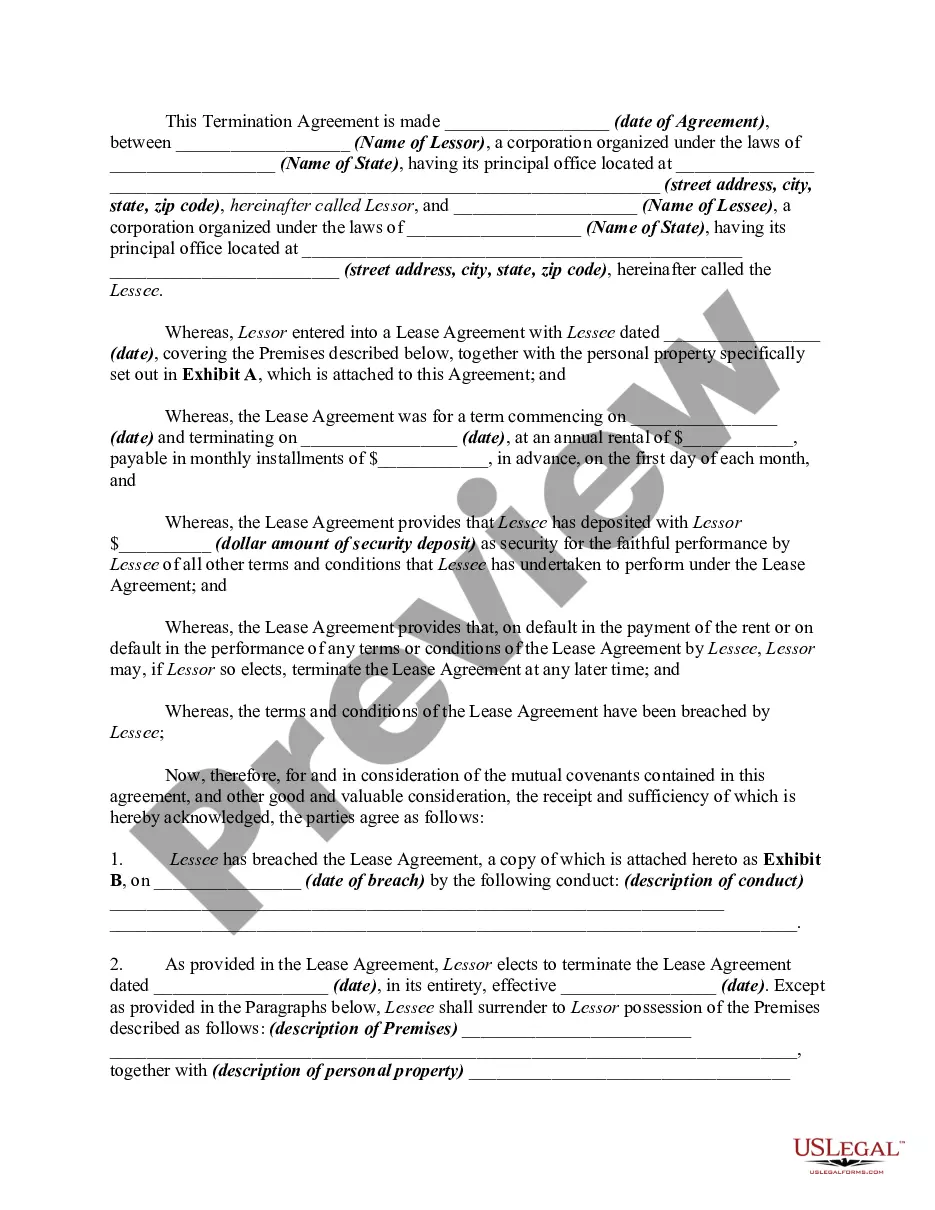
Get your form ready online
Our built-in tools help you complete, sign, share, and store your documents in one place.
Make edits, fill in missing information, and update formatting in US Legal Forms—just like you would in MS Word.
Download a copy, print it, send it by email, or mail it via USPS—whatever works best for your next step.
Sign and collect signatures with our SignNow integration. Send to multiple recipients, set reminders, and more. Go Premium to unlock E-Sign.
If this form requires notarization, complete it online through a secure video call—no need to meet a notary in person or wait for an appointment.
We protect your documents and personal data by following strict security and privacy standards.

Make edits, fill in missing information, and update formatting in US Legal Forms—just like you would in MS Word.

Download a copy, print it, send it by email, or mail it via USPS—whatever works best for your next step.

Sign and collect signatures with our SignNow integration. Send to multiple recipients, set reminders, and more. Go Premium to unlock E-Sign.

If this form requires notarization, complete it online through a secure video call—no need to meet a notary in person or wait for an appointment.

We protect your documents and personal data by following strict security and privacy standards.
Looking for another form?










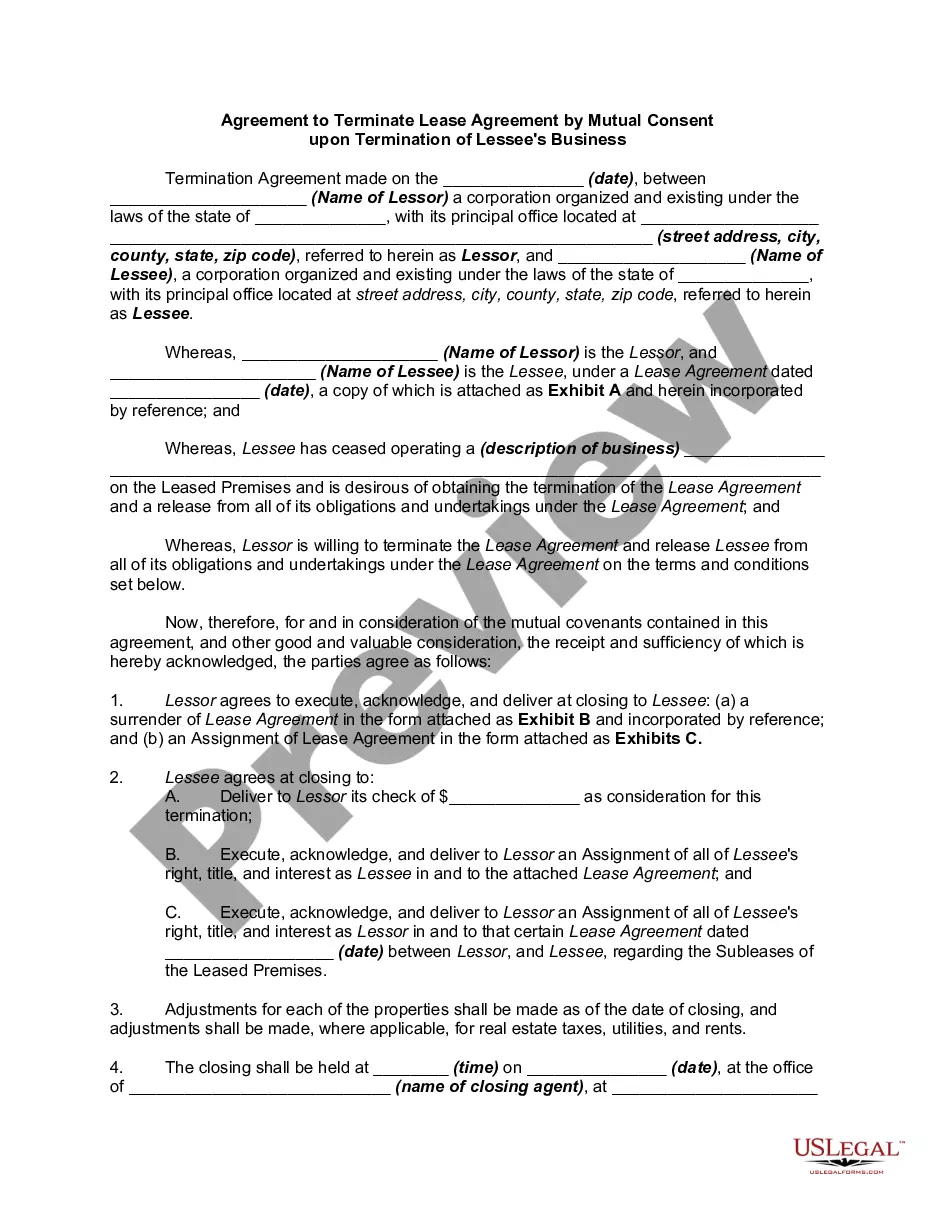
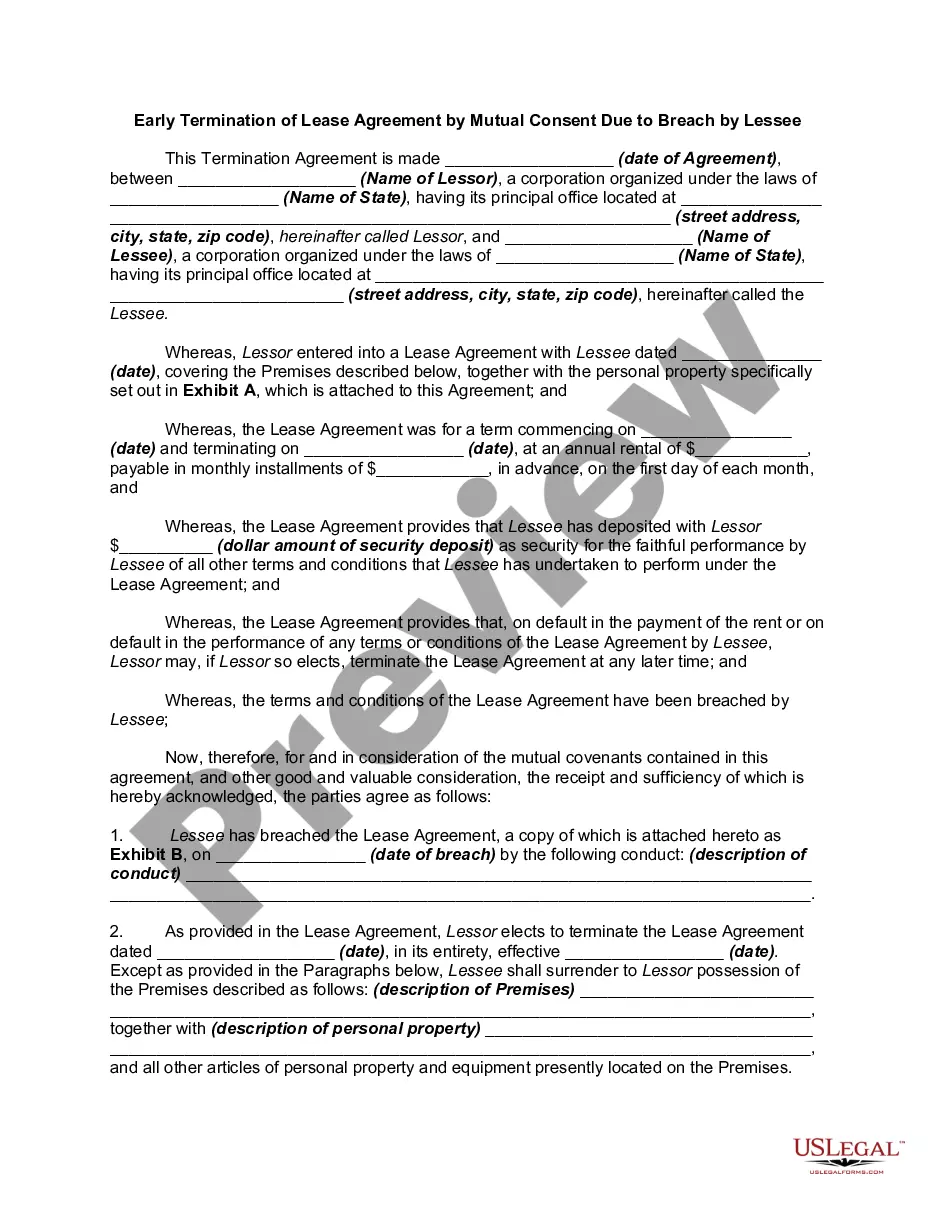
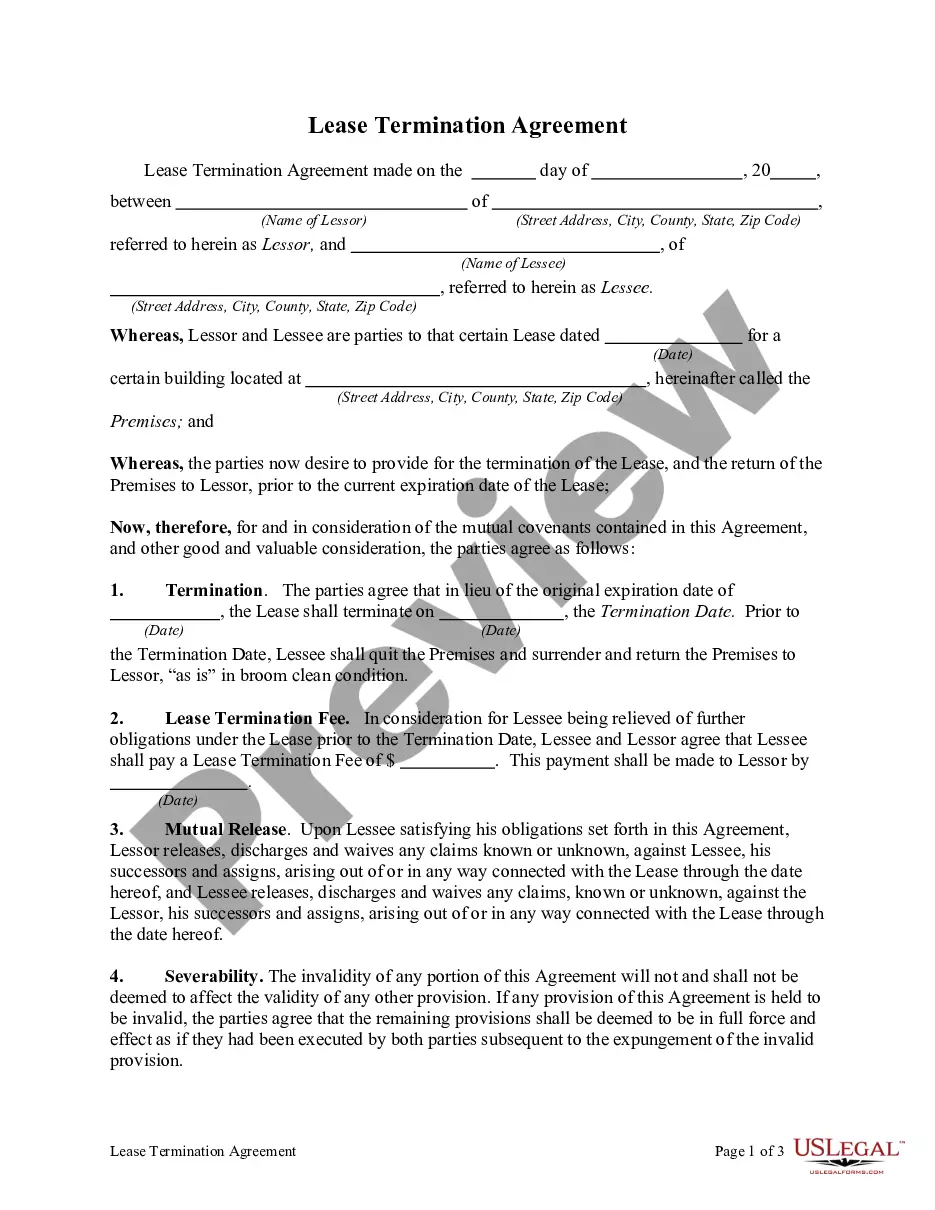
How to fill out Early Termination Of Lease Or Rental Agreement By Mutual Consent?
- If you're a returning user, log into your US Legal Forms account. Ensure your subscription is active, and download the appropriate form template by clicking the Download button.
- For first-time users, begin by exploring the Preview mode to understand the form's features. Verify that you've selected a template that meets your specific needs and adheres to local legal standards.
- Search for additional templates if necessary. If you find any discrepancies or need a different form, utilize the Search tab to find the right one.
- Purchase the necessary document by clicking the Buy Now button. Choose a subscription plan that best fits your needs and create an account for wider access.
- Complete your purchase by entering your credit card information or using PayPal to finalize the transaction.
- Download the form onto your device for completion. Access it anytime via the My Forms section of your profile.
US Legal Forms allows both individuals and attorneys to swiftly execute legal documents. With an extensive library of over 85,000 editable forms, you can find everything you need in one place.
Unlock the potential of legal simplicity today—visit US Legal Forms and start your journey toward smooth legal documentation!
Form popularity
FAQ
To write a letter to terminate a lease, begin with your address and the date, followed by the landlord's address. Clearly state your intention to terminate the lease, providing your reasons and the date you plan to vacate. This letter serves as a formal request for early lease termination, allowing both sides to agree on the next steps and any required actions.
An example of a lease termination occurs when a tenant submits a written notice expressing their desire to vacate the rental property early. The notice typically specifies the reasons for early lease termination and the intended move-out date. Following this, both the tenant and landlord can address any remaining obligations and finalize the details, ensuring a straightforward transition.
The most common method of terminating a lease is through mutual agreement between the landlord and tenant. Often, tenants seek early lease termination due to life changes, such as relocation or financial difficulties. Open communication and understanding can lead to a smooth process, which benefits both parties involved.
An example of a termination letter to a tenant might start by addressing the tenant directly, stating the reason for the lease termination, such as non-payment of rent. The letter should inform the tenant of the required date by which they must vacate the property, citing relevant lease clauses. A clear, concise communication helps to outline the process of early lease termination and establishes expectations for both parties.
An example of terminating a lease could be when a tenant decides to move out before the agreed end date due to a job transfer. In this situation, the tenant must communicate their intent to the landlord, allowing both parties to discuss the early lease termination process. This ensures that everyone understands their responsibilities and any potential penalties outlined in the lease agreement.
To avoid apartment move out fees, start by reviewing your lease agreement for any clauses related to early lease termination. If you have a valid reason for leaving, such as a job relocation or health issue, discuss this with your landlord. Demonstrating goodwill, such as offering to help find a new tenant, can also strengthen your case. Remember, understanding what is early lease termination can guide you in negotiating terms that minimize or eliminate these fees.
The early termination clause allows tenants to end their lease before the agreed-upon expiration date. This clause typically outlines the conditions under which you can terminate the lease, such as specific notice periods or payment obligations. To better understand what is early lease termination, you can refer to your lease agreement, as each contract may vary in terms. It is important to communicate with your landlord and explore your options.
When you choose early termination, several outcomes may unfold, typically including financial penalties or a requirement to settle any remaining balance on your lease. Your leasing agent may inspect the vehicle or property to assess condition and determine any additional charges. It's critical to follow the proper procedures to avoid unexpected costs. Platforms like US Legal Forms can aid in navigating these complexities efficiently.
The early termination period is the designated timeframe during which you can end your lease according to the terms specified in your agreement. This period often comes with specific penalties or other conditions to follow. Knowing the early termination period is crucial for planning your next steps. To gain insights into your lease terms, review your agreement or use US Legal Forms for additional clarity.
Lease termination refers to the conclusion of a lease contract, which can occur at the end of the lease term or through early termination. Understanding what this means is essential for managing your financial responsibilities effectively. Lease termination usually involves returning the property to the owner in its original condition. For specific guidance, US Legal Forms offers relevant documentation and support.