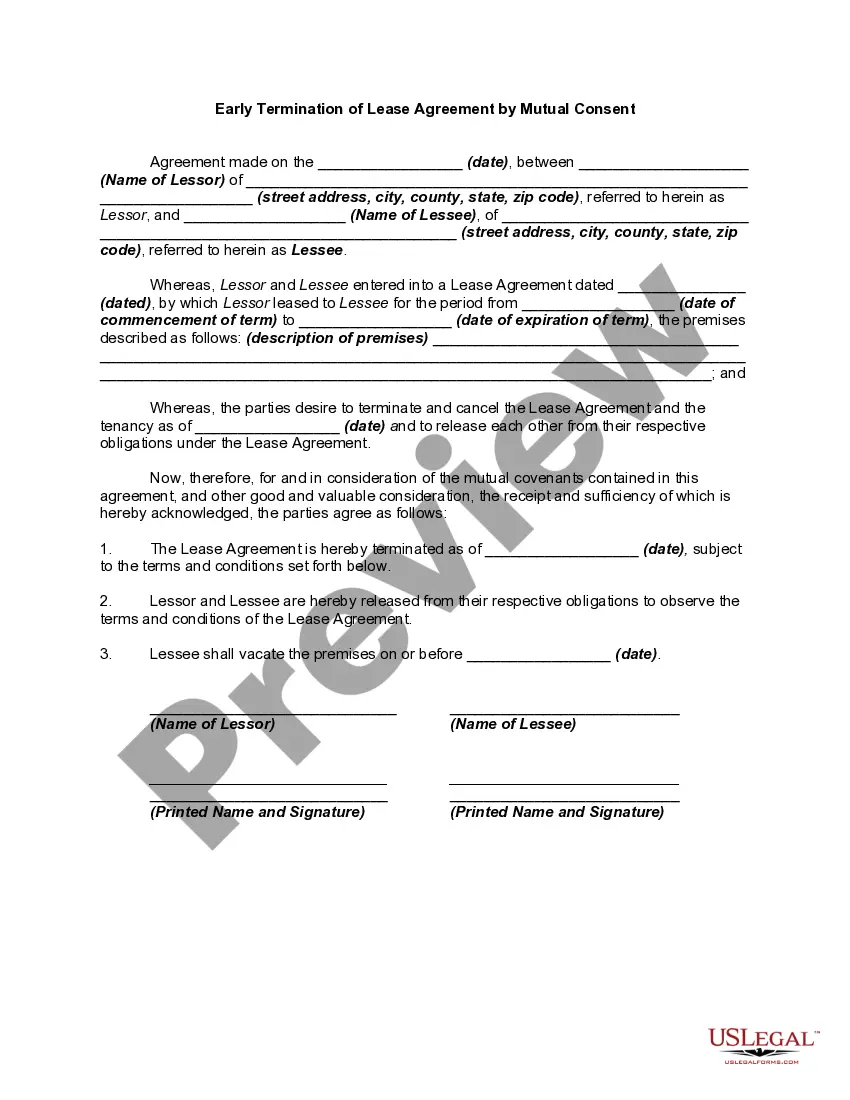
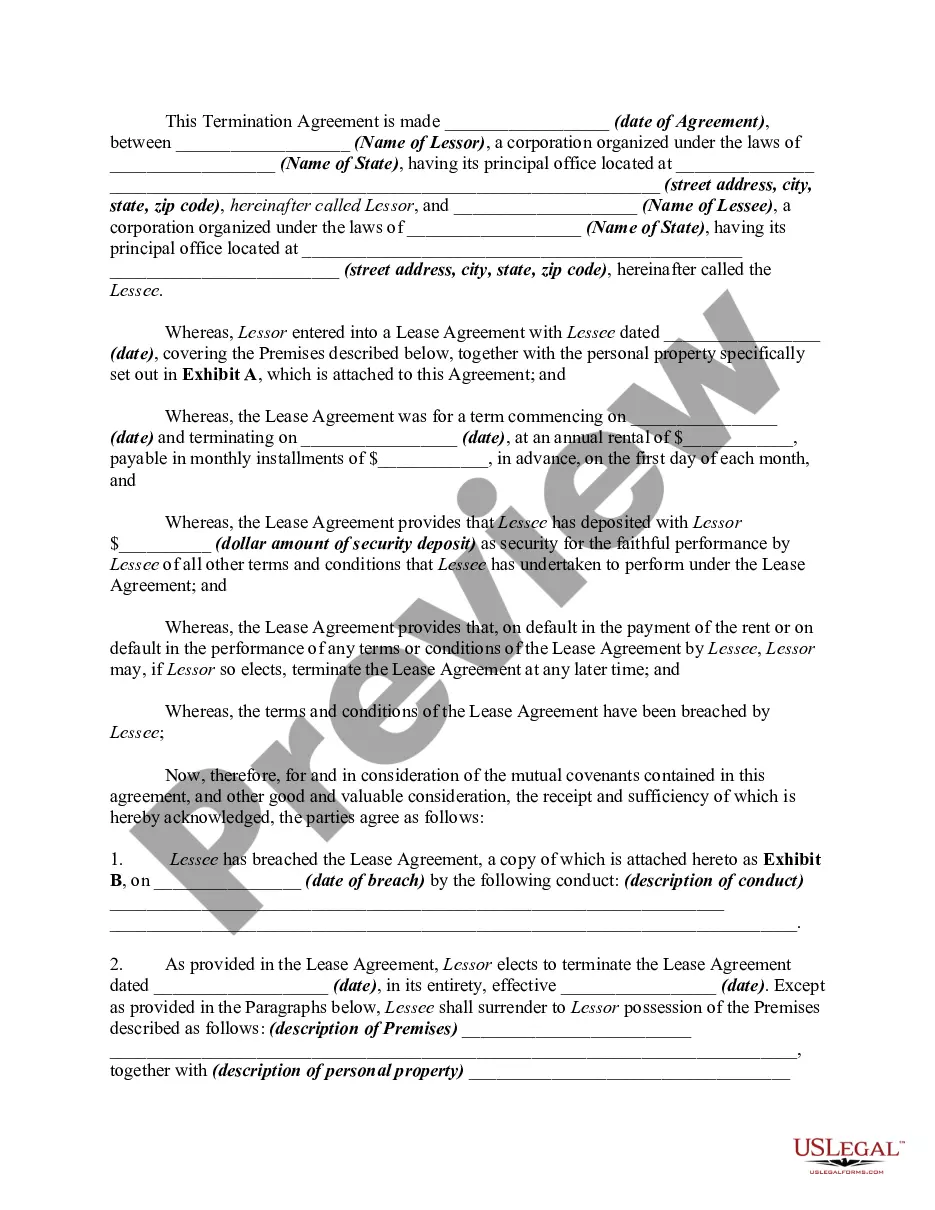
Termination Agreement And Mutual Release
Description
Get your form ready online
Our built-in tools help you complete, sign, share, and store your documents in one place.
Make edits, fill in missing information, and update formatting in US Legal Forms—just like you would in MS Word.
Download a copy, print it, send it by email, or mail it via USPS—whatever works best for your next step.
Sign and collect signatures with our SignNow integration. Send to multiple recipients, set reminders, and more. Go Premium to unlock E-Sign.
If this form requires notarization, complete it online through a secure video call—no need to meet a notary in person or wait for an appointment.
We protect your documents and personal data by following strict security and privacy standards.

Make edits, fill in missing information, and update formatting in US Legal Forms—just like you would in MS Word.

Download a copy, print it, send it by email, or mail it via USPS—whatever works best for your next step.

Sign and collect signatures with our SignNow integration. Send to multiple recipients, set reminders, and more. Go Premium to unlock E-Sign.

If this form requires notarization, complete it online through a secure video call—no need to meet a notary in person or wait for an appointment.

We protect your documents and personal data by following strict security and privacy standards.
Looking for another form?


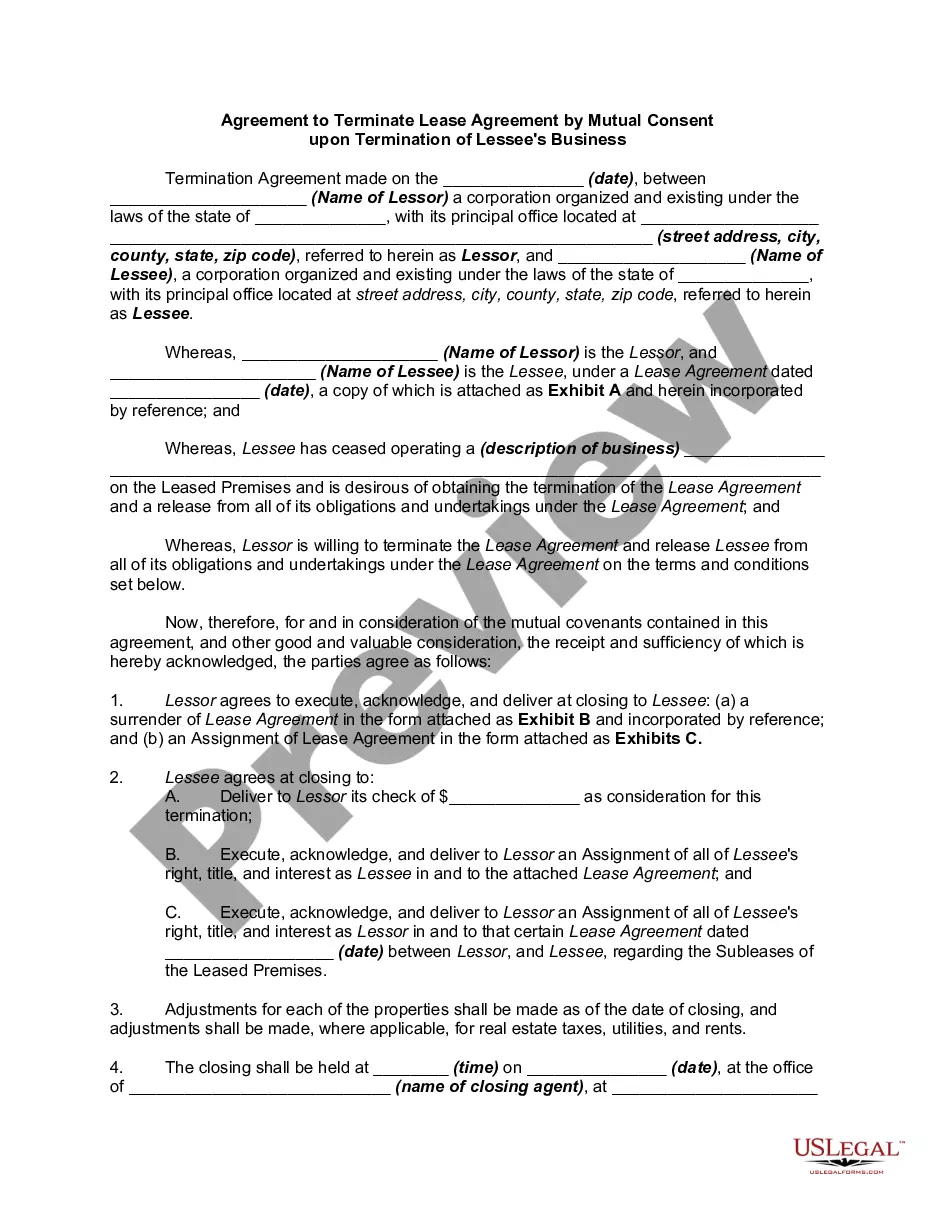
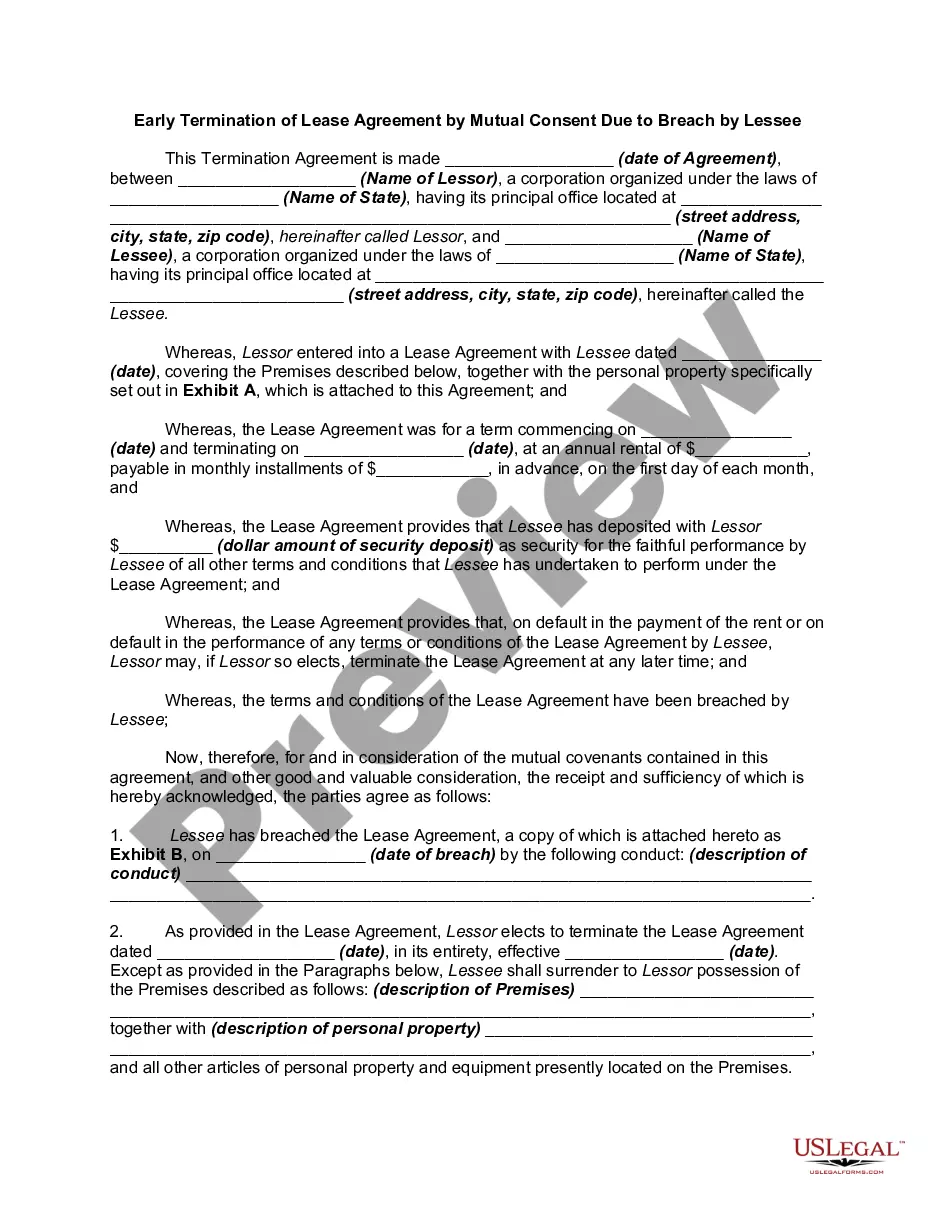
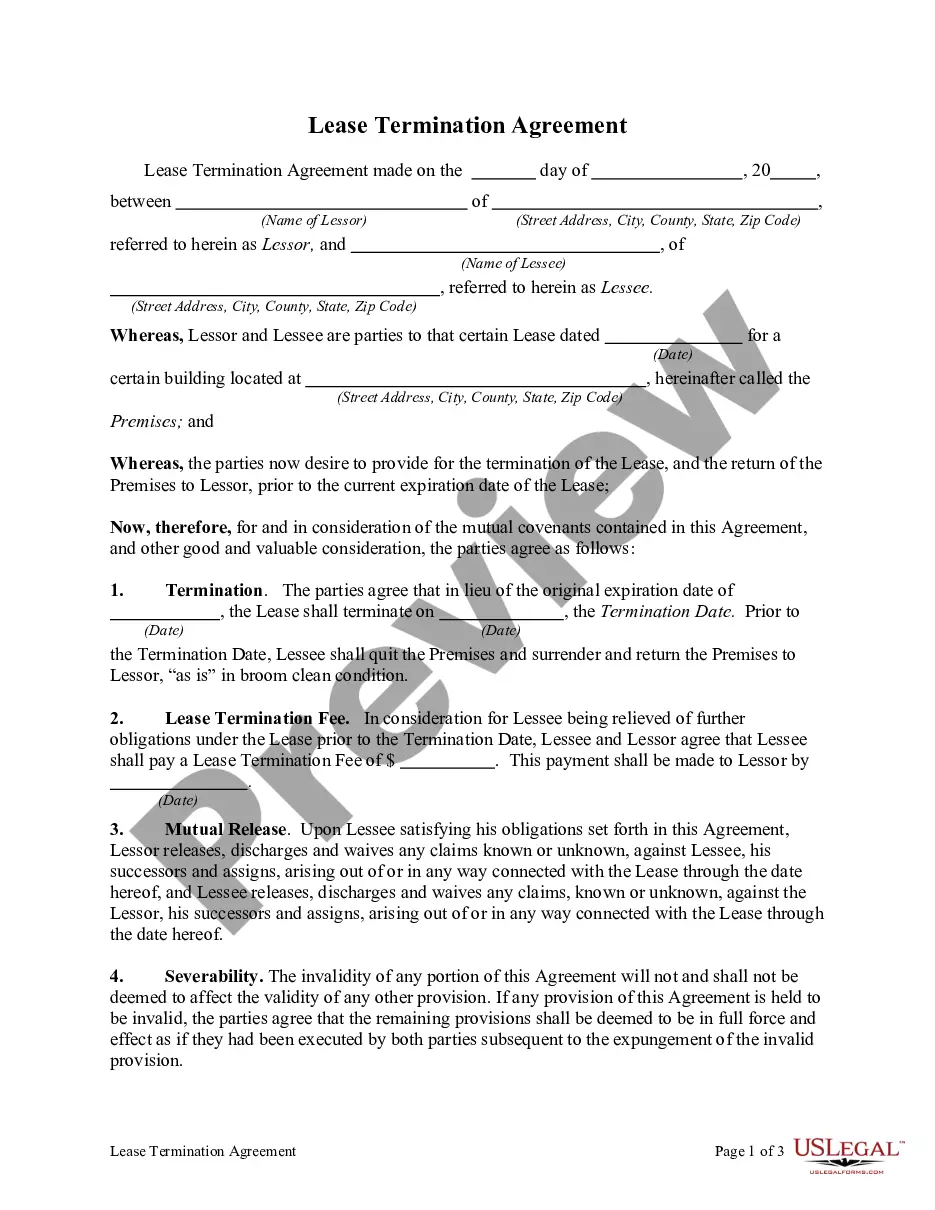
How to fill out Early Termination Of Lease Or Rental Agreement By Mutual Consent?
- If you are a returning user, simply log in to your account and select the desired termination agreement and mutual release template. Ensure your subscription is up to date before downloading.
- For new users, start by browsing the extensive form collection. Utilize the Preview mode to review necessary details and confirm that the template meets your jurisdiction's requirements.
- If the chosen document doesn't fit your needs, use the Search tab to find a more suitable template. Once satisfied, proceed to purchase.
- Click the Buy Now button and select a subscription plan that best suits your needs. You will need to create an account to access our complete library.
- Complete your purchase by entering your payment information, either via credit card or PayPal.
- Finally, download your termination agreement and mutual release. You can access it anytime from the My Forms section in your profile.
Following these steps will ensure you have a legally sound document that protects your interests.
Join US Legal Forms today to take advantage of our expansive library and premium expert support!
Form popularity
FAQ
Yes, you can mutually agree to terminate a contract. This process involves both parties acknowledging the end of the agreement and specifying the terms of the termination. A termination agreement and mutual release can outline how obligations are settled and protect both parties from future claims. Consider using uslegalforms to help draft a clear and enforceable agreement that reflects your mutual understanding.
To obtain a mutual separation agreement, start by outlining the terms you and the other party agree upon. You can use a legal template, which simplifies the drafting process and ensures that all necessary elements are included. The uslegalforms platform offers customizable templates for a termination agreement and mutual release, making it easy to create a binding document. Be sure to consult a legal professional if you have specific concerns or unique circumstances.
Yes, a mutual separation agreement can lead to termination, but it is framed as a collaborative decision. Instead of an employer unilaterally deciding to fire an employee, both parties agree to end the employment relationship amicably. This type of arrangement often includes a termination agreement and mutual release, providing clarity and security for both parties.
A separation agreement is not synonymous with termination. While a termination ends the employment relationship, a separation agreement often outlines the terms under which that termination occurs. It's designed to protect both parties and can include mutual releases, ensuring a fair process for everyone involved.
No, a mutual separation agreement is not the same as being fired. In this scenario, both parties agree to part ways, which can be less confrontational than termination. A termination agreement and mutual release typically involves both the employer and employee reaching a consensus on the terms of separation, allowing for a smoother transition.
Termination of contract by mutual agreement occurs when involved parties decide to end their contract together, based on shared understanding and collaboration. This process ensures that both sides acknowledge and accept the terms of termination, leading to a smoother transition. Utilizing a termination agreement and mutual release can streamline this process and safeguard both parties' interests.
Termination by mutual consent indicates that both parties agree to conclude their contractual obligations without conflict. This approach fosters a positive atmosphere, as both sides have an opportunity to discuss their reasons for termination. It often leads to a termination agreement and mutual release that ensures a respectful end to the business relationship.
The cancellation agreement and mutual release form WB 45 should be used when parties mutually agree to terminate their contract while ensuring that all terms are addressed. This form provides a structured way to document the termination, protecting both parties from potential future claims. By utilizing such forms, you can facilitate the process of a termination agreement and mutual release effectively.
Termination of agreement by mutual consent happens when both parties involved decide to end their contractual relationship. This method is often preferred as it avoids disputes and allows for a clean break, ensuring that all obligations are settled amicably. It serves as an effective way to initiate a termination agreement and mutual release while maintaining goodwill between the parties.
An agreement by mutual consent occurs when two parties come to a shared understanding and willingly agree to specific terms. This type of agreement emphasizes collaboration and cooperation, allowing both parties to express their needs and expectations clearly. In the context of a termination agreement and mutual release, such consent is essential for a smooth and respectful conclusion of any business relationship.