Sample Notice Of Probate Letter For New York
Description
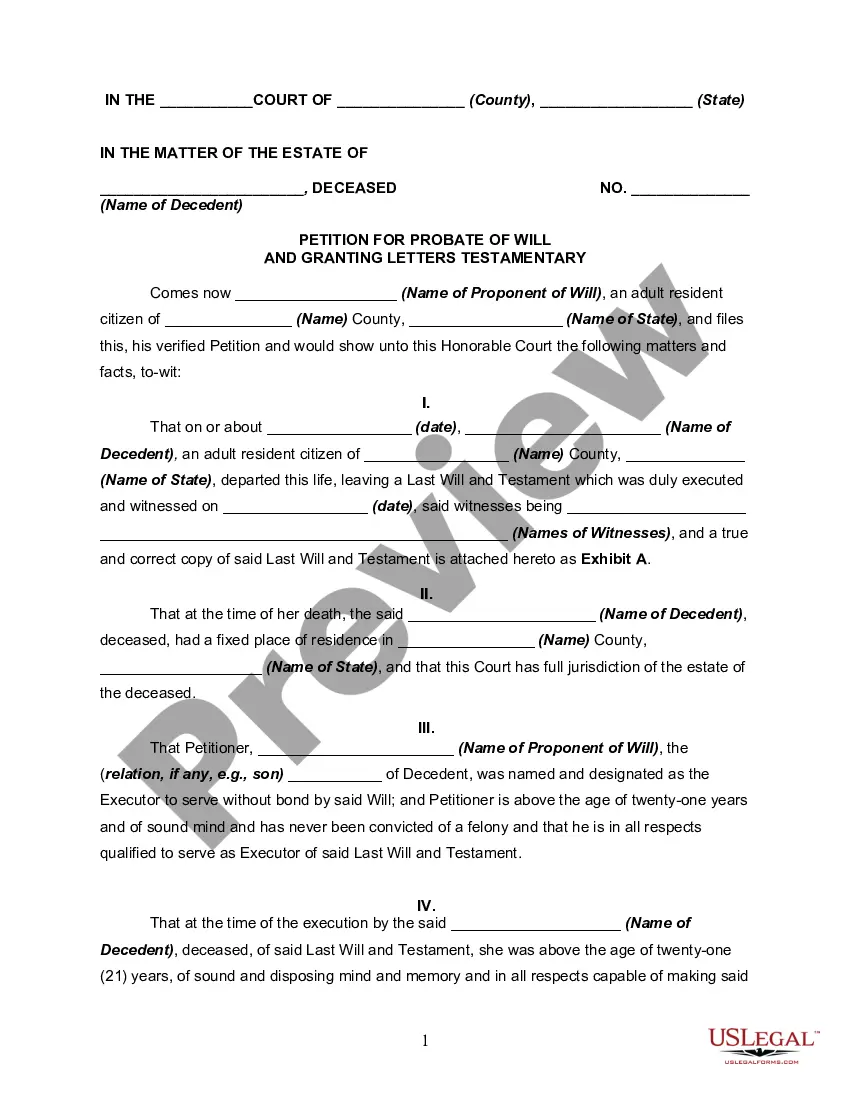
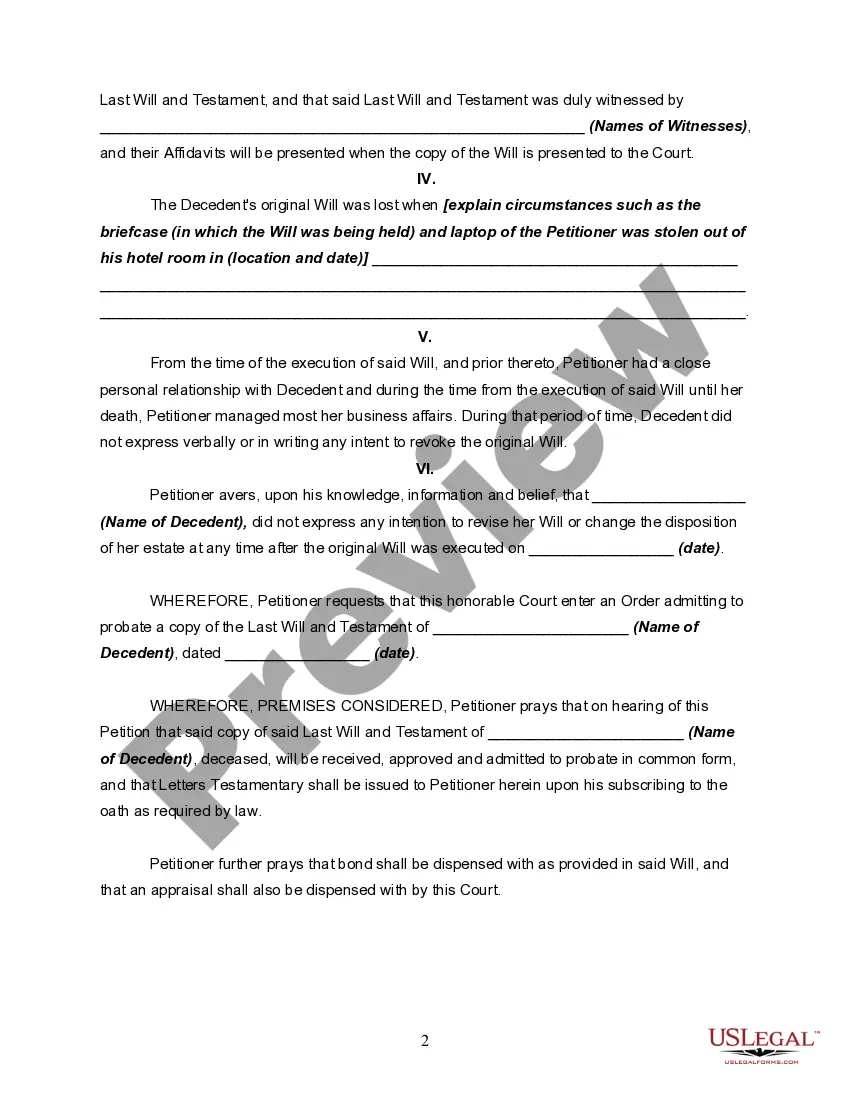
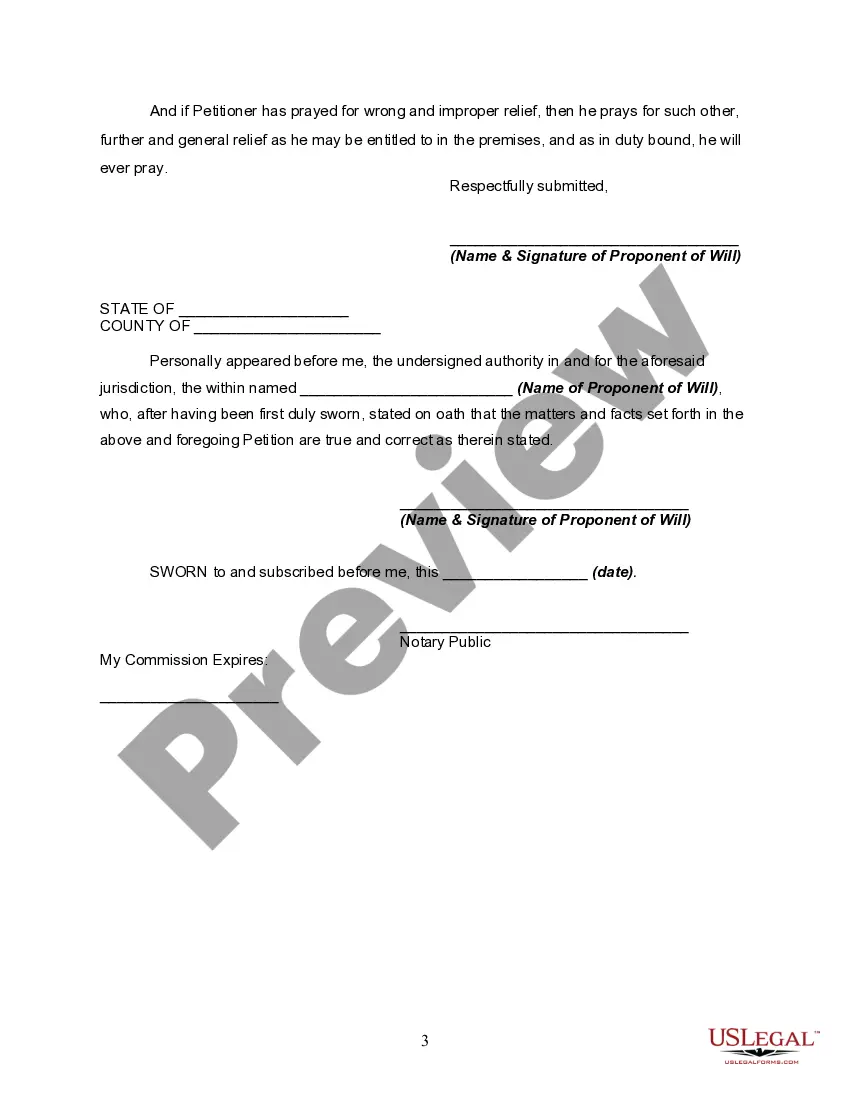
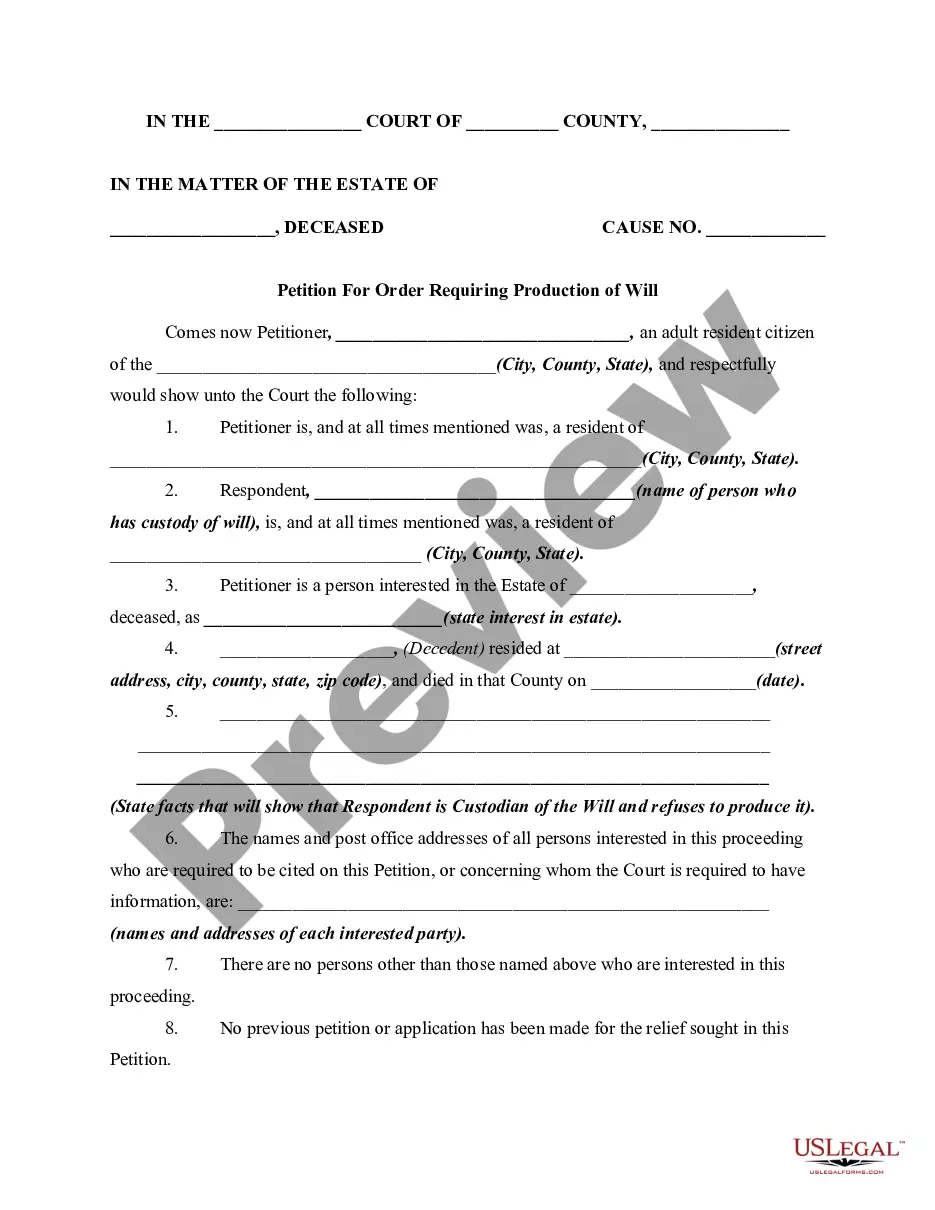



How to fill out Petition To Probate Lost Will?
Managing legal documents and processes can be a lengthy addition to your day.
Example Notice Of Probate Correspondence For New York and similar documents often necessitate you to search for them and find the most effective way to fill them out accurately.
Thus, whether you are addressing financial, legal, or personal issues, having an extensive and easily accessible online repository of forms nearby will be highly beneficial.
US Legal Forms is the premier online service for legal documents, offering more than 85,000 state-specific forms alongside various resources to facilitate your paperwork process effortlessly.
Is this your first experience with US Legal Forms? Register and establish a free account in just a few moments, granting you access to the form library and Example Notice Of Probate Correspondence For New York. Then, follow the steps below to fill out your form: Make sure you have the correct form by using the Preview feature and reviewing the form details. Choose Buy Now when you're prepared, and select the monthly subscription plan that suits you. Click Download, and then fill out, sign, and print the form. US Legal Forms has 25 years of experience assisting users with their legal documents. Retrieve the form you need today and streamline any process easily.
- Peruse the collection of relevant documents available to you with a simple click.
- US Legal Forms provides you with state- and county-specific forms accessible at any moment for download.
- Secure your document management procedures with a top-quality service that enables you to prepare any form in just minutes at no additional or undisclosed charge.
- Simply Log In to your account, search for Example Notice Of Probate Correspondence For New York, and obtain it immediately within the My documents section.
- You also have the ability to access previously downloaded forms.
Form popularity
FAQ
Beneficiaries who will inherit something under the Will must be notified (officially informed) of the probate proceeding. The filing fee is based on the dollar value of the estate. Probate proceedings can be very complicated. In many cases, it might be a good idea to get a lawyer.
The executor must file the original will and a certified copy of the death certificate with the probate petition and other supporting documents in the Surrogate's Court of the county where the deceased person lived. There is a filing fee based on the size of the estate.
Probate is the legal court process that oversees the final distribution of assets, and payment of liabilities for a person who has died without a Living Trust or LLC. The notice of probate lets beneficiaries and heirs know that legal proceedings in which they have rights are about to begin.
A letter of instruction has no legal authority, but it can provide an easy-to-understand explanation of a person's overall estate plan to their executor. A good letter of instruction should contain the following information: A complete list of all assets.
A Letter of Appointment of Executor helps prove you have been put in charge of someone's estate after they have passed away. As Executor, you've been given the duty to manage the estate and carry out the directions of the will; however, a court may require official documentation.