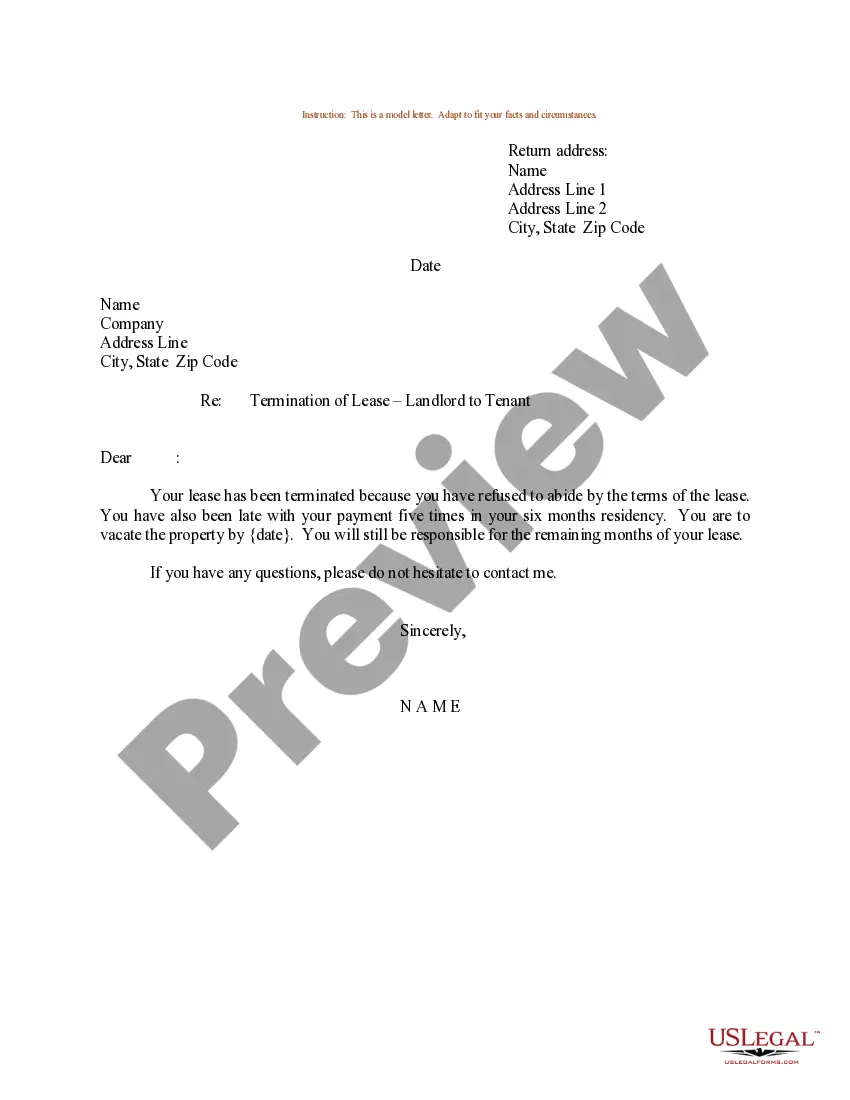
Termination Landlord With Tenants
Description
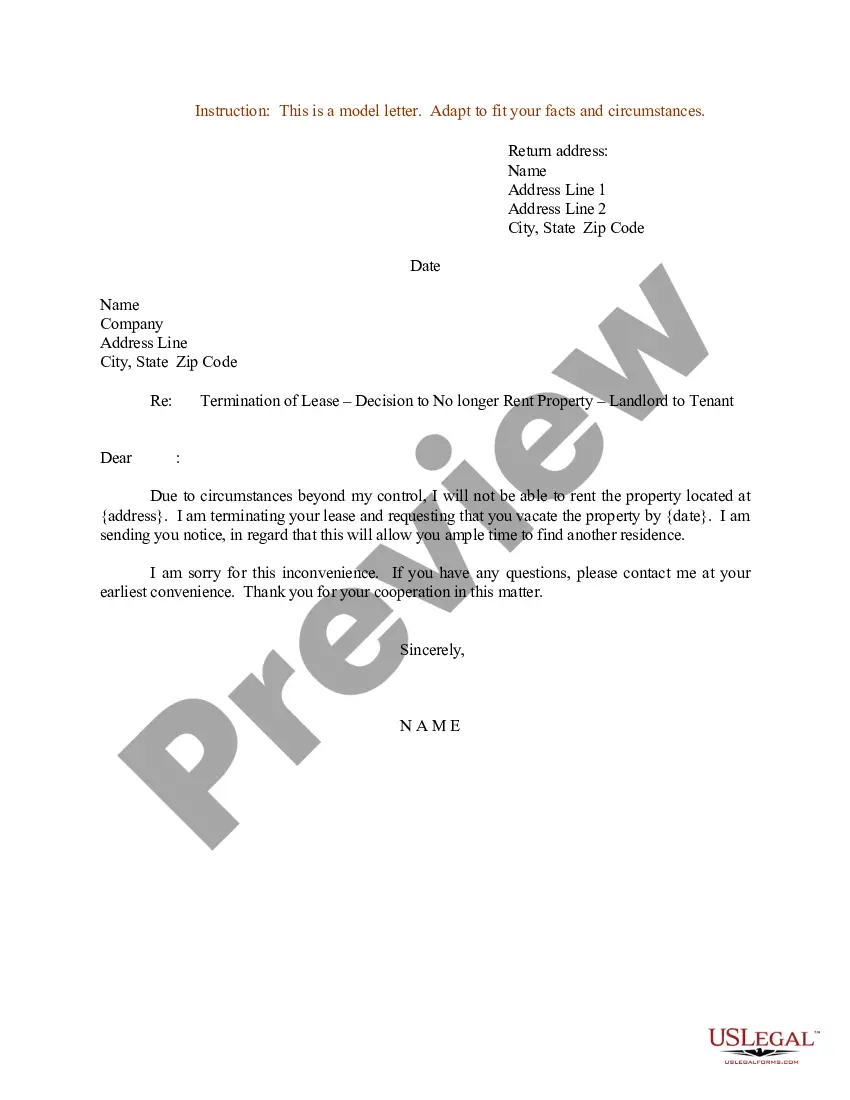
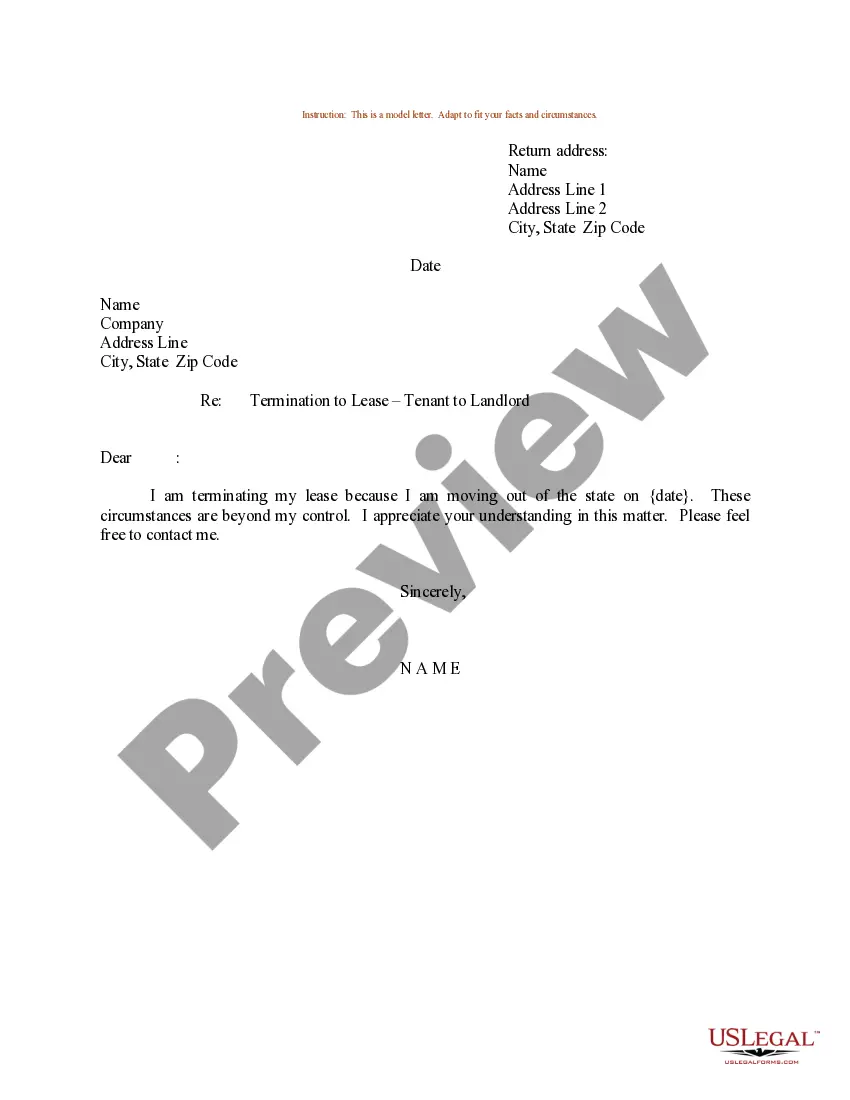
Get your form ready online
Our built-in tools help you complete, sign, share, and store your documents in one place.
Make edits, fill in missing information, and update formatting in US Legal Forms—just like you would in MS Word.
Download a copy, print it, send it by email, or mail it via USPS—whatever works best for your next step.
Sign and collect signatures with our SignNow integration. Send to multiple recipients, set reminders, and more. Go Premium to unlock E-Sign.
If this form requires notarization, complete it online through a secure video call—no need to meet a notary in person or wait for an appointment.
We protect your documents and personal data by following strict security and privacy standards.

Make edits, fill in missing information, and update formatting in US Legal Forms—just like you would in MS Word.

Download a copy, print it, send it by email, or mail it via USPS—whatever works best for your next step.

Sign and collect signatures with our SignNow integration. Send to multiple recipients, set reminders, and more. Go Premium to unlock E-Sign.

If this form requires notarization, complete it online through a secure video call—no need to meet a notary in person or wait for an appointment.

We protect your documents and personal data by following strict security and privacy standards.
Looking for another form?

How to fill out Sample Letter For Termination Of Lease From Landlord To Tenant?
- Log in to your US Legal Forms account, or create one if you're a new user.
- Browse the extensive library to find the correct termination form that meets your needs.
- Review the form's Preview mode and description to confirm it matches your requirements.
- Purchase the document by selecting a subscription plan that works for you.
- Complete your payment using a credit card or PayPal.
- Download your completed form directly to your device for immediate use.
Once you've downloaded your termination document, you can conveniently access it anytime through the 'My Forms' section in your profile. US Legal Forms not only provides a robust collection of forms but also ensures each document is easy to use and legally compliant.
If you need assistance, US Legal Forms offers access to premium experts who can help ensure your forms are completed accurately. Start your legal process today with US Legal Forms!
Form popularity
FAQ
When writing a letter to your landlord to terminate a lease, be clear and direct. Include your name, address, and the date, followed by a formal request for lease termination. Specify the reason for your decision and your intended move-out date to provide clarity. Utilizing templates from uslegalforms can streamline this process and ensure you cover all necessary points.
Writing a letter to your landlord regarding moving out before the lease ends is essential for proper communication. In your letter, explain your situation and clearly state your intention to terminate the lease. Additionally, indicate the date you plan to vacate and request a walkthrough of the property. Using resources from uslegalforms, you can ensure your letter meets legal standards.
If you face issues with your landlord and need termination landlord with tenants, consider filing legal action. Start by gathering evidence, such as emails, photos, or a lease agreement. Next, you should check local regulations to understand your rights and the process for filing a complaint. Services like uslegalforms can assist you in preparing the necessary legal documents.
When seeking termination landlord with tenants, you may consider several valid excuses to break your lease. Common reasons include job relocation, unsafe living conditions, or a significant change in personal circumstances. Remember, you must document any issues that support your situation to ensure a smooth process. You can use templates from uslegalforms to create official correspondences.
The landlord termination clause is a specific provision in a rental agreement that outlines the terms under which a landlord can terminate the tenancy. This clause typically includes reasons for termination, notification requirements, and any associated obligations. Understanding this clause can clarify the rights and responsibilities for both parties. Utilizing tools offered by platforms like uslegalforms can help ensure compliance with legal standards.
A landlord must give a tenant a minimum of 60 days' notice to move out in most situations. This notice needs to be written and delivered properly. It is important for landlords to use the correct forms and follow legal guidelines to avoid disputes. With proper planning, landlords can effectively manage tenant transitions.
A landlord in Ontario can evict a tenant for several reasons, including non-payment of rent, breach of lease terms, or the landlord's personal use of the property. Each reason requires proper documentation and notice, as outlined in the Residential Tenancies Act. Understanding these grounds helps both landlords and tenants navigate their rights. A reliable legal service like uslegalforms can support landlords in this process.
When one person on a lease moves out, the remaining tenants usually retain their rights under the lease agreement. However, the landlord should be notified to account for the changes in occupancy. The lease might allow for substituting or adding a new tenant, depending on its terms. Clear communication with the landlord can prevent misunderstandings and facilitate a smoother transition.
A landlord can end a tenancy in Ontario using a notice of termination that states the reason for the termination. The landlord must give the appropriate amount of notice as required by law, typically ranging from 30 to 120 days. It is advisable for landlords to follow legal procedures to avoid disputes with tenants. Utilizing resources like uslegalforms can help guide landlords through the specifics of ending a tenancy smoothly.
Yes, a landlord can cancel an eviction under certain circumstances. If the landlord decides to withdraw the notice of eviction, they must inform the tenant in writing. This action can help maintain positive relations and avoid unnecessary disputes. Overall, understanding the eviction process is essential in managing tenant relationships.