To Whom It May Concern - Tradução
Description

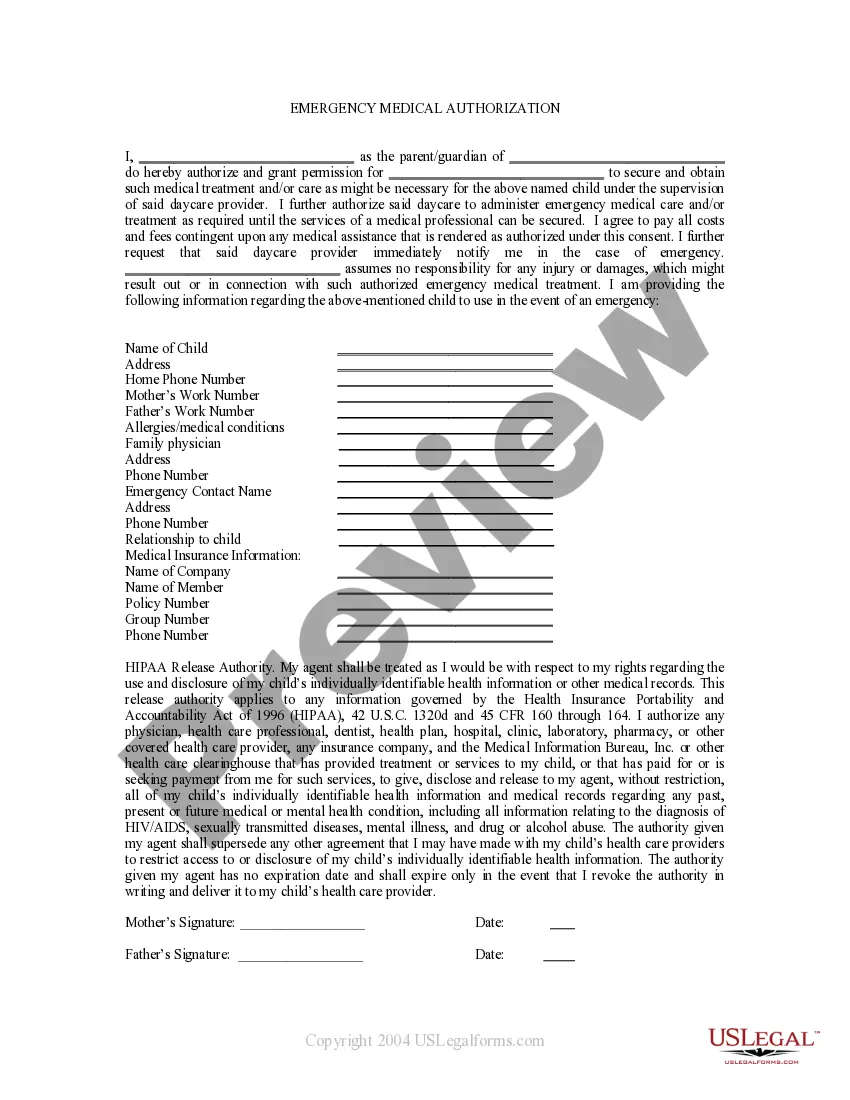
Get your form ready online
Our built-in tools help you complete, sign, share, and store your documents in one place.
Make edits, fill in missing information, and update formatting in US Legal Forms—just like you would in MS Word.
Download a copy, print it, send it by email, or mail it via USPS—whatever works best for your next step.
Sign and collect signatures with our SignNow integration. Send to multiple recipients, set reminders, and more. Go Premium to unlock E-Sign.
If this form requires notarization, complete it online through a secure video call—no need to meet a notary in person or wait for an appointment.
We protect your documents and personal data by following strict security and privacy standards.

Make edits, fill in missing information, and update formatting in US Legal Forms—just like you would in MS Word.

Download a copy, print it, send it by email, or mail it via USPS—whatever works best for your next step.

Sign and collect signatures with our SignNow integration. Send to multiple recipients, set reminders, and more. Go Premium to unlock E-Sign.

If this form requires notarization, complete it online through a secure video call—no need to meet a notary in person or wait for an appointment.

We protect your documents and personal data by following strict security and privacy standards.
Looking for another form?

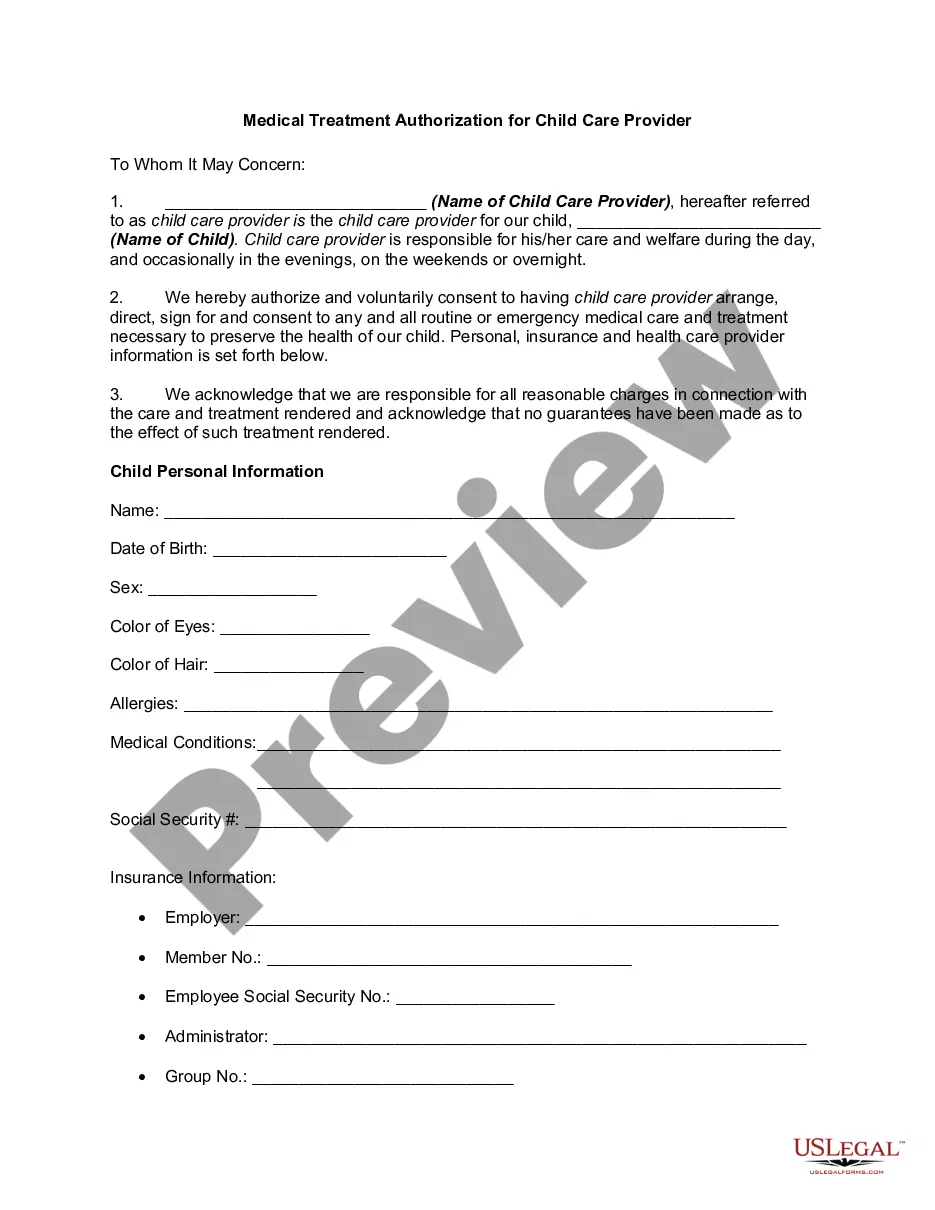
How to fill out Medical Treatment Authorization For Day Care Or Child Care Provider?
- If you are an existing user, log in to your profile and ensure your subscription is active. Click the Download button next to the desired form to save it to your device.
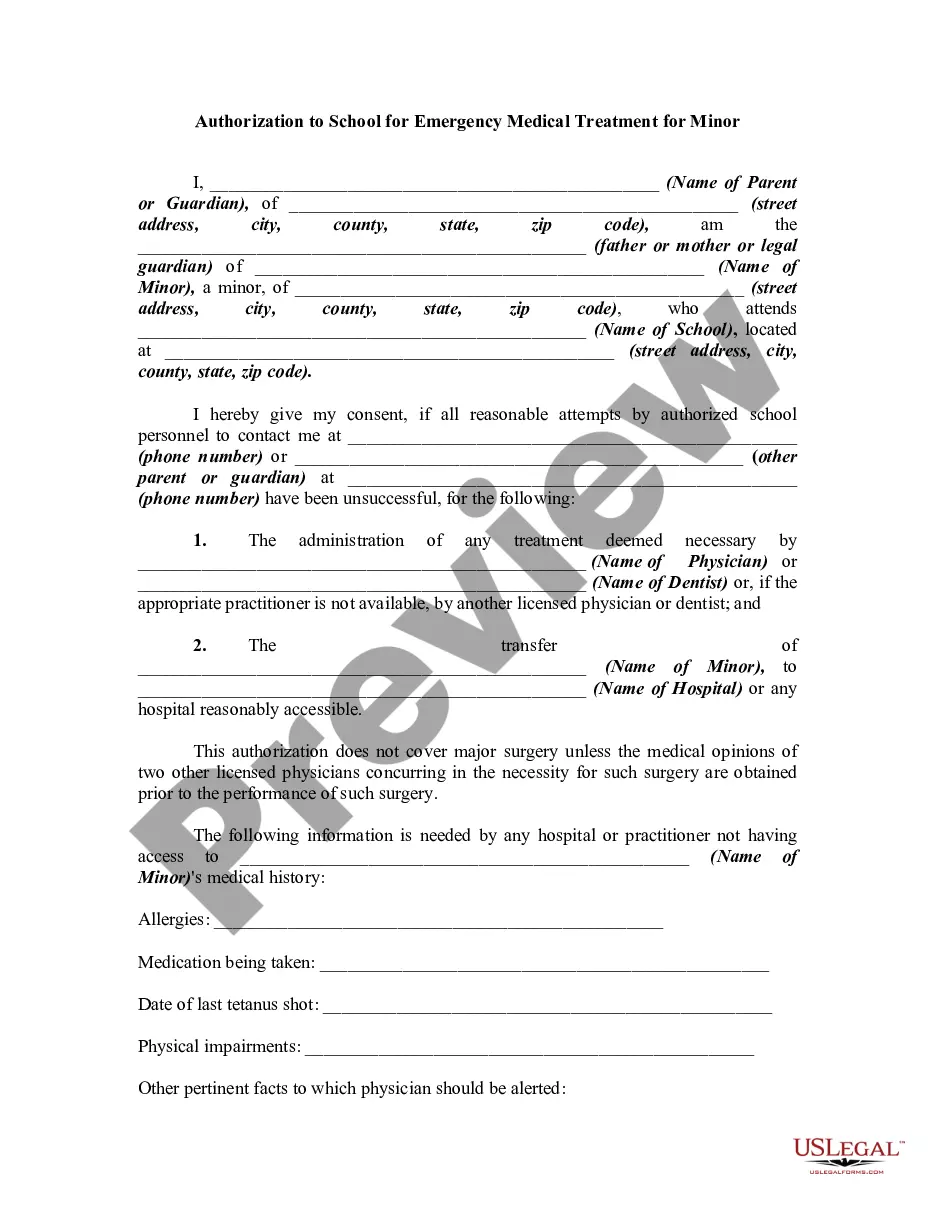
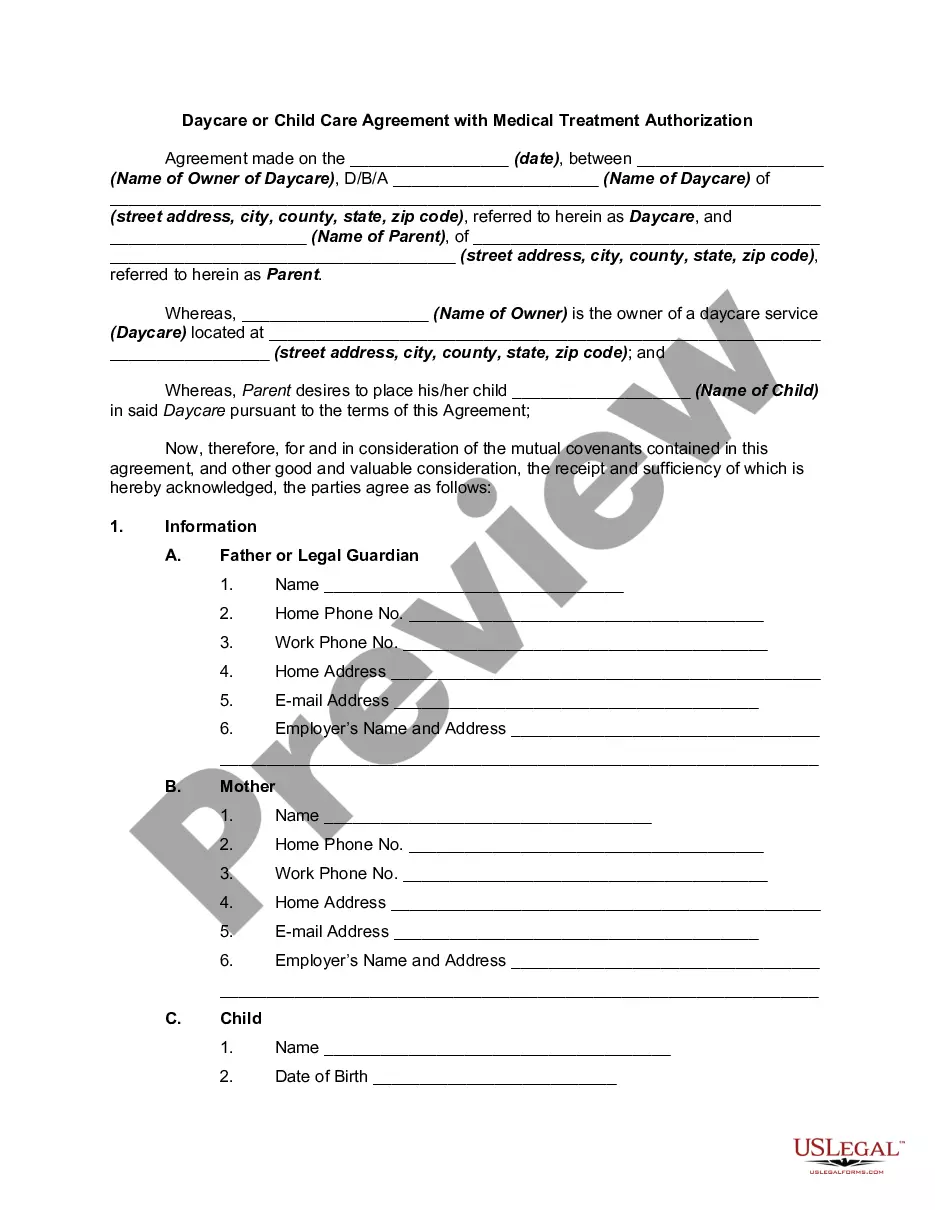
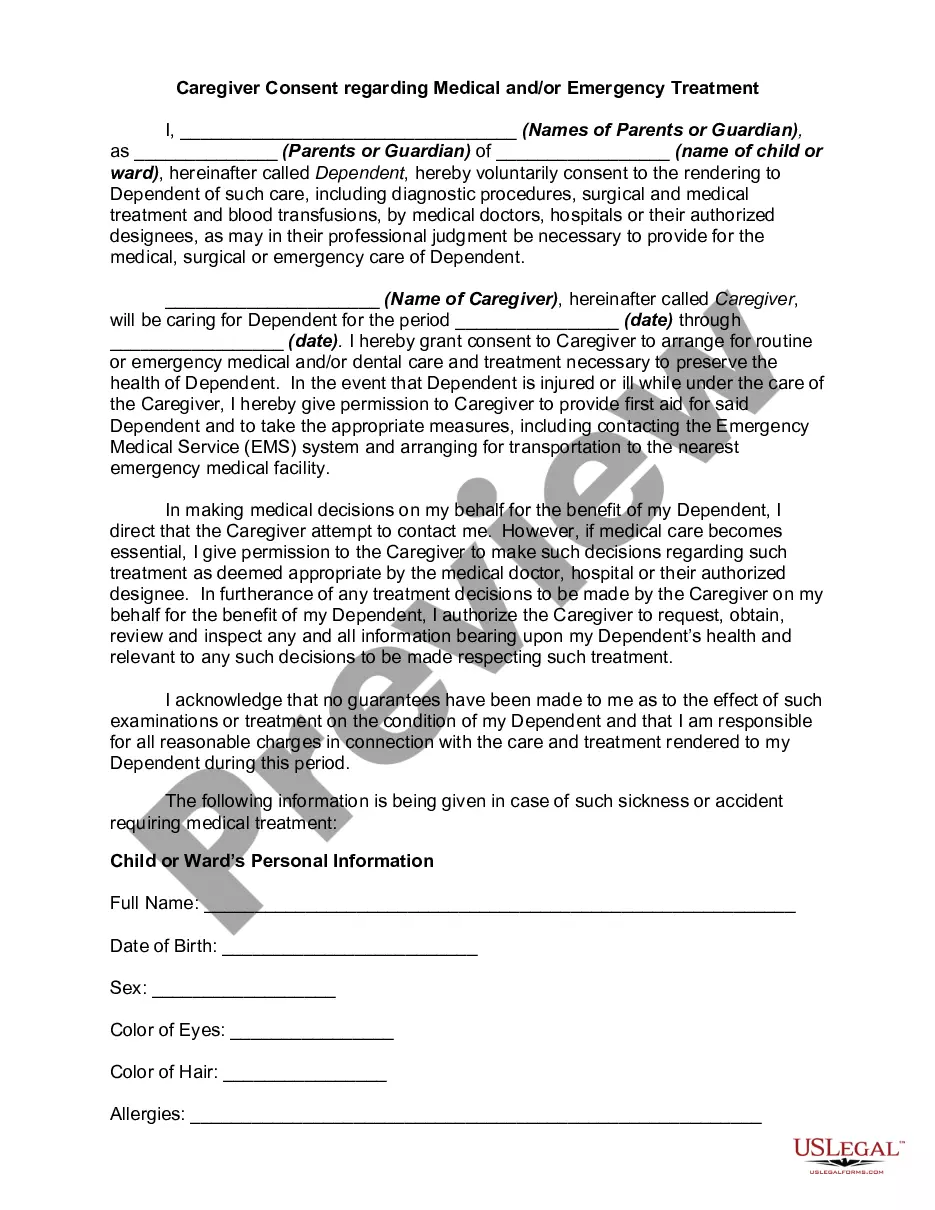
- If you're a new user, begin by browsing through the Preview mode. Carefully review the form description to confirm it meets your requirements and complies with your jurisdiction's rules.
- Should you need a different form, utilize the Search function at the top to find more options. Once you identify the correct template, you're ready for the next step.
- Proceed to purchase your document by clicking on the Buy Now button. Select your preferred subscription plan and complete the registration to access all available resources.
- Finalize your purchase by entering your payment details through credit card or PayPal, ensuring a smooth transaction.
- After making your purchase, download the form directly to your device. For future access, locate it in the My Forms section of your account.
US Legal Forms stands out with its vast collection of over 85,000 editable legal forms at competitive prices, far exceeding many competitors. Additionally, their platform allows users to connect with premium legal experts for assistance.
In conclusion, obtaining legal forms has never been easier. Experience the efficiency of US Legal Forms today and ensure your documents are accurate and legally sound. Start your journey by visiting our website now!
Form popularity
FAQ
Using 'to whom it may concern' can be appropriate, but it is often seen as generic. While it serves a purpose in formal communication, maximizing impact is key. Whenever feasible, opt for more personalized greetings to establish rapport. However, in situations where no specific recipient exists, this phrase offers clarity and maintains professionalism.
Proper use of 'to whom it may concern' involves situating it at the beginning of your letter, followed by a clear message. Ensure that the context of the letter aligns with a broader audience. This is particularly useful in legal or business communications. Additionally, using platforms like USLegalForms can provide templates that help convey your message accurately and effectively.
The reference 'to whom it may concern' directs communication to an unspecified audience, making it relevant for various situations. It is often used in letters, memos, and official notices where addressing a specific individual is not possible. Utilizing this phrase properly establishes clarity and intent in your message. Consider platforms like USLegalForms that provide templates for such documents.
Starting a cover letter with 'to whom it may concern' can be less effective, as it lacks personalization. Hiring managers often prefer a more tailored approach, which shows that you did your research. However, if you genuinely cannot identify the recipient, this phrase remains an acceptable choice. Just make sure to follow it up with a strong introduction that captures attention.
'To whom it may concern' serves as a salutation used when the specific recipient is unknown. It indicates that the message is intended for anyone who might have a stake in the content. Commonly, this phrase appears in formal documents, such as letters of recommendation or corporate communications. Understanding its use is vital for composing effective correspondence.
To write 'to whom it may concern' correctly, start with the phrase followed by a comma. For formal documents, it's best to capitalize the first letters of each word. Keep it professional and clear, ensuring the content that follows is relevant to the reader. This phrase is often used in business letters, and using it appropriately enhances the formality of your message.
A more personal alternative to 'to whom it may concern' is to use the recipient's name whenever possible. If that’s not feasible, you might say 'Dear Hiring Manager' or 'Dear Customer Service Team'. These options create a more direct connection with your audience, improving your chances of engagement. Remember, personalization can make a significant difference in communication.
'To whom it concerns' can be used in situations where the sender wishes to communicate with multiple parties. For instance, you might start a letter with this phrase when issuing a notice to various stakeholders. It conveys that your message is relevant to anyone affected. Using 'to whom it may concern - tradução' can help clarify your intent in formal correspondence.
The correct grammar for 'to whom it may concern' includes capitalizing each word and following it with a colon. Keep your wording formal and precise to convey respect and professionalism. This convention allows you to address unknown recipients effectively. Remember, maintaining good grammar enhances the clarity of your message.
When writing a letter without knowing the recipient, start with 'to whom it may concern.' This phrase allows you to maintain a formal tone. Follow it up with an introduction and clearly outline the purpose of your letter. For more structured options, you might explore resources like uslegalforms for guidance on various types of correspondence.