What Is Covered By Landlord Insurance
Description
Get your form ready online
Our built-in tools help you complete, sign, share, and store your documents in one place.
Make edits, fill in missing information, and update formatting in US Legal Forms—just like you would in MS Word.
Download a copy, print it, send it by email, or mail it via USPS—whatever works best for your next step.
Sign and collect signatures with our SignNow integration. Send to multiple recipients, set reminders, and more. Go Premium to unlock E-Sign.
If this form requires notarization, complete it online through a secure video call—no need to meet a notary in person or wait for an appointment.
We protect your documents and personal data by following strict security and privacy standards.

Make edits, fill in missing information, and update formatting in US Legal Forms—just like you would in MS Word.

Download a copy, print it, send it by email, or mail it via USPS—whatever works best for your next step.

Sign and collect signatures with our SignNow integration. Send to multiple recipients, set reminders, and more. Go Premium to unlock E-Sign.

If this form requires notarization, complete it online through a secure video call—no need to meet a notary in person or wait for an appointment.

We protect your documents and personal data by following strict security and privacy standards.
Looking for another form?






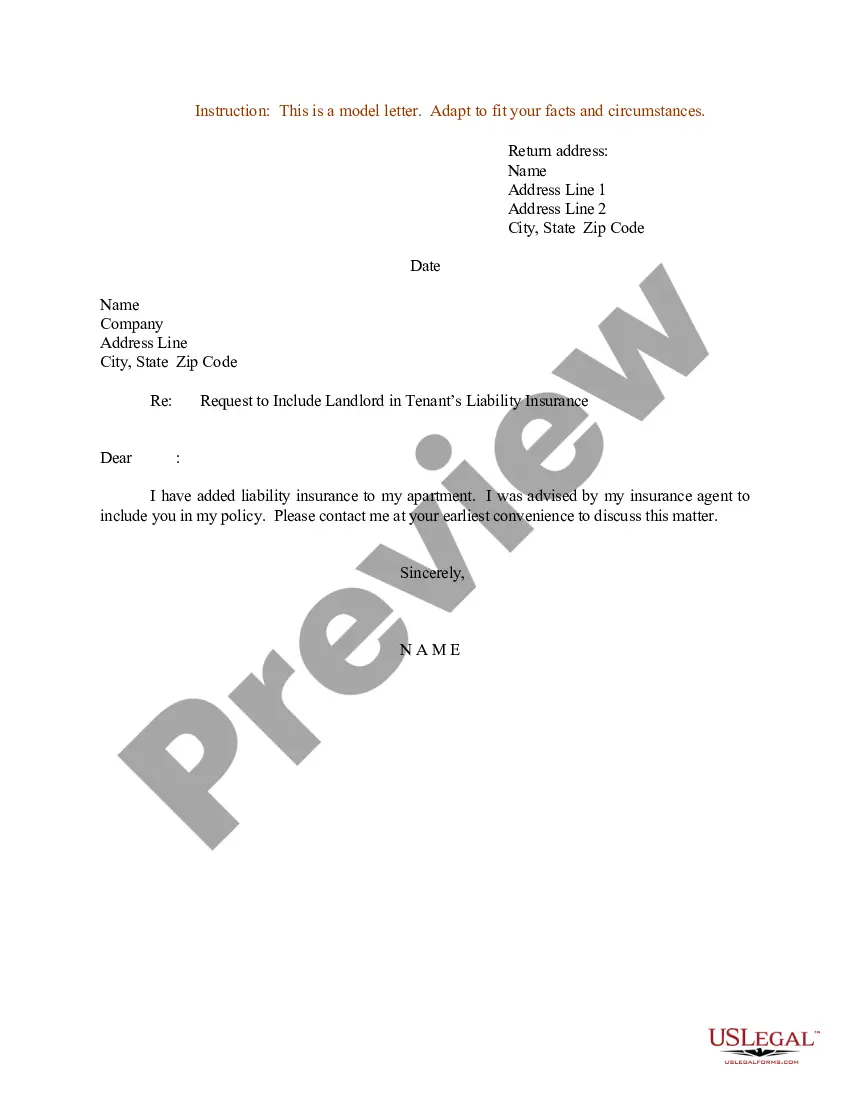
How to fill out Sample Letter For Request To Include Landlord In Tenant's Liability Insurance?
- Log in to your US Legal Forms account if you're a returning user. Click the Download button for the necessary form template you wish to access, ensuring your subscription remains active. If needed, renew your subscription based on your chosen payment plan.
- Preview the document by reviewing its description to confirm it meets your requirements and complies with local jurisdictional standards.
- If the document doesn't fit your needs, use the Search tab to find an alternative template. Proceed only if it aligns with your specifications.
- Select the document by clicking the Buy Now button and choose your preferred subscription plan, which requires account registration for full access.
- Complete the purchase by entering your credit card details or using PayPal for secure payment.
- Download the completed form and save it on your device. Access it later through the My Forms menu in your profile whenever needed.
In conclusion, US Legal Forms offers an extensive library of over 85,000 user-friendly legal documents, empowering both individuals and attorneys to streamline their legal processes. With access to premium experts, you can ensure that your forms are comprehensive and legally compliant.
Start protecting your investments today by exploring our collection of landlord insurance forms and get the assurance you need.
Form popularity
FAQ
The most common home insurance claim involves property damage caused by water, such as leaks from plumbing or natural disasters like floods. Understanding what is covered by landlord insurance can help you prepare for such incidents. Moreover, taking preventive measures can reduce the risk of such claims. Ensure that your policy includes provisions for these common issues to protect your investment.
The rule of thumb for landlord insurance typically includes ensuring coverage for the rental property’s structure, lost rental income, and liability protection. It is crucial to know what is covered by landlord insurance so that you can make informed decisions about additional endorsements or policies. Keeping adequate coverage amounts can safeguard your investment against unforeseen circumstances. Always review your policy to ensure it reflects your current needs.
As a landlord, you will need to insure several key aspects to protect your investment. Typically, landlord insurance covers the physical structure of the rental property, liability protection for injuries sustained on the premises, and loss of rental income due to property damage. Understanding what is covered by landlord insurance helps you safeguard against unforeseen events. For comprehensive support, consider exploring US Legal Forms to find tailored insurance solutions that meet your specific needs.
Rental insurance, often called tenant insurance, protects renters' personal belongings and personal liability. In contrast, landlord insurance covers the rental property itself and the landlord's liability. Knowing what is covered by landlord insurance can help you understand why it's vital for property owners. As a landlord, having the right insurance in place protects both your property and your peace of mind.
Landlord insurance is a specialized policy designed to protect property owners renting out their homes. It typically covers physical damage to the property, liability in case of tenant injuries, and loss of rental income due to unforeseen events. It's essential to know what is covered by landlord insurance so you can make informed decisions about your coverage needs. By securing the right policy, you safeguard your investment and your financial future.
The most common landlord insurance claim involves property damage, often caused by fire or water leaks. These incidents can disrupt rental income and lead to costly repairs. Understanding what is covered by landlord insurance helps you prepare for these situations. Having the right coverage means you can alleviate financial stress when accidents occur.
Renters insurance often covers personal belongings against theft, fire, and other risks, along with liability for accidents that occur in the rented space. It may also include coverage for additional living expenses if you need to relocate temporarily due to a covered loss. Familiarizing yourself with what is covered by landlord insurance versus renters insurance ensures all parties are aware of their protections.
Rental insurance generally covers damage to the property caused by incidents such as fire, storms, or vandalism. It also provides liability coverage in case someone is injured on the property and files a claim against you. Understanding what is covered by landlord insurance gives an overview of both physical asset protection and liability aspects that are crucial for landlords.
Renters insurance typically does not cover damages from natural disasters like floods or earthquakes, as these require separate policies. It also usually excludes damage to property owned by someone else, and high-value items such as jewelry or art might not be fully covered without additional riders. Being aware of these limitations helps you better understand what is covered by landlord insurance versus renters insurance.
One key feature of renters insurance coverage is personal property protection, which safeguards your belongings from certain risks like theft or damage. Renters insurance also provides liability protection for injuries that may occur within the rental unit. Knowing what is covered by landlord insurance and what falls under renters insurance helps clarify the responsibilities of both tenants and property owners.