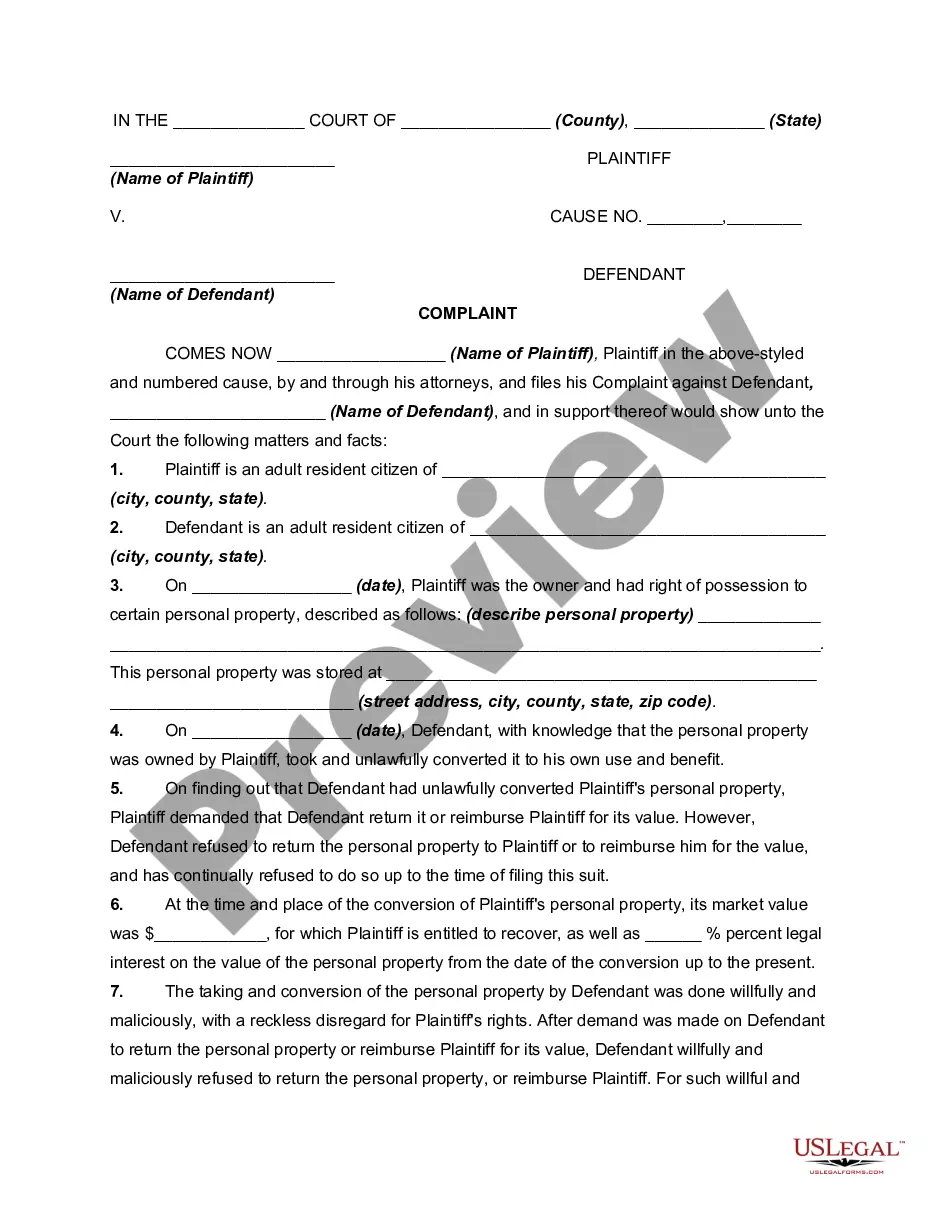
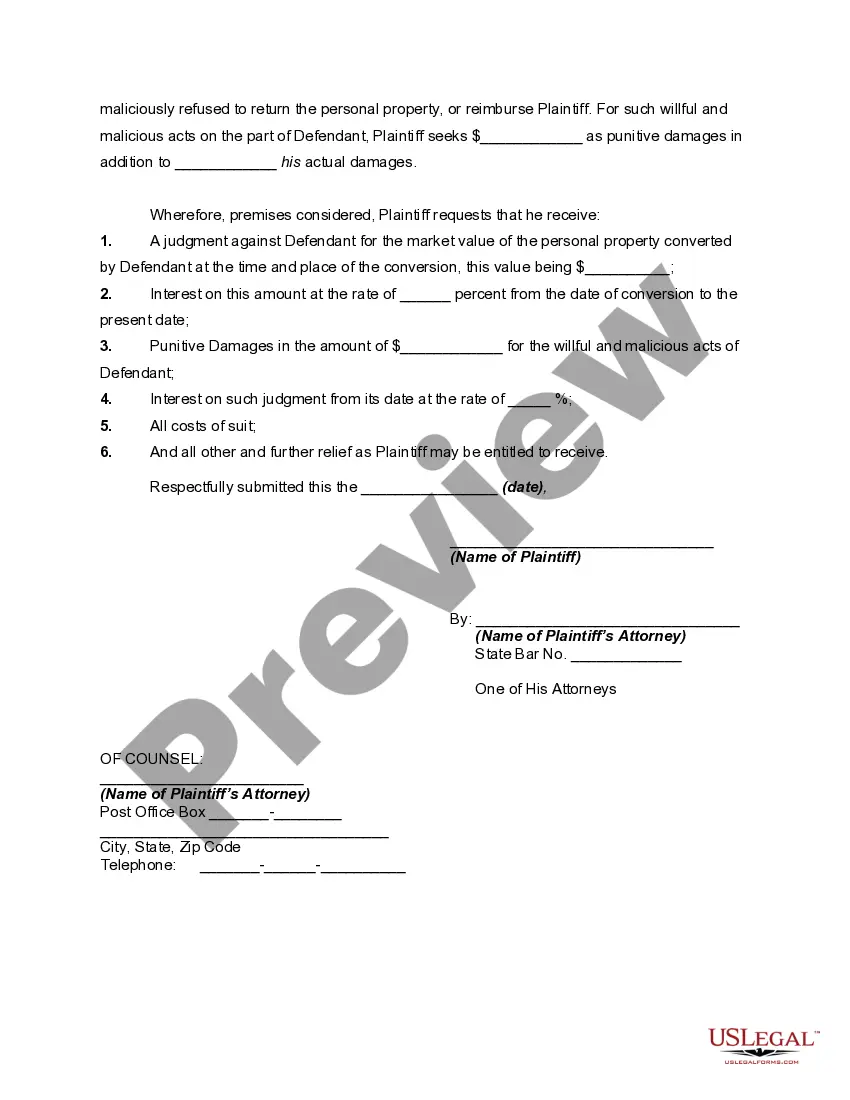
Complaint For Conversion Forced
Description

Get your form ready online
Our built-in tools help you complete, sign, share, and store your documents in one place.
Make edits, fill in missing information, and update formatting in US Legal Forms—just like you would in MS Word.
Download a copy, print it, send it by email, or mail it via USPS—whatever works best for your next step.
Sign and collect signatures with our SignNow integration. Send to multiple recipients, set reminders, and more. Go Premium to unlock E-Sign.
If this form requires notarization, complete it online through a secure video call—no need to meet a notary in person or wait for an appointment.
We protect your documents and personal data by following strict security and privacy standards.

Make edits, fill in missing information, and update formatting in US Legal Forms—just like you would in MS Word.

Download a copy, print it, send it by email, or mail it via USPS—whatever works best for your next step.

Sign and collect signatures with our SignNow integration. Send to multiple recipients, set reminders, and more. Go Premium to unlock E-Sign.

If this form requires notarization, complete it online through a secure video call—no need to meet a notary in person or wait for an appointment.

We protect your documents and personal data by following strict security and privacy standards.
Looking for another form?


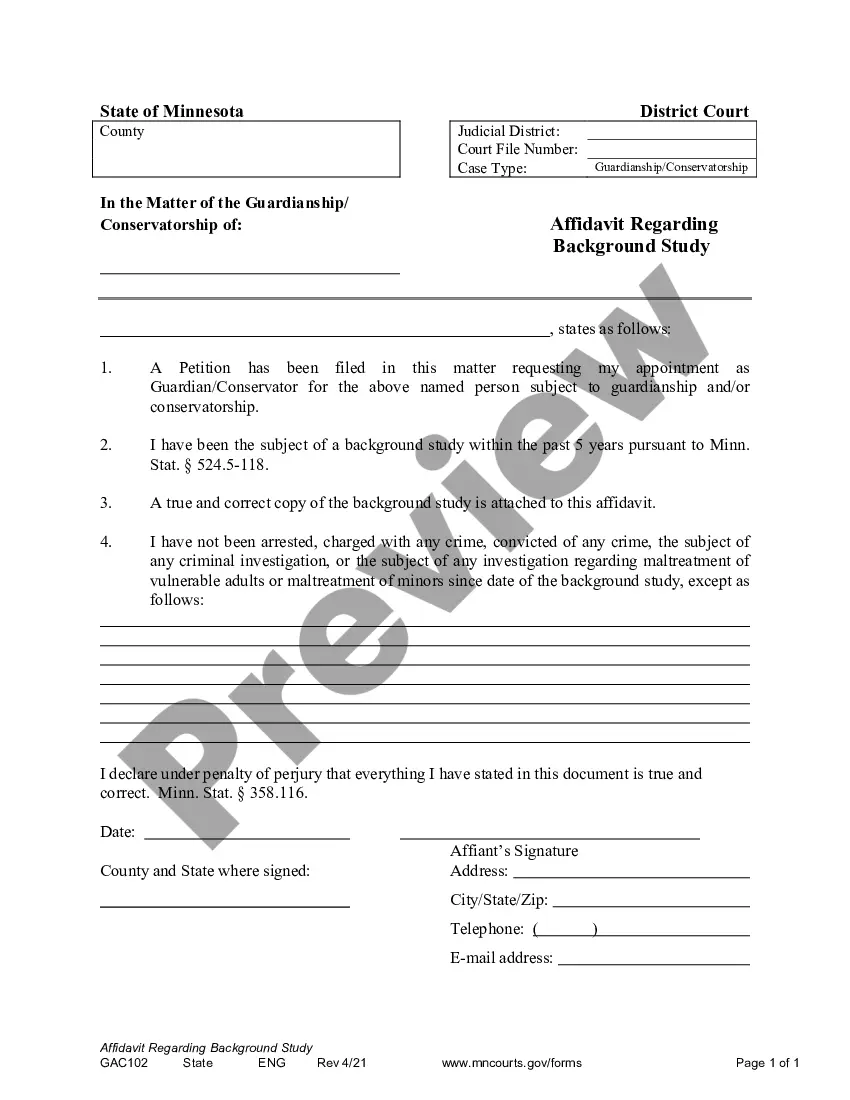
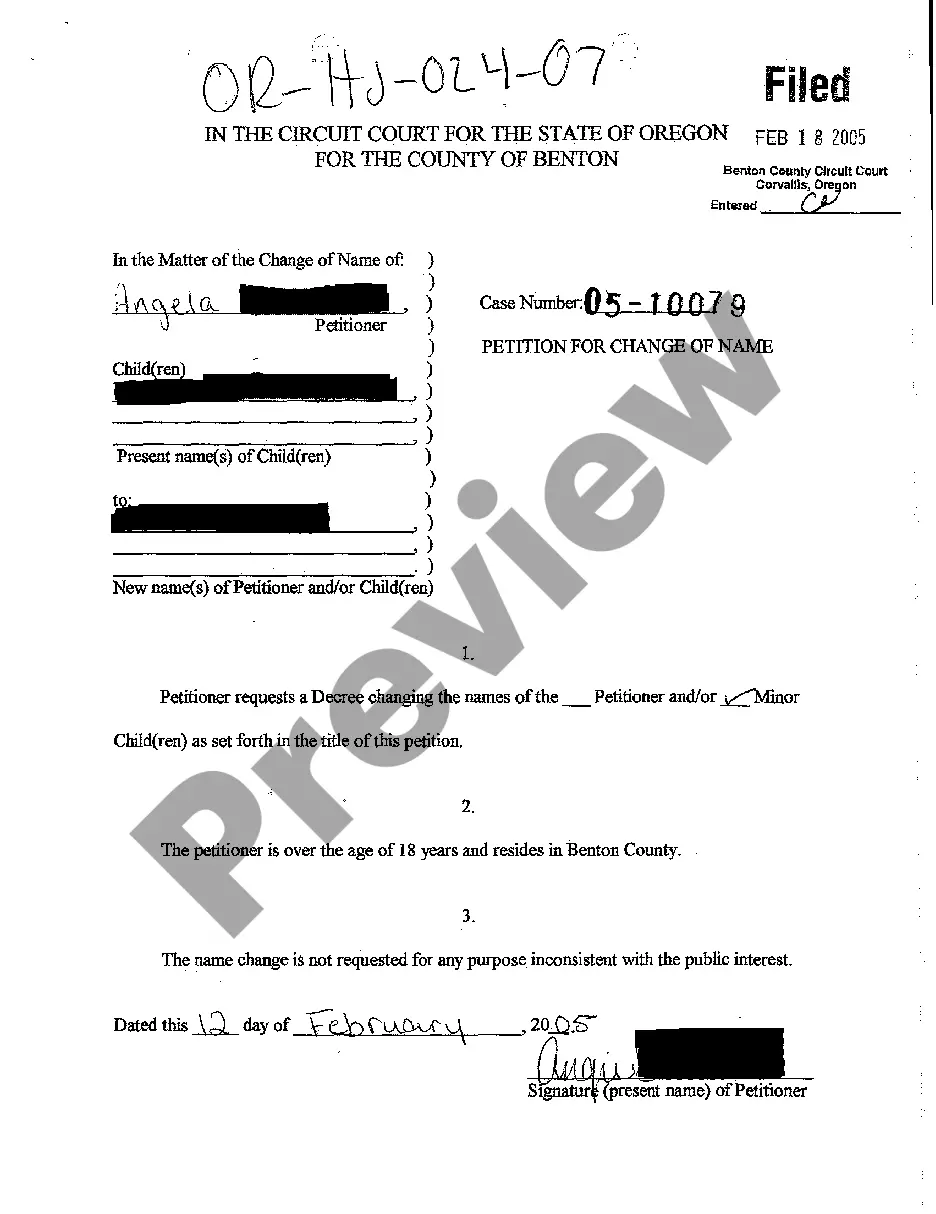
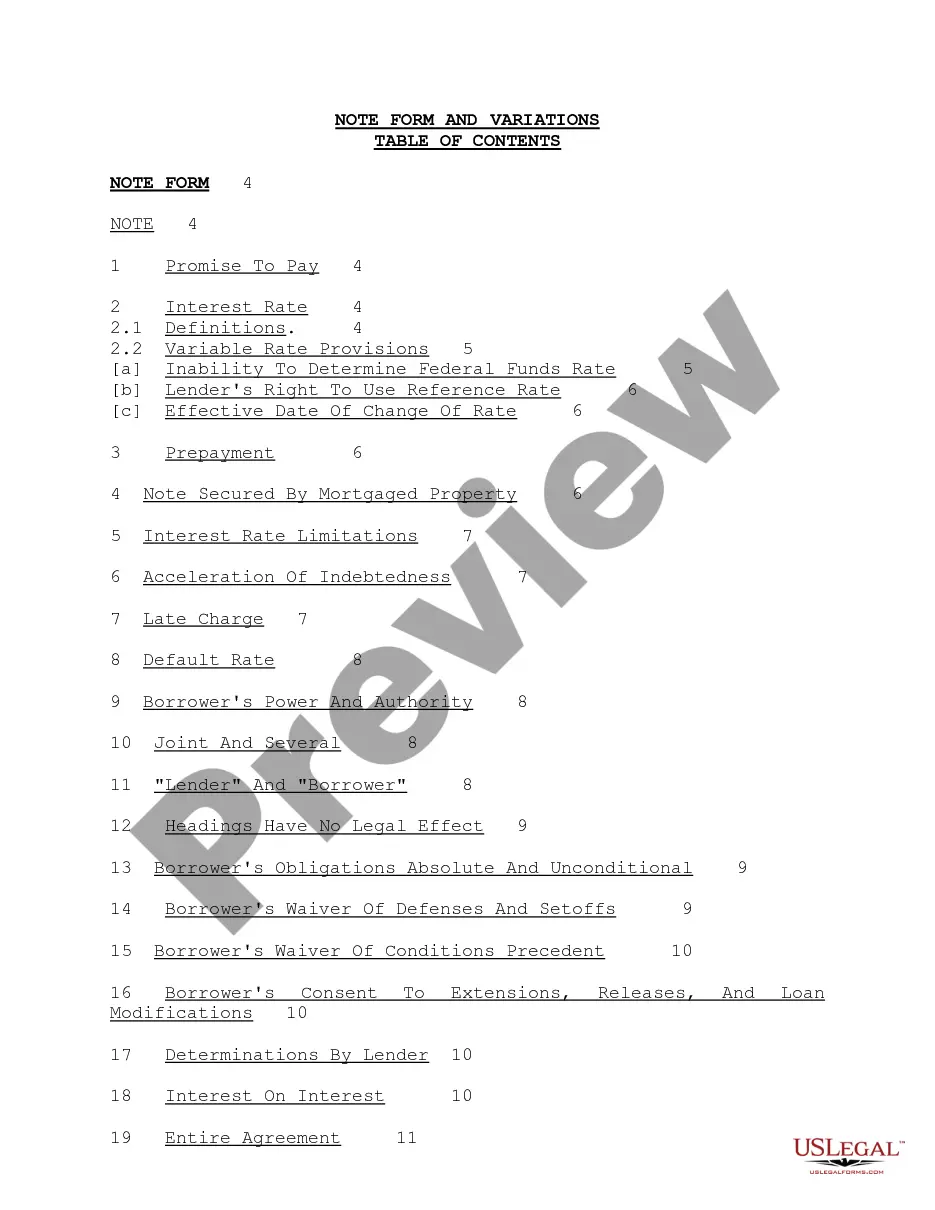

How to fill out Complaint For Conversion Seeking Punitive Damages?
The Grievance For Transformation Compelled you observe on this page is a reusable legal framework crafted by expert attorneys in accordance with federal and state statutes and regulations.
For over 25 years, US Legal Forms has supplied individuals, businesses, and lawyers with more than 85,000 authenticated, state-specific documents for any commercial and personal circumstance. It’s the quickest, simplest, and most dependable method to acquire the forms you require, as the service ensures bank-level data protection and anti-malware security.
Select the format you desire for your Grievance For Transformation Compelled (PDF, Word, RTF) and download the example to your device.
- Explore for the document you require and review it.
- Browse through the file you sought and preview it or examine the form description to confirm it meets your needs. If it does not, utilize the search bar to find the correct one. Click Buy Now once you have located the template you require.
- Register and Log In.
- Select the pricing plan that fits you and create an account. Use PayPal or a credit card to make an immediate payment. If you already possess an account, Log In and check your subscription to proceed.
- Acquire the editable template.
Form popularity
FAQ
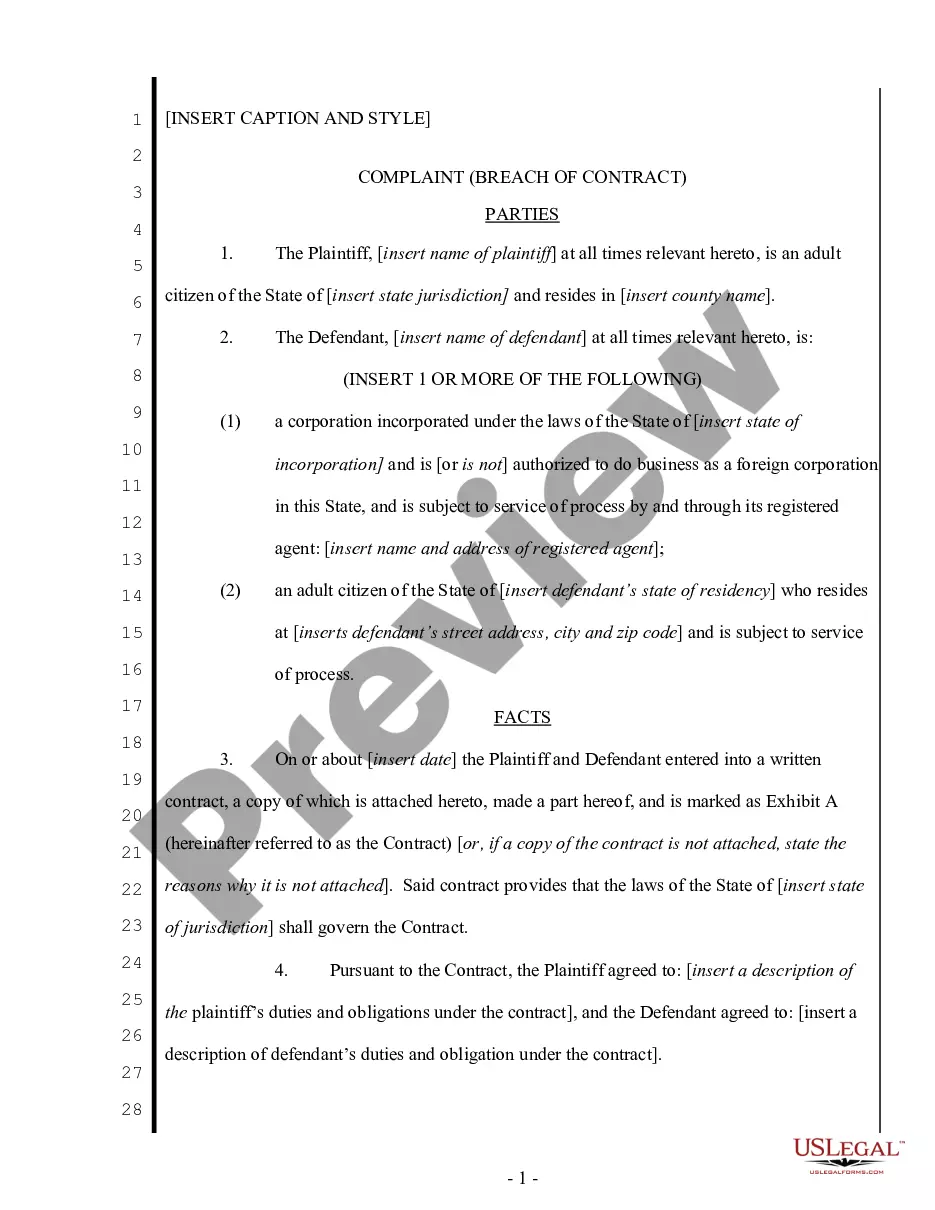
In many lawsuits there are several causes of action stated separately, such as fraud, breach of contract, and debt, or negligence and intentional destruction of property.
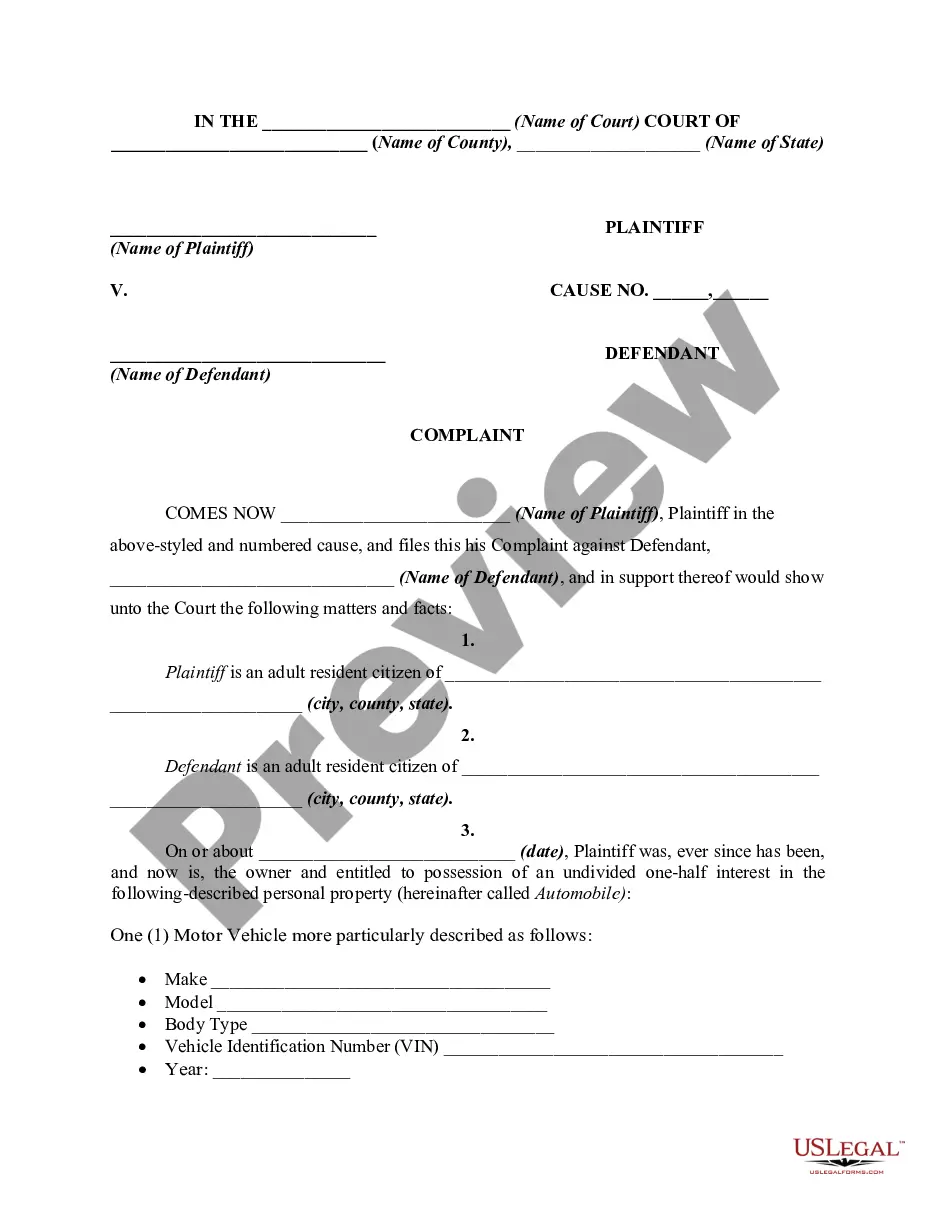
To establish a conversion claim, a plaintiff must prove that: it had a possessory interest in the property, the defendants intentionally interfered with the plaintiff's possession, and. the defendants' acts are the legal cause of the plaintiff's loss of property.
For example, a person who picks up a necklace off the ground with the intent to resell it because they erroneously believed it was abandoned still converted that necklace. The standard remedy for conversion is return of the property in question or damages for the fair market value of the property.
Under California law, the elements required to prove a claim of conversion are: (1) the plaintiff's ownership or right to possession of the property; (2) the defendant's conversion by a wrongful act or in a manner that is inconsistent with the plaintiff's property rights; and (3) resulting damages.
In order to properly write a cause of action, several things must be included. The names of the Plaintiff and Defendant. The legal means by which the Plaintiff is bringing the lawsuit. Be sure to only include the facts, not opinions. ... Offer expert opinions and lay out the evidence. ... Request of relief.