Title Insurance For Owner
Description

Get your form ready online
Our built-in tools help you complete, sign, share, and store your documents in one place.
Make edits, fill in missing information, and update formatting in US Legal Forms—just like you would in MS Word.
Download a copy, print it, send it by email, or mail it via USPS—whatever works best for your next step.
Sign and collect signatures with our SignNow integration. Send to multiple recipients, set reminders, and more. Go Premium to unlock E-Sign.
If this form requires notarization, complete it online through a secure video call—no need to meet a notary in person or wait for an appointment.
We protect your documents and personal data by following strict security and privacy standards.

Make edits, fill in missing information, and update formatting in US Legal Forms—just like you would in MS Word.

Download a copy, print it, send it by email, or mail it via USPS—whatever works best for your next step.

Sign and collect signatures with our SignNow integration. Send to multiple recipients, set reminders, and more. Go Premium to unlock E-Sign.

If this form requires notarization, complete it online through a secure video call—no need to meet a notary in person or wait for an appointment.

We protect your documents and personal data by following strict security and privacy standards.
Looking for another form?





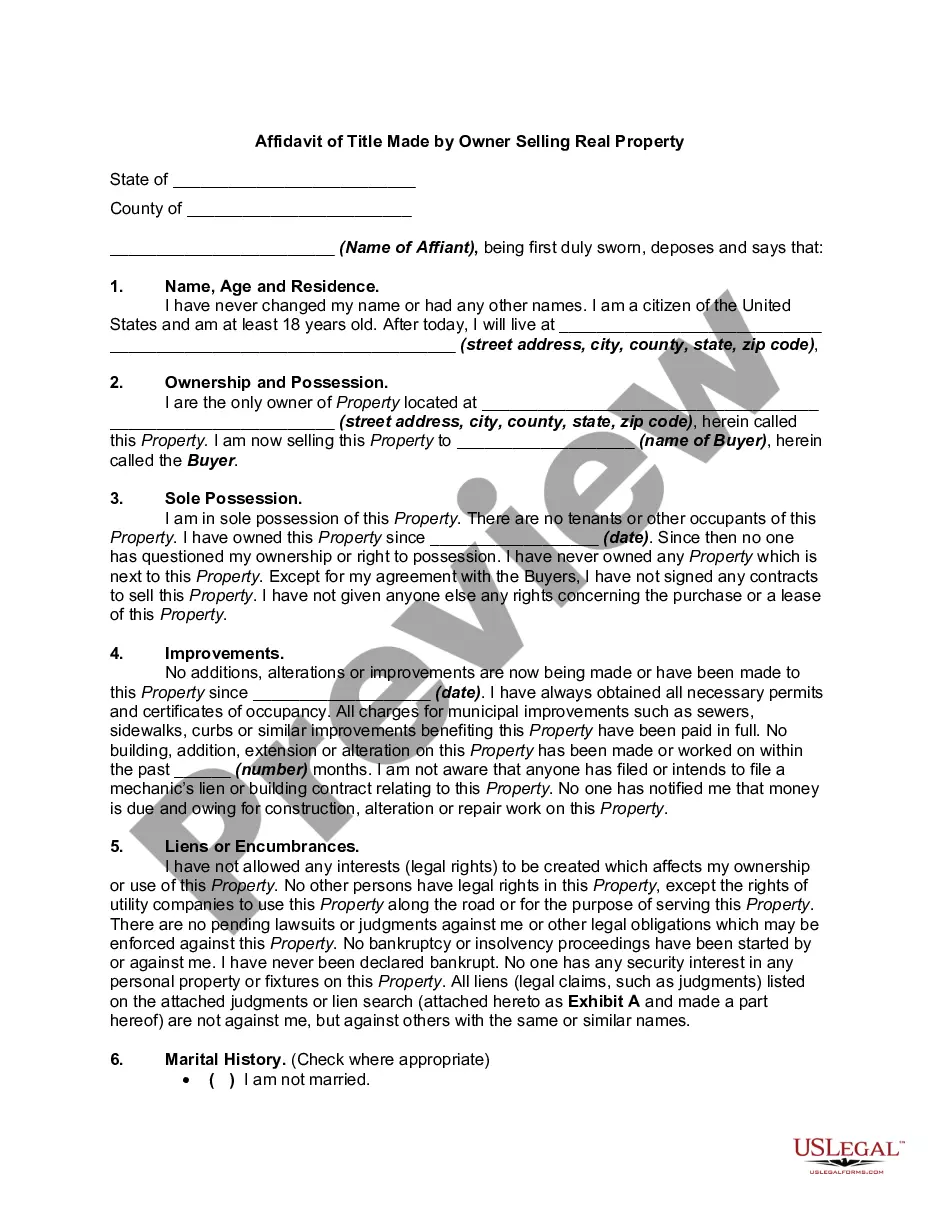
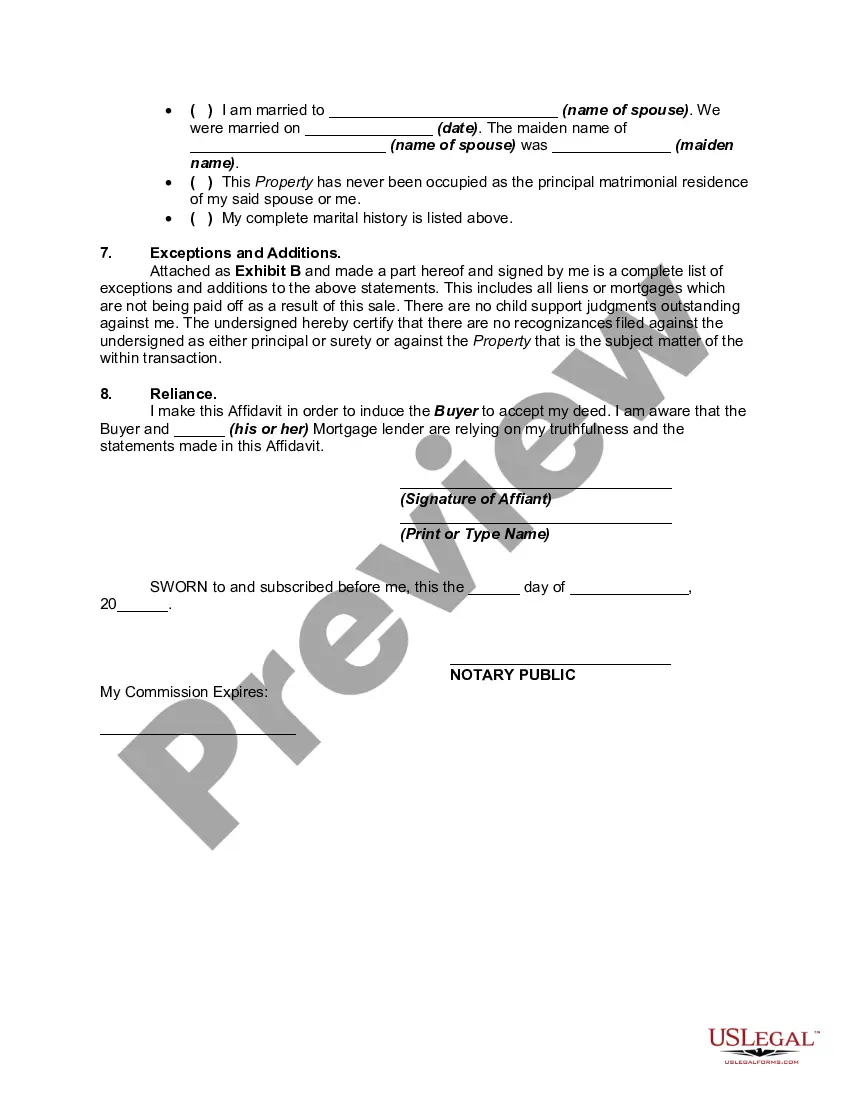
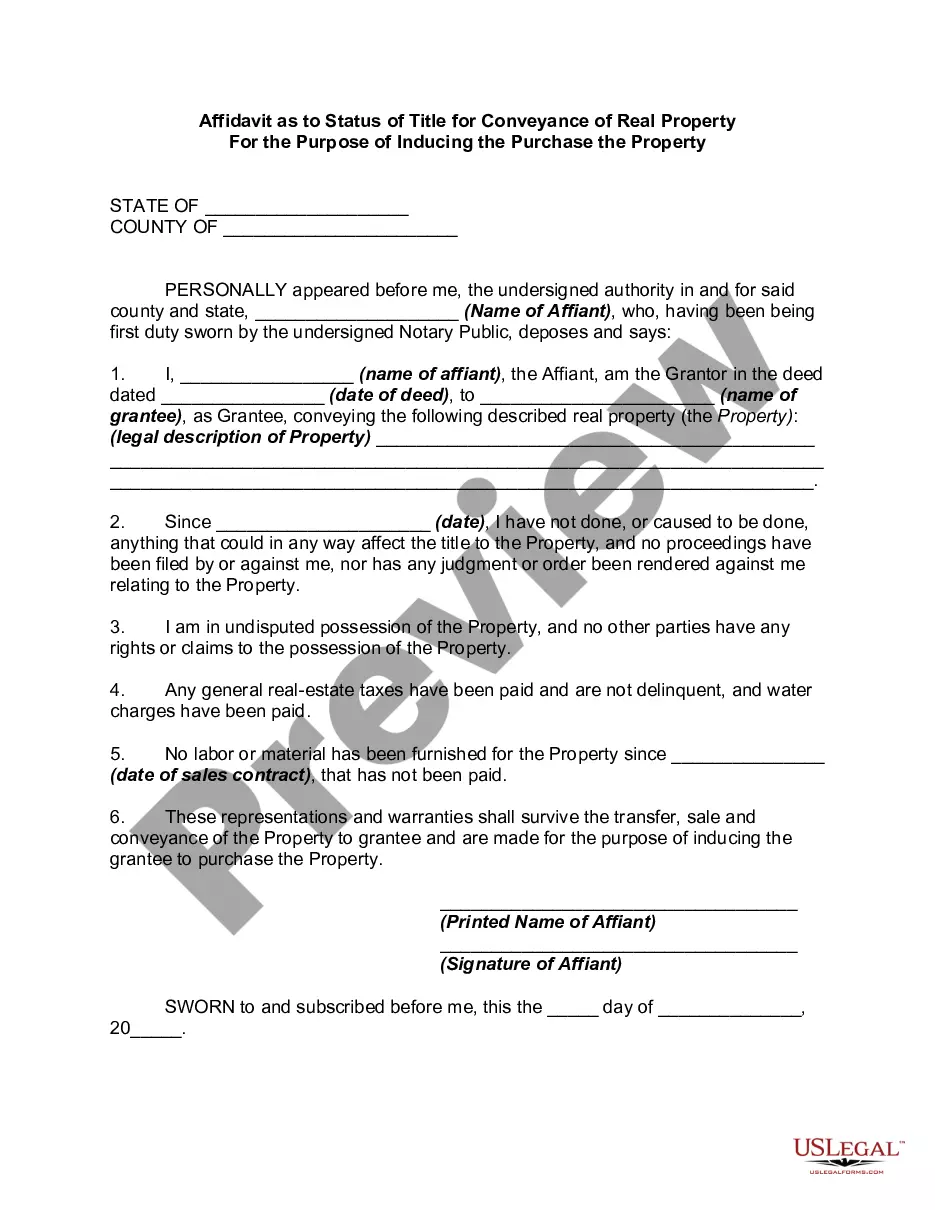
How to fill out Affidavit Of Title Made By Owner Selling Real Property?
Legal documents management can be daunting, even for experienced specialists.
If you are seeking Title Insurance For Owner and lack the time to invest in locating the appropriate and current version, the tasks may be anxiety-inducing.
US Legal Forms addresses any needs you may have, from personal to business paperwork, all in one place.
Utilize cutting-edge tools to complete and manage your Title Insurance For Owner.
Here are the steps to follow after obtaining the form you require: Validate that it is the correct document by previewing it and reviewing its details.
- Access a reservoir of articles, guides, and resources pertinent to your circumstances and needs.
- Save time and effort searching for the necessary documents by employing US Legal Forms’ advanced search and Review feature to locate Title Insurance For Owner and acquire it.
- If you possess a membership, Log In to your US Legal Forms account, locate the document, and procure it.
- Examine your My documents tab to review the documents you have previously saved and to organize your folders as desired.
- If it is your first experience with US Legal Forms, create an account and enjoy unlimited access to the entire library's benefits.
- A comprehensive online form catalog can revolutionize the way individuals handle these matters efficiently.
- US Legal Forms is a pioneer in digital legal forms, offering over 85,000 state-specific legal documents accessible at any time.
- With US Legal Forms, you can obtain documents tailored to your state or county.
Form popularity
FAQ
Who is responsible to pay title insurance fees in Michigan? Traditionally the buyer is responsible to pay the lender's title insurance fees and the seller is responsible to pay the owner's title insurance fees. These fees, however, may be paid by either party if agreed to differently in the purchase contract.
There are two types of title insurance: owner's title insurance and lender's title insurance. Both provide important protections for different participants in a real estate transaction, and it's important to be able to distinguish between the two and what they cover.
In Florida, the seller customarily pays for title insurance in many counties, including Palm Beach, Hillsborough County, Osceola County, and Orange County. However, in some counties, including Collier County, Sarasota County, Broward County, and Miami-Dade County, the buyer typically pays.
Lender's Policy. If you've ever mortgaged a home, chances are you were required to purchase a title insurance policy. ... Owner's Policy. However, as a buyer, you also want to protect your investment -- and the ownership rights that come with it. ... Customs. ... Refinance Transactions.
Title insurance is a form of indemnity insurance that protects lenders and homebuyers from financial loss sustained from defects in a title to a property. The most common type of title insurance is lender's title insurance, which the borrower purchases to protect the lender.