Next Of Kin Relationship List
Description
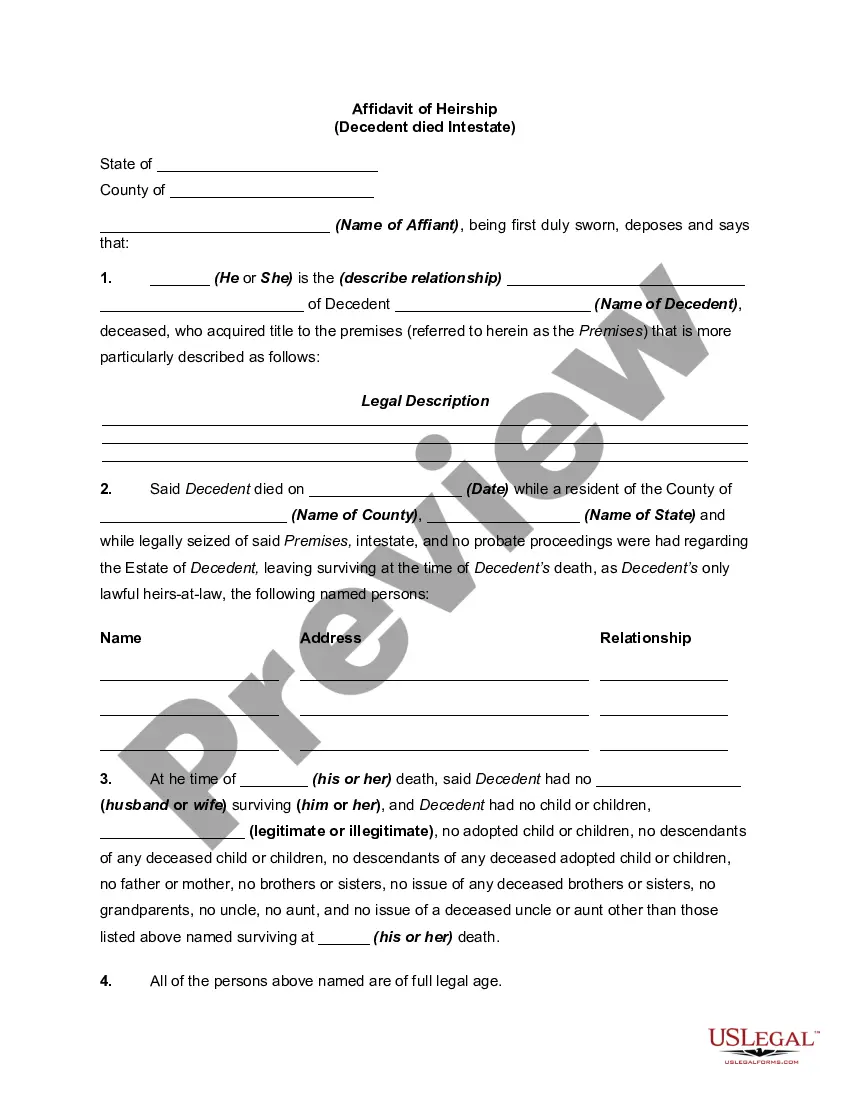
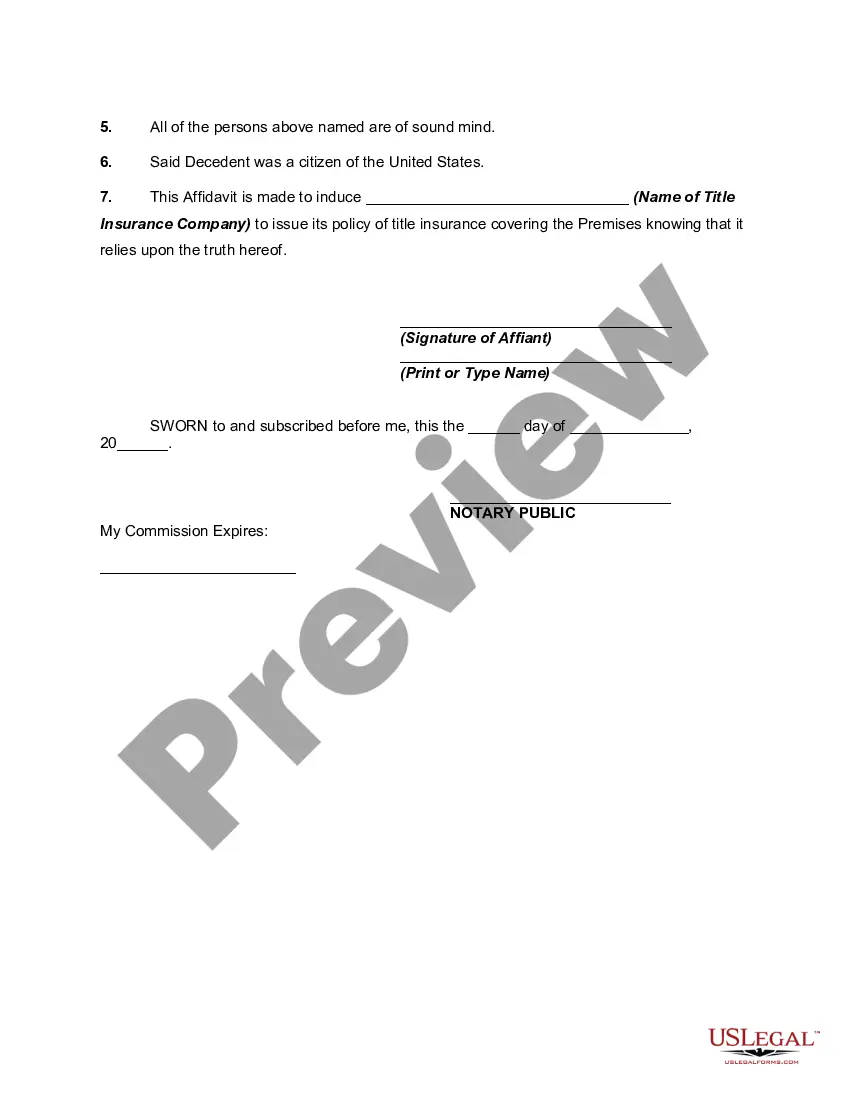
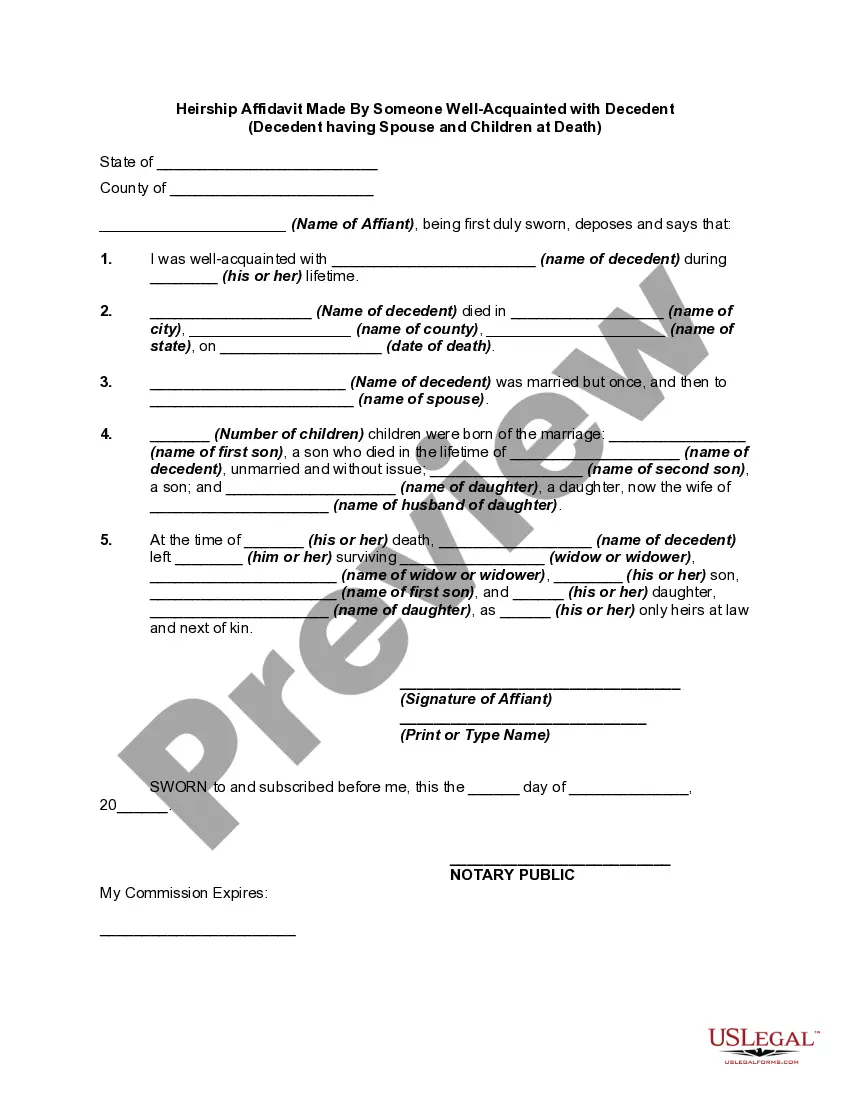
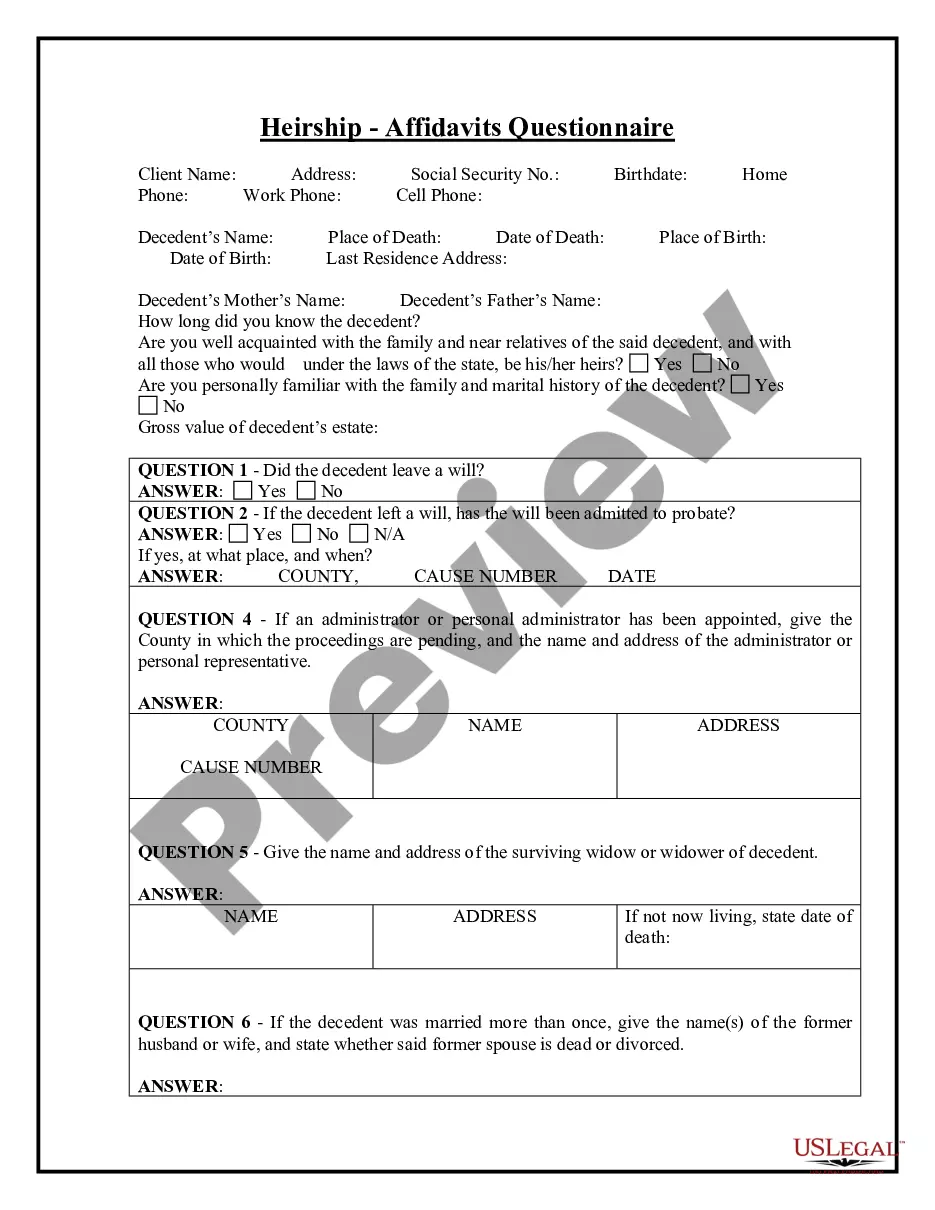
How to fill out Affidavit Of Heirship, Next Of Kin Or Descent - Decedent Died Intestate?
The Next Of Kin Relationship List presented on this webpage is a reusable legal framework formulated by skilled attorneys in accordance with federal and regional statutes.
For over 25 years, US Legal Forms has supplied individuals, businesses, and legal experts with over 85,000 authenticated, state-specific documents for any commercial and personal event. It is the quickest, simplest, and most dependable method to acquire the paperwork you require, as the service ensures bank-grade data protection and anti-malware safeguards.
Pick the format you prefer for your Next Of Kin Relationship List (PDF, DOCX, RTF) and download the sample to your device.
- Search for the document you require and review it.
- Browse through the file you searched and preview it or review the form description to verify it meets your needs. If it does not, use the search function to find the suitable one. Click Buy Now once you have located the template you require.
- Subscribe and Log In.
- Choose the pricing plan that works for you and set up an account. Utilize PayPal or a credit card for a quick transaction. If you already possess an account, Log In and verify your subscription to continue.
- Obtain the editable template.
Form popularity
FAQ
'Next to kin' is a term used to describe an individual's closest living relatives. This includes people like parents, siblings, and children. The term defines the legal beneficiaries in terms of inheritance or decisions when someone is incapacitated. For a more detailed overview, check a next of kin relationship list.
Your next of kin can include a variety of family members, such as a spouse, children, parents, or siblings. In some situations, it may extend to grandparents, aunts, or uncles. It's important to check local laws or guidelines regarding next of kin relationships for accurate information. You can find comprehensive details in a next of kin relationship list.
The next of kin typically refers to the closest living relatives of an individual. This can include parents, children, or siblings. The specific order of who is considered next of kin may vary by state or jurisdiction. It's essential to refer to a next of kin relationship list for clarity.
To obtain copies or information from a court case file, complete a records request form and send by fax to (907) 452-9330 or by email to 4FArecords@akcourts.gov. Prepayment is required. The court will notify you of the amount due and payment must be received before the records will be released to you.
A complete list of Alaska Court System contact information is available on our website. Most court files are available for public inspection. Files in some proceedings, such as juvenile matters, are confidential and only parties to the case are allowed access to the file.
That court rule says that the noncustodial parent of one child should pay 20% of his or her adjusted income to support one child. Adjusted income means earning after deductions for taxes, union dues, retirement deductions and other mandatory deductions.
In Alaska, the withholding limit for child support is 40% of net income or 50% if Medical Support is required. Net income is gross wages minus federal income taxes, Social Security, Medicare, and other mandatory deductions.
You can request a modification by calling, emailing or writing to CSED. Include your federal income tax returns for the past two years, W-2's (annual wage statements you receive from your employer), pay stubs for the past three months, and proof of health insurance coverage.
In Alaska, the mandatory minimum child support is $50.00 per month or $600.00 per year. A parent may also be responsible to pay for health care expenses not covered by insurance or a government benefit program.
The percentages used to calculate an Alaska child support award are: 20% for one child. 27% for two children. 33% for three children.