Trusts And Taxes Withdrawal
Description
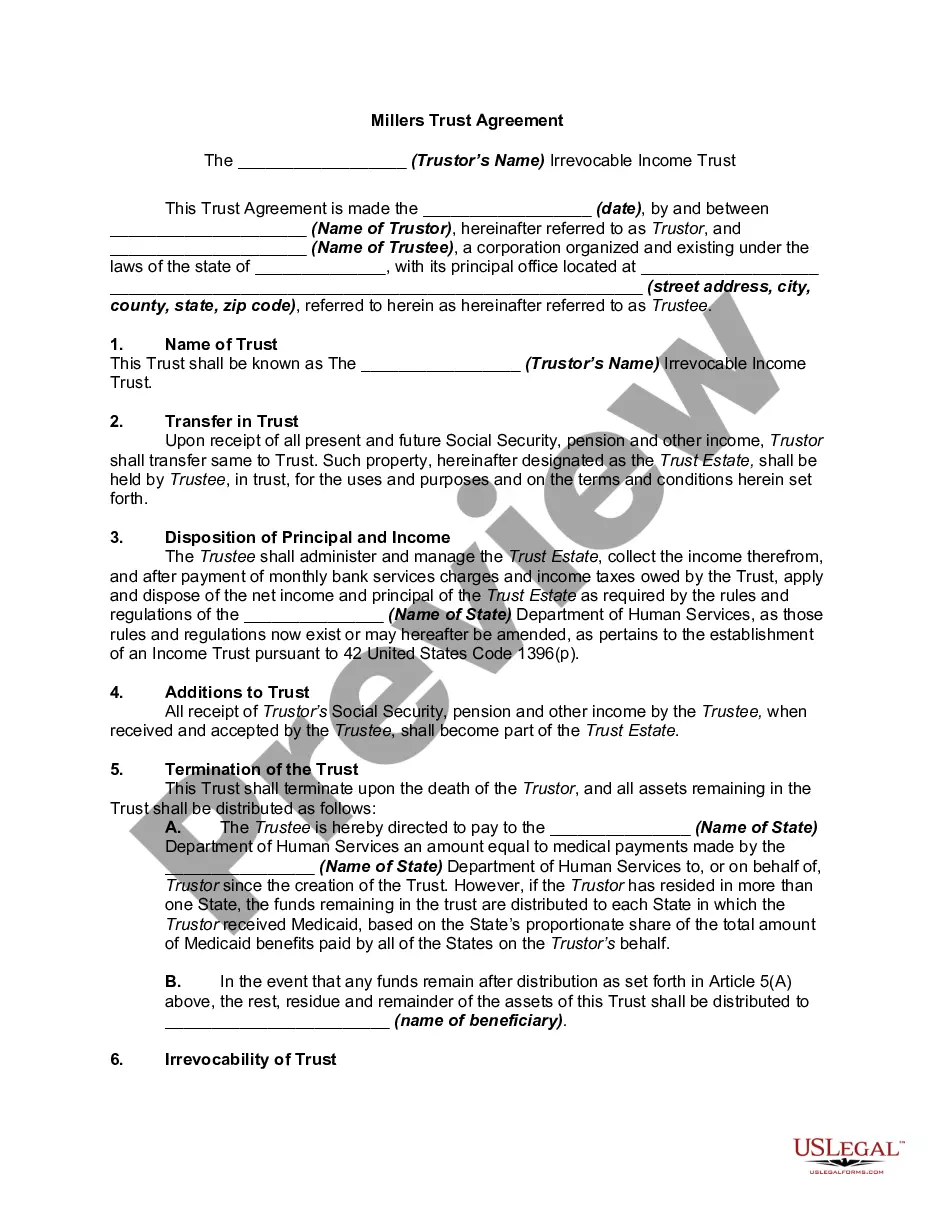

Get your form ready online
Our built-in tools help you complete, sign, share, and store your documents in one place.
Make edits, fill in missing information, and update formatting in US Legal Forms—just like you would in MS Word.
Download a copy, print it, send it by email, or mail it via USPS—whatever works best for your next step.
Sign and collect signatures with our SignNow integration. Send to multiple recipients, set reminders, and more. Go Premium to unlock E-Sign.
If this form requires notarization, complete it online through a secure video call—no need to meet a notary in person or wait for an appointment.
We protect your documents and personal data by following strict security and privacy standards.

Make edits, fill in missing information, and update formatting in US Legal Forms—just like you would in MS Word.

Download a copy, print it, send it by email, or mail it via USPS—whatever works best for your next step.

Sign and collect signatures with our SignNow integration. Send to multiple recipients, set reminders, and more. Go Premium to unlock E-Sign.

If this form requires notarization, complete it online through a secure video call—no need to meet a notary in person or wait for an appointment.

We protect your documents and personal data by following strict security and privacy standards.
Looking for another form?



How to fill out Qualified Income Miller Trust?
The Trusts And Taxes Withdrawal you observe on this page is a reusable formal template crafted by expert attorneys in accordance with federal and state laws and regulations.
For over 25 years, US Legal Forms has supplied individuals, organizations, and legal professionals with more than 85,000 validated, state-specific forms for any business and personal situation.
Join US Legal Forms to have verified legal templates available for all of life’s situations at your convenience.
- Look for the document you require and review it.
- Browse through the sample you searched and preview it or examine the form description to ensure it meets your requirements.
- If it does not, utilize the search option to locate the appropriate one.
- Click Buy Now once you have identified the template you need.
- Subscribe and Log In.
Form popularity
FAQ
Tax Forms Required for Distributions Trustees will need to submit a completed 1041 form (i.e., a trust income tax return) to the IRS in order to deduct from the trust's taxable income the income it distributed to beneficiaries.
Report income distributions to beneficiaries and to the IRS on Schedule K-1 (Form 1041). For calendar year estates and trusts, file Form 1041 and Schedule(s) K-1 on or before April 15 of the following year.
Trust beneficiaries must pay taxes on income and other distributions from a trust. Trust beneficiaries don't have to pay taxes on returned principal from the trust's assets. IRS forms K-1 and 1041 are required for filing tax returns that receive trust disbursements.
For trusts, distributions are taxable to the beneficiary, and the trust must file a Schedule K-1 for each beneficiary. The beneficiary will then report the income on their tax return. The trust must also generate a Form 1041 to report the total amount of income the trust earned from the grantor's date of death.
If an estate or trust distributes IRD to a beneficiary, the beneficiary is entitled to deduct the portion of the estate tax imposed on the decedent's estate which is attributable to the IRD distributed to the beneficiary. You may claim this amount on line 16 of Schedule A (Form 1040).