Trust Accounting Forms For Trusts
Description

Get your form ready online
Our built-in tools help you complete, sign, share, and store your documents in one place.
Make edits, fill in missing information, and update formatting in US Legal Forms—just like you would in MS Word.
Download a copy, print it, send it by email, or mail it via USPS—whatever works best for your next step.
Sign and collect signatures with our SignNow integration. Send to multiple recipients, set reminders, and more. Go Premium to unlock E-Sign.
If this form requires notarization, complete it online through a secure video call—no need to meet a notary in person or wait for an appointment.
We protect your documents and personal data by following strict security and privacy standards.

Make edits, fill in missing information, and update formatting in US Legal Forms—just like you would in MS Word.

Download a copy, print it, send it by email, or mail it via USPS—whatever works best for your next step.

Sign and collect signatures with our SignNow integration. Send to multiple recipients, set reminders, and more. Go Premium to unlock E-Sign.

If this form requires notarization, complete it online through a secure video call—no need to meet a notary in person or wait for an appointment.

We protect your documents and personal data by following strict security and privacy standards.
Looking for another form?


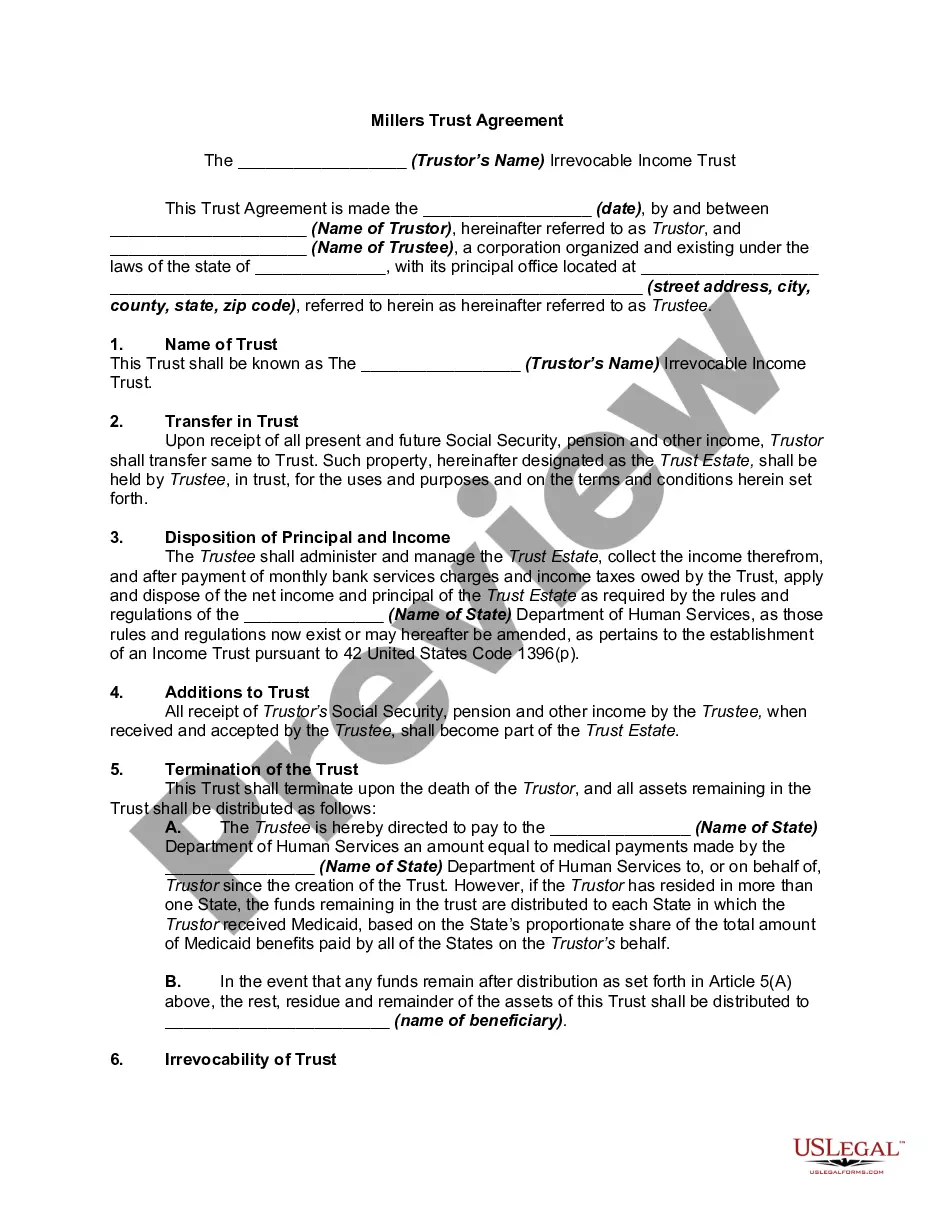
How to fill out Qualified Income Miller Trust?
- If you're an existing user, log in to your account and select the form you need, then click the Download button. Ensure your subscription is active, or renew it as necessary.
- For first-time users, start by checking the Preview mode and reading the description of the required form. Make sure it meets your needs and adheres to your local laws.
- If the form doesn't meet your criteria, use the Search tab to find another template that suits your requirements.
- Once you've found the appropriate form, click on the Buy Now button, choose your subscription plan, and create an account to gain access.
- Complete your purchase using a credit card or PayPal, following the prompts provided.
- After payment, download the form to your device. You can also find it later in the My Forms section of your profile.
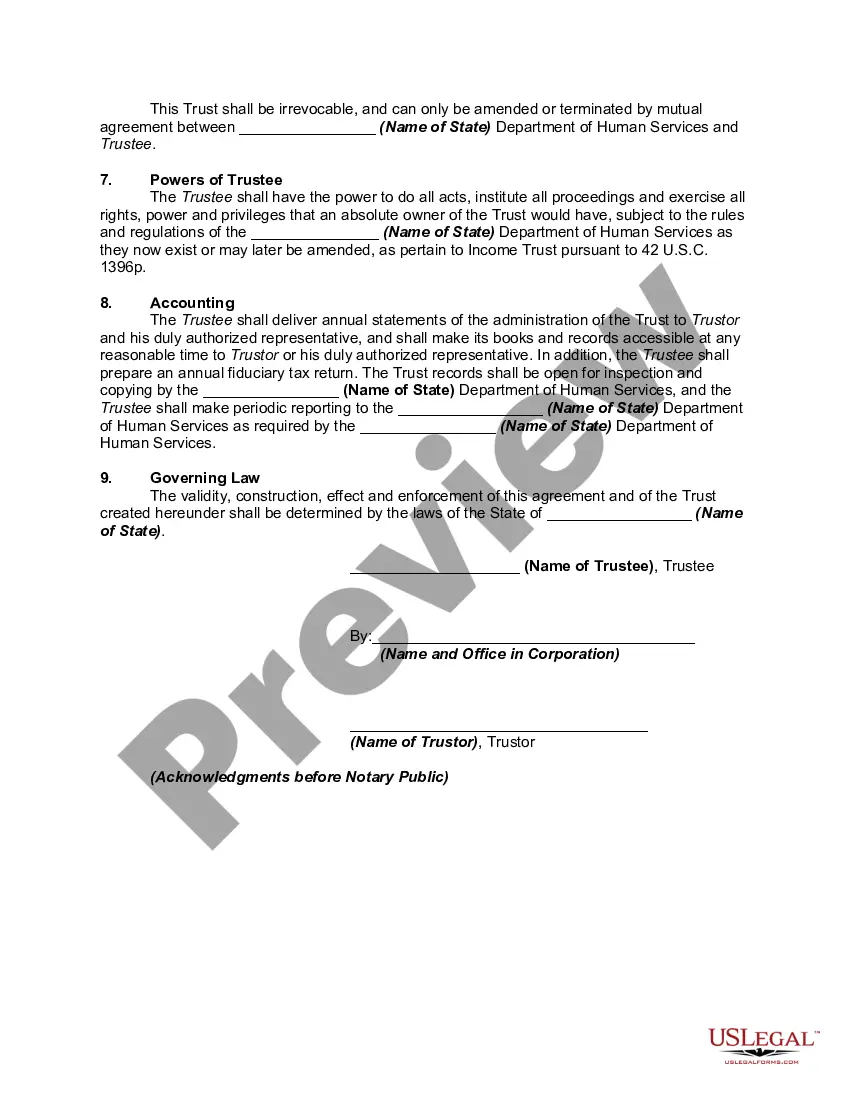
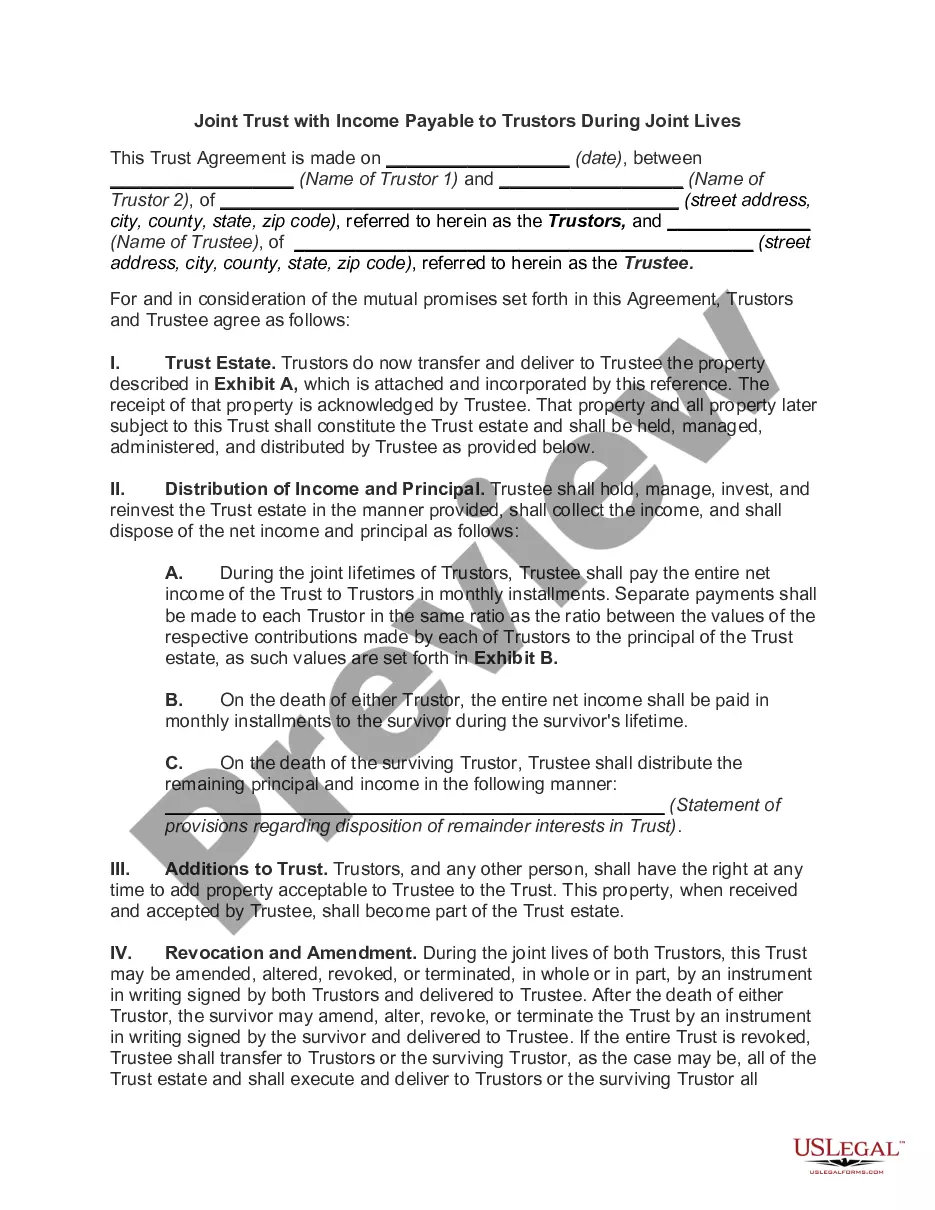
In conclusion, US Legal Forms offers a comprehensive suite of legal documents, empowering users to efficiently handle trust accounting with ease. With an extensive library and support from premium experts, you can ensure accuracy in all your legal documentation.
Start simplifying your trust accounting processes today by exploring the resources available at US Legal Forms!
Form popularity
FAQ
The downside of putting assets in a trust often includes the potential for certain tax implications and the loss of control over assets. Once assets are transferred into a trust, the grantor may have limited access or flexibility. Understanding these factors and employing trust accounting forms for trusts can help ease the transition and clarify ownership.
A family trust can have disadvantages, such as restrictions on access to funds and increased administrative duties. Families may feel constrained by the rules set forth in the trust. To mitigate confusion, regularly updating trust documents and utilizing trust accounting forms for trusts can ensure a smoother operation and better communications among family members.
Trust accounting income typically includes interest, dividends, rent, and other forms of income generated by the trust assets. It's important to accurately track all sources of income to provide a clear financial picture. You can simplify this process by utilizing trust accounting forms for trusts, which help organize and clarify income types.
Deciding whether your parents should put their assets in a trust depends on their specific financial and family circumstances. Trusts can offer benefits such as avoiding probate and managing asset distribution. However, it’s essential to evaluate their long-term goals and consider using trust accounting forms for trusts to ensure accurate management.
The main downfall of having a trust lies in its initial setup and ongoing maintenance, which can be complex and costly. Additionally, if not managed properly, a trust can lead to misunderstandings among beneficiaries regarding distributions. Utilizing trust accounting forms for trusts can help streamline the process and clarify all fiduciary responsibilities.
One of the biggest mistakes parents often make when setting up a trust fund is failing to update the trust documents as circumstances change. Life events, such as the birth of new children or changes in assets, can impact the effectiveness of the trust. Always review your trust periodically and adjust as needed to avoid complications.
Preparing a trust accounting involves several steps to ensure accuracy and compliance. First, gather all financial statements, transaction records, and related documents. Next, note all income, expenses, and distributions related to the trust. Finally, utilize trust accounting forms for trusts to document your findings and ensure proper reporting.
For most trusts, you will file IRS Form 1041, which is specifically designed to report income, deductions, gains, and losses of the trust. This form helps ensure that both the trust and its beneficiaries meet tax obligations. By employing reliable trust accounting forms for trusts, you can streamline your filing process, keeping your tax records organized and complete.
Yes, you generally need to file Form 1041 for a trust if the trust has gross income of $600 or more or has a beneficiary who is a non-resident alien. This form allows the IRS to track the income earned within the trust and ensure proper tax treatment for both the trust and its beneficiaries. Utilizing trustworthy trust accounting forms for trusts simplifies the filing process, making it easier to stay compliant.
The IL 1041 must be filed by any estate or trust that has taxable income, including certain revocable and irrevocable trusts. If the trust earns income above a certain threshold or has beneficiaries, it is vital for compliance and tax reporting. Trust accounting forms for trusts can simplify this process by providing the necessary structure and guidance when filing IL 1041.