The Miller Trust For Medicaid
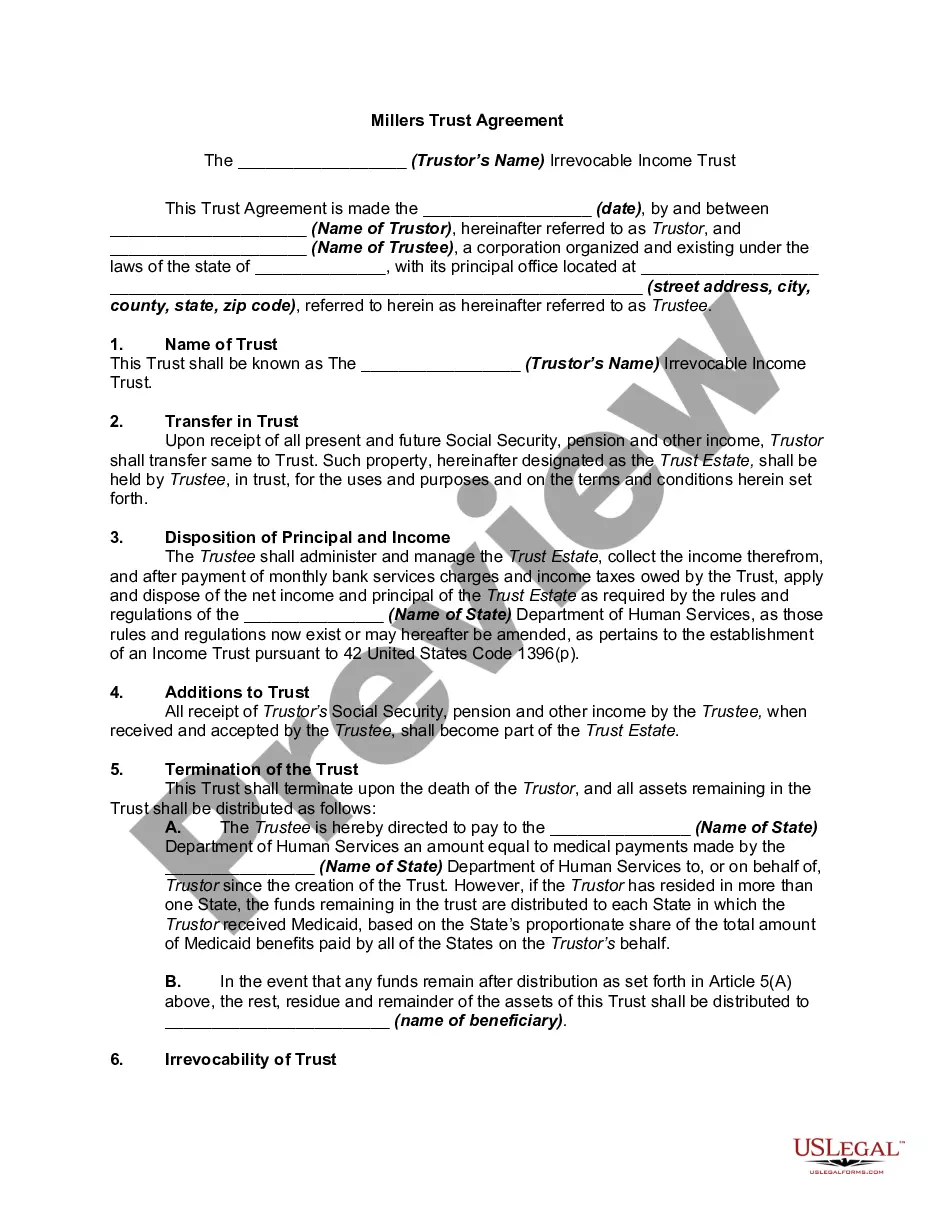
Description

Get your form ready online
Our built-in tools help you complete, sign, share, and store your documents in one place.
Make edits, fill in missing information, and update formatting in US Legal Forms—just like you would in MS Word.
Download a copy, print it, send it by email, or mail it via USPS—whatever works best for your next step.
Sign and collect signatures with our SignNow integration. Send to multiple recipients, set reminders, and more. Go Premium to unlock E-Sign.
If this form requires notarization, complete it online through a secure video call—no need to meet a notary in person or wait for an appointment.
We protect your documents and personal data by following strict security and privacy standards.

Make edits, fill in missing information, and update formatting in US Legal Forms—just like you would in MS Word.

Download a copy, print it, send it by email, or mail it via USPS—whatever works best for your next step.

Sign and collect signatures with our SignNow integration. Send to multiple recipients, set reminders, and more. Go Premium to unlock E-Sign.

If this form requires notarization, complete it online through a secure video call—no need to meet a notary in person or wait for an appointment.

We protect your documents and personal data by following strict security and privacy standards.
Looking for another form?








How to fill out Qualified Income Miller Trust?
Acquiring legal document samples that conform to federal and state regulations is crucial, and the internet provides numerous options to choose from.
However, what is the purpose of squandering time searching for the right The Miller Trust For Medicaid sample online when the US Legal Forms digital repository already has such documents collected in one location.
US Legal Forms is the premier online legal repository featuring over 85,000 fillable templates crafted by attorneys for any professional and personal scenario.
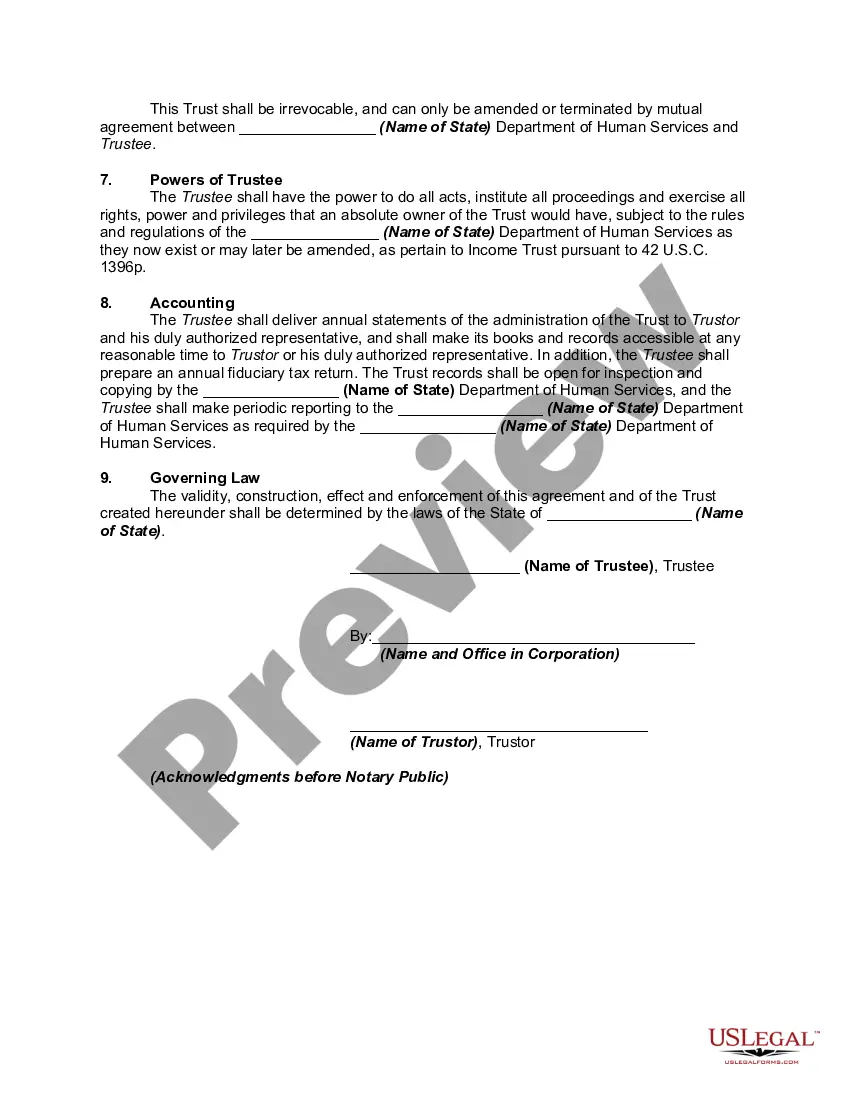
Review the template using the Preview feature or via the text outline to confirm it satisfies your requirements.
- They are easy to navigate with all documents categorized by state and intended use.
- Our team stays updated on legislative changes, ensuring your form is current and compliant when acquiring a The Miller Trust For Medicaid from our platform.
- Accessing a The Miller Trust For Medicaid is straightforward and rapid for both existing and new users.
- If you already possess an account with an active subscription, Log In and secure the document sample you need in your desired format.
- If you are new to our site, follow the instructions outlined below.
Form popularity
FAQ
You might need a Miller trust if your income exceeds Medicaid's limits but you still require assistance for healthcare. This trust can help reduce your countable income, allowing you to qualify for essential Medicaid benefits. By establishing this trust, you can protect your assets while still receiving needed care without facing financial strain.
What will a Delaware Miller Trust pay for? Community spouse ? if the individual is married, the funds from the Miller Trust can be used towards the amount of money their spouse requires for monthly expenses also known as a Minimum Monthly Maintenance Needs Allowance [MMMNA]. ... Medicare premiums.
A Miller trust, also called a Qualified Income Trust (QIT), can help you qualify for Medicaid nursing home benefits or other long-term home-based care services if your income exceeds the eligibility requirements.
The state in which the Medicaid recipient will be receiving long-term care benefits must be named as the beneficiary, and upon the death of the individual, the state will receive any funds it paid into the Miller Trust that were unused. The trust is irrevocable, which means that it cannot be altered or cancelled.
The trust must be irrevocable. The trust must state: ?Upon the death of the beneficiary, the trust assets shall be paid to the Medicaid agency of the State of Indiana up to the total amount of the Medicaid payments made to or on behalf of the beneficiary,? or words substantially to that effect.