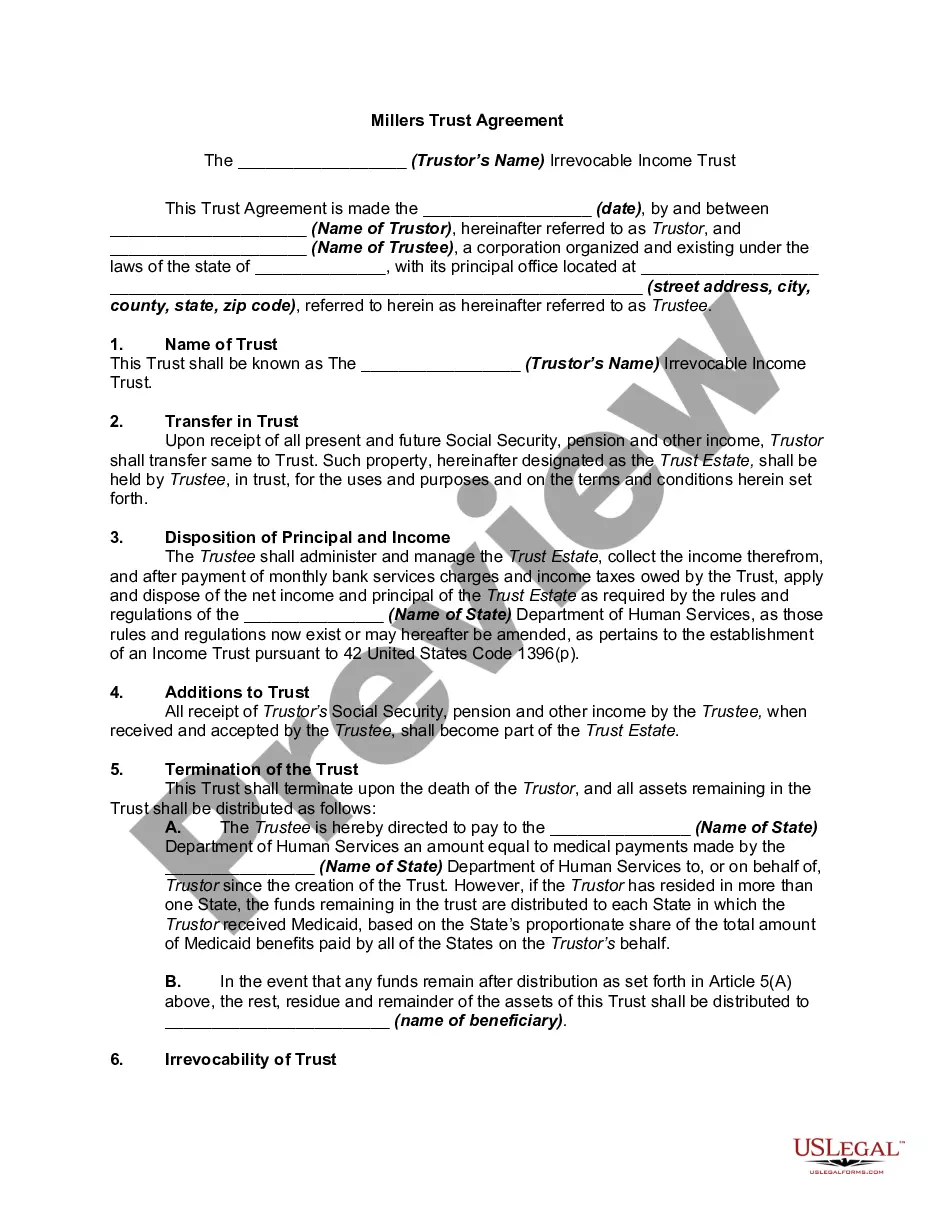
Texas Qualified Income Trust
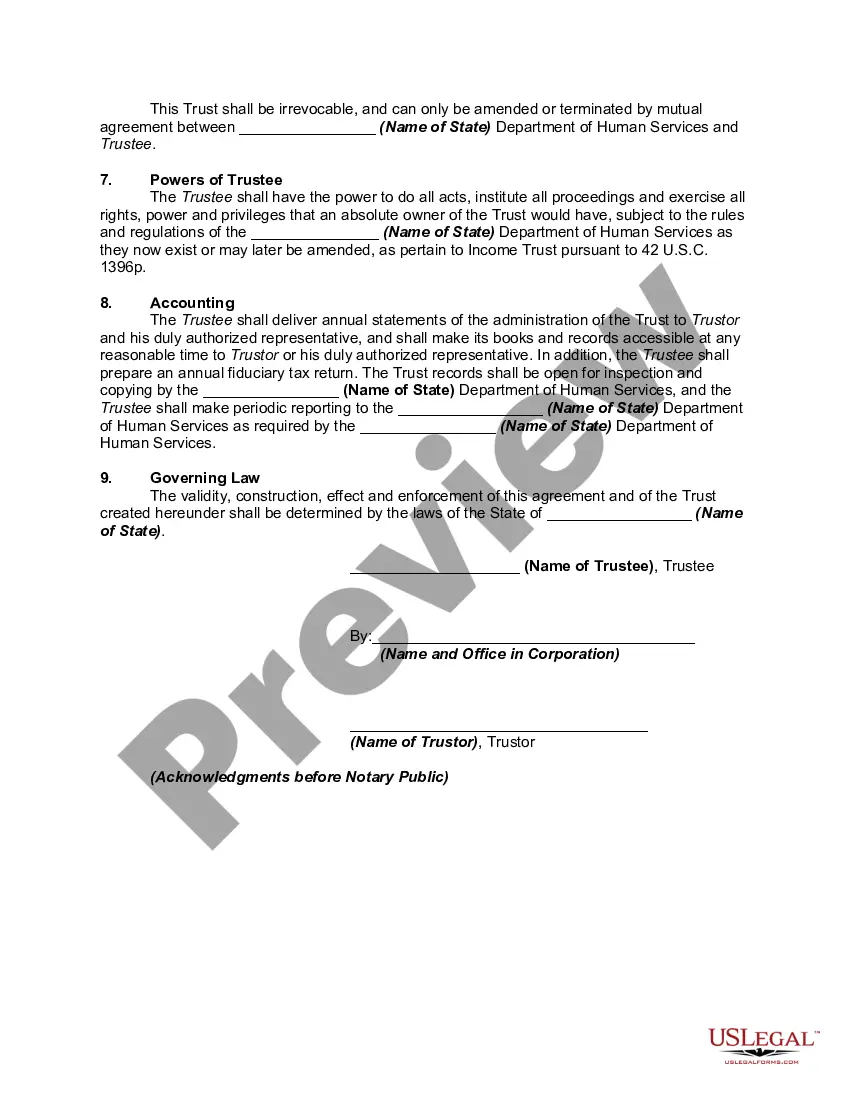
Description

Get your form ready online
Our built-in tools help you complete, sign, share, and store your documents in one place.
Make edits, fill in missing information, and update formatting in US Legal Forms—just like you would in MS Word.
Download a copy, print it, send it by email, or mail it via USPS—whatever works best for your next step.
Sign and collect signatures with our SignNow integration. Send to multiple recipients, set reminders, and more. Go Premium to unlock E-Sign.
If this form requires notarization, complete it online through a secure video call—no need to meet a notary in person or wait for an appointment.
We protect your documents and personal data by following strict security and privacy standards.

Make edits, fill in missing information, and update formatting in US Legal Forms—just like you would in MS Word.

Download a copy, print it, send it by email, or mail it via USPS—whatever works best for your next step.

Sign and collect signatures with our SignNow integration. Send to multiple recipients, set reminders, and more. Go Premium to unlock E-Sign.

If this form requires notarization, complete it online through a secure video call—no need to meet a notary in person or wait for an appointment.

We protect your documents and personal data by following strict security and privacy standards.
Looking for another form?


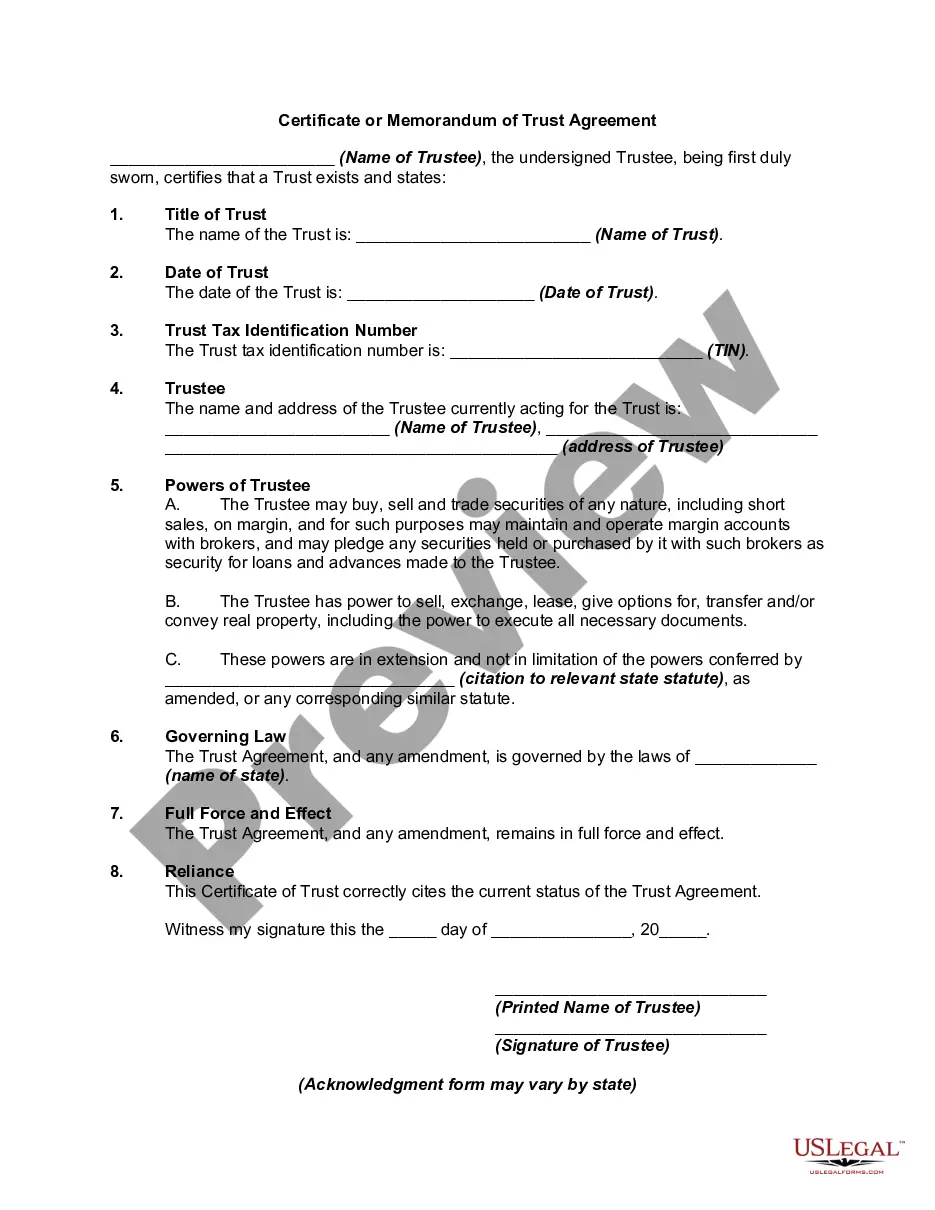




How to fill out Qualified Income Miller Trust?
- If you're a returning user, simply log in to your account and locate the appropriate form template. Ensure your subscription is active; consider renewing it if necessary.
- For first-time users, start by checking the Preview mode and form description to select the Texas qualified income trust that best fits your needs according to your jurisdiction.
- If you find that the chosen form doesn’t meet your requirements, use the Search tab to find an alternative template.
- Once you've found the right document, click the Buy Now button and select your preferred subscription plan. This will require you to create an account for full access.
- Complete your purchase by entering your credit card information or logging into your PayPal account to finalize the subscription.
- Finally, download the form and save it onto your device. You can also access it later in the My Forms section of your account.
With US Legal Forms, you gain access to a robust collection of over 85,000 editable and fillable legal forms, ensuring you can execute all necessary legal documents accurately and efficiently.
Don’t hesitate to get started—empower yourself today with US Legal Forms and secure your legally sound Texas qualified income trust easily!
Form popularity
FAQ
Filing a trust in Texas involves a series of steps to ensure it meets all legal requirements. While you typically do not file the trust document with the state, you must keep it in a safe place and ensure all involved parties understand its terms. You may want to consider consulting a legal professional to ensure that your Texas qualified income trust complies with state laws and retains its validity.
A Texas qualified income trust must meet specific criteria to ensure it serves its intended purpose. First, the trust must solely hold income that would otherwise disqualify you from government assistance programs. Secondly, the trust must have a trustee responsible for managing the assets. Finally, the trust must be established in compliance with state law, ensuring it meets all legal requirements for a qualified income trust.
Setting up a qualified income trust account in Texas requires you to choose a bank or financial institution willing to administer your trust. You will need to present the trust document and provide necessary identification. Additionally, be ready to discuss how you plan to fund the account with your income sources. This step is crucial to ensure that your Texas qualified income trust operates smoothly and complies with state regulations.
To set up a Texas qualified income trust, begin by consulting an attorney who specializes in elder law or estate planning. You will need to create a formal legal document that outlines the trust's terms, including who the trustee will be. Be sure to include a list of income sources and beneficiaries. Once the trust is established, you can fund it according to the requirements set by Texas state laws.
A qualified trust is defined as a trust that meets specific legal criteria established by state and federal laws. In Texas, a qualified income trust allows individuals to place their excess income into the trust, making them eligible for Medicaid services. Understanding the requirements of a Texas qualified income trust can significantly help in estate planning and safeguarding your assets.
Protecting your assets from Medicaid in Texas often involves establishing a Texas qualified income trust. This trust allows you to shift your income into a protected account that does not count against Medicaid eligibility limits. Additionally, working with experienced professionals can enhance your understanding of other asset protection strategies available.
To get a Texas qualified income trust, you typically need to consult with an attorney who specializes in elder law or estate planning. They will guide you through the necessary documentation and ensure compliance with state regulations. Platforms like uslegalforms can help simplify the process, providing forms and resources to establish your Texas qualified income trust efficiently.
A qualified trust in Texas is a legal arrangement that allows individuals to manage their income and assets while meeting Medicaid eligibility criteria. It is specially designed for individuals who need long-term care but want to protect their financial resources. Thus, creating a Texas qualified income trust helps ensure that you can receive Medicaid benefits without losing your assets.
A Texas qualified income trust is designed to help individuals qualify for Medicaid benefits while managing their income. It works by holding the individual’s income above the Medicaid limit in a trust, enabling them to still access necessary medical assistance. The funds in the trust can only be used for specified expenses, ensuring compliance with Medicaid regulations. Utilizing platforms like USLegalForms can provide essential resources and templates to aid in setting up your qualified income trust efficiently.
To create a valid trust, you must satisfy five essential requirements: a clear intent to create a trust, identifiable beneficiaries, a lawful purpose, a legitimate trustee, and a funded trust. The trust must specifically outline its terms to avoid any ambiguity, which is particularly important when establishing a Texas qualified income trust. By meeting these criteria, you can ensure your trust will operate legally and effectively.