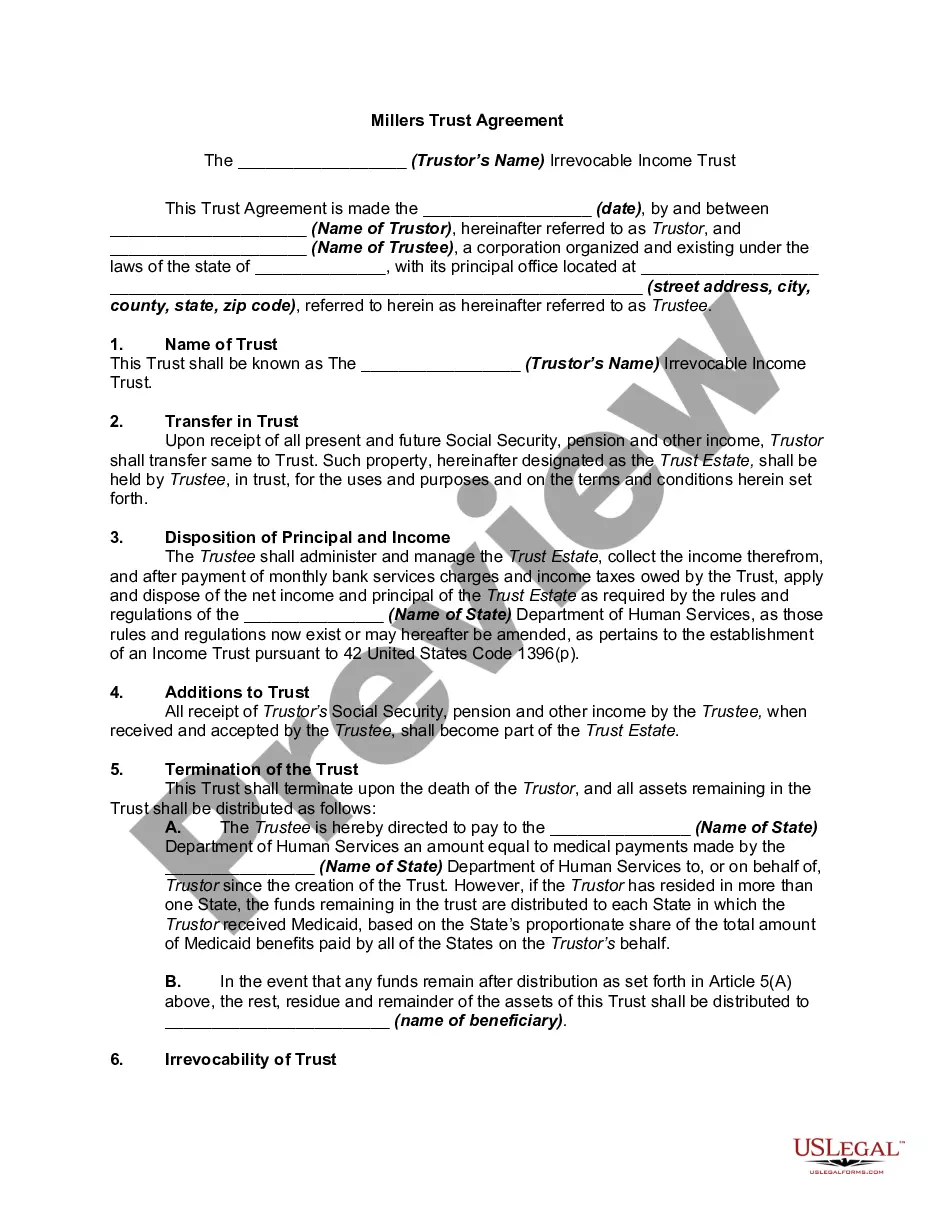
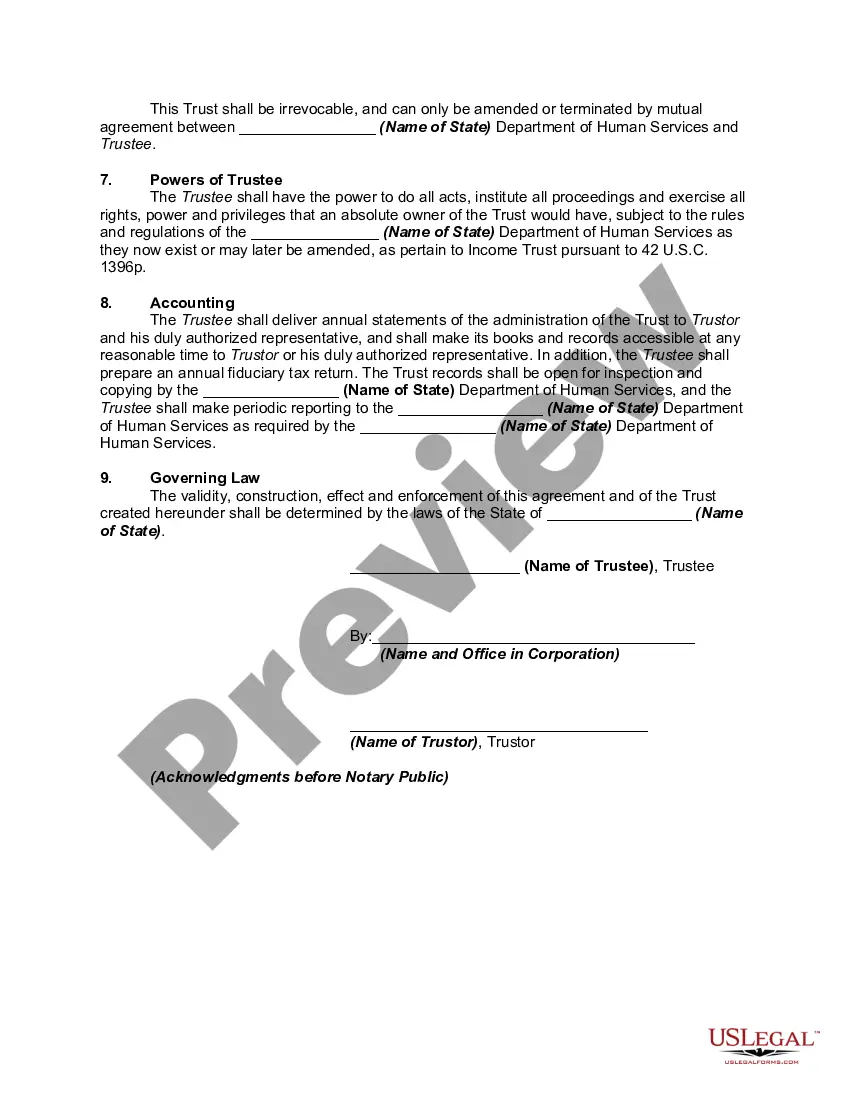
Qualified Income Trust Qit Form Florida
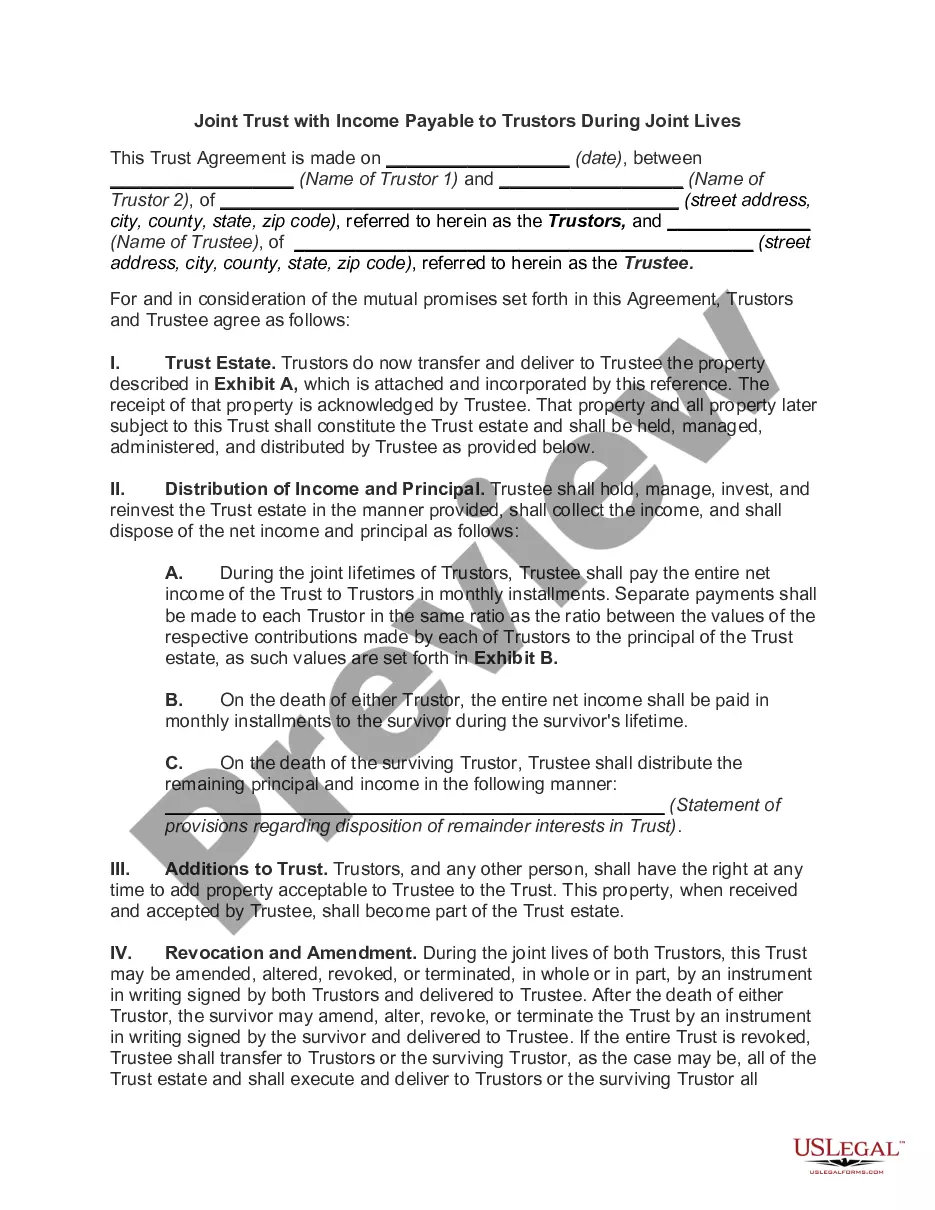
Description

Get your form ready online
Our built-in tools help you complete, sign, share, and store your documents in one place.
Make edits, fill in missing information, and update formatting in US Legal Forms—just like you would in MS Word.
Download a copy, print it, send it by email, or mail it via USPS—whatever works best for your next step.
Sign and collect signatures with our SignNow integration. Send to multiple recipients, set reminders, and more. Go Premium to unlock E-Sign.
If this form requires notarization, complete it online through a secure video call—no need to meet a notary in person or wait for an appointment.
We protect your documents and personal data by following strict security and privacy standards.

Make edits, fill in missing information, and update formatting in US Legal Forms—just like you would in MS Word.

Download a copy, print it, send it by email, or mail it via USPS—whatever works best for your next step.

Sign and collect signatures with our SignNow integration. Send to multiple recipients, set reminders, and more. Go Premium to unlock E-Sign.

If this form requires notarization, complete it online through a secure video call—no need to meet a notary in person or wait for an appointment.

We protect your documents and personal data by following strict security and privacy standards.
Looking for another form?

How to fill out Qualified Income Miller Trust?
Creating legal documents from the ground up can occasionally feel rather daunting.
Certain situations may require extensive research and significant financial investment.
If you're seeking a more straightforward and economical method for preparing the Qualified Income Trust Qit Form Florida or any other forms without unnecessary complications, US Legal Forms is always here to assist you.
Our digital library of over 85,000 current legal documents covers nearly every aspect of your financial, legal, and personal matters. With just a few taps, you can rapidly find state- and county-specific forms meticulously crafted for you by our legal experts.
Examine the form preview and descriptions to ensure you are accessing the correct document.
- Utilize our platform whenever you require trustworthy and dependable services to swiftly find and access the Qualified Income Trust Qit Form Florida.
- If you are a returning user with an account, simply Log In, find the form, and download it instantly or retrieve it later from the My documents section.
- Don't have an account yet? No problem. Setting one up takes minimal time, allowing you to browse the library.
- Before proceeding with the download of the Qualified Income Trust Qit Form Florida, please adhere to these suggestions.
Form popularity
FAQ
Florida does have limitations on self-settled trusts, particularly concerning Medicaid eligibility. A self-settled trust typically cannot protect assets from Medicaid claims since you retain some control over those assets. Consequently, if you're considering a Qualified Income Trust QIT form Florida, it's essential to consult with a legal expert to understand the implications and ensure you set up an effective trust.
Yes, an irrevocable trust can protect assets from Medicaid in Florida. Once you place your assets in this trust, you cannot reclaim them, which makes them unavailable for Medicaid's asset tests. This strategy helps safeguard your wealth while you meet the eligibility criteria for long-term care benefits. For detailed assistance with the Qualified Income Trust QIT form Florida, the resources at USLegalForms can be invaluable.
A Qualified Income Trust (QIT) in Florida allows individuals to set aside income that exceeds the Medicaid limit. When you establish a QIT, you can deposit your excess income into this trust. This process ensures that you qualify for Medicaid benefits while still preserving some of your income. If you want to navigate the complexities of a Qualified Income Trust QIT form Florida, consider using USLegalForms as your guide.
A QIT document is essential in establishing a Qualified Income Trust (QIT), which allows individuals to qualify for Medicaid while maintaining their income. The Qualified Income Trust QIT form Florida details the legal framework of the trust, including trustee responsibilities and beneficiary rights. This document is critical in ensuring that your income stays within the limits set by Medicaid eligibility criteria. For those looking to create this document, US Legal Forms provides comprehensive resources and templates.
To set up a Qualified Income Trust (QIT) in Florida, you first need to complete the Qualified Income Trust QIT form Florida. This form requires you to list the trust’s name, trustee, and beneficiaries. After filling out the form, you must have it notarized and then submit it for approval to the Department of Children and Families. Using US Legal Forms can simplify this process, as they provide easy access to the necessary documents.
Yes, Florida does allow the establishment of qualified income trusts to help residents manage their income for Medicaid eligibility. This legal framework permits individuals to set aside excess income, thereby qualifying for essential healthcare benefits. By making use of the qualified income trust QIT form in Florida, you can take advantage of this provision and secure the necessary assistance without sacrificing your financial well-being.
In Florida, QIT funds can be allocated towards immediate needs like housing, groceries, and healthcare services. This ensures that while you benefit from Medicaid or other programs, your essential needs are met. Understanding the utility of the qualified income trust QIT form in Florida can help you maximize the potential of your QIT for daily expenses.
Setting up a QIT involves drafting a trust agreement, which outlines how the trust will operate and what guidelines it will follow. You must choose a reliable trustee to manage the funds within the trust. When using the qualified income trust QIT form in Florida, you have a clearer path to establishing this legal entity, ensuring it complies with state regulations.
A qualified income trust, or QIT, serves to hold excess income that exceeds the federal limits for Medicaid eligibility. Essentially, it allows qualifying individuals to meet the income threshold while still accessing necessary healthcare benefits. Exploring the features of a qualified income trust QIT form in Florida can help you understand how it aids in financial planning for healthcare.
To set up a qualified income trust in Florida, you need to create a legal document that meets state requirements. This includes specifying the trust's purpose, designating a trustee, and listing beneficiaries. Utilizing the qualified income trust QIT form in Florida can simplify this process, allowing you to navigate legalities smoothly. Resources like USLegalForms provide templates and guidance to assist you.