Qualified Income Trust Complete With The
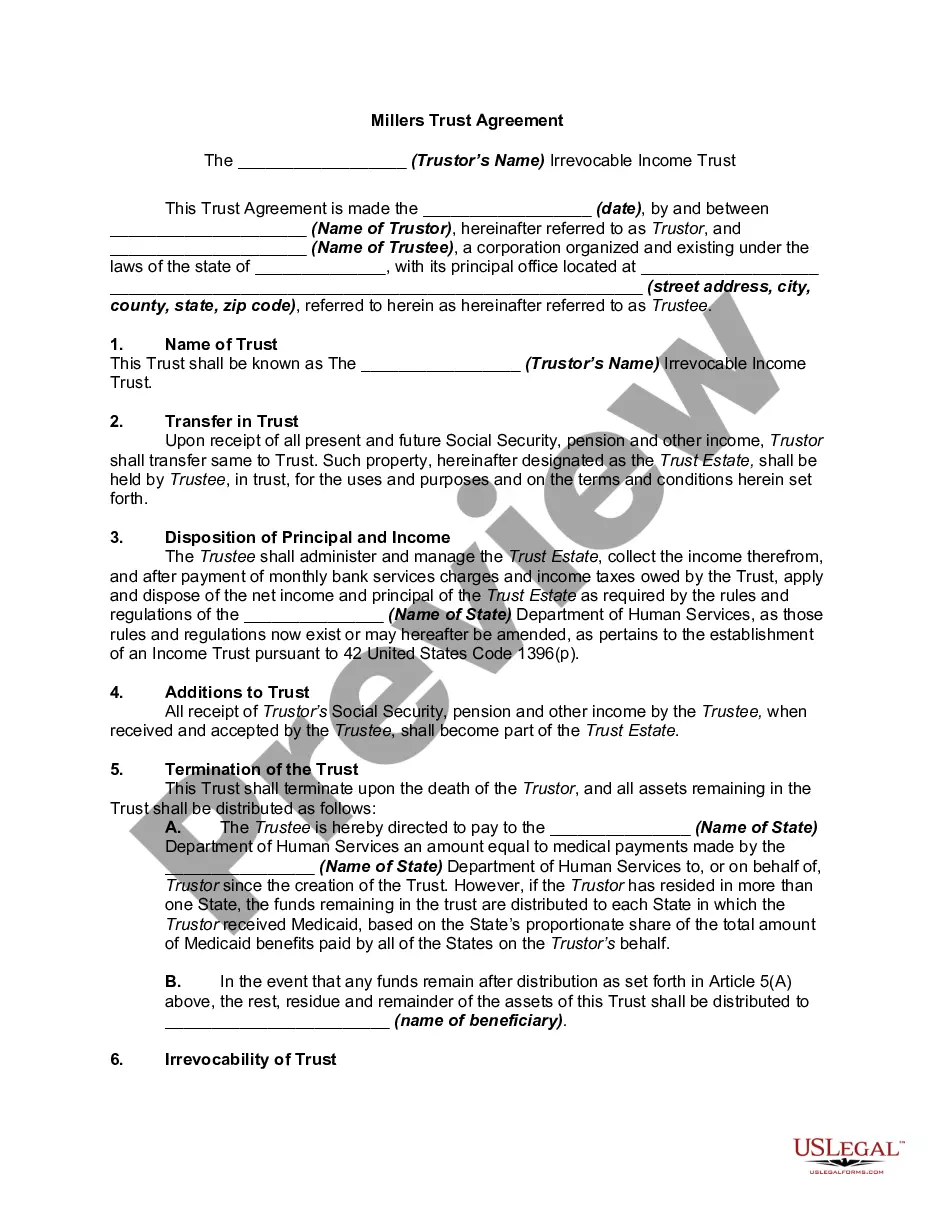
Description

Get your form ready online
Our built-in tools help you complete, sign, share, and store your documents in one place.
Make edits, fill in missing information, and update formatting in US Legal Forms—just like you would in MS Word.
Download a copy, print it, send it by email, or mail it via USPS—whatever works best for your next step.
Sign and collect signatures with our SignNow integration. Send to multiple recipients, set reminders, and more. Go Premium to unlock E-Sign.
If this form requires notarization, complete it online through a secure video call—no need to meet a notary in person or wait for an appointment.
We protect your documents and personal data by following strict security and privacy standards.

Make edits, fill in missing information, and update formatting in US Legal Forms—just like you would in MS Word.

Download a copy, print it, send it by email, or mail it via USPS—whatever works best for your next step.

Sign and collect signatures with our SignNow integration. Send to multiple recipients, set reminders, and more. Go Premium to unlock E-Sign.

If this form requires notarization, complete it online through a secure video call—no need to meet a notary in person or wait for an appointment.

We protect your documents and personal data by following strict security and privacy standards.
Looking for another form?








How to fill out Qualified Income Miller Trust?
- If you're an existing user, log in to your account and access the required form. Make sure your subscription is current; if it's expired, renew it following your chosen payment plan.
- For new users, begin by browsing through the forms available in Preview mode. Confirm the document meets your specific needs and aligns with local jurisdiction guidelines.
- If the form isn't quite right, utilize the Search tab above to find an alternative that better fits your requirements. Once you identify the appropriate template, proceed to the next step.
- To purchase the document, click the Buy Now button and select your preferred subscription plan. You will need to create an account to gain access to the full library.
- Complete your purchase by providing your payment details through credit card or PayPal.
- Finally, download your selected form and save it to your device. You can also access it later from the My Forms section in your profile.
With US Legal Forms, you're not just purchasing a document; you're ensuring legal accuracy with access to premium expertise. Their robust collection of forms is unmatched, offering more options at a competitive price.
Take the stress out of legal documentation. Start using US Legal Forms today for all your legal needs!
Form popularity
FAQ
Setting up a Qualified Income Trust account begins with choosing a bank that allows trust accounts. Next, gather all required documents, including the trust agreement and identification. You need to complete the bank’s application to establish the account in the trust's name. For a seamless process, consider using USLegalForms to create your trust documents and ensure all legal requirements are met.
Reporting income from a Qualified Income Trust on your tax return involves filing IRS Form 1041, which is the tax return for estates and trusts. The trust itself is a separate taxable entity, so ensure all income generated is reported accurately. Distributions made to beneficiaries may also require additional reporting. You can consult USLegalForms for resources and tax handling guidance specific to Qualified Income Trusts.
In New Jersey, a Qualified Income Trust allows individuals to qualify for Medicaid while maintaining some income. The trust receives monthly income, which limits the amount available for personal expenses. This mechanism ensures that the individual's total income does not exceed the Medicaid threshold. Utilizing USLegalForms can help create compliant QIT documents that align with New Jersey laws.
To set up a Qualified Income Trust, you must create a written trust agreement that meets state requirements. Then, open a separate bank account specifically for the trust funds. It is essential to transfer the income that exceeds the Medicaid limit into this account. Using USLegalForms can simplify this process, providing templates for trust agreements and guidance tailored to your needs.
To establish a qualified income trust, you typically need to create a legal document outlining its terms and purpose. You can draft this document yourself or seek assistance from a legal professional, especially to ensure compliance with your state’s regulations. Platforms like USLegalForms can provide templates and resources to simplify this process. By using a qualified income trust complete with the right guidance, you can effectively manage your income while qualifying for necessary benefits.
Upon the death of the beneficiary, a qualified income trust typically terminates. The remaining funds in the trust can then be used to settle any outstanding debts or healthcare expenses of the deceased. It is important to consult legal guidance to ensure these funds are managed appropriately. Utilizing a qualified income trust complete with the guidance of professionals can streamline this process.
Qualified income trust funds can be used to cover certain expenses that exceed Medicaid income limits. These expenses typically include housing costs, medical bills, and personal care services. By utilizing a qualified income trust, individuals can preserve more of their income for essential needs. Thus, using a qualified income trust complete with the necessary documentation can enhance your financial stability.
To use a qualified income trust, start by establishing the trust according to state guidelines. Next, transfer any excess income into the trust to protect your eligibility for Medicaid. This income can then be utilized for specific expenses outlined by Medicaid, such as healthcare costs or assisted living fees. By employing a qualified income trust complete with well-defined terms, you enhance your financial planning while ensuring access to necessary benefits.
Documenting trust income requires careful record-keeping of all income sources and disbursements. You should maintain accurate records of deposits, withdrawals, and any related transactions. It's important to regularly update this documentation to reflect the trust's financial activity. Using a qualified income trust complete with organized records will simplify the application process for Medicaid and ensure compliance with regulations.
A qualified income trust can be used for managing excess income when applying for Medicaid benefits. It helps individuals qualify for these benefits by legally setting aside income that exceeds Medicaid limits. You can use this trust to cover various expenses, such as medical bills or long-term care services. Utilizing a qualified income trust complete with the proper documentation can significantly ease the financial strain.