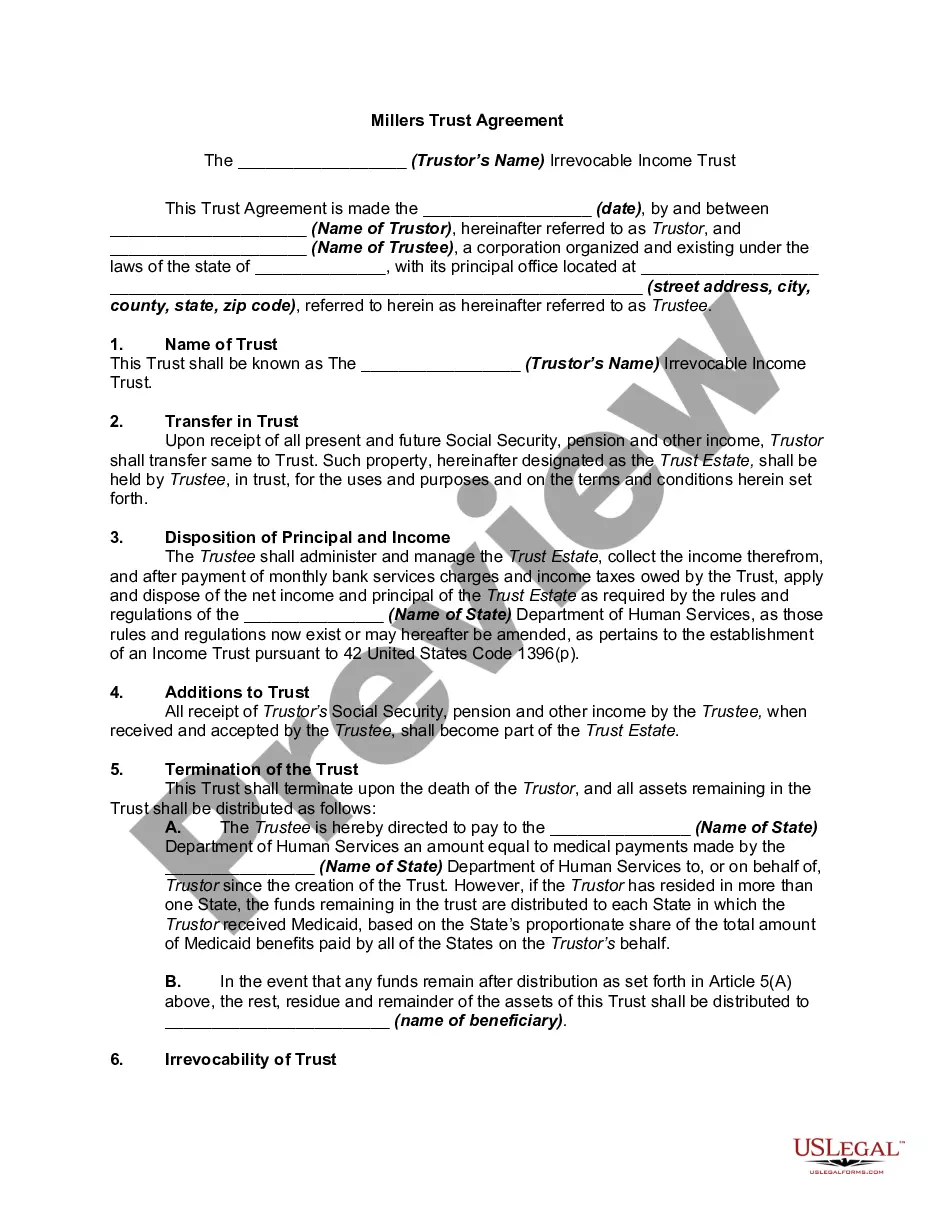
Miller Trust In Iowa
Description
Get your form ready online
Our built-in tools help you complete, sign, share, and store your documents in one place.
Make edits, fill in missing information, and update formatting in US Legal Forms—just like you would in MS Word.
Download a copy, print it, send it by email, or mail it via USPS—whatever works best for your next step.
Sign and collect signatures with our SignNow integration. Send to multiple recipients, set reminders, and more. Go Premium to unlock E-Sign.
If this form requires notarization, complete it online through a secure video call—no need to meet a notary in person or wait for an appointment.
We protect your documents and personal data by following strict security and privacy standards.

Make edits, fill in missing information, and update formatting in US Legal Forms—just like you would in MS Word.

Download a copy, print it, send it by email, or mail it via USPS—whatever works best for your next step.

Sign and collect signatures with our SignNow integration. Send to multiple recipients, set reminders, and more. Go Premium to unlock E-Sign.

If this form requires notarization, complete it online through a secure video call—no need to meet a notary in person or wait for an appointment.

We protect your documents and personal data by following strict security and privacy standards.
Looking for another form?








How to fill out Qualified Income Miller Trust?
It’s clear that you cannot transform into a legal expert in a single night, nor can you swiftly learn how to prepare a Miller Trust in Iowa without possessing a specialized skill set.
Drafting legal papers is a prolonged journey that demands particular education and abilities. So why not entrust the assembly of the Miller Trust in Iowa to the experts.
With US Legal Forms, one of the most extensive legal document repositories, you can find anything from court filings to templates for office communication.
You can access your documents from the My documents section whenever you need. If you’re an established client, you can just Log In, and find and download the template from the same section.
No matter the reason for your documents—be it financial, legal, or personal—our website has everything you need. Give US Legal Forms a try today!
- Begin your search with the search bar located at the top of the page.
- View it (if this option is available) and review the accompanying description to determine if the Miller Trust in Iowa meets your needs.
- Restart your search if you require another form.
- Sign up for a free account and pick a subscription plan to purchase the form.
- Click Buy now. Once the payment is processed, you can obtain the Miller Trust in Iowa, fill it out, print it, and send or mail it to the required persons or organizations.
Form popularity
FAQ
Creating a trust in Iowa typically involves drafting a legal document that specifies the terms of the trust, including who the beneficiaries are and how the assets should be managed. You may want to consider a Miller trust in Iowa, especially if you are looking to protect eligibility for certain benefits. After drafting the document, you'll need to fund the trust by transferring assets into it. Engaging with a reliable legal platform like uslegalforms can simplify this process, guiding you through the necessary steps.
Yes, a Miller trust in Iowa does need to file a tax return. The income generated from the assets held within the trust is taxable, and it will require a separate tax filing under the trust's name. The trustee is responsible for ensuring that all income and distributions are properly reported to the IRS. Consulting a tax professional can help ensure compliance with tax regulations.
To form a trust in Iowa, start by drafting a trust document that outlines your assets and the chosen beneficiaries. Clearly define roles for the trustee, who will manage the trust. It's beneficial to consult with an attorney familiar with the Miller trust in Iowa to ensure compliance with state laws. Once everything is in place, you can fund the trust by transferring your assets into it.
To establish a Miller trust in Iowa, you begin by understanding your specific financial situation and needs. You can consult with an attorney who specializes in estate planning to ensure you meet all legal requirements. Next, you'll need to draft the trust document, outlining the terms and appointing a trustee. Finally, work with your attorney to fund the trust and comply with any state regulations, ensuring it effectively serves its purpose.
The primary benefit of a Miller trust in Iowa is that it allows you to access Medicaid benefits while adhering to income restrictions. This trust helps safeguard your financial resources while ensuring that you can receive medical care. By utilizing a Miller trust, you can also facilitate better management of your funds, leading to more meaningful engagement with your financial well-being. If you need support setting up a trust, consider using US Legal Forms for easy-to-navigate resources.
You might need a Miller trust to preserve your eligibility for Medicaid while maintaining some control over your income. If your income exceeds Iowa's Medicaid threshold, this trust can help you qualify for assistance with medical expenses. Moreover, it provides a practical solution to manage your financial resources effectively. Considering a Miller trust can provide peace of mind knowing you have options for healthcare financing.
A Miller trust in Iowa is a special type of trust designed to help individuals qualify for Medicaid while allowing them to manage their income. It holds excess income above Medicaid limits, ensuring that beneficiaries meet the program’s financial criteria. This trust ensures that individuals can still receive necessary medical care and support without losing their financial stability. Understanding this trust can be vital for individuals looking to secure their health benefits.
To set up a Miller trust in Iowa, you need to create a legal document that outlines how the trust will operate. You can work with an attorney to draft this document and ensure it meets state requirements. Additionally, you’ll need to fund the trust appropriately and follow Iowa's regulations to maintain its compliance. Using a legal service platform like US Legal Forms can simplify this process by providing templates and guidance tailored for Iowa.