Agreement Art Contract Without
Description
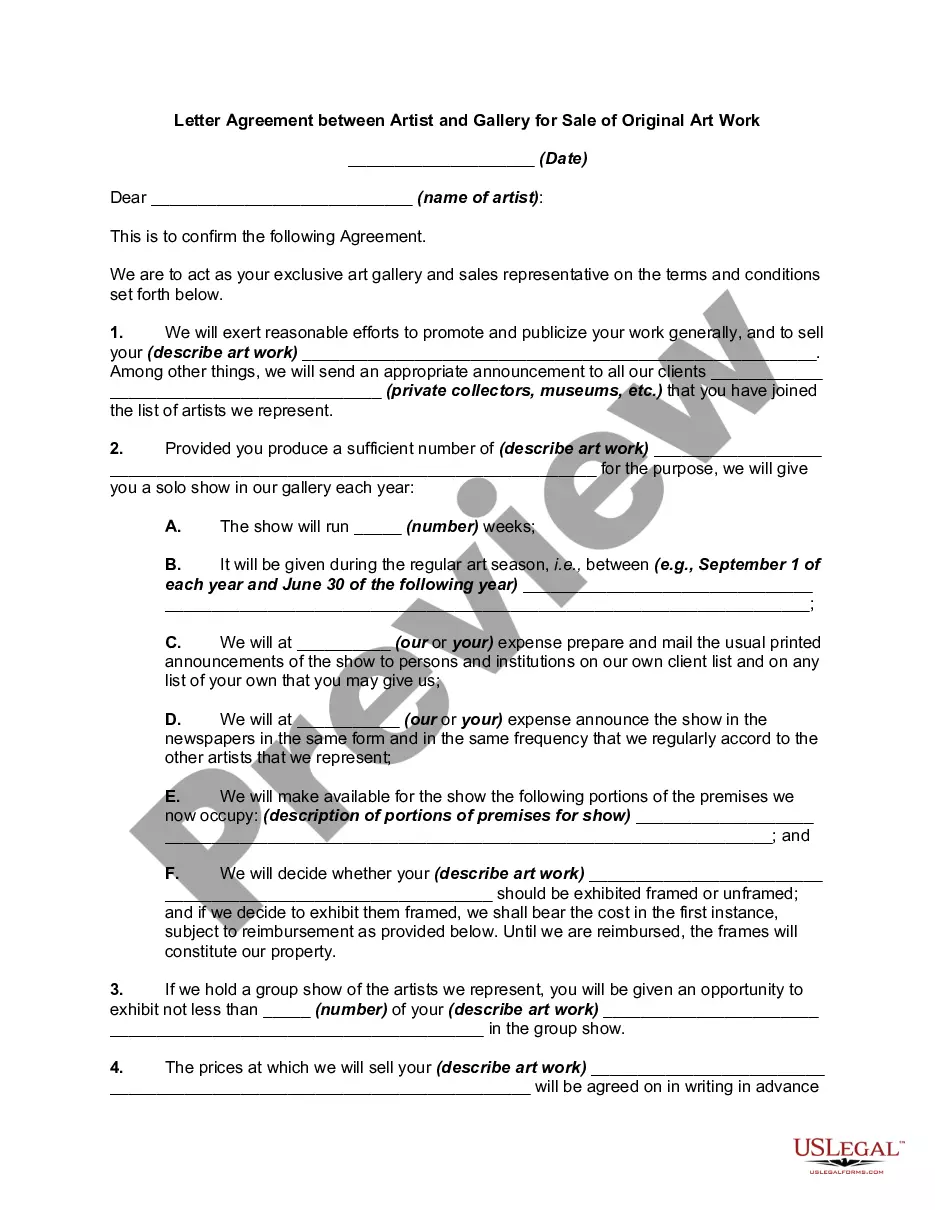
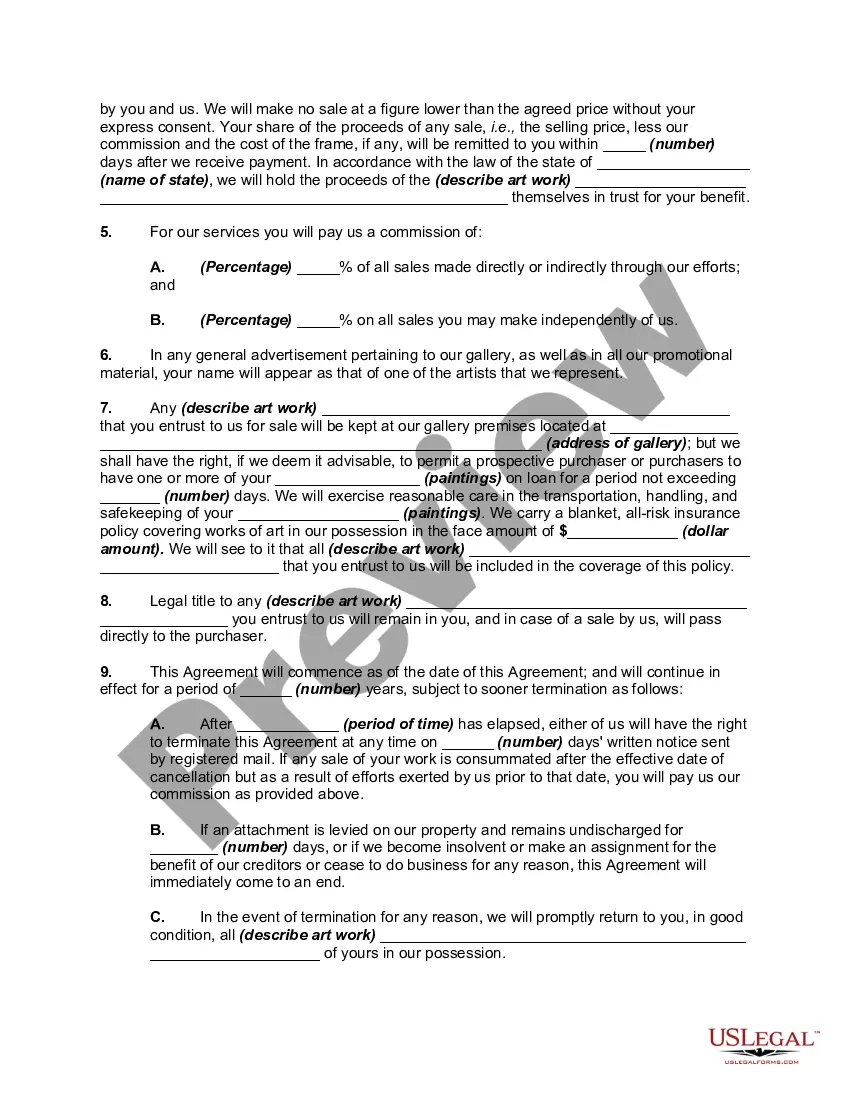
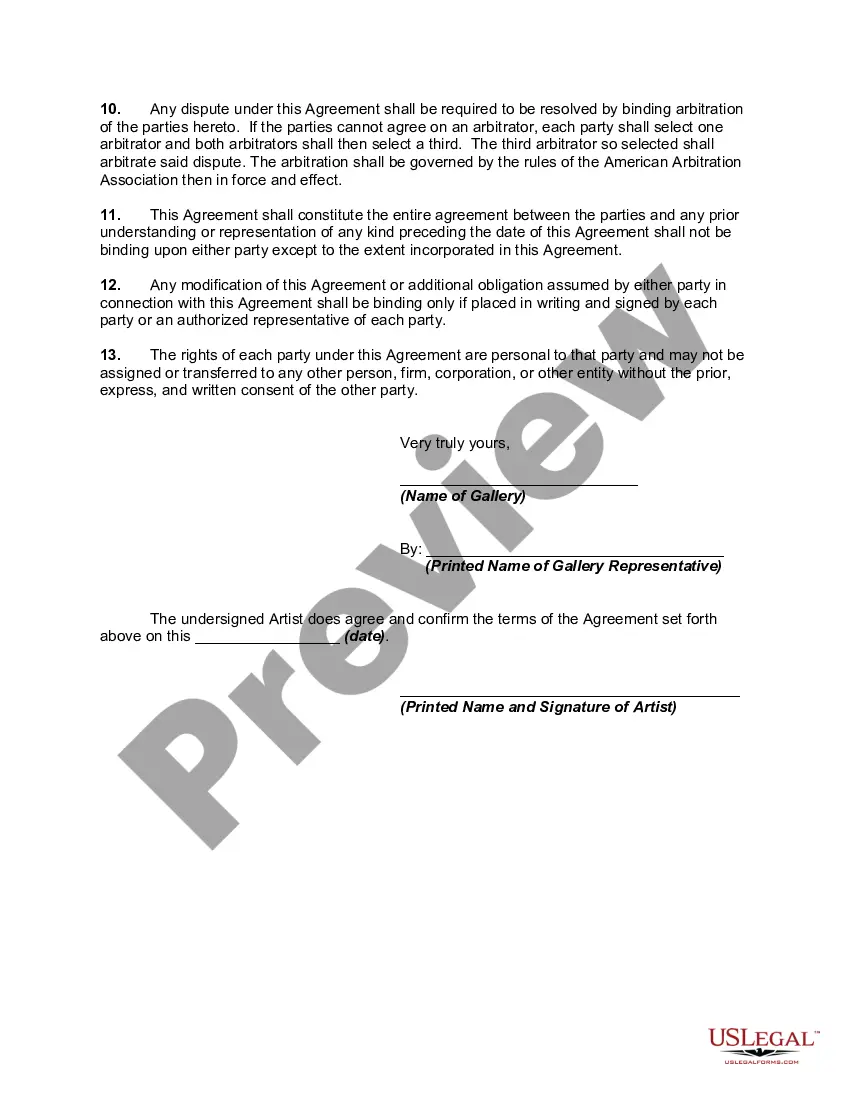
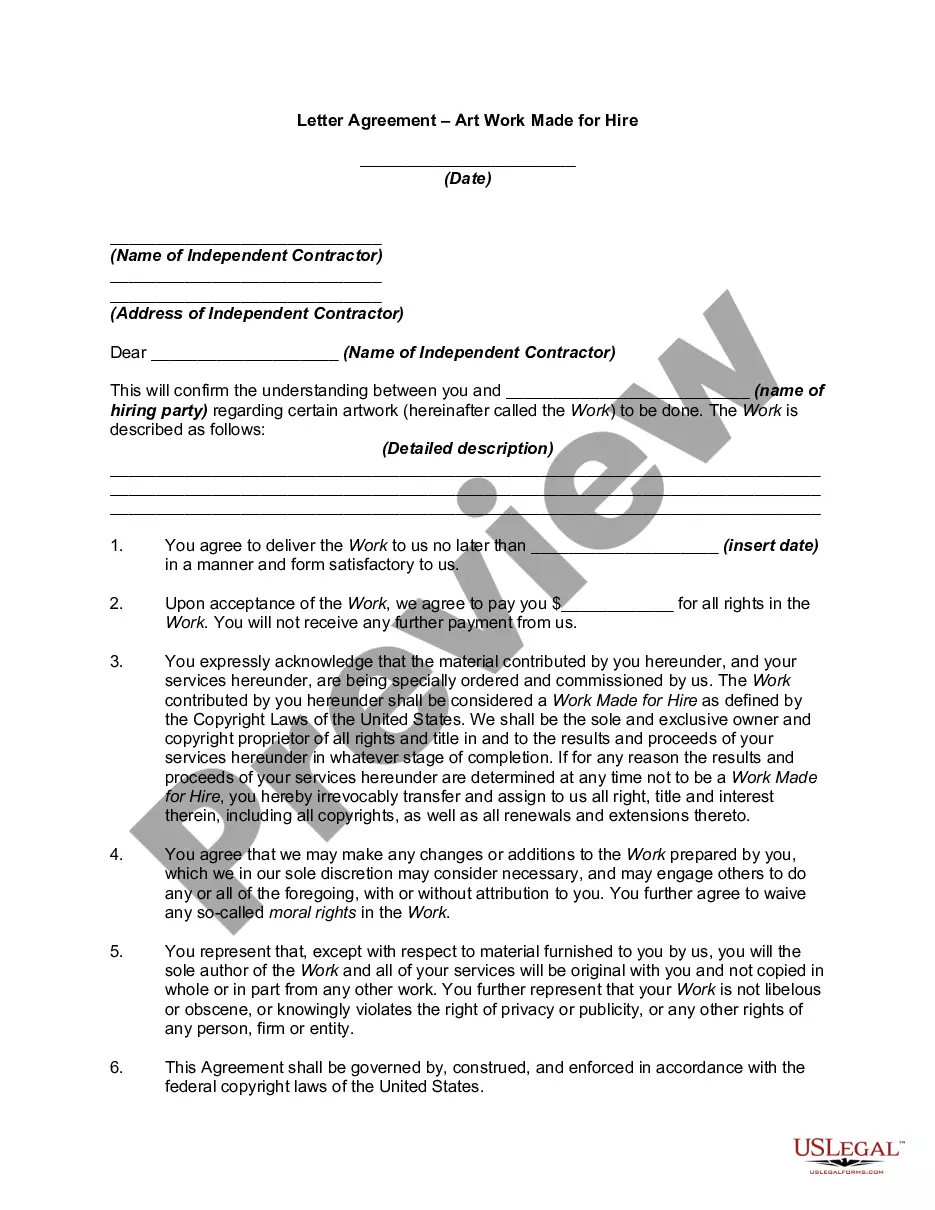
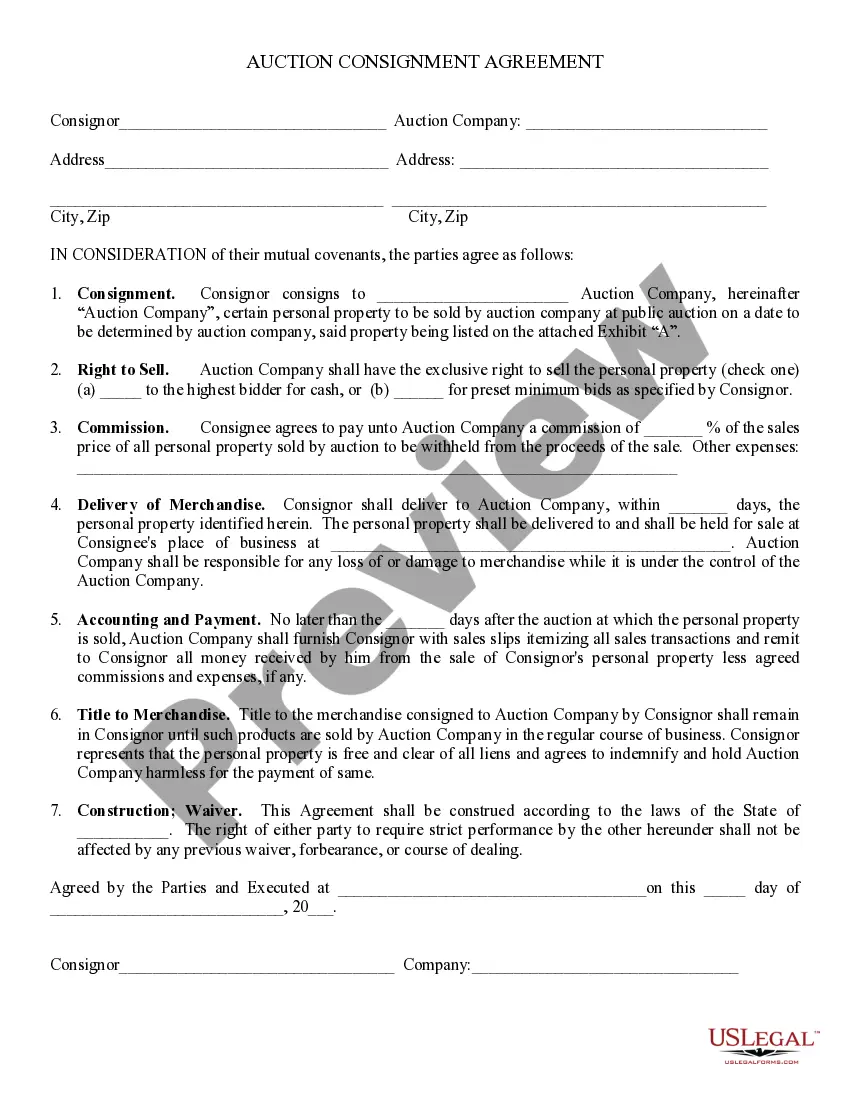





How to fill out Letter Agreement Between Artist And Gallery For Sale Of Original Art Work?
Legal documentation management can be daunting, even for seasoned professionals.
When you seek an Agreement Art Contract Without and lack the time to search for the right and current version, the process can be overwhelming.
With US Legal Forms, you can.
Access state- or region-specific legal and business documents. US Legal Forms accommodates all your needs, from personal to corporate paperwork, all in a single location.
If this is your first experience with US Legal Forms, create an account and gain unrestricted access to all the platform's features. Here are the steps to follow after locating the necessary form: confirm it is the correct form by previewing it and reading its description, ensure the template is valid in your state or county, click Buy Now when ready, choose a subscription plan, select the format you need, and Download, fill out, eSign, print, and send your document. Benefit from the US Legal Forms web library, backed by 25 years of expertise and reliability. Transform your daily document management into a smooth and user-friendly experience today.
- Utilize advanced tools to fill out and manage your Agreement Art Contract Without.
- Access a database of articles, guides, and materials that are pertinent to your circumstances and requirements.
- Save time and effort in searching for the documents you want, and take advantage of US Legal Forms’ sophisticated search and Review feature to find Agreement Art Contract Without and download it.
- If you have a monthly subscription, Log In to your US Legal Forms account, search for the form, and download it.
- Check your My documents tab to review the documents you have previously downloaded and manage your folders to your liking.
- A robust online form library could be transformative for anyone wanting to handle these matters efficiently.
- US Legal Forms is a leader in online legal documents, with more than 85,000 state-specific legal forms available at your convenience.
Form popularity
FAQ
Yes, you can create your own legally binding contract, provided it meets essential legal requirements. This includes clearly stating the agreement's purpose, the parties involved, and any terms and conditions. If you prefer to draft an agreement art contract without the need for a lawyer, using resources from US Legal Forms can guide you through the process, ensuring that your contract holds up in a legal setting.
Creating an artist agreement involves outlining the scope of work, payment terms, and rights to the artwork. Start by defining key terms and responsibilities for both parties. It is essential to include clauses that protect your interests, especially if you want to agree to an art contract without complications. You can utilize US Legal Forms to access templates that simplify this process, ensuring your agreement is comprehensive and legally binding.
To prove ownership of artwork, you can provide receipts, signed contracts, or any documentation that shows you purchased or created the piece. Additionally, photographs of the artwork during its creation can serve as evidence. If you have a formal agreement art contract without any ambiguity, it can strengthen your claim of ownership. Using platforms like US Legal Forms can help you create a solid agreement that establishes your rights clearly.
For an agreement to be recognized as a legally binding contract, it must meet four essential requirements. First, there must be an offer made by one party and accepted by another, demonstrating mutual agreement. Second, consideration must be present, meaning something of value must be exchanged between the parties. Third, both parties must have the legal capacity to form a contract, which generally includes being of legal age and mentally competent. Finally, the agreement must have a lawful purpose; hence, an Agreement art contract without an illegal objective is crucial for validity.
Commission TIPS Subject. Determine the subject of the project, e.g., a commissioned painting, sculpture, or textile. Terms. Establish the terms of the project. ... Price. Determine the price in advance. Timeline. Set a time frame for the work's execution and installation. Artist's rights. ... Signature.
Points to include in your art Commission Agreement: A loose description of the project. ... Payment terms for the artwork commission. ... Deadline for your commissioned artwork. ... Does the commission price include framing? ... Delivery of the commissioned artwork. ... Installation of the artwork. ... Copyright.
The important parts of an artist agreement include: Client details. Project details. Schedule. Payment information. Item list (for artworks) Rights of the artist. Cancellation.
But there are also some key sections and details that are common across different types of contracts: including full and complete details of an artwork or proposal; artwork copyright and documentation permissions; time frame of the agreement, important stages and key dates; governing law under which the agreement is ...
Those seven elements are: Identification (Defining all the parties involved) Offer (The agreement) Acceptance (Agreement mirrored by other parties) Mutual consent (Signatory consent of all parties) Consideration (The value exchanged for the offer) Capacity (Legal/mental competence of all parties)