Written Demand For Past Due Rent
Description

Get your form ready online
Our built-in tools help you complete, sign, share, and store your documents in one place.
Make edits, fill in missing information, and update formatting in US Legal Forms—just like you would in MS Word.
Download a copy, print it, send it by email, or mail it via USPS—whatever works best for your next step.
Sign and collect signatures with our SignNow integration. Send to multiple recipients, set reminders, and more. Go Premium to unlock E-Sign.
If this form requires notarization, complete it online through a secure video call—no need to meet a notary in person or wait for an appointment.
We protect your documents and personal data by following strict security and privacy standards.

Make edits, fill in missing information, and update formatting in US Legal Forms—just like you would in MS Word.

Download a copy, print it, send it by email, or mail it via USPS—whatever works best for your next step.

Sign and collect signatures with our SignNow integration. Send to multiple recipients, set reminders, and more. Go Premium to unlock E-Sign.

If this form requires notarization, complete it online through a secure video call—no need to meet a notary in person or wait for an appointment.

We protect your documents and personal data by following strict security and privacy standards.
Looking for another form?




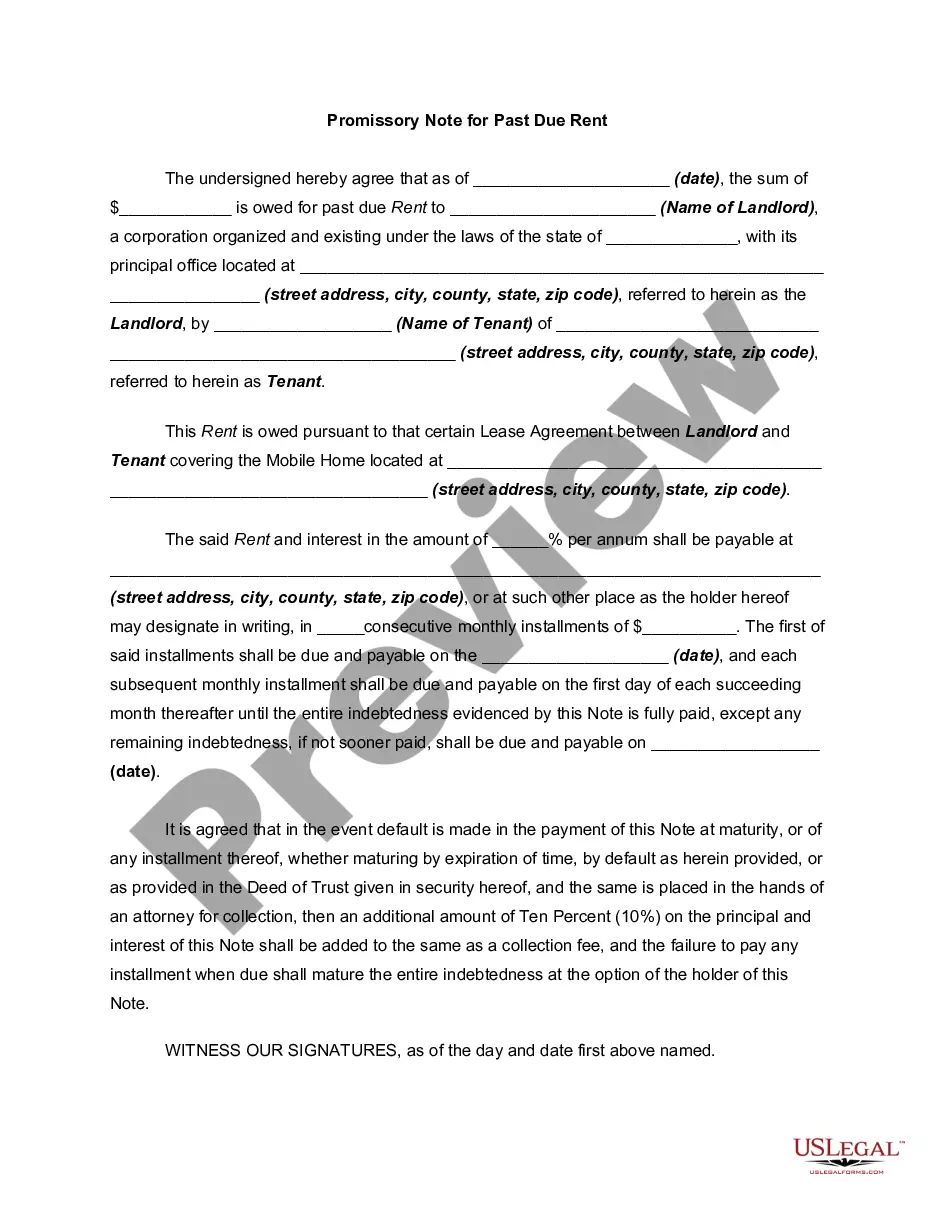
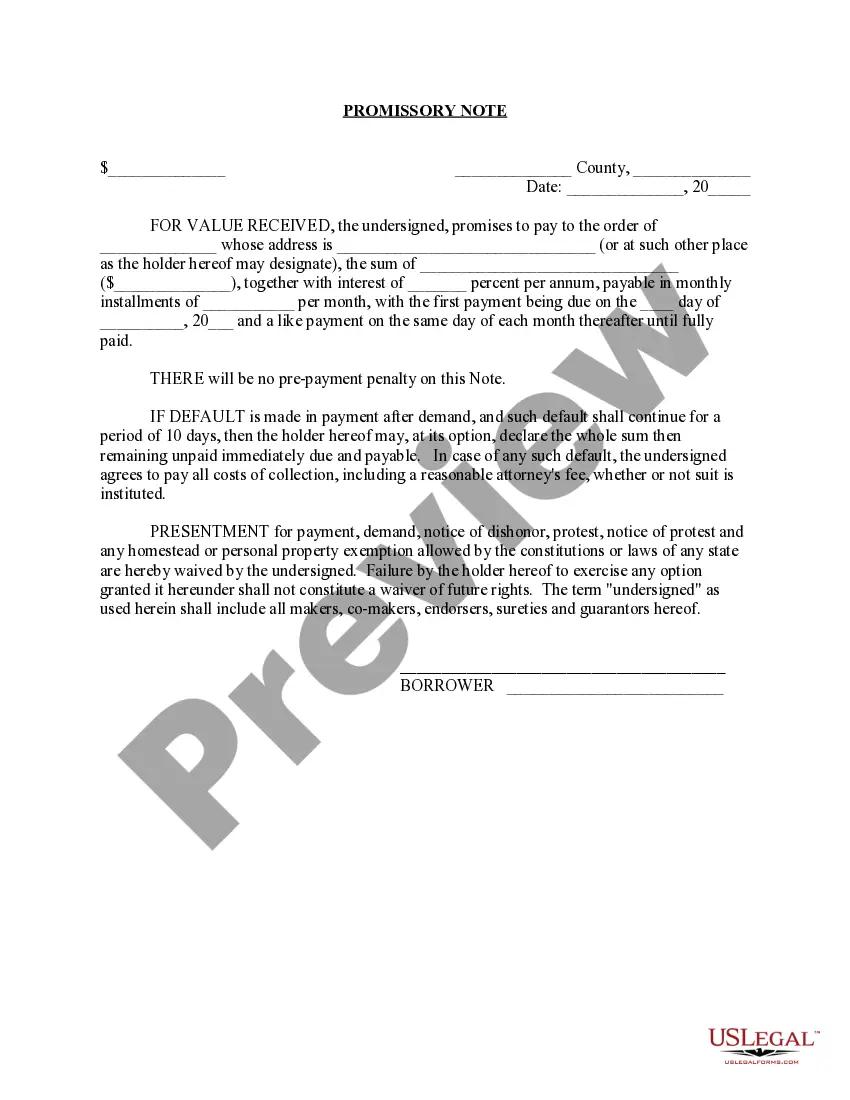
How to fill out Promissory Note For Past Due Rent?
Regardless of whether for commercial reasons or personal issues, everyone must confront legal situations at some point in their lives.
Filling out legal documents demands meticulous care, beginning with selecting the correct form template.
With a vast catalog of US Legal Forms available, you do not need to waste time searching for the correct sample online. Utilize the library’s intuitive navigation to find the right template for any situation.
- For example, if you select an incorrect version of the Written Demand For Past Due Rent, it will be rejected upon submission.
- Thus, it is crucial to have a reliable source for legal documents such as US Legal Forms.
- If you need to acquire a Written Demand For Past Due Rent template, follow these straightforward steps.
- Obtain the sample you require by utilizing the search bar or browsing through the catalog.
- Examine the details of the form to ensure it corresponds with your circumstances, state, and county.
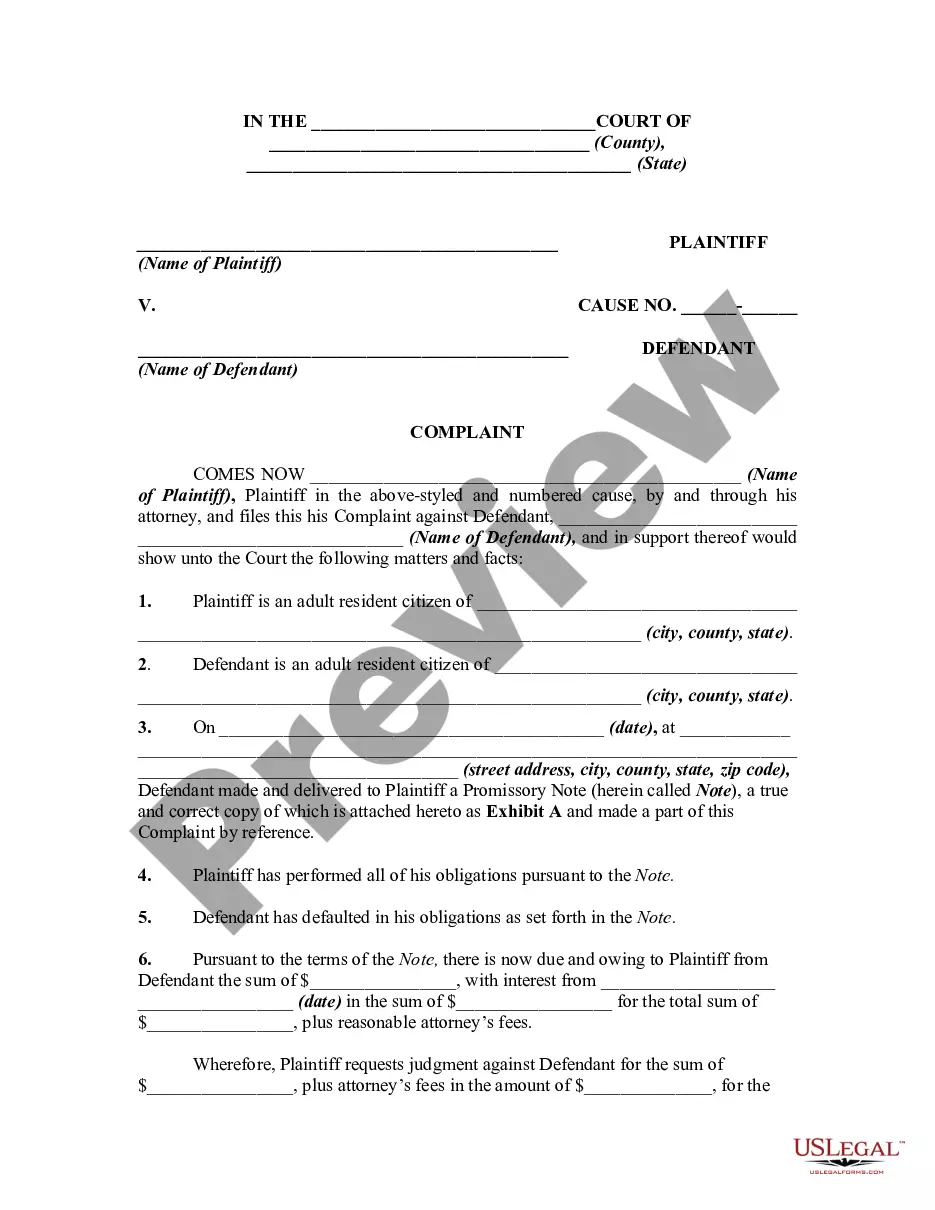
- Click on the form’s preview to inspect it.
- If it is the wrong document, return to the search tool to locate the Written Demand For Past Due Rent template you need.
- Download the file once it meets your specifications.
- If you already possess a US Legal Forms account, click Log in to retrieve previously saved documents from My documents.
- If you do not yet have an account, you can acquire the form by clicking Buy now.
- Select the correct payment option.
- Complete the profile registration form.
- Choose your payment method: either a credit card or a PayPal account.
- Select the desired file format and download the Written Demand For Past Due Rent.
- Once downloaded, you can complete the form using editing software or print it out and fill it in manually.
Form popularity
FAQ
Suing a tenant for unpaid rent can be worthwhile, especially after sending a written demand for past due rent. It may recover your losses and send a clear message about the importance of timely payments. Before proceeding, weigh the costs of litigation against the potential recovery. Using services from US Legal can help you navigate this process efficiently and effectively.
You do not necessarily need a lawyer to write a written demand for past due rent. Many landlords handle this task themselves with the right resources. However, if you are unsure about the legal language, using a platform like US Legal Forms can guide you in drafting a professional demand letter. This helps ensure that your letter includes all necessary details to make your claim strong.
In Connecticut, there is no strict grace period for late rent, so landlords may start the eviction process as soon as the rent is overdue. However, many landlords give tenants a brief grace period, typically five days, before issuing a written demand for past due rent. To navigate this process smoothly, consider using a platform like USLegalForms, which provides templates to ensure compliance with local regulations.
When writing a letter for overdue rent, begin with the tenant’s name and address, followed by the date. Clearly mention the overdue amount and reference the lease agreement to provide context. Incorporate a written demand for past due rent to convey the seriousness of the situation, and politely encourage the tenant to make the payment promptly to maintain their good standing.
To write a letter for late rent, start by addressing the tenant directly and clearly state the purpose of the letter. Include specific details such as the amount of rent due, the due date, and any applicable late fees. It's important to include a written demand for past due rent to emphasize urgency. Finally, kindly request that the tenant respond by a specified date to avoid further action.
When writing to someone who is not paying rent, clearly express your concern and outline the specifics of the unpaid amount. Start with a friendly tone while stating that prompt attention is necessary. Include information about potential consequences, like a written demand for past due rent, to convey the seriousness of the situation without being confrontational. Keeping the conversation civil can lead to a more favorable resolution.
To write a demand letter for unpaid rent, start by outlining the details, including the amount overdue and the rent period. State your expectations clearly and include a timeline for payment. It’s also advisable to mention that you may consider further actions, such as a written demand for past due rent, if there is no response. The goal is to encourage prompt payment while keeping the tone professional.
An example of a rent demand letter generally includes a clear subject line stating 'Demand for Past Due Rent.' Begin with the tenant's name, address, and the total amount owed. The letter should specify the due date for payment and mention any penalties or further actions you may take, such as issuing a written demand for past due rent if no payment is received. Always end with your contact information for any questions.
When asking for past due rent, it’s important to approach the conversation politely and professionally. Send a written request detailing the amount owed and any previously agreed-upon terms for payment. Frame your demand in a way that expresses understanding of their situation while emphasizing the importance of fulfilling their responsibilities. This approach can help maintain a good relationship.
In Arkansas, a landlord can begin the eviction process if a tenant is more than five days late with rent. Typically, landlords will issue a written demand for past due rent before proceeding with eviction actions. Each situation may differ, so it's advisable to consult local laws or a legal professional to understand your rights and options better.