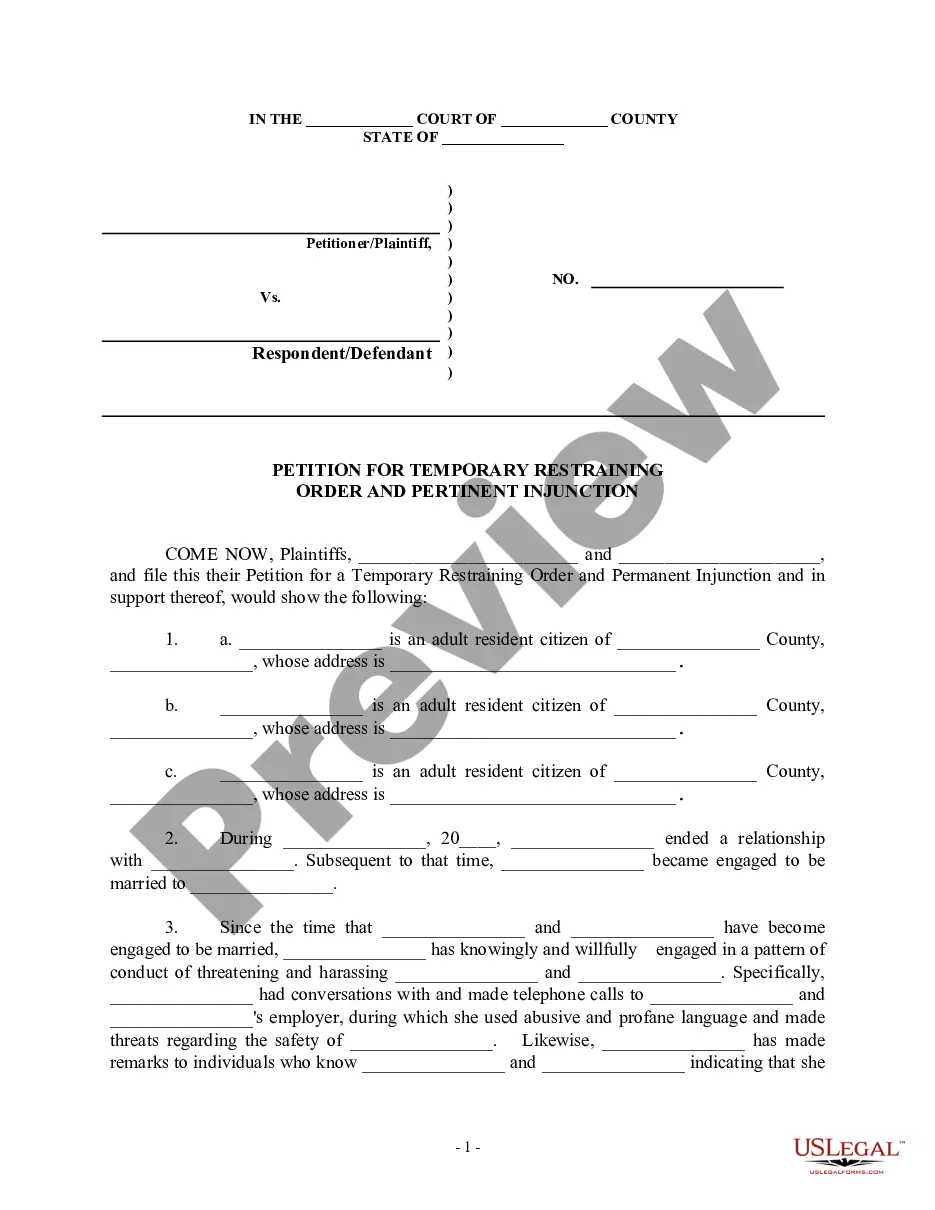
Restraining Order With Child Involved
Description

Get your form ready online
Our built-in tools help you complete, sign, share, and store your documents in one place.
Make edits, fill in missing information, and update formatting in US Legal Forms—just like you would in MS Word.
Download a copy, print it, send it by email, or mail it via USPS—whatever works best for your next step.
Sign and collect signatures with our SignNow integration. Send to multiple recipients, set reminders, and more. Go Premium to unlock E-Sign.
If this form requires notarization, complete it online through a secure video call—no need to meet a notary in person or wait for an appointment.
We protect your documents and personal data by following strict security and privacy standards.

Make edits, fill in missing information, and update formatting in US Legal Forms—just like you would in MS Word.

Download a copy, print it, send it by email, or mail it via USPS—whatever works best for your next step.

Sign and collect signatures with our SignNow integration. Send to multiple recipients, set reminders, and more. Go Premium to unlock E-Sign.

If this form requires notarization, complete it online through a secure video call—no need to meet a notary in person or wait for an appointment.

We protect your documents and personal data by following strict security and privacy standards.
Looking for another form?







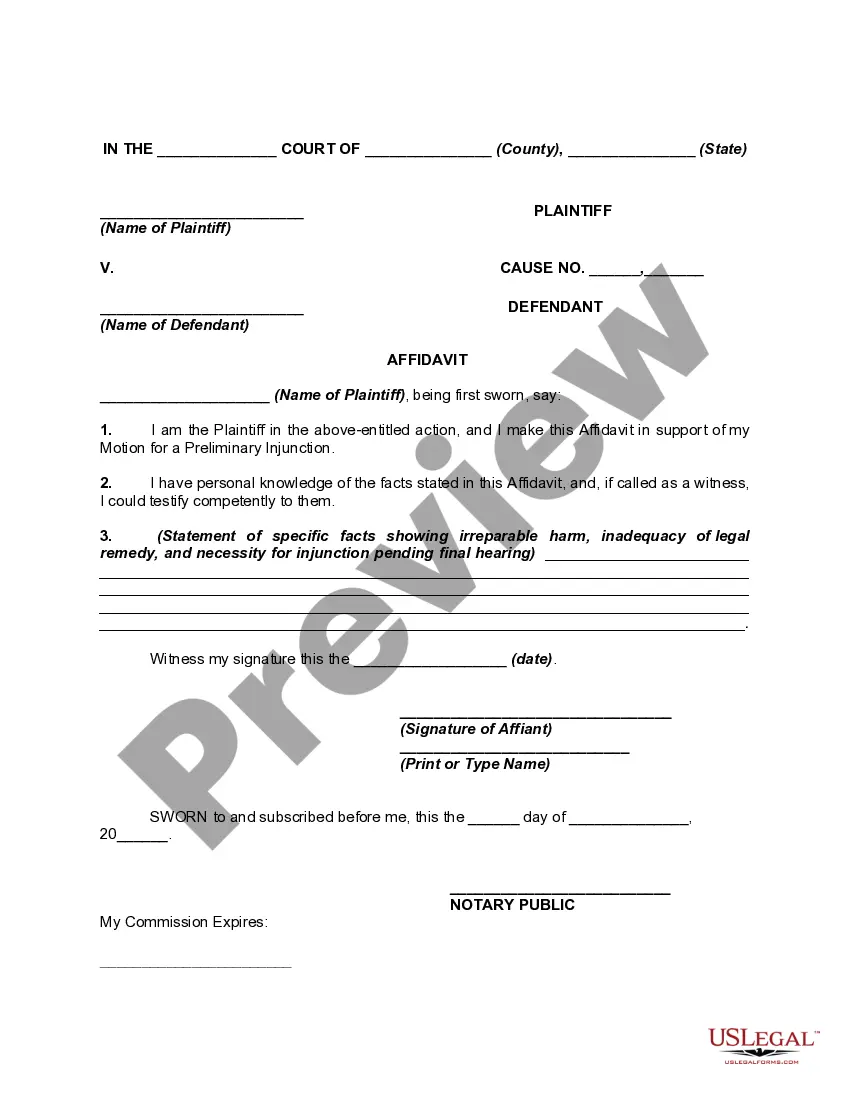
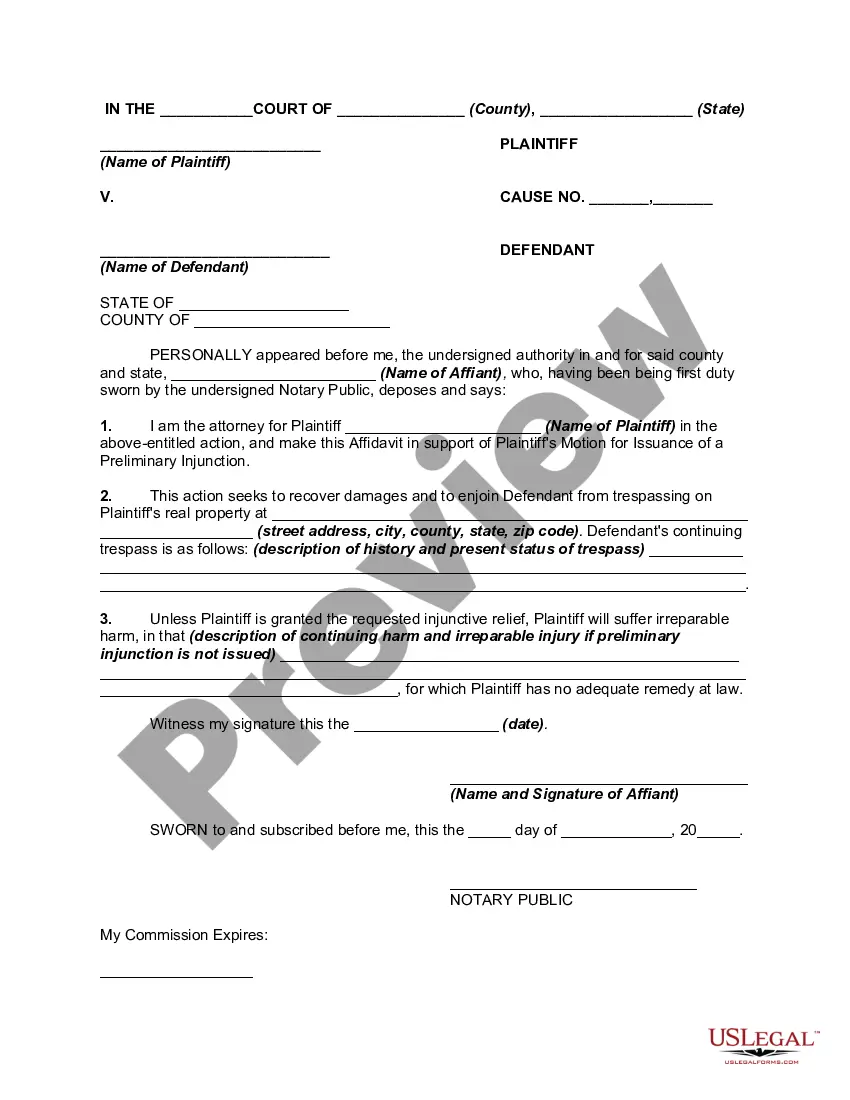
How to fill out Affidavit In Support Of Motion For Preliminary Injunction?
- If you're a returning user, log into your account and locate the necessary form template by clicking the Download button. Ensure your subscription is active; renew if necessary.
- For first-time users, start by checking the Preview mode and form description. Confirm that you’ve selected the right template that meets your requirements and complies with local jurisdiction.
- If the template doesn’t fit your needs, use the Search feature above to find an alternative. Once you find the correct document, proceed to the next step.
- Purchase the document by clicking the Buy Now button and selecting your desired subscription plan. You will need to create an account for resource access.
- Complete your transaction by entering your credit card information or using your PayPal account for payment.
- Lastly, download your form to your device. You can also access it anytime in the My Forms section of your account.
US Legal Forms provides an extensive collection of over 85,000 legal documents, ensuring you have access to a variety of options tailored to your needs. With the opportunity to consult premium experts, you gain confidence that your documents are comprehensive and legally sound.
In conclusion, utilizing US Legal Forms allows you to easily navigate the legal landscape concerning restraining orders involving children. Take the first step towards protecting your family and explore our library today!
Form popularity
FAQ
If you talk to someone you have a restraining order against, you could be violating the terms of the order. This violation may have serious legal consequences, potentially leading to criminal charges. Always prioritize your safety and adhere to the order's stipulations. If you have questions about management or compliance, consider reaching out to professionals on platforms like USLegalForms for guidance.
In Rhode Island, a restraining order typically lasts for three years. If there is a restraining order with a child involved, the duration may vary based on the court's discretion. You can petition for a renewal if you believe ongoing protection is necessary for you and your child. Understanding the legal framework will help you navigate this process effectively.
When you have a restraining order with a child involved, avoid any direct contact with the individual named in the order. Additionally, do not violate the terms of the order, as this can lead to legal consequences against you. Stay calm and respectful in all communications and document any violations of the order. This careful approach can help maintain your safety and the child’s wellbeing.
When filing for a restraining order with a child involved, the best evidence can include photographs of injuries, text messages, emails, or eyewitness accounts. Documentation that illustrates a pattern of abusive behavior can also strengthen your case. Collect all relevant evidence that demonstrates the need for protection. Consider consulting with legal professionals for the best strategies.
In New Hampshire, a restraining order generally lasts for one year. However, if there is a restraining order with a child involved, it could remain in effect for a longer period upon the request of either party. Remember, you can seek an extension if you feel unsafe. It's crucial to be aware of the specific details when navigating this legal matter.
To obtain a no contact order for your child, you typically need to file a petition in court that details the reasons for your concern. This includes evidence of threats or harm directed towards your child, establishing the necessity for protection. A restraining order with child involved can provide you peace of mind, and using platforms like USLegalForms can help you navigate the legal documentation required. They can provide forms and instructions tailored to your specific circumstances.
To initiate a no contact order in North Carolina, you will need to complete a specific application form, often referred to as a complaint or petition. This form outlines the reasons for your request, the relationship to the other person, and the child’s involvement if applicable. Using resources like USLegalForms can simplify this process, ensuring that you have access to the correct documents and guidance to fill them out accurately.
In California, proof for a restraining order typically includes credible evidence of harassment, threats, or abuse. When children are involved, it is essential to demonstrate how the situation affects their safety and well-being, affirming the need for a restraining order with child involved. Collecting text messages, photographs, or witness statements can strengthen your case. Consulting legal forms or services can guide you on organizing this evidence effectively.
If a restraining order is not appropriate for your situation, consider other protective measures such as a protective order or seeking mediation services. These alternatives also address safety concerns, particularly in cases involving children. Additionally, tools such as safety plans can help manage interactions with the individual without a formal order. Exploring these options can provide a tailored approach to your family's needs.
In North Carolina, grounds for a restraining order include domestic violence, stalking, or any credible threat to your safety or your children's safety. This type of restraining order with child involved requires showing that the other party poses a significant risk to you or your child. It’s important to detail any past incidents and patterns of behavior that establish the need for protection. Legal assistance can further clarify these grounds and guide you through the process.