Letter For Attornment
Description
Get your form ready online
Our built-in tools help you complete, sign, share, and store your documents in one place.
Make edits, fill in missing information, and update formatting in US Legal Forms—just like you would in MS Word.
Download a copy, print it, send it by email, or mail it via USPS—whatever works best for your next step.
Sign and collect signatures with our SignNow integration. Send to multiple recipients, set reminders, and more. Go Premium to unlock E-Sign.
If this form requires notarization, complete it online through a secure video call—no need to meet a notary in person or wait for an appointment.
We protect your documents and personal data by following strict security and privacy standards.

Make edits, fill in missing information, and update formatting in US Legal Forms—just like you would in MS Word.

Download a copy, print it, send it by email, or mail it via USPS—whatever works best for your next step.

Sign and collect signatures with our SignNow integration. Send to multiple recipients, set reminders, and more. Go Premium to unlock E-Sign.

If this form requires notarization, complete it online through a secure video call—no need to meet a notary in person or wait for an appointment.

We protect your documents and personal data by following strict security and privacy standards.
Looking for another form?







How to fill out Attornment Agreement Between Lessor And Sublessee Of Lessee?
Maneuvering through the red tape of official documents and formats can be challenging, particularly when one does not engage in that professionally.
Even selecting the appropriate format for the Letter For Attornment may prove to be labor-intensive, as it must be accurate and valid down to the very last digit.
Nonetheless, you will have to invest considerably less effort in locating a suitable format from a source you can depend on.
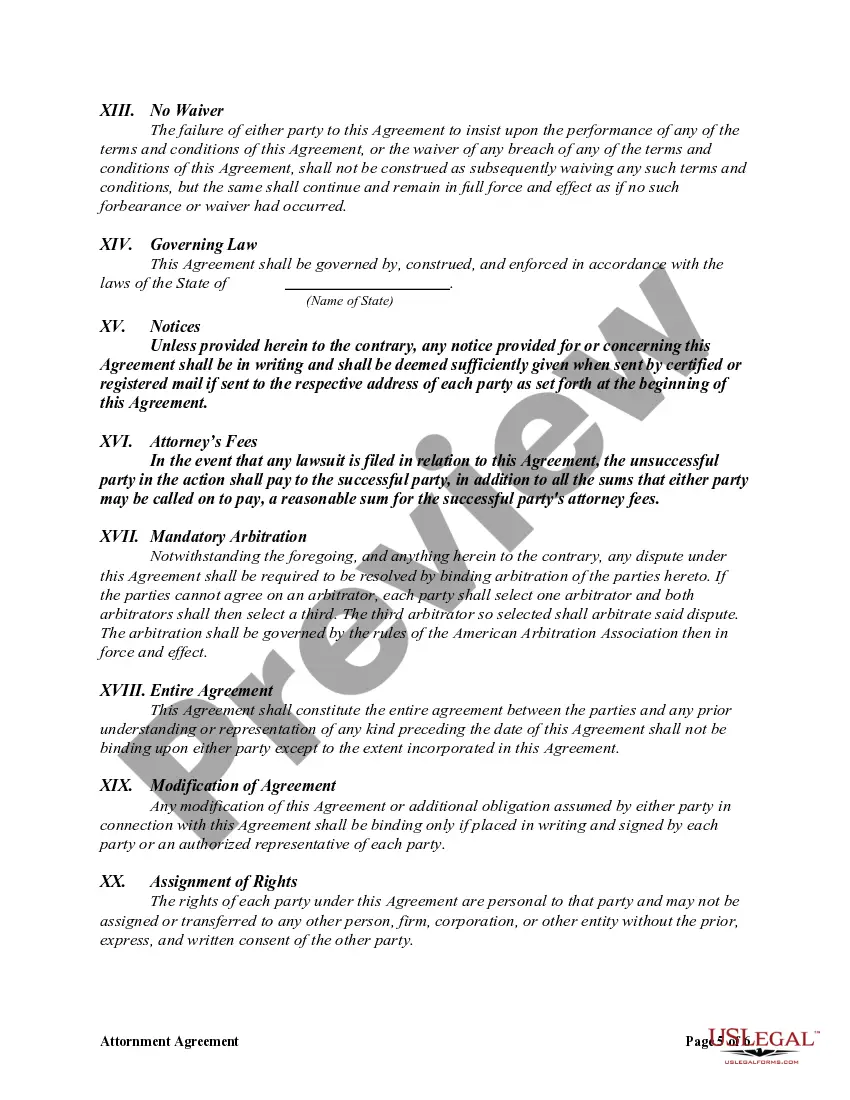
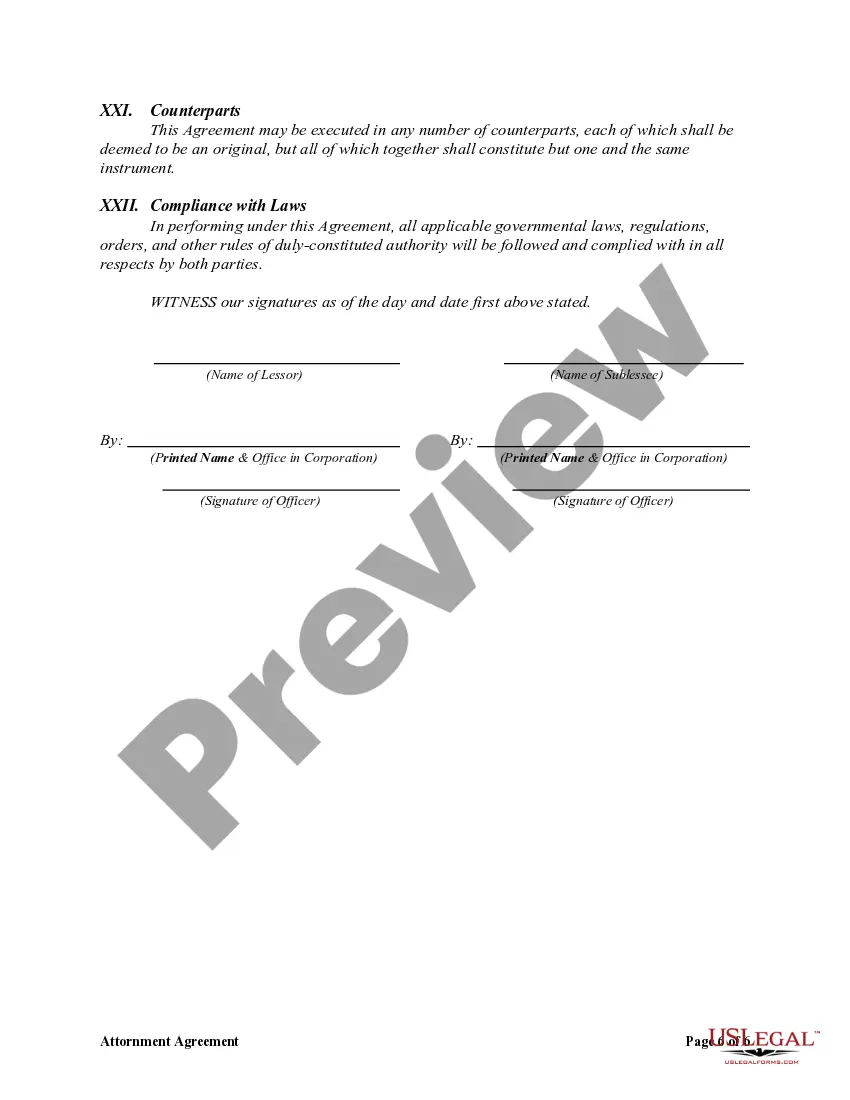
Acquire the appropriate document in a few straightforward steps: Enter the title of the document in the search area. Locate the correct Letter For Attornment among the findings. Review the outline of the sample or view its preview. When the template fulfills your criteria, click Buy Now. Choose your subscription plan. Use your email and create a password to set up an account with US Legal Forms. Select a credit card or PayPal as your payment method. Save the template file on your device in your desired format. US Legal Forms will save you considerable time in verifying if the form you found online meets your requirements. Create an account and gain unlimited access to all the templates you need.
- US Legal Forms is a platform that streamlines the process of finding the correct documents online.
- US Legal Forms serves as a single hub where you can discover the most current samples of documents, understand their utilization, and download those samples for completion.
- This is a collection comprising over 85K templates applicable in various fields of work.
- When searching for a Letter For Attornment, you need not question its authenticity as all the documents are validated.
- Having an account at US Legal Forms guarantees that you possess all the essential samples at your fingertips.
- You can keep them in your history or add them to the My documents catalog.
- Access your saved documents from any device by selecting Log In at the library website.
- If you don’t yet have an account, you can always search for the template you need.
Form popularity
FAQ
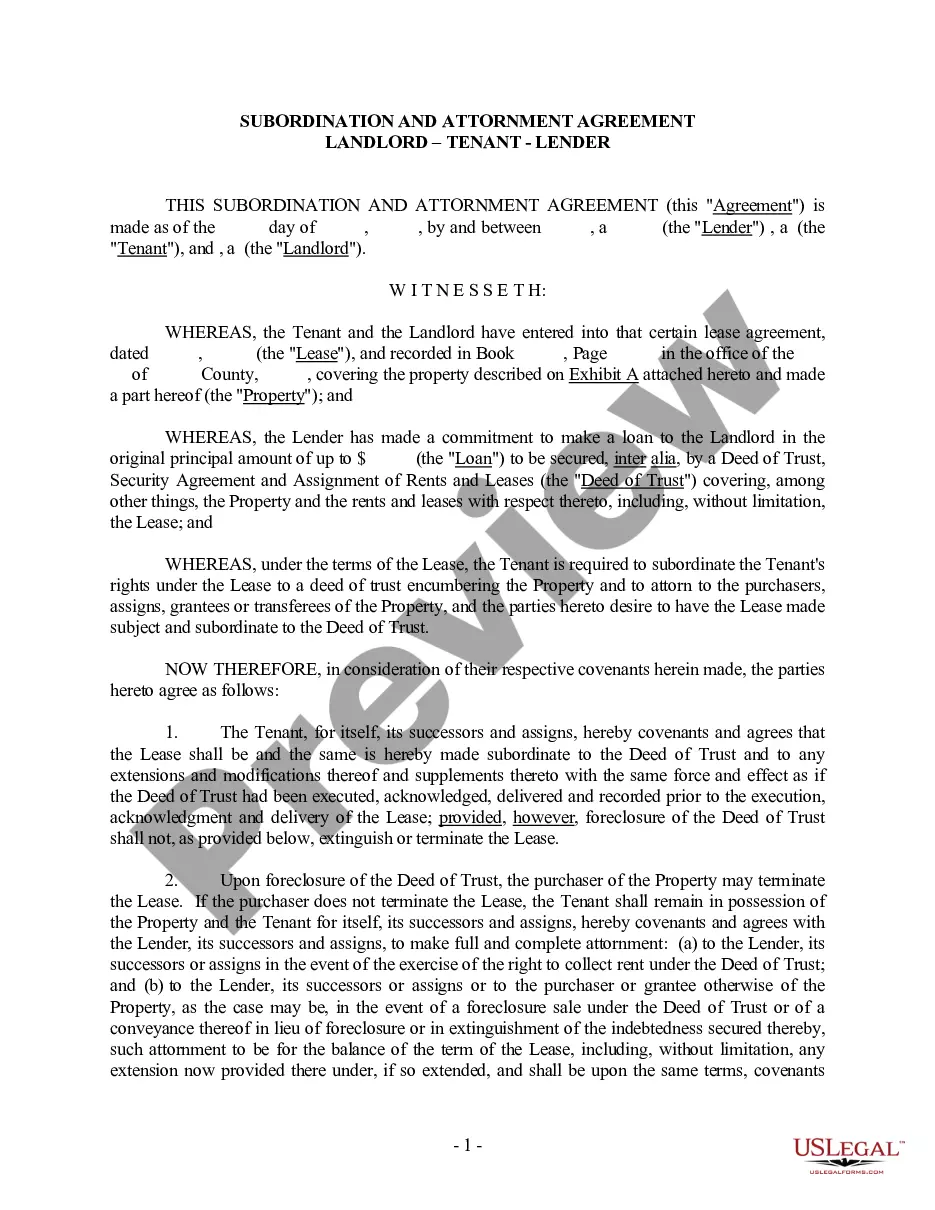
A letter for attornment is a document that facilitates the transfer of lease obligations in real estate. It serves as confirmation from a tenant that they acknowledge a new landlord, establishing legal recognition of the new management. This letter is essential for ensuring that rent payments are made to the correct party and protects both the landlord's and tenant's rights. For those looking to draft a letter for attornment efficiently, USLegalForms offers a variety of resources and templates that simplify this process.
Writing a letter to a tenant involves starting with a clear introduction of who you are and the purpose of your correspondence. Be direct but courteous in addressing the subject matter, whether it’s about rent payments, maintenance requests, or lease renewals. Ending with a call to action or an invitation for questions can foster good communication. Using the right template can streamline the process, and platforms like US Legal Forms offer suitable options for creating your letter for attornment.
To write a formal letter to a tenant, begin with a clear subject line specifying the purpose of the letter. Use a respectful and professional tone throughout the letter, including the date and your contact information. Clearly outline the necessary details and any required actions by the tenant, making sure to conclude with a polite closing. A well-structured letter ensures clarity and reassurance, particularly in relation to their letter for attornment.
When writing a letter to tell a tenant to move out nicely, start with gratitude for their time as a tenant. Clearly state the reasons for the move-out request but keep the tone respectful and understanding. Offer assistance in the moving process or provide a timeline to help them transition smoothly. This approach ensures the letter feels considerate while serving its purpose, linking it to their letter for attornment.
A great tenant letter example highlights the tenant’s positive attributes, such as responsibility, cleanliness, and respect for rules. It should include anecdotes that illustrate these qualities and build trust, which helps prospective landlords feel confident. Additionally, emphasizing promptness in rent payments can strengthen your case, making it a powerful letter for attornment.
To write a good reference letter for a tenant, begin by stating your relationship with the tenant and for how long you have known them. Include specific examples of their positive qualities, such as their reliability and timely rent payments. You can also mention how they maintained the property. Ultimately, your letter should serve as a strong recommendation, supporting it as part of their letter for attornment.
For a buyer, obtaining attornment letters is crucial in establishing the relationship with existing tenants. These letters confirm the tenants' acknowledgment of the new ownership and their commitment to the lease terms. Securing letters for attornment reduces potential conflicts and helps the buyer understand the financial obligations tied to the property. By leveraging resources on uslegalforms, buyers can easily create or obtain the necessary attornment letters to facilitate a seamless transition.
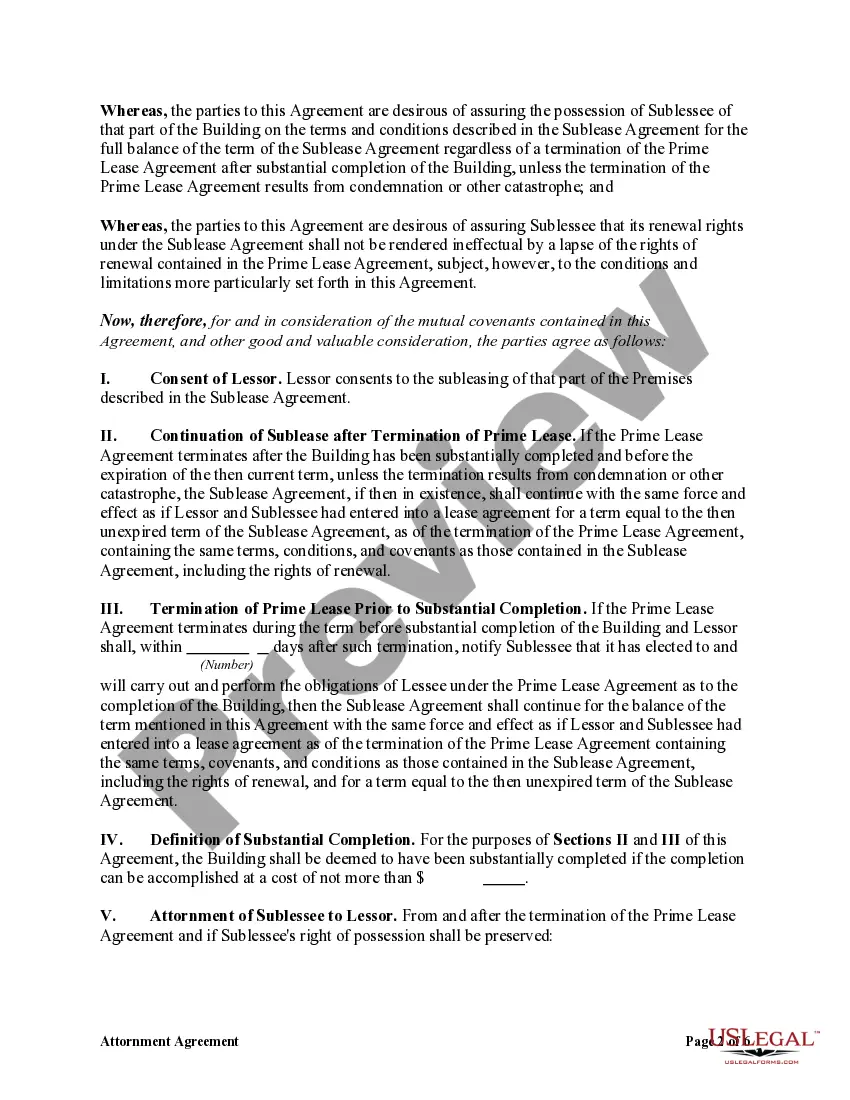
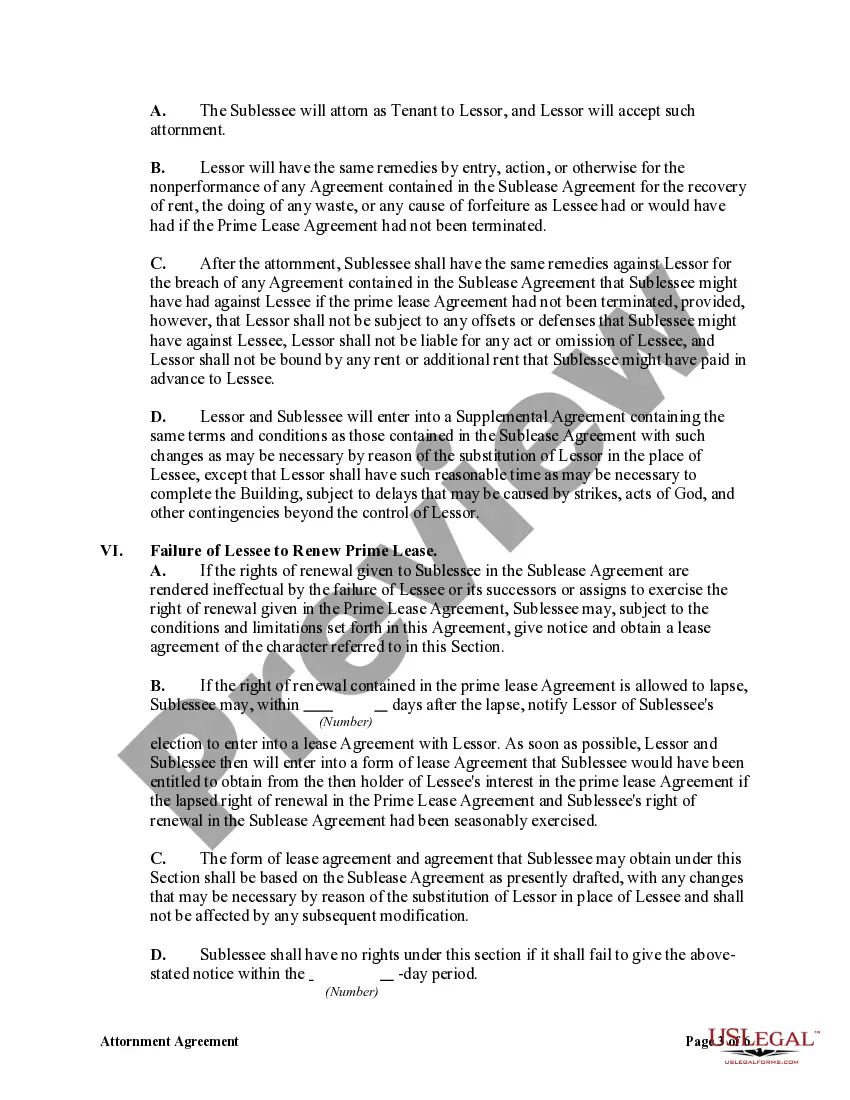
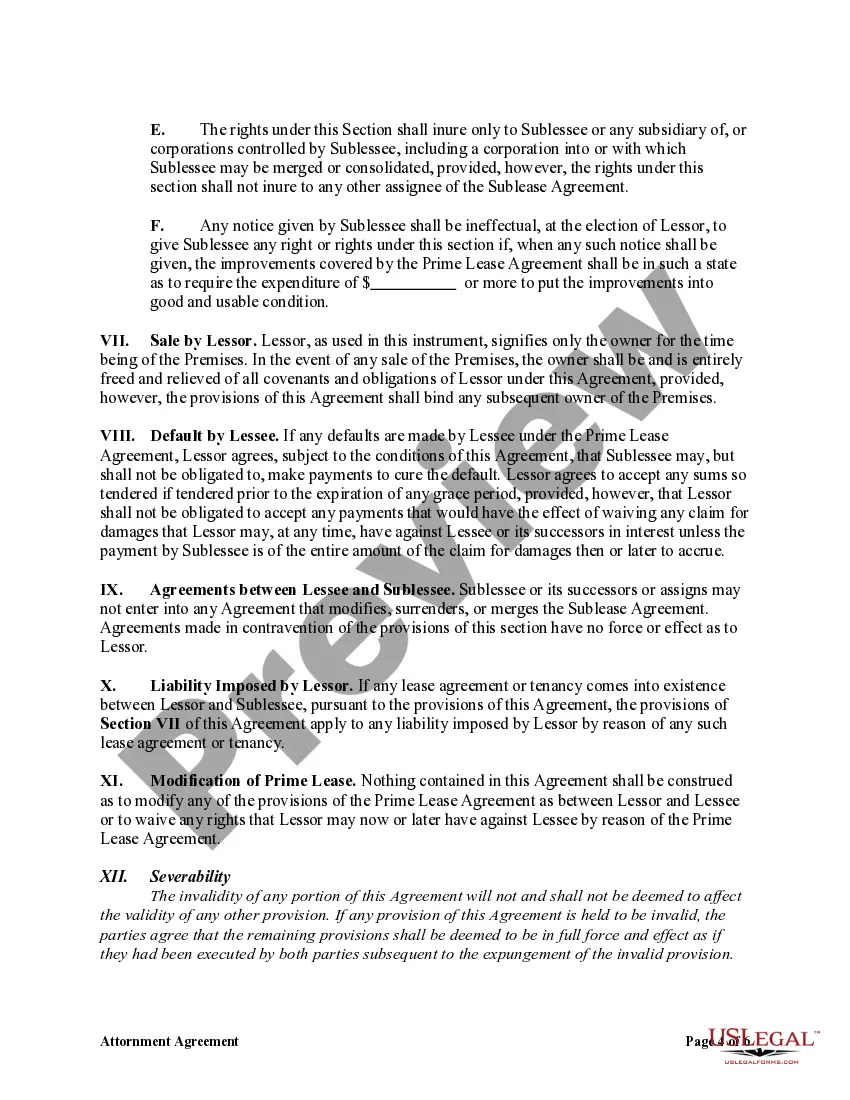
The attornment clause in a lease provides clarity about the tenant's obligations if the property changes ownership. This clause ensures that the tenant agrees to recognize any new landlord and abide by the existing lease terms. Essentially, it protects the rights of both the tenant and the new landlord, preventing confusion or disputes during a property transition. Including an attornment clause in your lease promotes a stable relationship and a smoother rental experience.
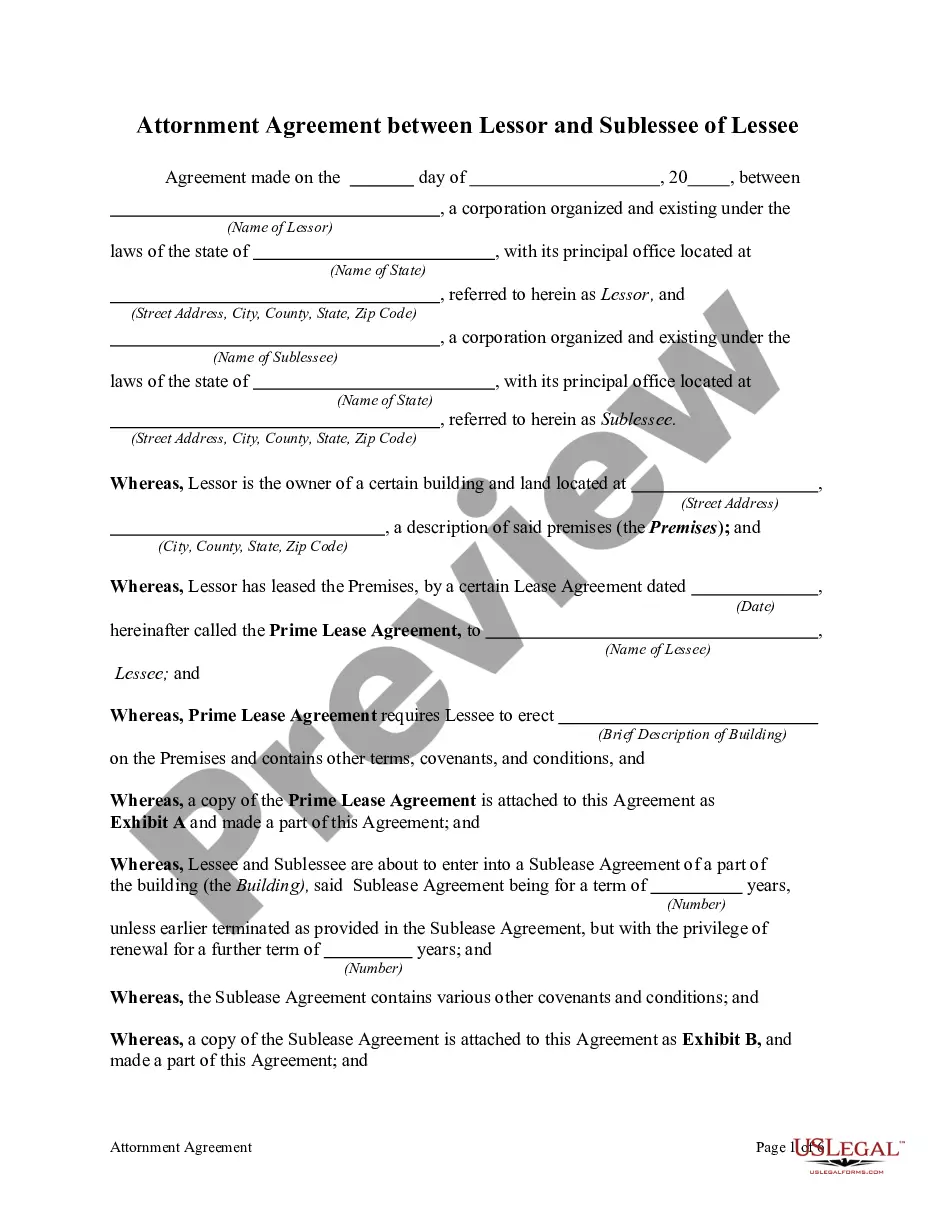
An attornment letter is a formal document that a tenant signs to acknowledge the new landlord or property owner when a property changes hands. This letter serves to reaffirm the lease terms and establish a direct relationship between the tenant and the new owner. Using a letter for attornment helps streamline the transition process, ensuring that all parties are aware of their rights and responsibilities. It's an essential document that protects both tenant and landlord interests during ownership changes.
Attorn refers to the act of a tenant acknowledging a new landlord or owner of the property. This legal concept ensures that the tenant continues to recognize and fulfill their obligations under the lease agreement. By attorning, the tenant gives their consent to stand by the lease terms, even after a change in property ownership. Understanding the concept of attorn is crucial for both landlords and tenants to maintain a smooth rental relationship.
