Notary Oath For Deposition
Description

Get your form ready online
Our built-in tools help you complete, sign, share, and store your documents in one place.
Make edits, fill in missing information, and update formatting in US Legal Forms—just like you would in MS Word.
Download a copy, print it, send it by email, or mail it via USPS—whatever works best for your next step.
Sign and collect signatures with our SignNow integration. Send to multiple recipients, set reminders, and more. Go Premium to unlock E-Sign.
If this form requires notarization, complete it online through a secure video call—no need to meet a notary in person or wait for an appointment.
We protect your documents and personal data by following strict security and privacy standards.

Make edits, fill in missing information, and update formatting in US Legal Forms—just like you would in MS Word.

Download a copy, print it, send it by email, or mail it via USPS—whatever works best for your next step.

Sign and collect signatures with our SignNow integration. Send to multiple recipients, set reminders, and more. Go Premium to unlock E-Sign.

If this form requires notarization, complete it online through a secure video call—no need to meet a notary in person or wait for an appointment.

We protect your documents and personal data by following strict security and privacy standards.
Looking for another form?
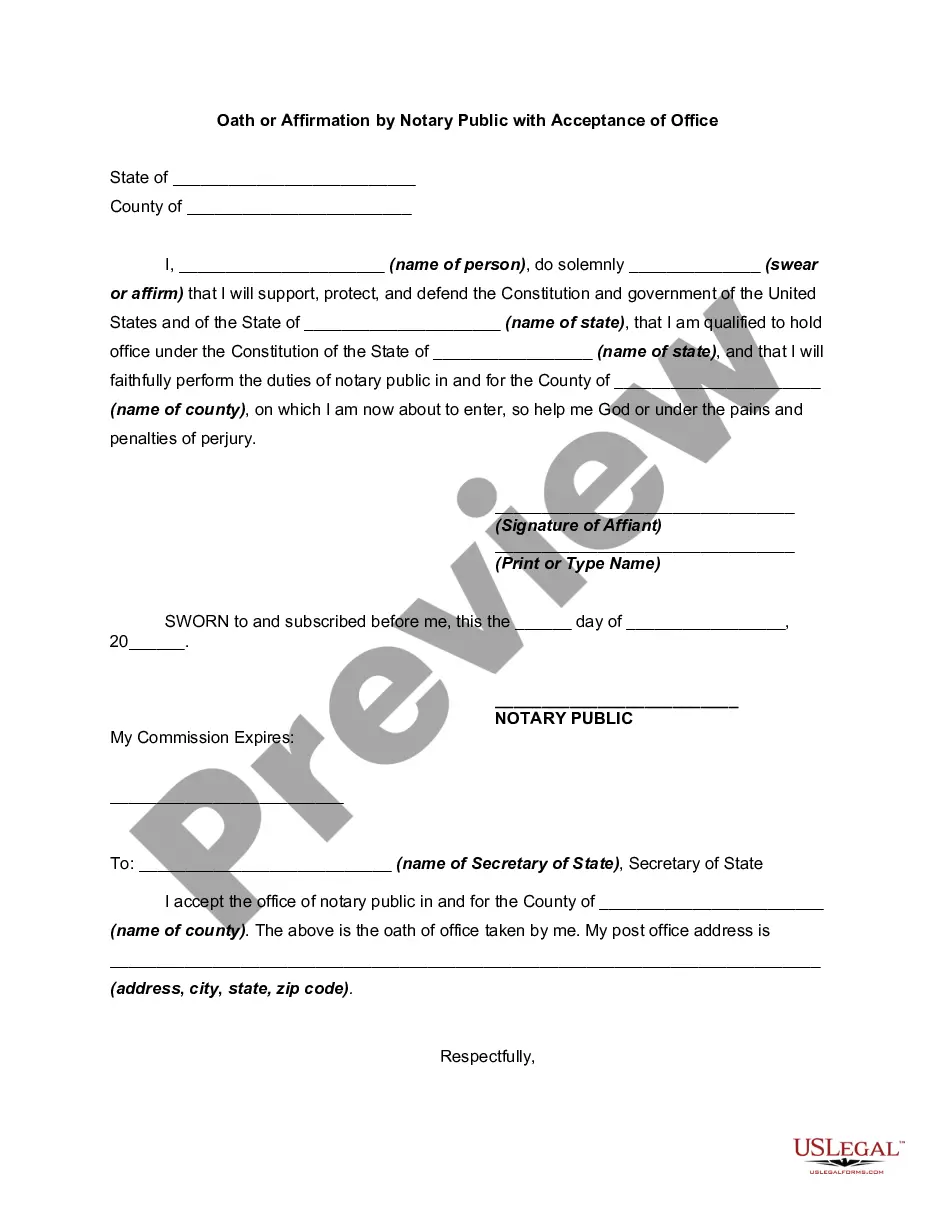
How to fill out Oath Or Affirmation By Notary Public With Acceptance Of Office?
Individuals frequently link legal documentation with intricacies that only an expert can manage. In a specific sense, this is accurate, as composing a Notary Oath For Deposition necessitates a significant grasp of topic parameters, which includes state and county rules.
However, with US Legal Forms, everything has become easier: pre-designed legal documents for any personal and business situation tailored to state legislation are compiled in a single online directory and are now accessible to everyone.
US Legal Forms offers over 85,000 current documents categorized by state and area of use, making it a breeze to search for a Notary Oath For Deposition or any specific template in just a few minutes. Previously registered users with an active subscription must Log In to their account and click Download to acquire the form. New users will need to register for an account and subscribe before they can download any files.
All templates within our catalog are reusable: once purchased, they remain saved in your profile. You can access them whenever needed from the My documents tab. Discover all the advantages of using the US Legal Forms platform. Subscribe today!
- Carefully review the page content to ensure it meets your requirements.
- Examine the form description or view it through the Preview feature.
- If the first template doesn’t fit, find another sample using the Search bar above.
- When you locate the correct Notary Oath For Deposition, click Buy Now.
- Select a pricing plan that caters to your needs and budget.
- Sign up for an account or Log In to continue to the payment page.
- Complete the payment for your subscription using PayPal or a credit card.
- Decide on the format for your sample and click Download.
- Print your document or upload it to an online editor for quicker completion.
Form popularity
FAQ
Three examples of an oath include the oath taken by witnesses in court, the oath administered to elected officials, and the oath of office taken by military personnel. Each of these examples reflects a notary oath for deposition, highlighting the importance of truth and commitment in various roles. These oaths serve different purposes but all share a common goal – to uphold integrity and trust within legal and public services. Understanding these distinctions can enhance one's appreciation for the legal framework that governs our society.
Making an oath or affirmation involves declaring one's commitment to truthfulness or integrity in a specific context, often witnessed by a notary. This process is essential in legal situations, such as depositions, where a notary oath for deposition is administered. The individual acknowledges their legal obligation to speak truthfully and fulfill the promises made during the oath. This act builds trust in the legal system and ensures accountability.
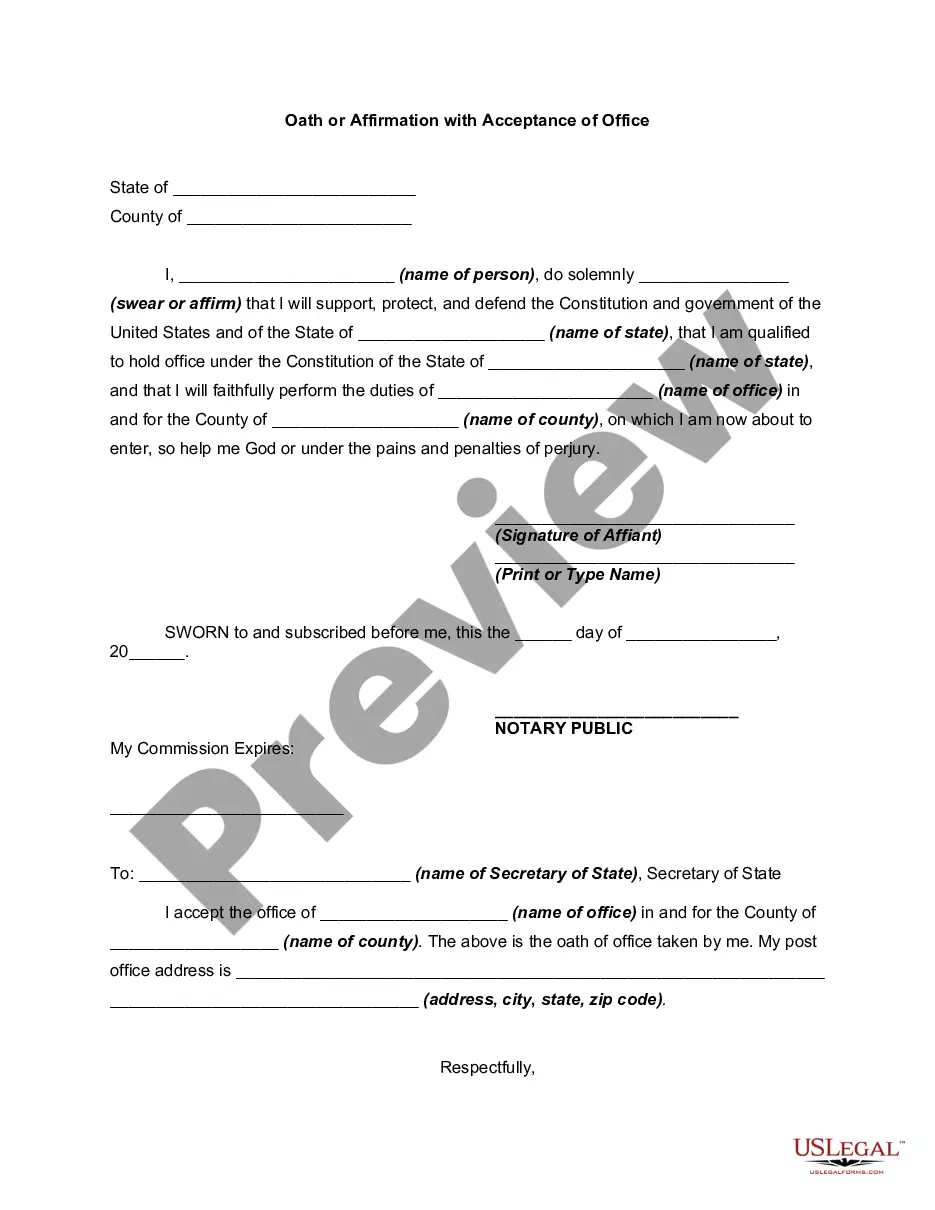
The oath to affirm is a formal declaration where an individual swears to tell the truth or uphold certain responsibilities, without invoking a deity. This is particularly relevant in legal situations where a notary oath for deposition plays a critical role. By taking this oath, individuals commit to providing truthful testimony during depositions or court appearances. This process reinforces honesty and the seriousness of the legal proceedings.
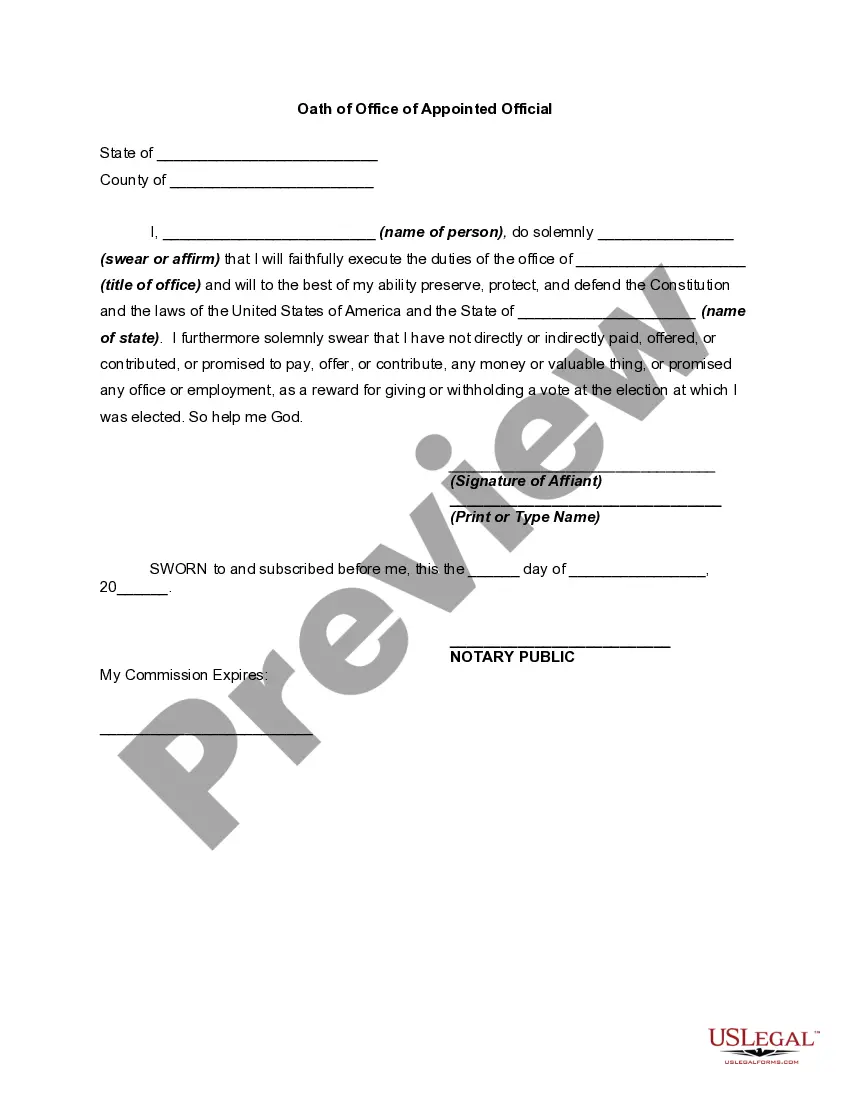
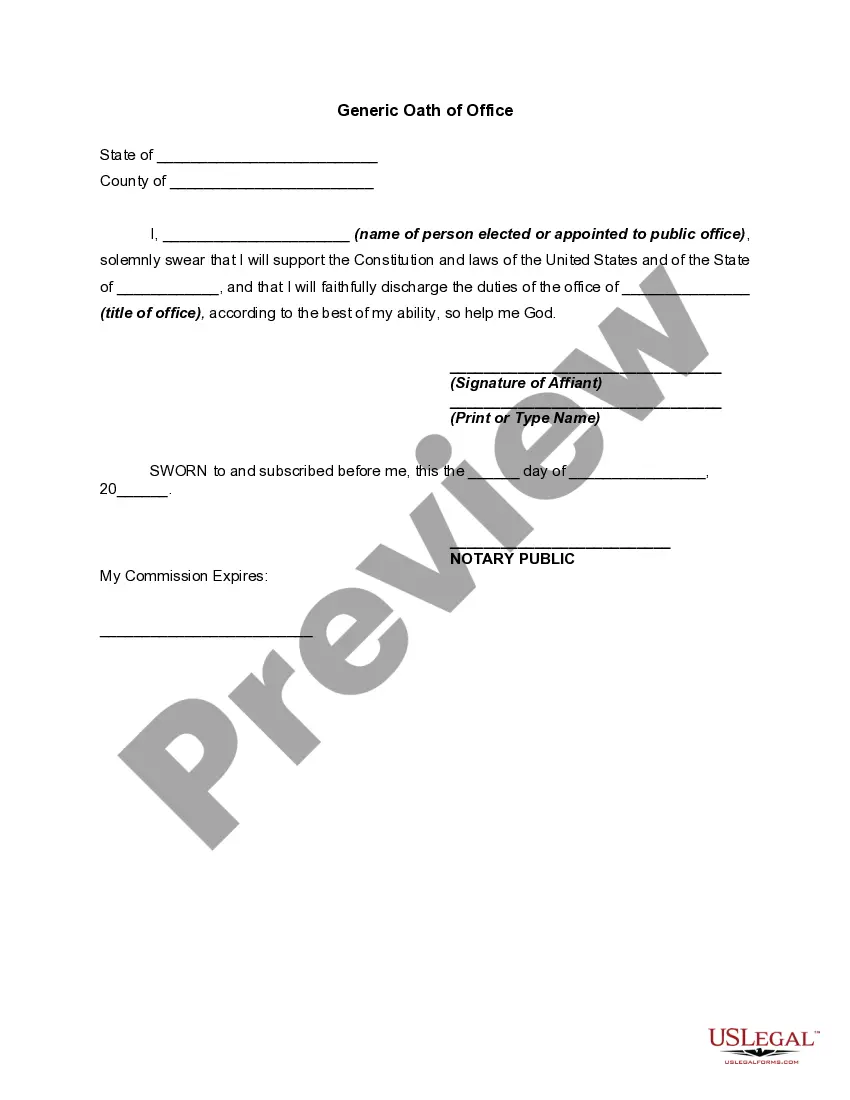
An example of an oath or affirmation could be the commitment made by a public official when they assume office. This engagement is often documented through a notary oath for deposition, reflecting their duty to serve faithfully. By taking this oath, the official confirms their responsibility to uphold the law and serve their constituents. It is a vital part of ensuring accountability in government roles.
An example of an oath and affirmation would be when a witness promises to tell the truth during a legal proceeding. In this context, the notary oath for deposition ensures that the witness understands the importance of their testimony. The notary public typically administers this oath, reinforcing the legal obligation to provide accurate information. It upholds the integrity of the legal process and protects the interests of all parties involved.
One of the most common mistakes by a notary public is not ensuring all necessary fields are completed on the document before signing. Leaving out critical information can invalidate the notarial act. Therefore, double-checking not only the client's details but also the completeness of the document is necessary for maintaining trust in the notary oath for deposition.
A frequent mistake made by notaries is failing to properly verify the identity of the signer. It’s crucial for notaries to check acceptable forms of identification to prevent fraud. Neglecting this step can lead to issues, especially regarding the integrity of the notary oath for deposition.
The two most common notarial acts are acknowledgment and jurat. In an acknowledgment, the notary confirms that the signer willingly appeared before them and accepted the terms of a document. A jurat, on the other hand, involves administering an oath or affirmation, critical for processes like the notary oath for deposition.
You can get a document notarized for your attorney at many local banks, law offices, or notary public services. Additionally, you might want to consider platforms like US Legal Forms, which offer professional notary services. They can help facilitate the notary oath for deposition, ensuring your important documents are properly notarized.
For an affidavit to be valid, it must include a clear statement of facts, be signed by the affiant, and be notarized by a notary public. Furthermore, the affiant must be of sound mind and competent to testify. When you utilize a notary oath for deposition, you ensure all legal requirements are met, reinforcing the affidavit's credibility.