Application For Subpoena By Defense
Description

Get your form ready online
Our built-in tools help you complete, sign, share, and store your documents in one place.
Make edits, fill in missing information, and update formatting in US Legal Forms—just like you would in MS Word.
Download a copy, print it, send it by email, or mail it via USPS—whatever works best for your next step.
Sign and collect signatures with our SignNow integration. Send to multiple recipients, set reminders, and more. Go Premium to unlock E-Sign.
If this form requires notarization, complete it online through a secure video call—no need to meet a notary in person or wait for an appointment.
We protect your documents and personal data by following strict security and privacy standards.

Make edits, fill in missing information, and update formatting in US Legal Forms—just like you would in MS Word.

Download a copy, print it, send it by email, or mail it via USPS—whatever works best for your next step.

Sign and collect signatures with our SignNow integration. Send to multiple recipients, set reminders, and more. Go Premium to unlock E-Sign.

If this form requires notarization, complete it online through a secure video call—no need to meet a notary in person or wait for an appointment.

We protect your documents and personal data by following strict security and privacy standards.
Looking for another form?









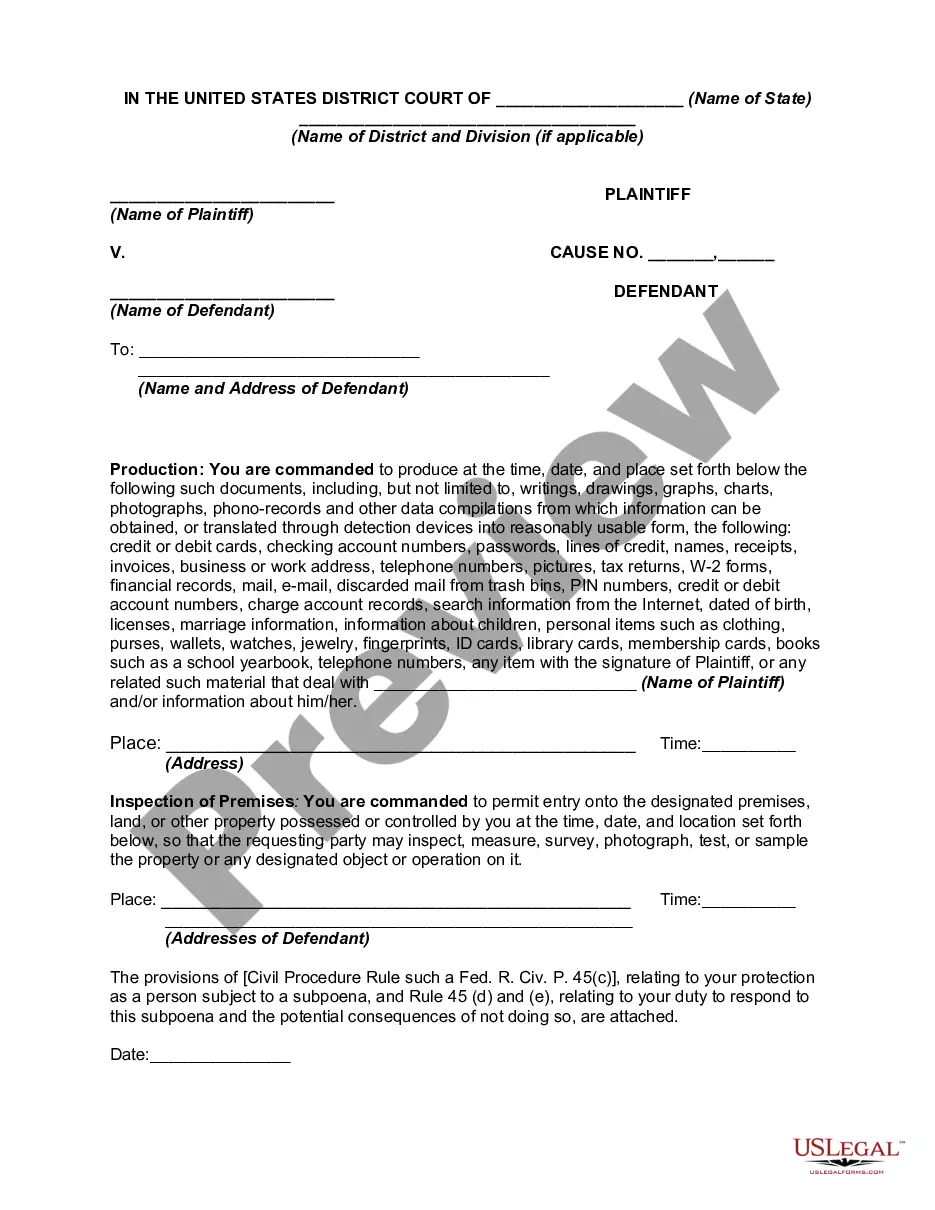
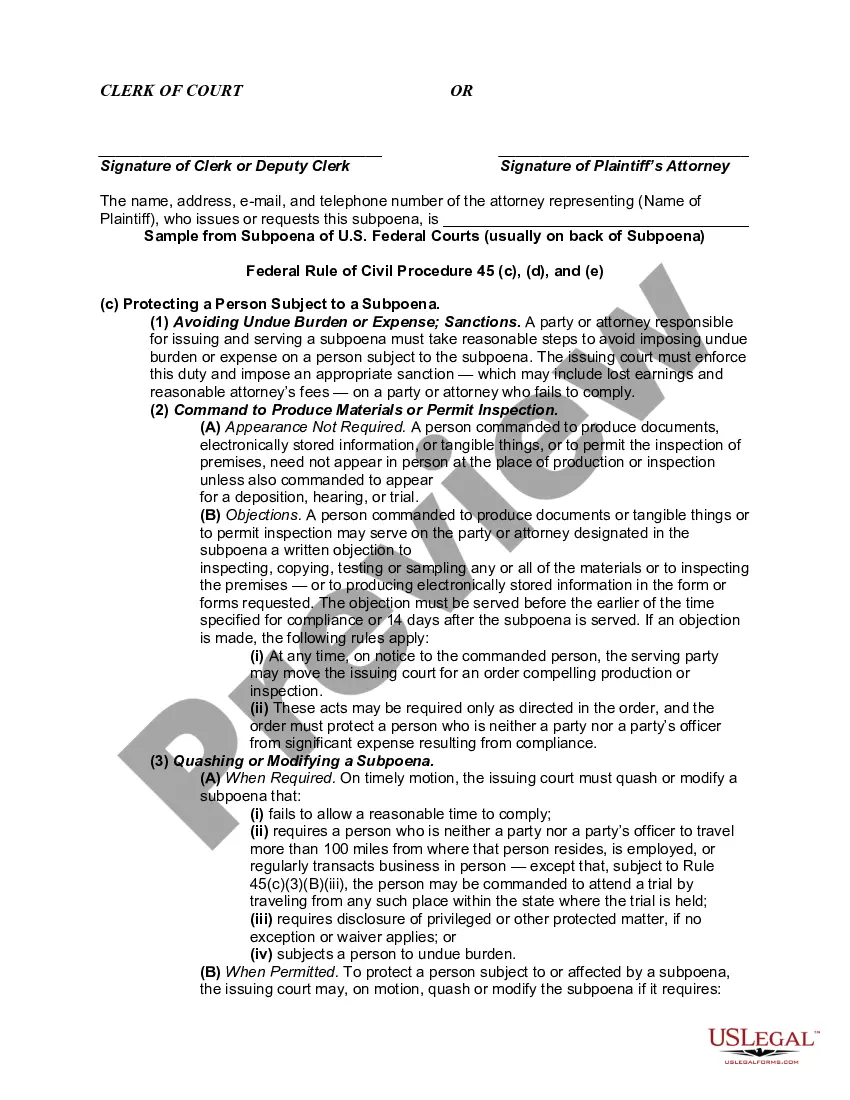
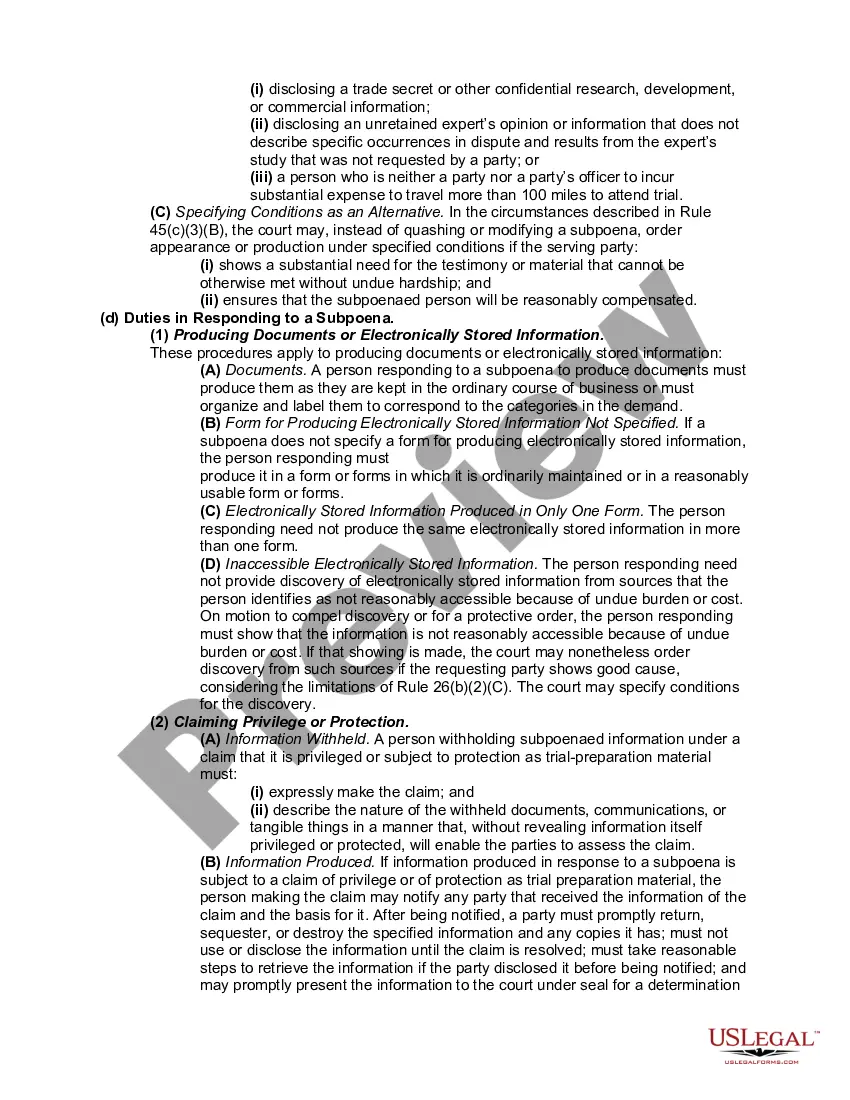
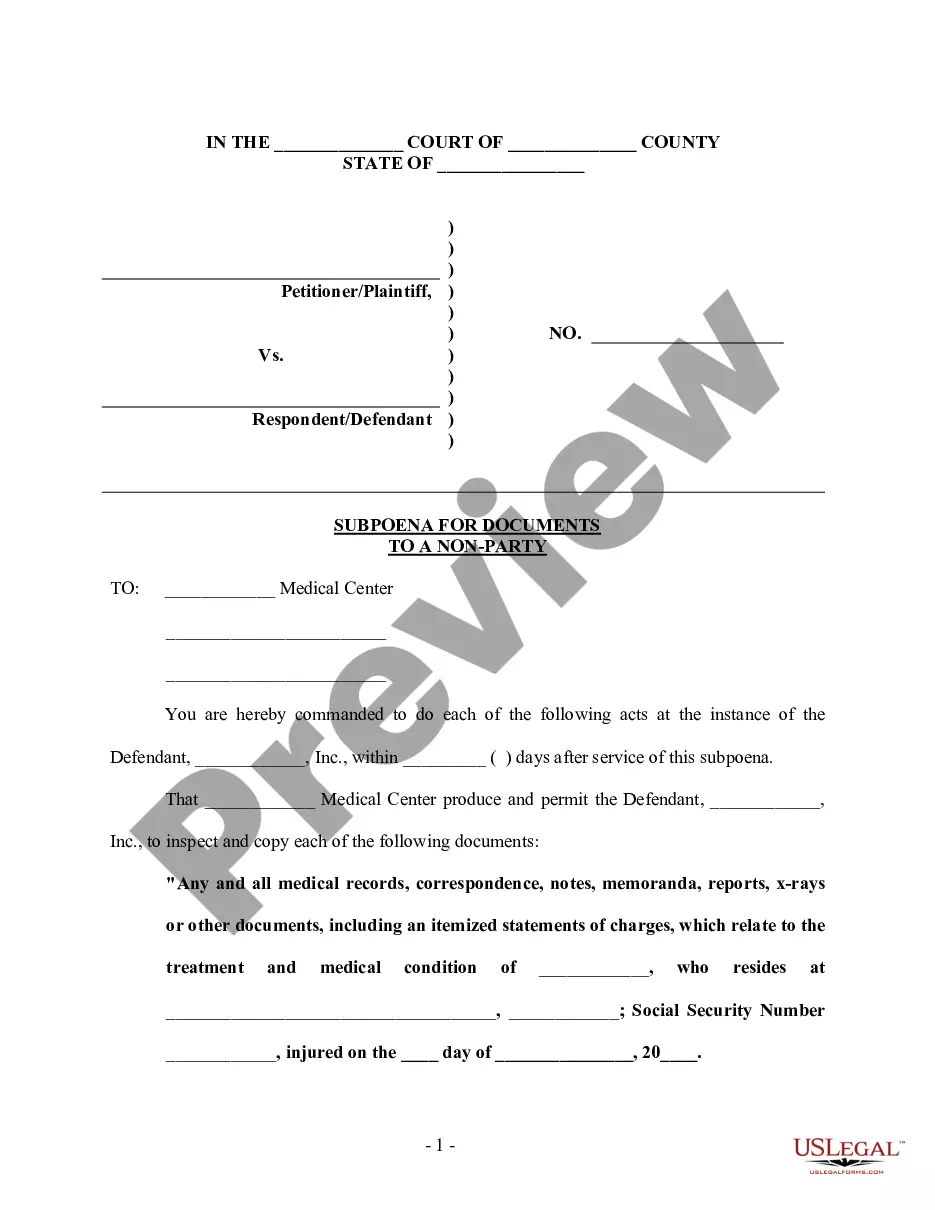
How to fill out Subpoena To Produce Documents, Information, Or Objects Or Permit Inspection Of Premises In A Civil Action Involving Identity Theft?
- Log in to your account on the US Legal Forms website if you're an existing user. Make sure your subscription is active to access the required templates.
- If you're new to the service, begin by browsing the extensive online library. Use the Preview mode to review the documents and select the application for subpoena by defense that best fits your needs.
- If you find discrepancies, utilize the Search feature to locate the correct form. Confirm it aligns with your local jurisdiction's requirements before proceeding.
- Once you’ve decided on the appropriate document, click the Buy Now button. Choose your preferred subscription plan, and create an account to unlock access to an extensive range of legal forms.
- Complete your purchase by entering your payment information. You can use a credit card or PayPal for convenience.
- After your transaction is processed, download the form to your device. You can easily revisit it later via the My Forms section in your account.
In conclusion, US Legal Forms provides a comprehensive and user-friendly platform designed to simplify the process of acquiring legal documents, including the application for subpoena by defense. The extensive library and expert assistance ensure that your legal needs are met with precision.
Take action today and empower yourself with the right legal documents by visiting US Legal Forms now!
Form popularity
FAQ
Yes, a defense attorney can subpoena phone records, which can be crucial for building a defense. To do so, they need to properly utilize the Application for subpoena by defense to request these records legally. This process helps in obtaining valuable evidence that may support the client's case. Ensuring that this is done correctly can make a significant difference in the outcome of the defense.
Generally, a judge's approval is not required for the defense to issue a subpoena for evidence. However, the Application for subpoena by defense must adhere to specific procedural rules to ensure its legitimacy. Moreover, while you can initiate a subpoena without prior approval, understanding the overall legal process is beneficial. Consulting with legal professionals can guide you through any complexities.
In Texas, a subpoena must contain specific information, such as the names of the parties involved and the court's details. Additionally, the Application for subpoena by defense must be properly filled out and filed in accordance with Texas law. It's important to follow these requirements to ensure that the subpoena is valid and enforceable. Seeking guidance through uslegalforms can simplify this process.
Yes, a defense attorney can present evidence at trial, which is vital for building a strong defense. They utilize the Application for subpoena by defense to obtain pertinent evidence that supports their client's case. Understanding how to effectively present this evidence can sway a judge or jury’s opinion. Defense attorneys play a key role in ensuring that all relevant facts are brought to light.
Defendants do have subpoena power within the legal system. They can issue subpoenas to gather evidence needed for their defense. However, using the Application for subpoena by defense correctly is crucial to ensure that subpoenas are enforced. This power helps defendants present a robust case by obtaining relevant information.
Yes, the defense can subpoena evidence as part of the legal process. This allows the defense to obtain necessary documents, records, or testimonies that may help support their case. Often, the Application for subpoena by defense is essential to ensure that evidence is legally acquired. Knowing how to use this tool effectively can significantly bolster the defense's arguments.
The three types of subpoenas include subpoenas ad testificandum, which compel a person to testify, subpoenas duces tecum, which require someone to produce documents, and subpoenas for deposition, which necessitate a person to provide testimony before trial. When considering an Application for subpoena by defense, understanding these types can help you determine which best suits your needs. Each serves a unique purpose and can significantly impact your case. Utilizing resources such as USLegalForms can assist you in creating the necessary documents efficiently.
In North Carolina, various officials can issue subpoenas, including judges, clerks of court, and attorneys licensed in the state. If you are preparing an Application for subpoena by defense, your attorney can play a crucial role, as they can issue subpoenas for necessary documents or witnesses. It is essential to follow proper legal procedures to ensure your subpoena is enforceable and valid in court. Consulting with a knowledgeable legal professional can streamline this process.
The burden of proof for a subpoena is determined by the party seeking the subpoena. Generally, this means demonstrating relevance and necessity to the case, ensuring the information requested is critical for the defense. When you file an Application for subpoena by defense, you should be prepared to show how the evidence can impact the outcome of the trial. Always remember, the more clearly you can articulate the importance, the stronger your request will be.
To decline a subpoena, you typically need to file a motion to quash or a similar legal request with the court. Outline your reasons for declining, such as the request being irrelevant or burdensome. Engaging with legal counsel can also provide clarity and assistance through this process. Resources like Application for subpoena by defense can help you navigate the steps involved in formally declining a subpoena.