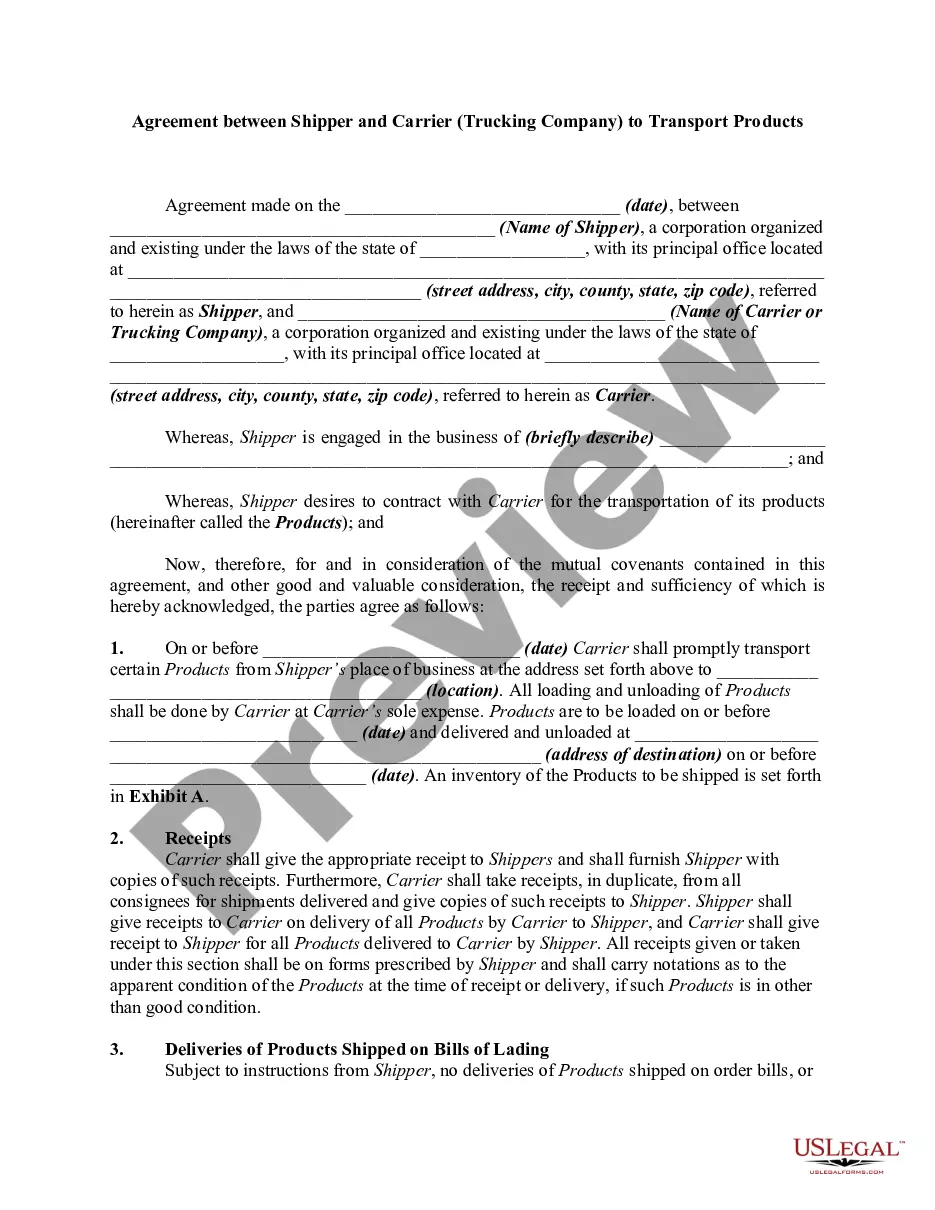
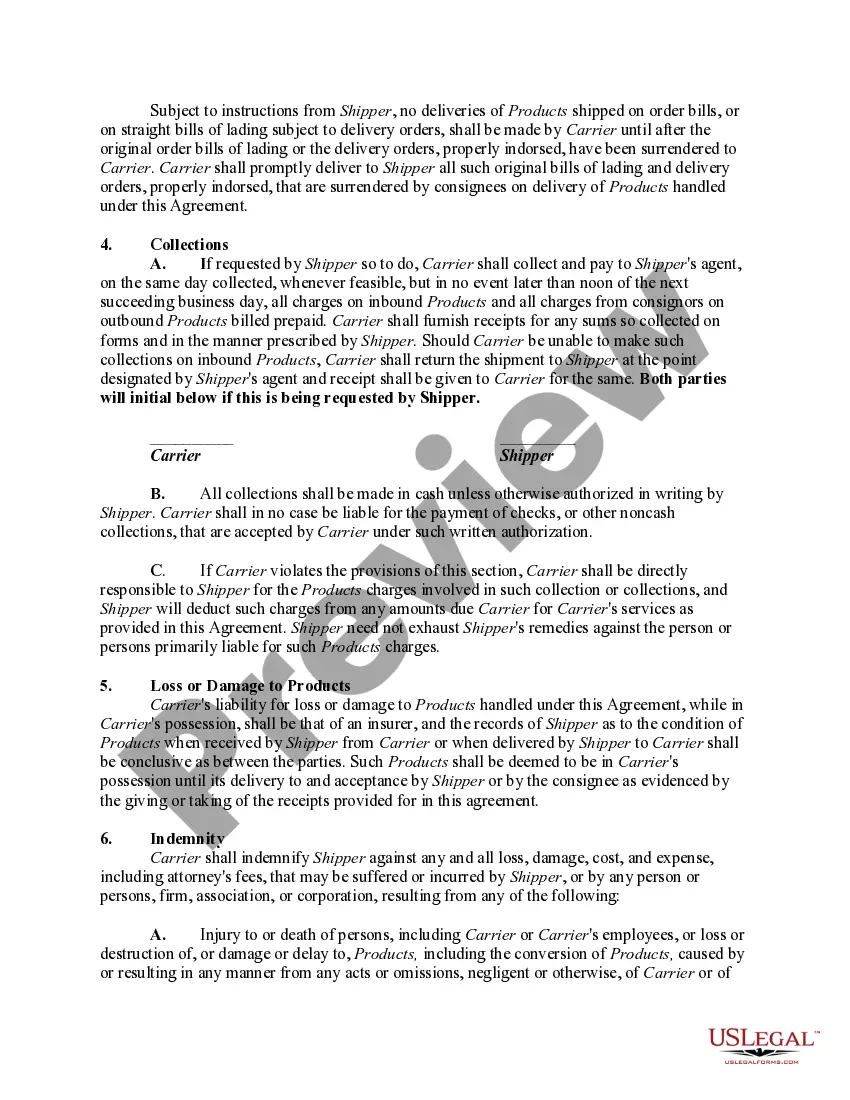
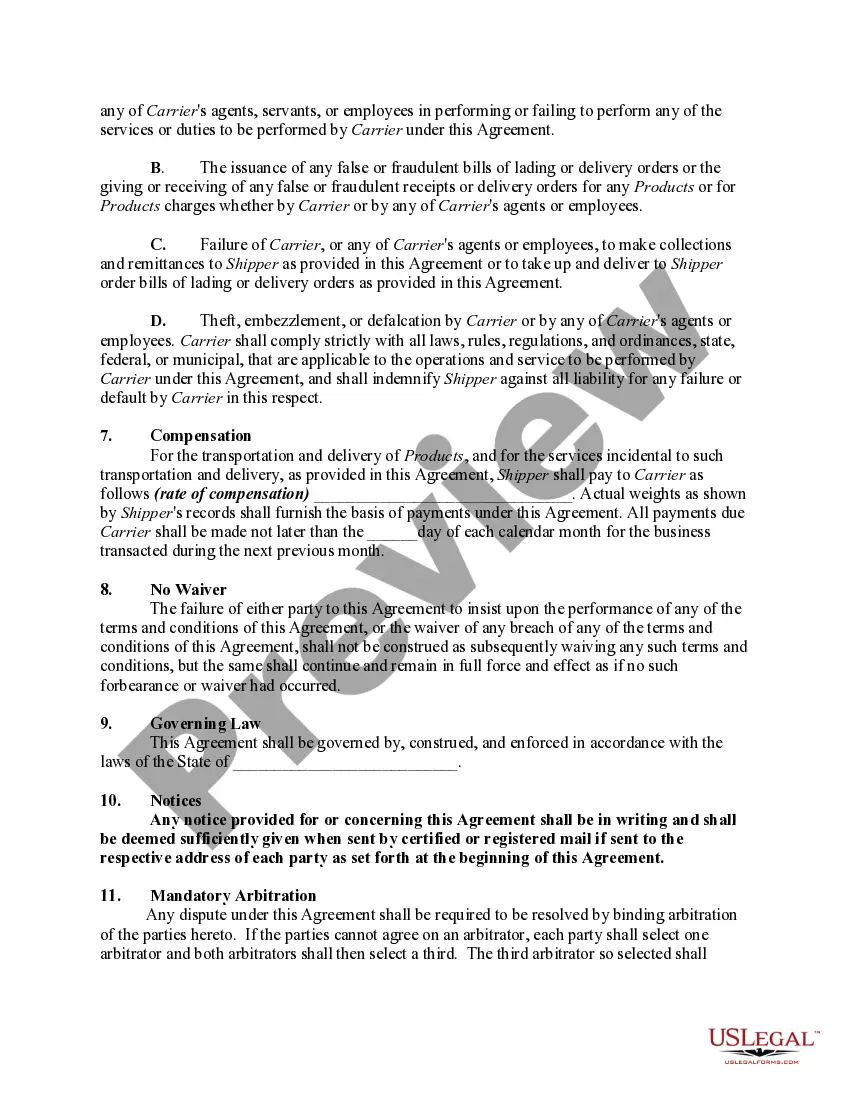
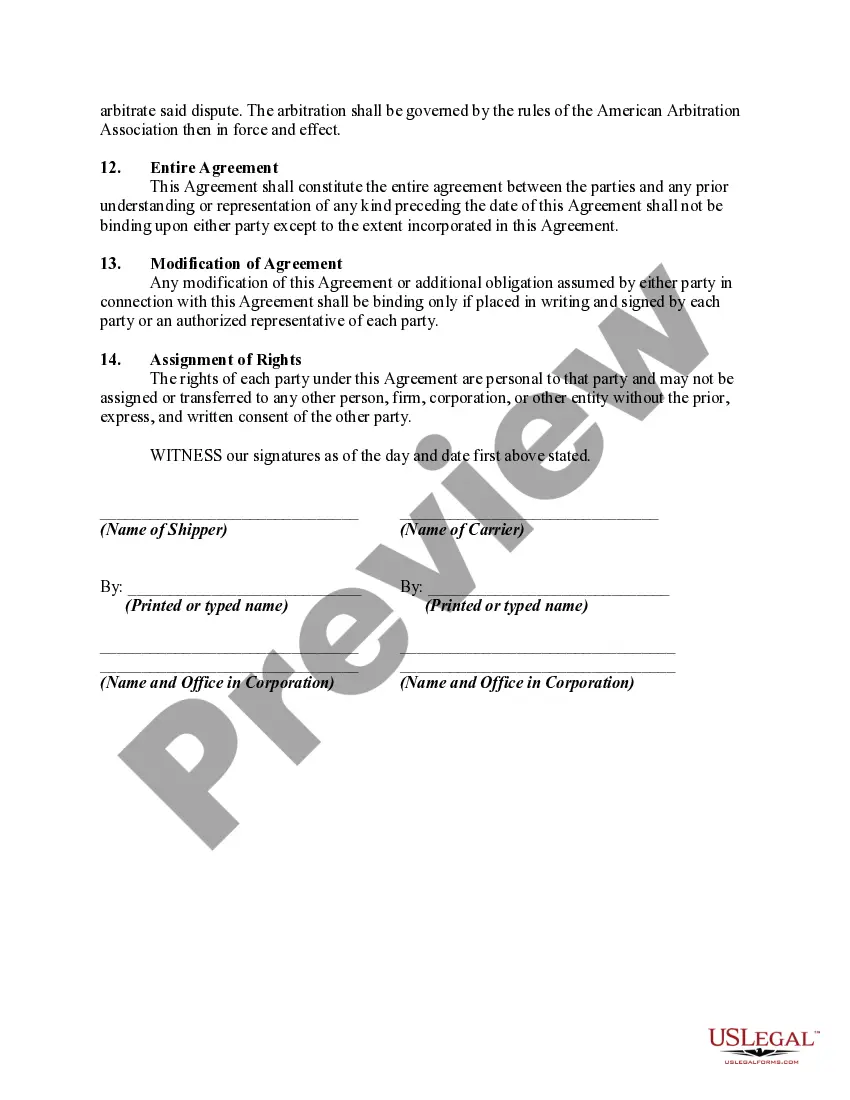
Agreement Trucking Contract With Client
Description
Get your form ready online
Our built-in tools help you complete, sign, share, and store your documents in one place.
Make edits, fill in missing information, and update formatting in US Legal Forms—just like you would in MS Word.
Download a copy, print it, send it by email, or mail it via USPS—whatever works best for your next step.
Sign and collect signatures with our SignNow integration. Send to multiple recipients, set reminders, and more. Go Premium to unlock E-Sign.
If this form requires notarization, complete it online through a secure video call—no need to meet a notary in person or wait for an appointment.
We protect your documents and personal data by following strict security and privacy standards.

Make edits, fill in missing information, and update formatting in US Legal Forms—just like you would in MS Word.

Download a copy, print it, send it by email, or mail it via USPS—whatever works best for your next step.

Sign and collect signatures with our SignNow integration. Send to multiple recipients, set reminders, and more. Go Premium to unlock E-Sign.

If this form requires notarization, complete it online through a secure video call—no need to meet a notary in person or wait for an appointment.

We protect your documents and personal data by following strict security and privacy standards.
Looking for another form?

How to fill out Agreement Between Shipper And Carrier - Trucking Company To Transport Products?
Red tape necessitates exactness and correctness.
If you do not engage with completing documentation like the Agreement Trucking Contract With Client regularly, it may result in some misunderstanding.
Choosing the appropriate template from the outset will ensure that your document submission will proceed smoothly and avert any hassles of resending a document or repeating the same task from the beginning.
Locating the correct and current templates for your documentation takes just a few minutes with an account at US Legal Forms. Sidestep bureaucratic uncertainties and simplify your paperwork tasks.
- Discover the accurate template with the assistance of the search feature.
- Verify that the Agreement Trucking Contract With Client you’ve found is suitable for your state or locality.
- Preview the document or examine the description containing the particulars about the use of the template.
- If the result aligns with your query, click the Buy Now button.
- Choose the appropriate option among the available subscription plans.
- Log In to your account or establish a new one.
- Complete the transaction using a credit card or PayPal account.
- Download the form in your preferred format.
Form popularity
FAQ
Here's a look at the basic steps you'll need to take to create a simple and effective client contract:Include Contact Information of Both Parties.Specify Project Terms and Scope.Establish Payment Terms.Set the Schedule.Decide What Happens If a Contract Is Terminated.Determine Who Owns Final Copyrights.More items...
What is a Trucking Contract? Trucking carriers and their clients often use Trucking Contracts as a means of laying out the scope and payment terms for their business relationship with a manufacturer or distributor of goods. As a result of this agreement, all signers will know what to expect from the trucking services.
A client agreement is a legally binding contract between your business and your clients, who you are providing your services to. The clauses of a client agreement: set out the rights and obligations of both your business and your client; set out the expectations of both parties; and.
For example, a carrier which offers delivery of bread from community bakeries has a contract with each bakery to collect and deliver its bread, and the bakery in turn charges customers and retailers who receive deliveries a delivery charge.
All business contracts must contain the essential elements of an agreement. The essential elements include consideration, offer and acceptance, a legal purpose, capable parties and mutual assent. Consideration means something of value must be exchanged.