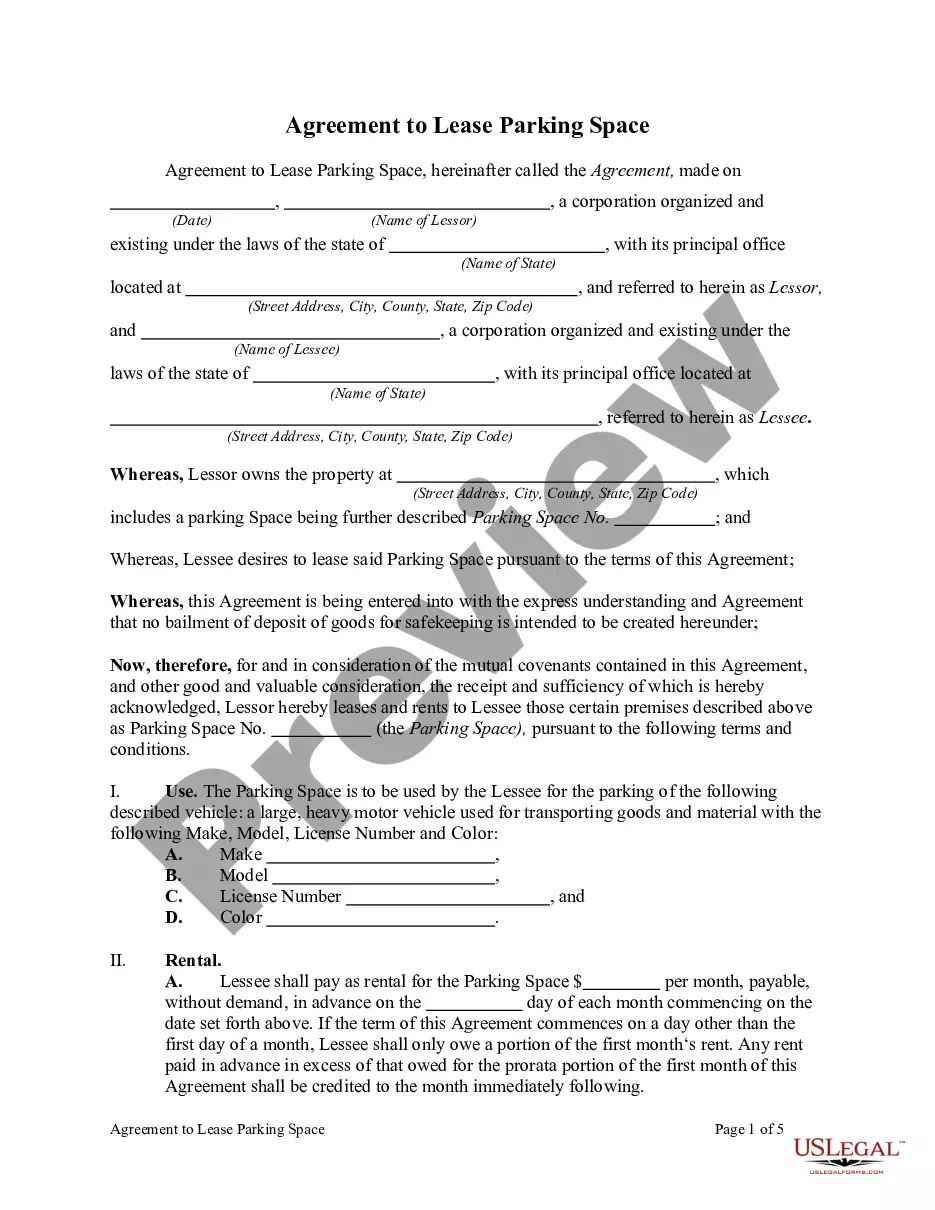
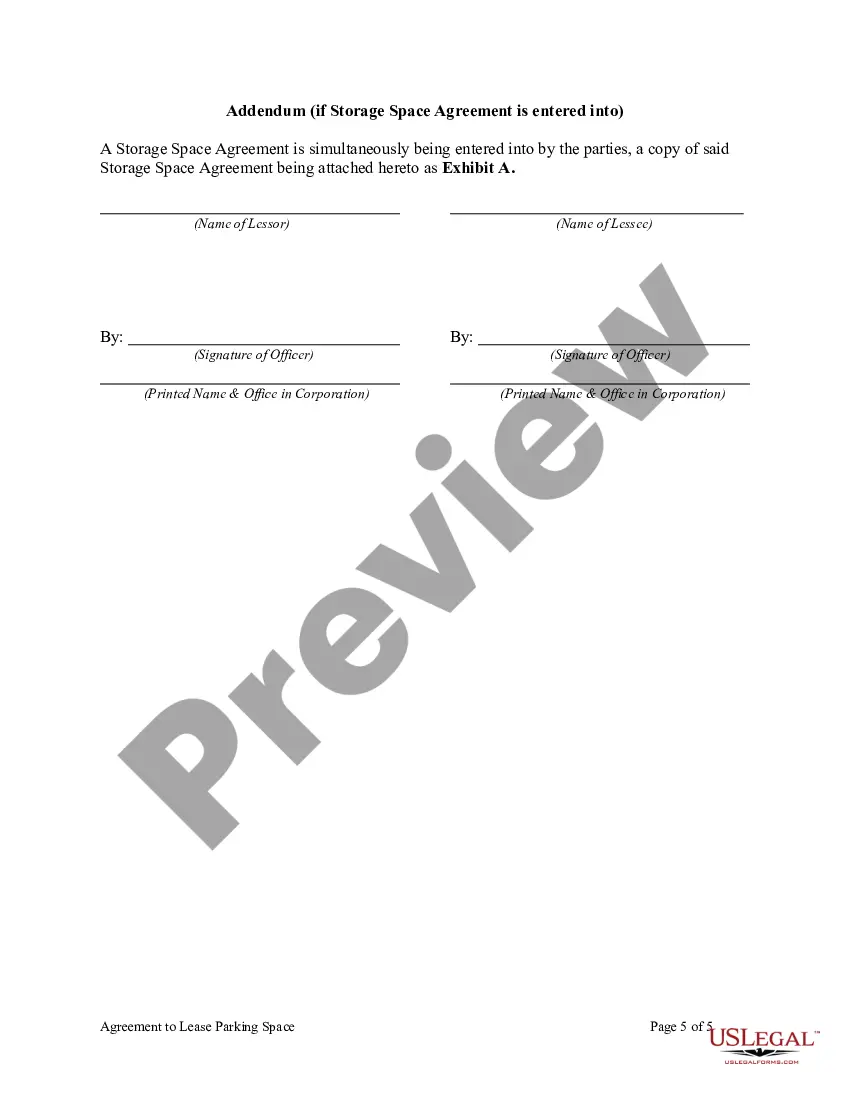
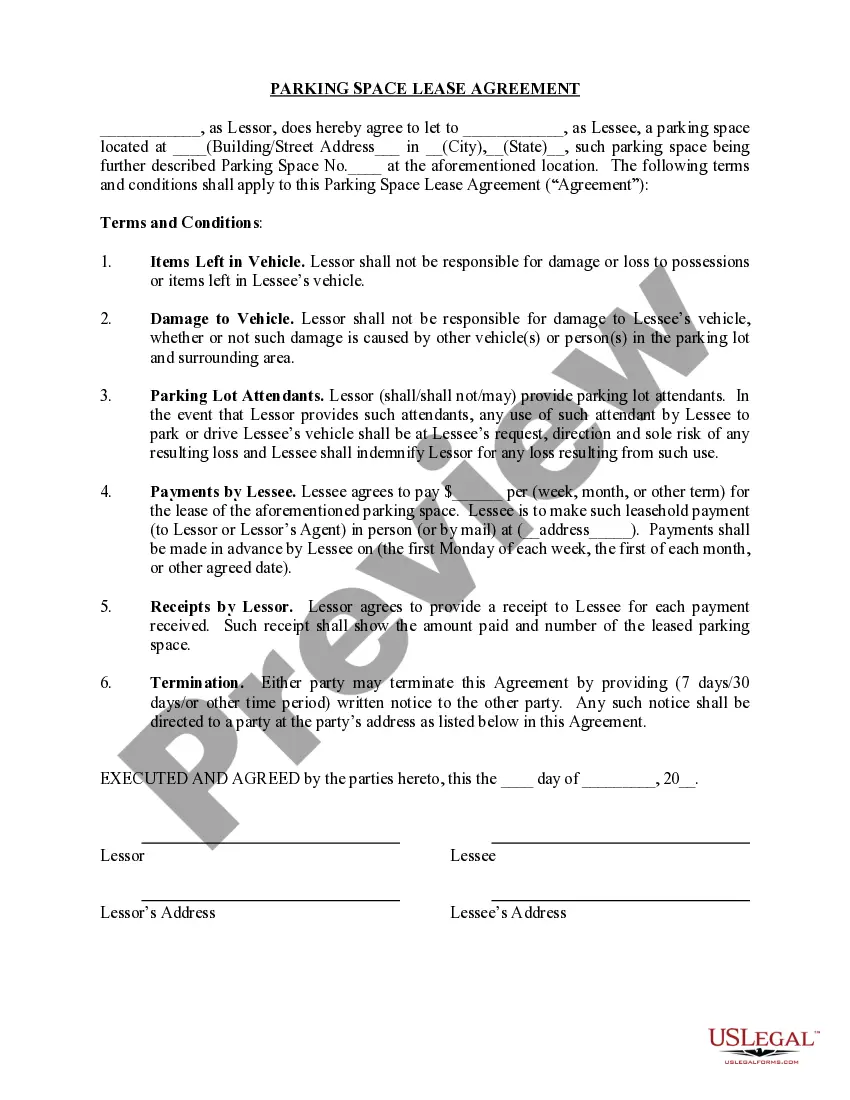
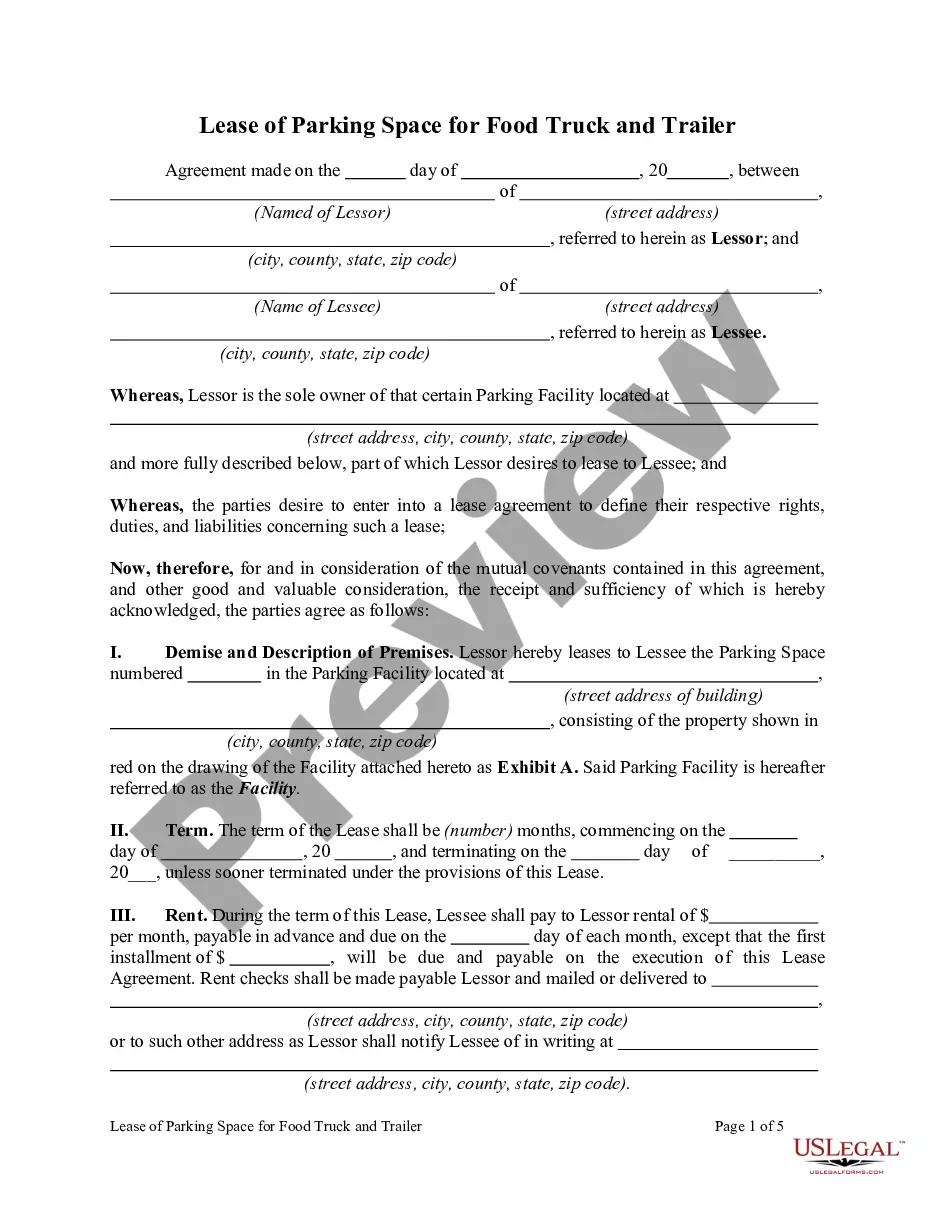
Parking Lot Lease Agreement With Insurance
Description
Get your form ready online
Our built-in tools help you complete, sign, share, and store your documents in one place.
Make edits, fill in missing information, and update formatting in US Legal Forms—just like you would in MS Word.
Download a copy, print it, send it by email, or mail it via USPS—whatever works best for your next step.
Sign and collect signatures with our SignNow integration. Send to multiple recipients, set reminders, and more. Go Premium to unlock E-Sign.
If this form requires notarization, complete it online through a secure video call—no need to meet a notary in person or wait for an appointment.
We protect your documents and personal data by following strict security and privacy standards.

Make edits, fill in missing information, and update formatting in US Legal Forms—just like you would in MS Word.

Download a copy, print it, send it by email, or mail it via USPS—whatever works best for your next step.

Sign and collect signatures with our SignNow integration. Send to multiple recipients, set reminders, and more. Go Premium to unlock E-Sign.

If this form requires notarization, complete it online through a secure video call—no need to meet a notary in person or wait for an appointment.

We protect your documents and personal data by following strict security and privacy standards.
Looking for another form?
How to fill out Agreement To Lease Parking Space?
Regardless of whether for commercial reasons or personal matters, everyone must confront legal circumstances at some stage in their existence.
Filling out legal paperwork necessitates meticulous care, starting from selecting the suitable form template.
With an extensive US Legal Forms catalog available, you need not waste time searching for the appropriate template online. Utilize the library's user-friendly navigation to locate the correct form for any occasion.
- For example, if you select an incorrect version of a Parking Lot Lease Agreement With Insurance, it will be rejected upon submission.
- Thus, it is crucial to have a reliable source of legal documents such as US Legal Forms.
- If you need to obtain a Parking Lot Lease Agreement With Insurance template, follow these straightforward steps.
- Retrieve the template you require using the search bar or catalog navigation.
- Review the form's details to confirm it aligns with your circumstances, state, and county.
- Click on the form's preview to assess it.
- If it is the incorrect form, return to the search feature to find the Parking Lot Lease Agreement With Insurance example you need.
- Download the template once it fulfills your criteria.
- If you already possess a US Legal Forms account, simply click Log in to access previously stored templates in My documents.
- If you do not have an account yet, you can acquire the form by clicking Buy now.
- Choose the appropriate pricing option.
- Complete the account registration form.
- Select your payment method: you can utilize a credit card or PayPal account.
- Choose the document format you prefer and download the Parking Lot Lease Agreement With Insurance.
- Once downloaded, you can fill out the form using editing software or print it and complete it manually.
Form popularity
FAQ
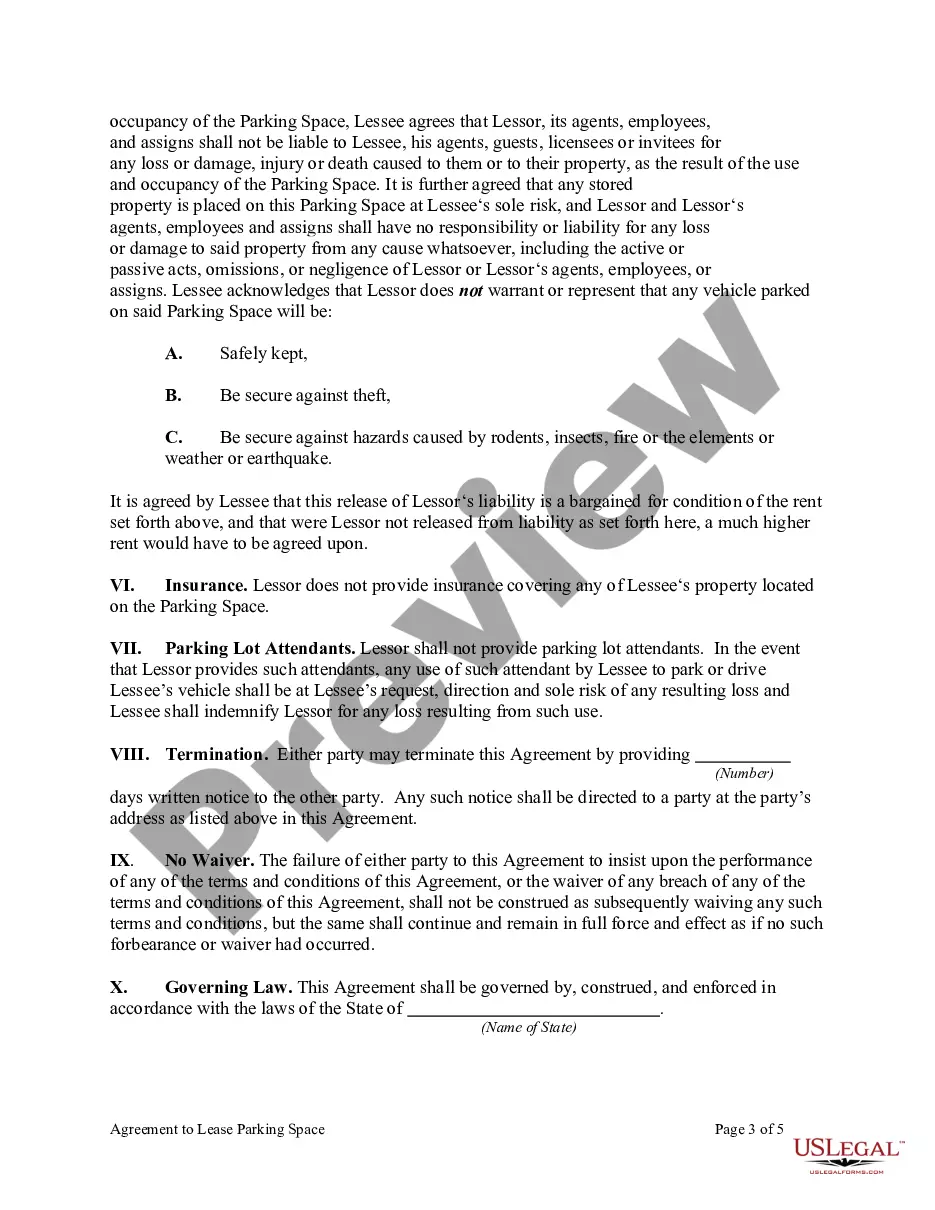
Insurance in a parking lot works by providing financial protection against various risks, such as accidents and theft. When a vehicle is damaged or an accident occurs, the insurance can cover repair costs and liability claims. Having a parking lot lease agreement with insurance ensures that both the property owner and the renters are protected under the same policy.
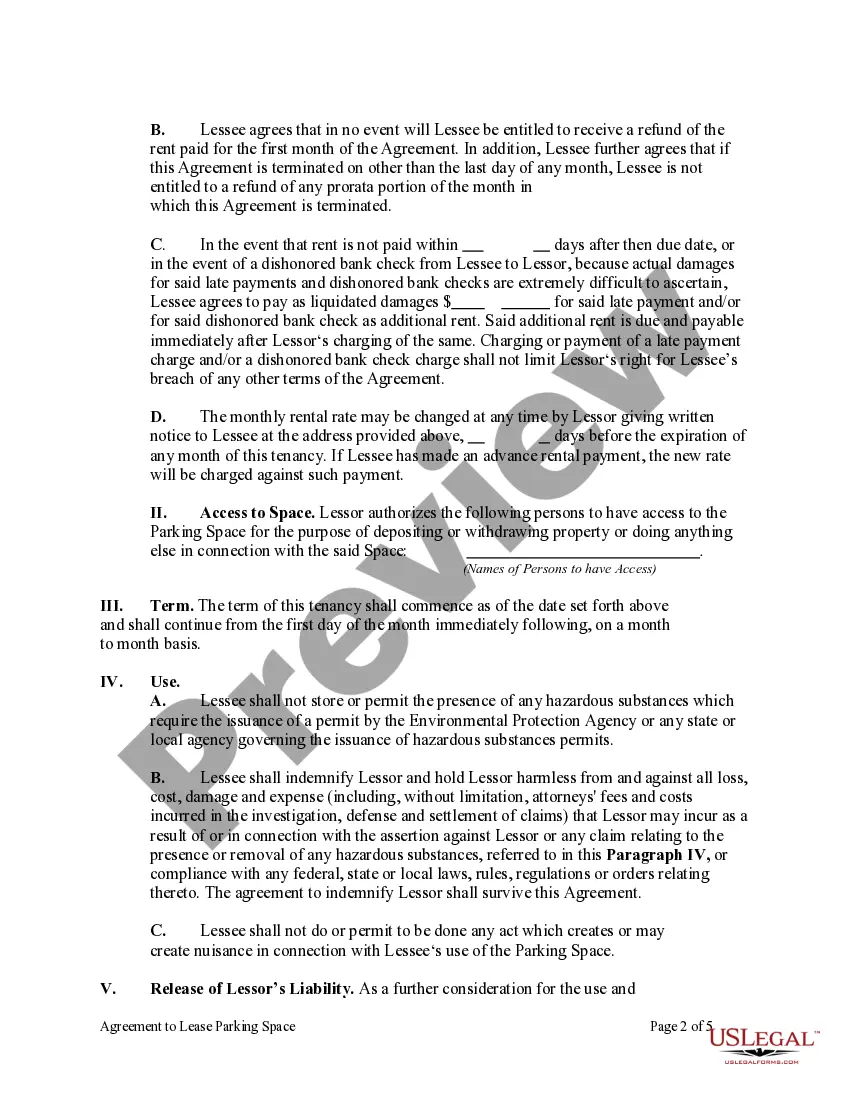
The parking clause in a residential lease agreement details the terms under which tenants may use designated parking spaces. This clause often includes rules about the number of vehicles, visitor parking, and insurance requirements. By incorporating a parking lot lease agreement with insurance, landlords can protect their property and clarify expectations for tenants.
Parking lot insurance is a specific type of liability insurance designed to cover accidents and damages occurring on a parking lot property. This insurance protects the owner from financial losses due to claims made by renters or visitors. When forming a parking lot lease agreement with insurance, it is crucial to ensure that adequate coverage is included.
Yes, parking lots typically need insurance to protect against potential liabilities and damages. Insurance provides coverage for accidents, theft, and property damage that may occur on the premises. A parking lot lease agreement with insurance is essential for safeguarding both the property and the vehicles parked there.
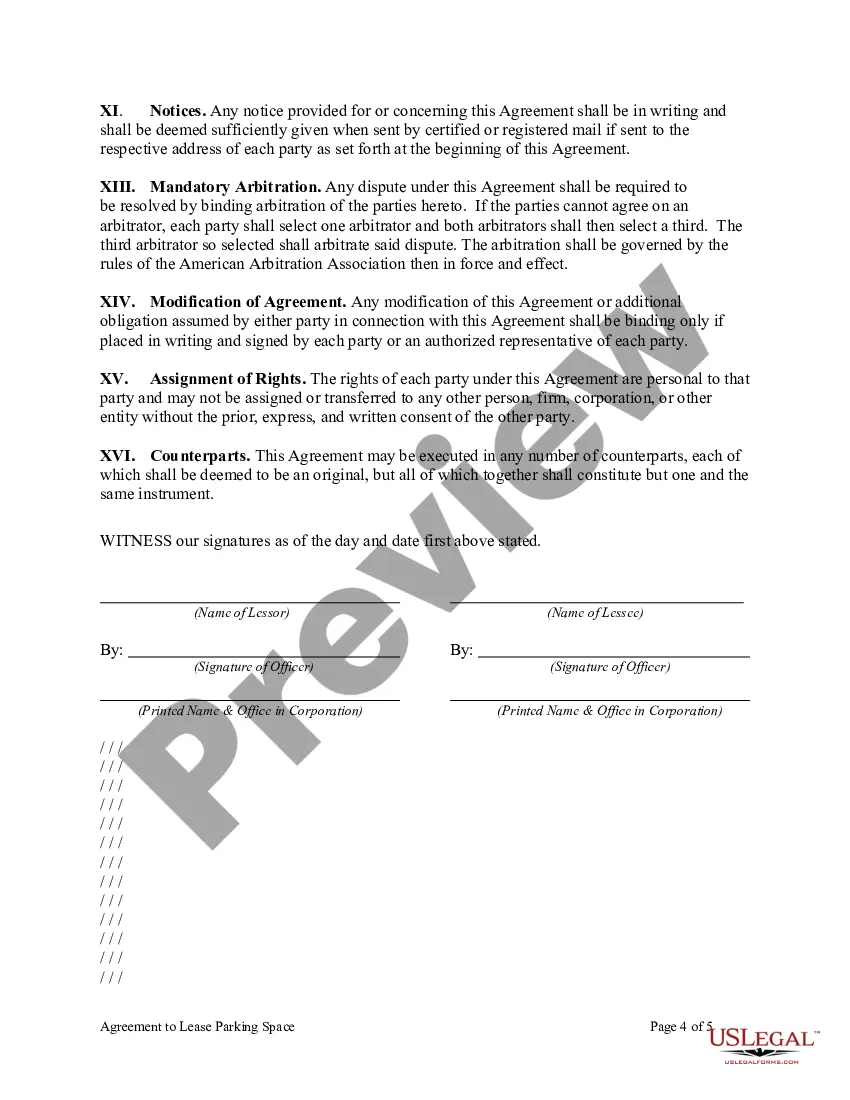
A tenancy agreement for a parking space is a contract between the property owner and the individual renting the space. This agreement outlines the terms, including rental fees, duration, and any insurance requirements. Having a clear parking lot lease agreement with insurance helps prevent disputes and ensures that both parties understand their rights and responsibilities.
Parking insurance typically covers damages to vehicles parked in a lot, theft, and liability for accidents that occur on the property. When you enter into a parking lot lease agreement with insurance, it ensures that both the property owner and renters have financial protection. This coverage can include legal fees if disputes arise from accidents or damages.
To properly fill out a parking lot lease agreement with insurance, start by clearly identifying the parties involved, including the landlord and tenant. Next, specify the terms of the lease, such as the duration and rental amount. Ensure you include details about insurance requirements, as this protects both parties from potential liabilities. Lastly, review the agreement carefully for accuracy before signing, and consider using a reliable platform like US Legal Forms to access templates and guidance tailored to your needs.
To write a lease agreement for a vehicle, you should start by outlining the essential terms, such as the duration of the lease, the rental amount, and the responsibilities of both parties. Include specific clauses about the use of the vehicle, maintenance requirements, and any insurance obligations. It's crucial to incorporate a section that addresses the parking lot lease agreement with insurance, ensuring that both parties understand their liabilities. For a comprehensive solution, consider using US Legal Forms, which provides templates and guidance to create a legally sound lease agreement.