Estate With Broker For Futures
Description
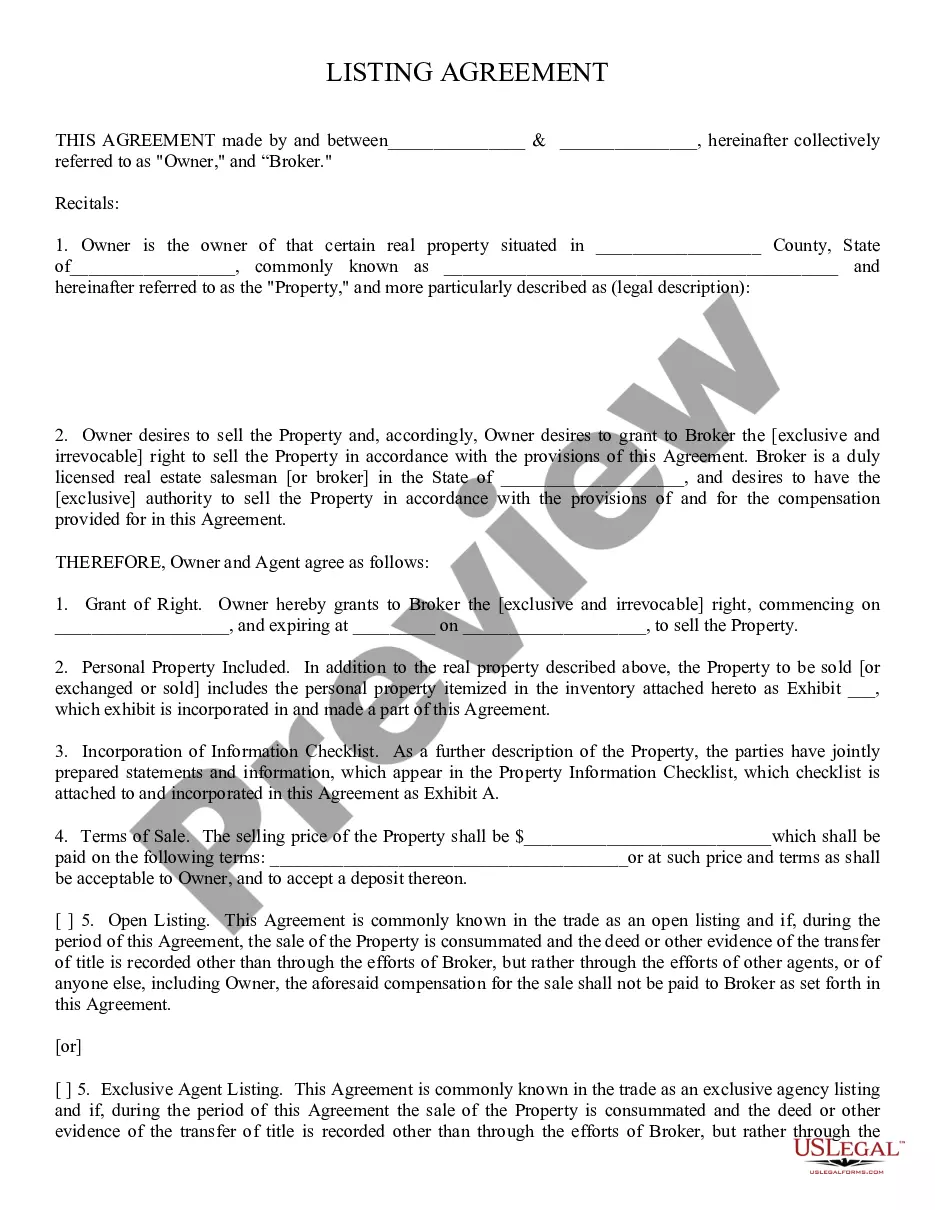
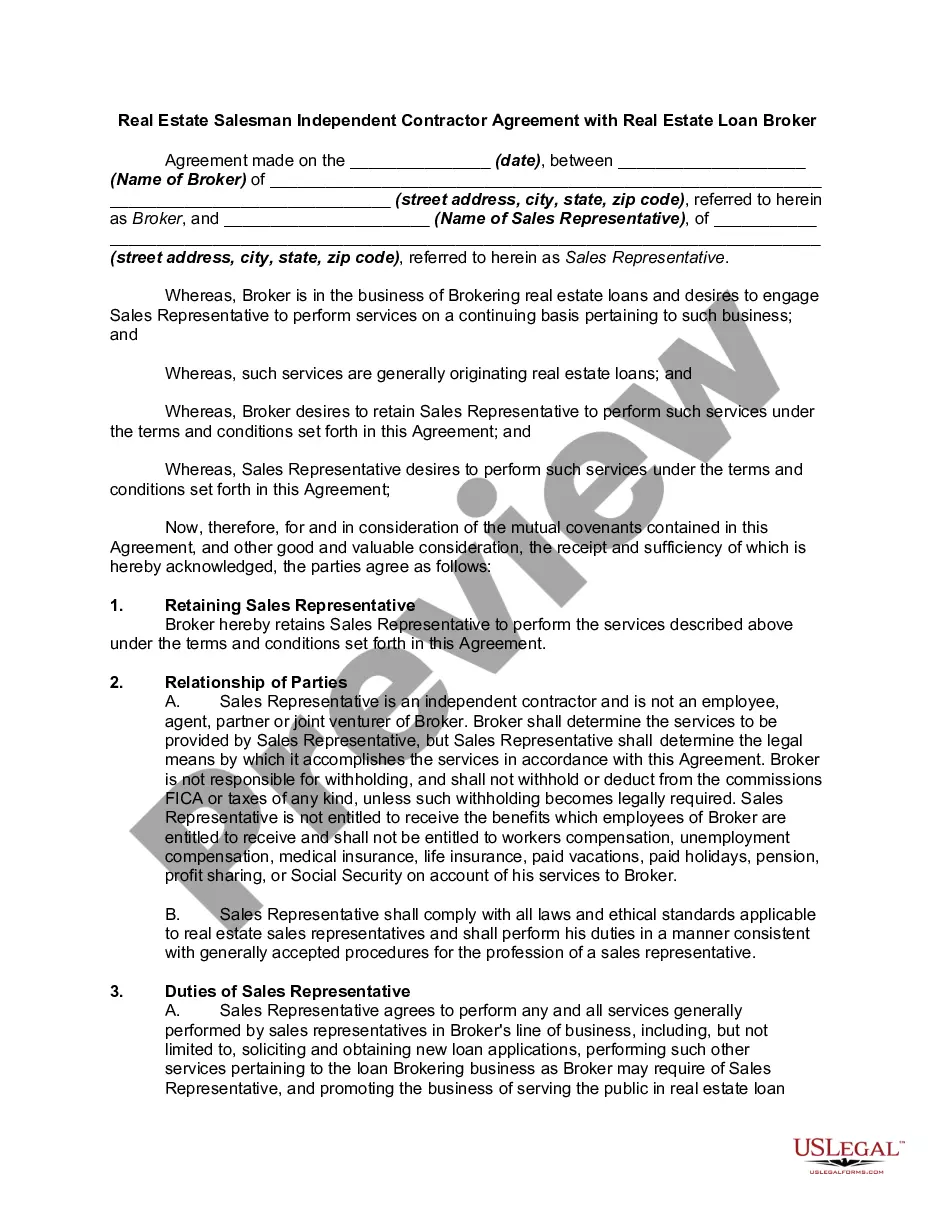
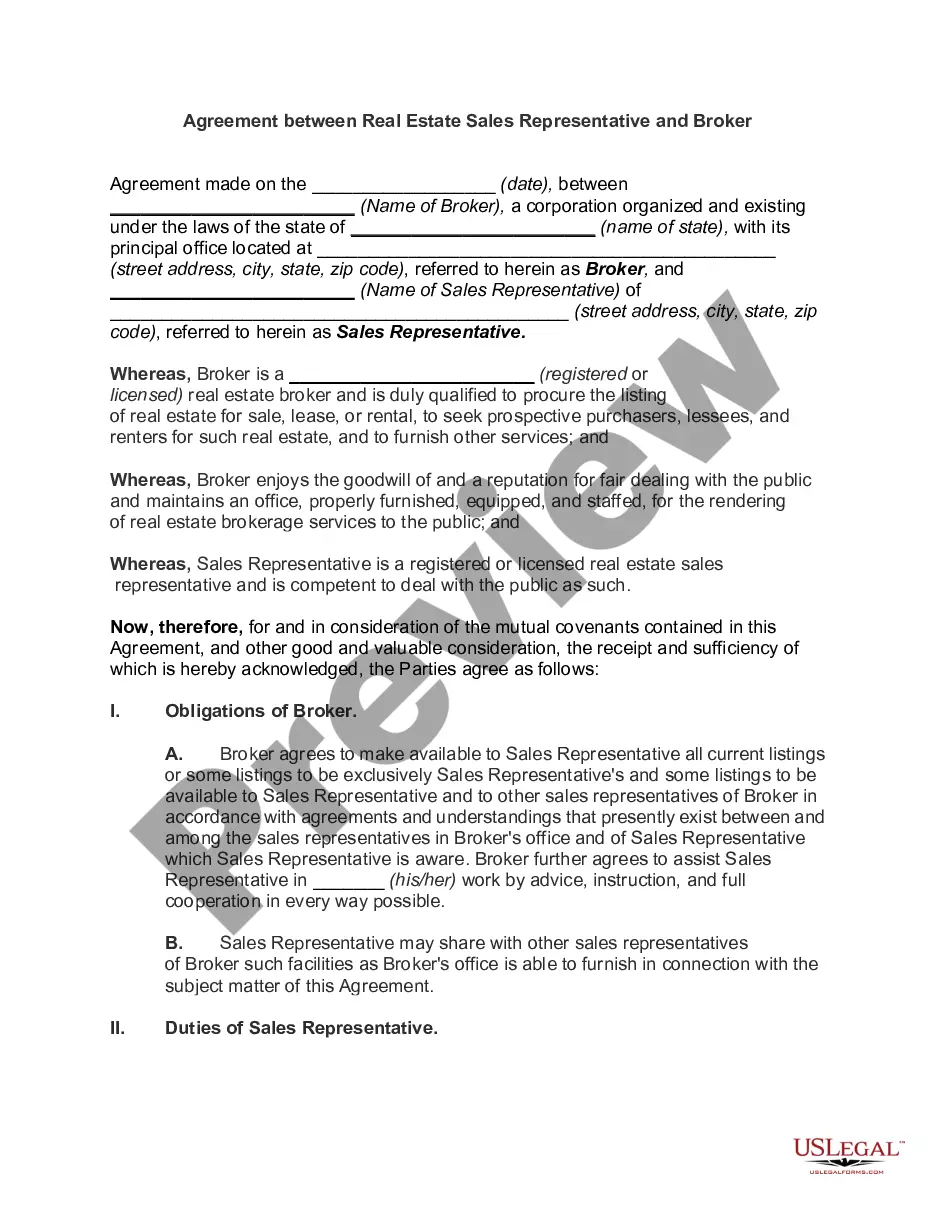
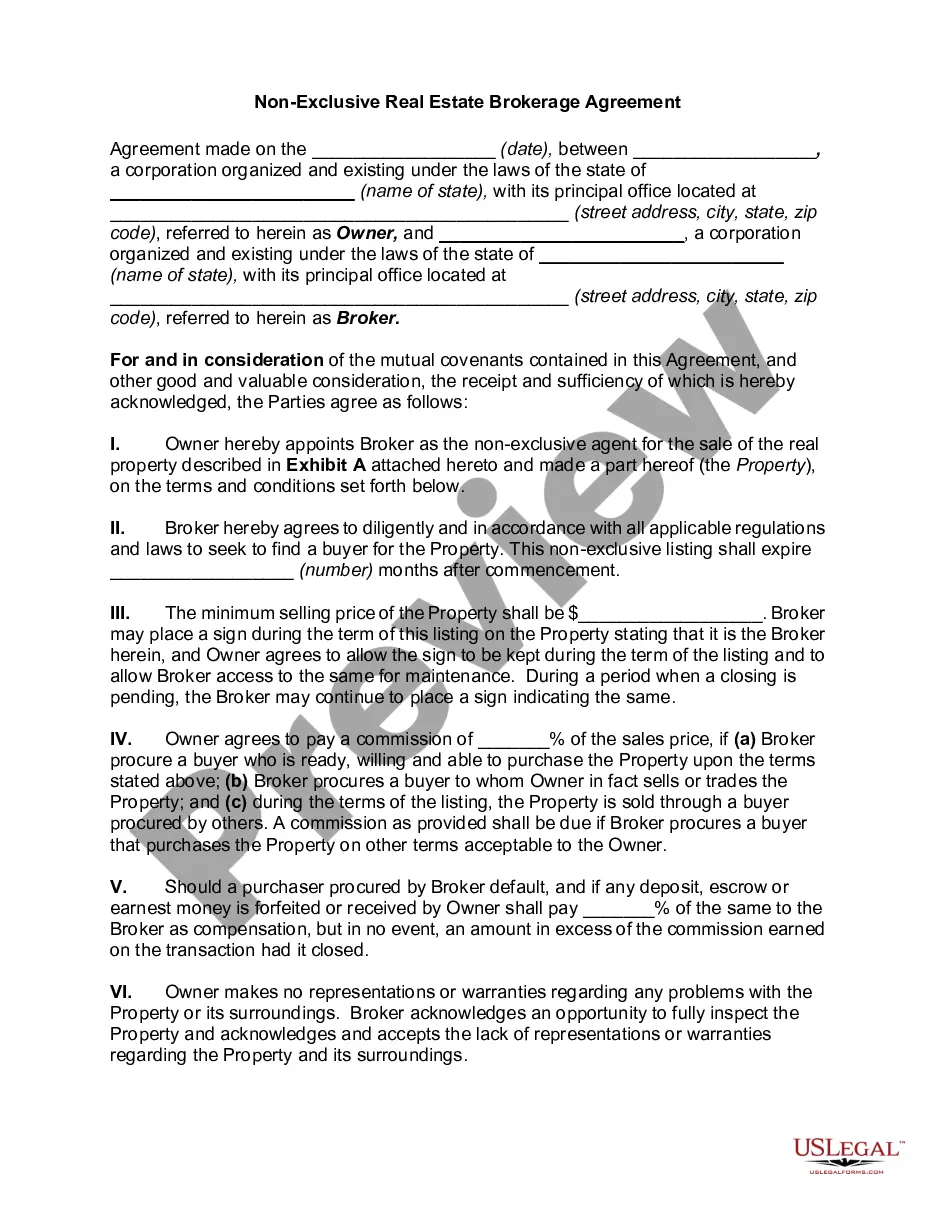
Get your form ready online
Our built-in tools help you complete, sign, share, and store your documents in one place.
Make edits, fill in missing information, and update formatting in US Legal Forms—just like you would in MS Word.
Download a copy, print it, send it by email, or mail it via USPS—whatever works best for your next step.
Sign and collect signatures with our SignNow integration. Send to multiple recipients, set reminders, and more. Go Premium to unlock E-Sign.
If this form requires notarization, complete it online through a secure video call—no need to meet a notary in person or wait for an appointment.
We protect your documents and personal data by following strict security and privacy standards.

Make edits, fill in missing information, and update formatting in US Legal Forms—just like you would in MS Word.

Download a copy, print it, send it by email, or mail it via USPS—whatever works best for your next step.

Sign and collect signatures with our SignNow integration. Send to multiple recipients, set reminders, and more. Go Premium to unlock E-Sign.

If this form requires notarization, complete it online through a secure video call—no need to meet a notary in person or wait for an appointment.

We protect your documents and personal data by following strict security and privacy standards.
Looking for another form?

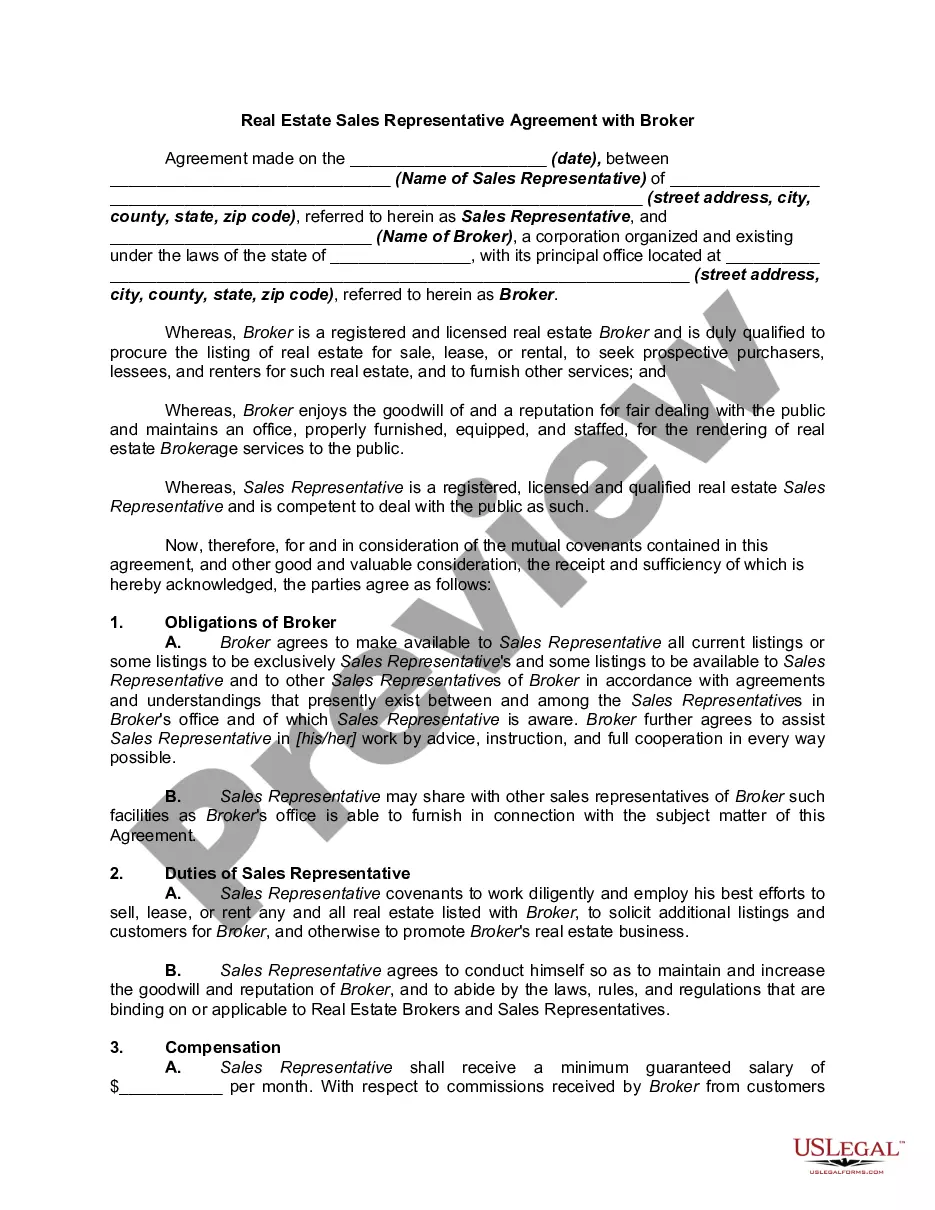
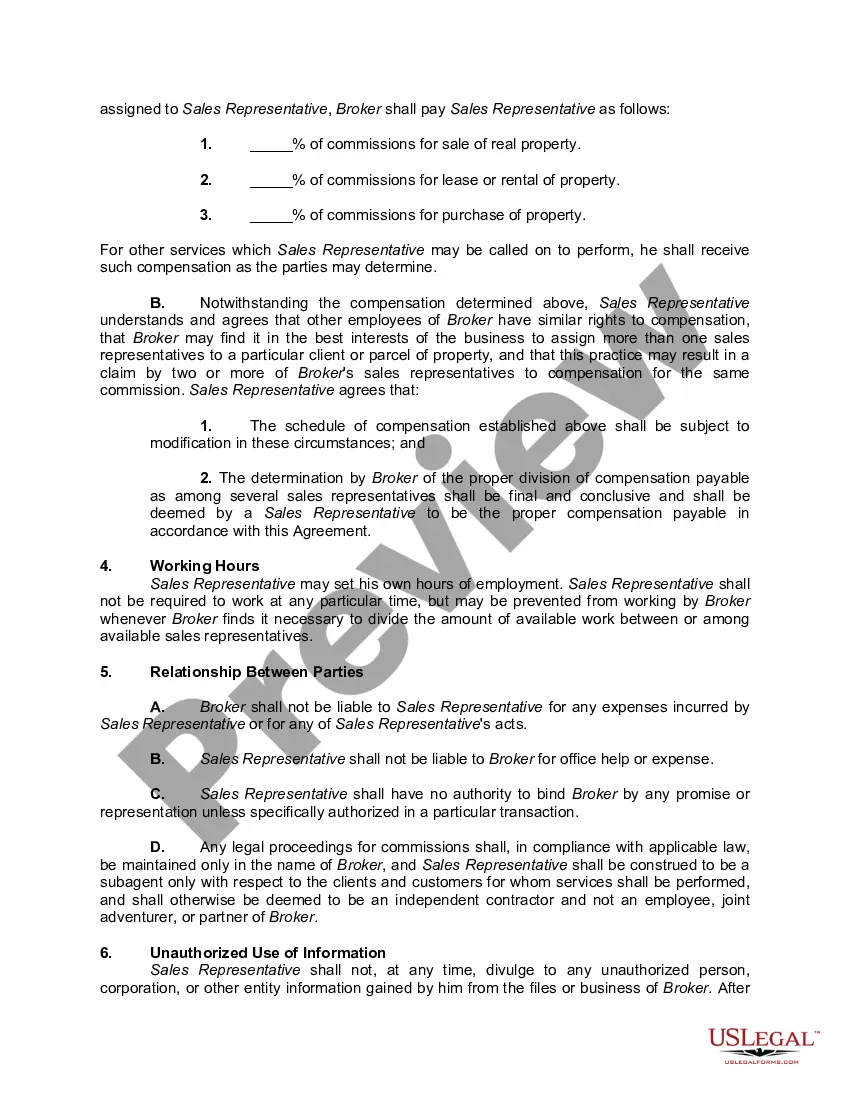
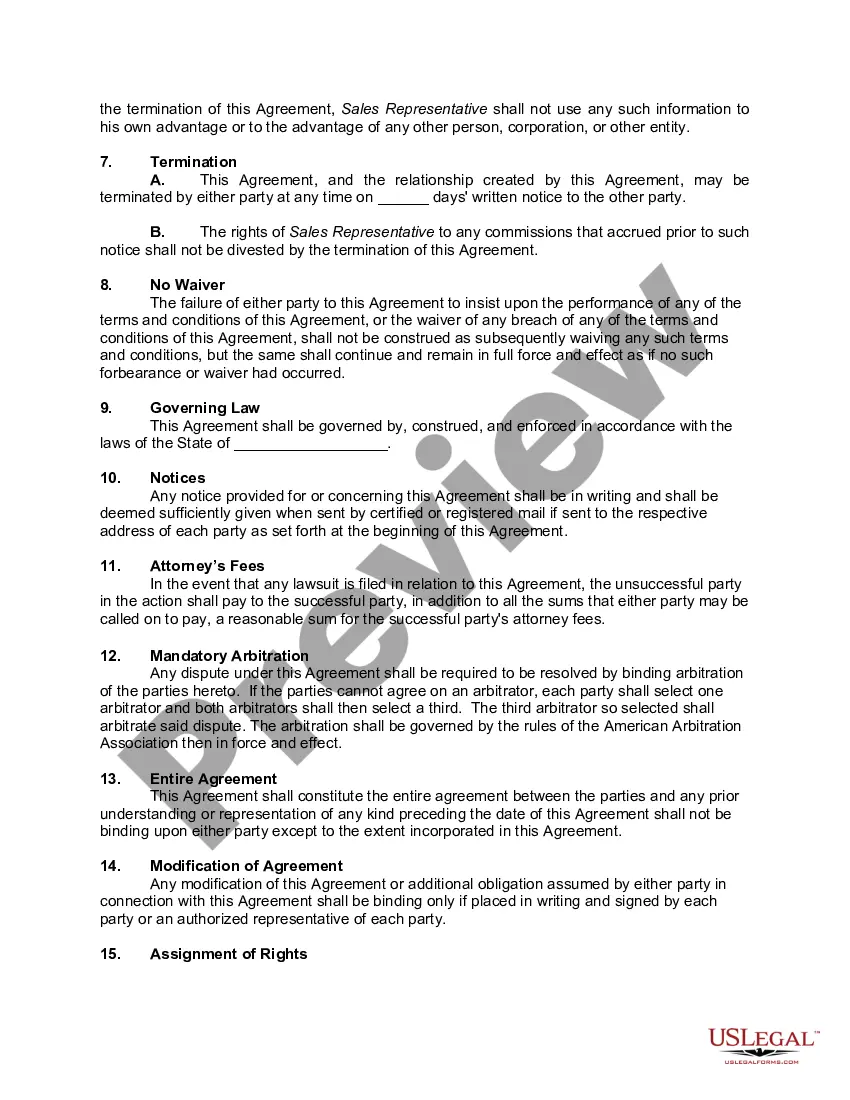
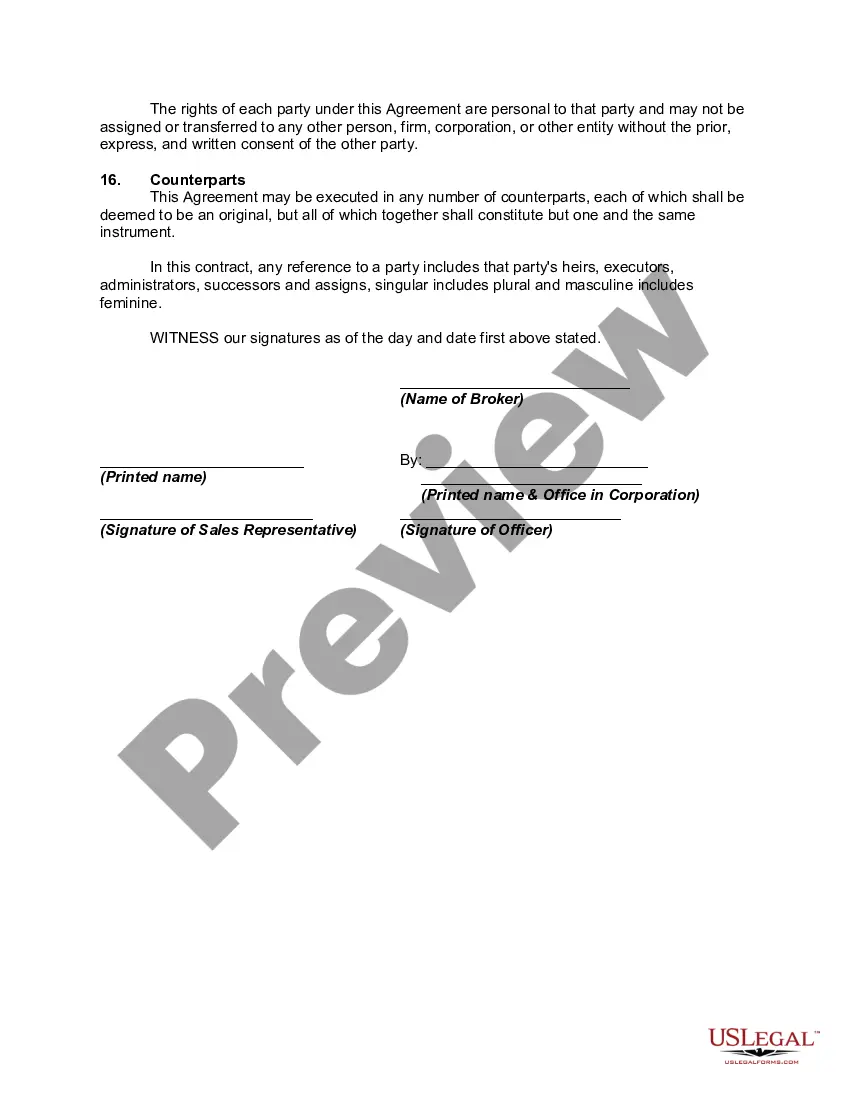
How to fill out Real Estate Sales Representative Agreement With Broker?
- If you're an existing user, log in to your account on US Legal Forms and ensure your subscription is current. Click the Download button to retrieve your necessary forms.
- For new users, begin by exploring the Preview mode to familiarize yourself with form descriptions. Select the template that aligns with your requirements and adheres to local jurisdiction standards.
- If your search reveals a mismatch, utilize the Search tab to find the appropriate template that meets your needs.
- Once you locate the correct document, click the Buy Now button, select a subscription plan, and create an account to unlock library access.
- Proceed with your purchase by entering your payment information via credit card or PayPal.
- Finally, download the template to your device. You can revisit your documents anytime through the My Documents section of your profile.
In conclusion, US Legal Forms offers a robust collection of over 85,000 fillable and editable legal forms, making document preparation straightforward and efficient. With the added benefit of premium expert assistance, you can ensure your documents are accurate and legally compliant.
Start your journey with US Legal Forms today and experience the ease of finding the right legal documents for your needs!
Form popularity
FAQ
To report futures, you will primarily use IRS Form 6781, ensuring to reflect all gains and losses from your trading activities accurately. Be mindful to classify your transactions correctly according to the tax rules for futures. If you need assistance in navigating this process, platforms like uslegalforms can provide valuable support for organizing your estate with a broker for futures.
You report a futures contract on your tax return by using Form 6781, where you will detail your gains and losses aligned with IRS guidelines. Ensure to separate your short-term and long-term gains as per the 60/40 rule. Utilizing platforms such as uslegalforms can simplify the process of reporting, especially when dealing with your estate with a broker for futures.
Filing taxes for futures trading typically involves reporting gains and losses accurately on IRS Form 6781. It's essential to document all transactions through the year, as this information will be necessary for your return. Consider using services like uslegalforms that provide comprehensive tools for managing your estate with a broker for futures effectively.
The 60/40 rule refers to the tax treatment of futures contracts where 60% of the gains are taxed at long-term capital gains rates and 40% at short-term rates. This favorable split can result in substantial tax savings for your estate with a broker for futures. Understanding this rule helps you make informed decisions and optimize your tax situation.
To report futures and options on your tax return, you generally need to use Form 6781 for section 1256 contracts. All gains and losses should be detailed accurately, as they are taxed differently than regular investments. It is beneficial to consult with a tax professional or utilize platforms like uslegalforms to streamline the reporting process for your estate with a broker for futures.
You can enter section 1256 contracts on your tax return using IRS Form 6781. This form is specifically designed for reporting gains and losses from these contracts. It’s important to accurately complete this form to calculate how your estate with a broker for futures is taxed. Be attentive to the guidelines provided by the IRS to ensure compliance.
You do not need $25,000 to day trade futures, unlike stocks, where this requirement applies under the Pattern Day Trader rule. Futures offer a greater degree of flexibility in capital requirements. However, having sufficient funds can help you manage margin and risk more effectively. To better understand the financial requirements of day trading, consider exploring resources from US Legal Forms.
Yes, you typically need a broker to trade futures effectively. Brokers provide access to the futures markets, along with essential tools and resources for executing trades. Choosing a broker who understands your needs can enhance your trading experience significantly. With the right broker, paired with guidance from US Legal Forms, you can streamline your trading process.
The 60/40 rule refers to the taxation of futures gains, where 60% are treated as long-term capital gains and 40% as short-term. This rule is beneficial because long-term capital gains typically face lower tax rates. Traders can take advantage of this structure to minimize their tax liabilities effectively. Utilizing US Legal Forms can help clarify this rule's application in your trading strategy.
The effective tax rate for futures can vary based on individual circumstances and income levels. Generally, futures trading benefits from the 60/40 rule, where 60% of gains are treated as long-term and 40% as short-term. This can lead to a lower overall tax burden for traders. Using US Legal Forms can assist you in understanding and optimizing your tax strategy related to futures.