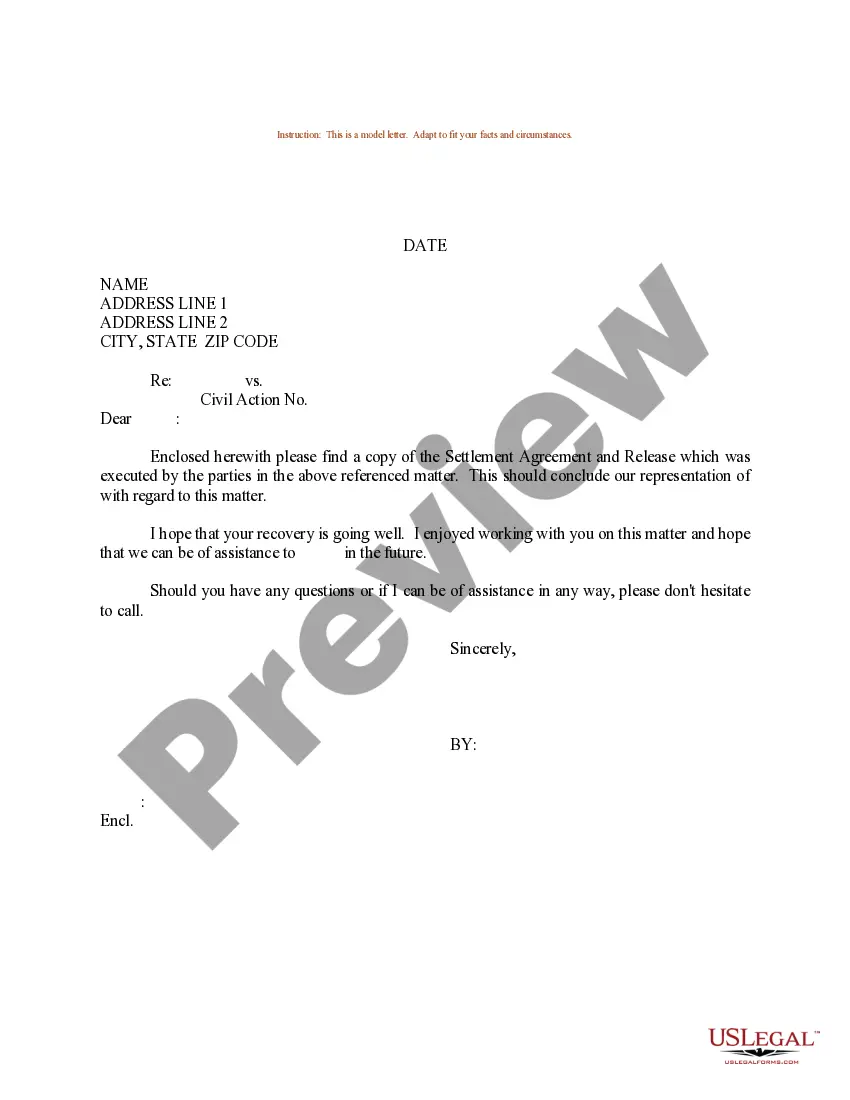
Settlement Agreement For Car Accident
Description
Get your form ready online
Our built-in tools help you complete, sign, share, and store your documents in one place.
Make edits, fill in missing information, and update formatting in US Legal Forms—just like you would in MS Word.
Download a copy, print it, send it by email, or mail it via USPS—whatever works best for your next step.
Sign and collect signatures with our SignNow integration. Send to multiple recipients, set reminders, and more. Go Premium to unlock E-Sign.
If this form requires notarization, complete it online through a secure video call—no need to meet a notary in person or wait for an appointment.
We protect your documents and personal data by following strict security and privacy standards.

Make edits, fill in missing information, and update formatting in US Legal Forms—just like you would in MS Word.

Download a copy, print it, send it by email, or mail it via USPS—whatever works best for your next step.

Sign and collect signatures with our SignNow integration. Send to multiple recipients, set reminders, and more. Go Premium to unlock E-Sign.

If this form requires notarization, complete it online through a secure video call—no need to meet a notary in person or wait for an appointment.

We protect your documents and personal data by following strict security and privacy standards.
Looking for another form?






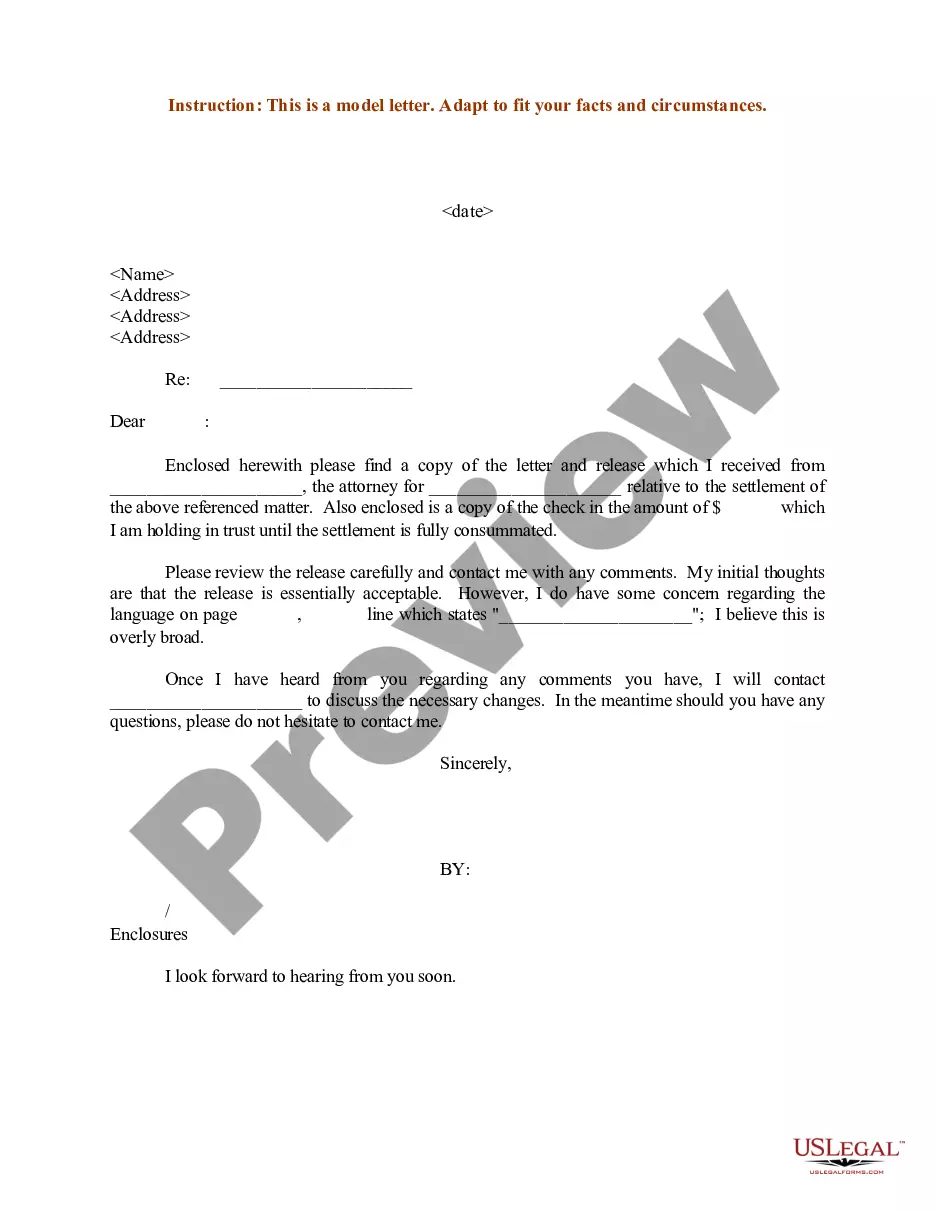
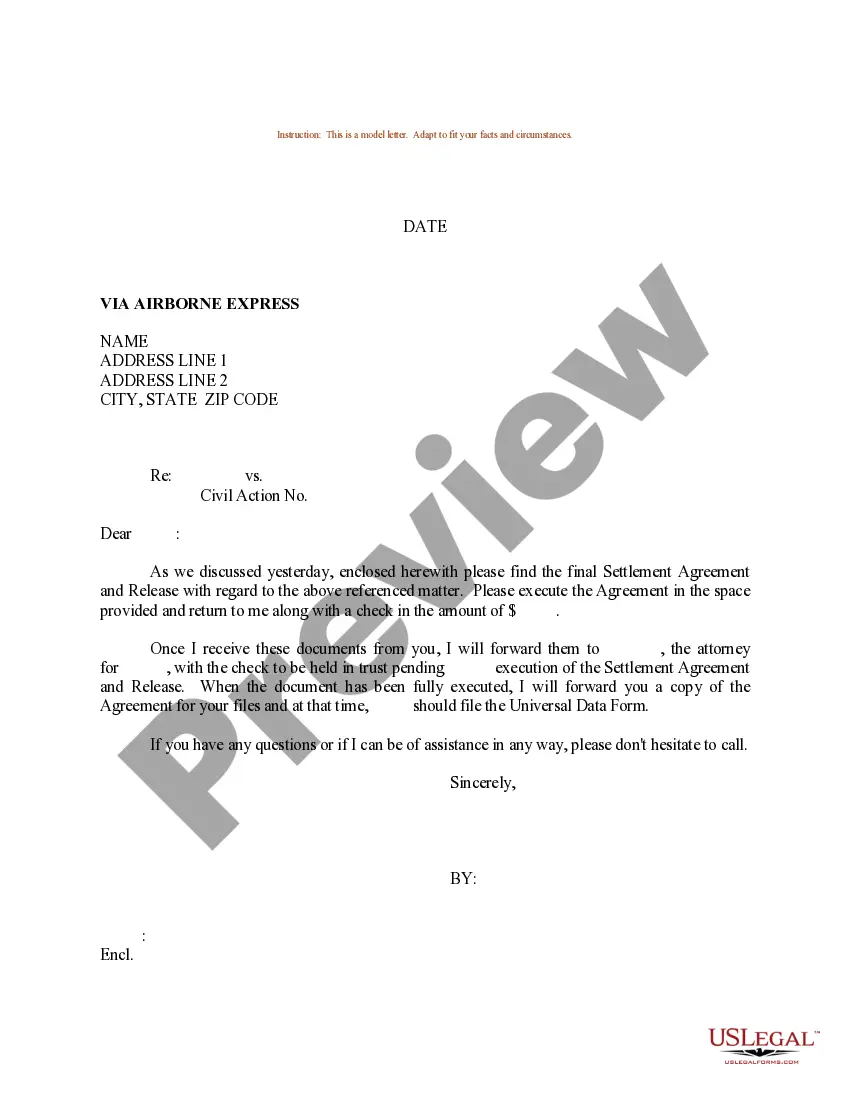
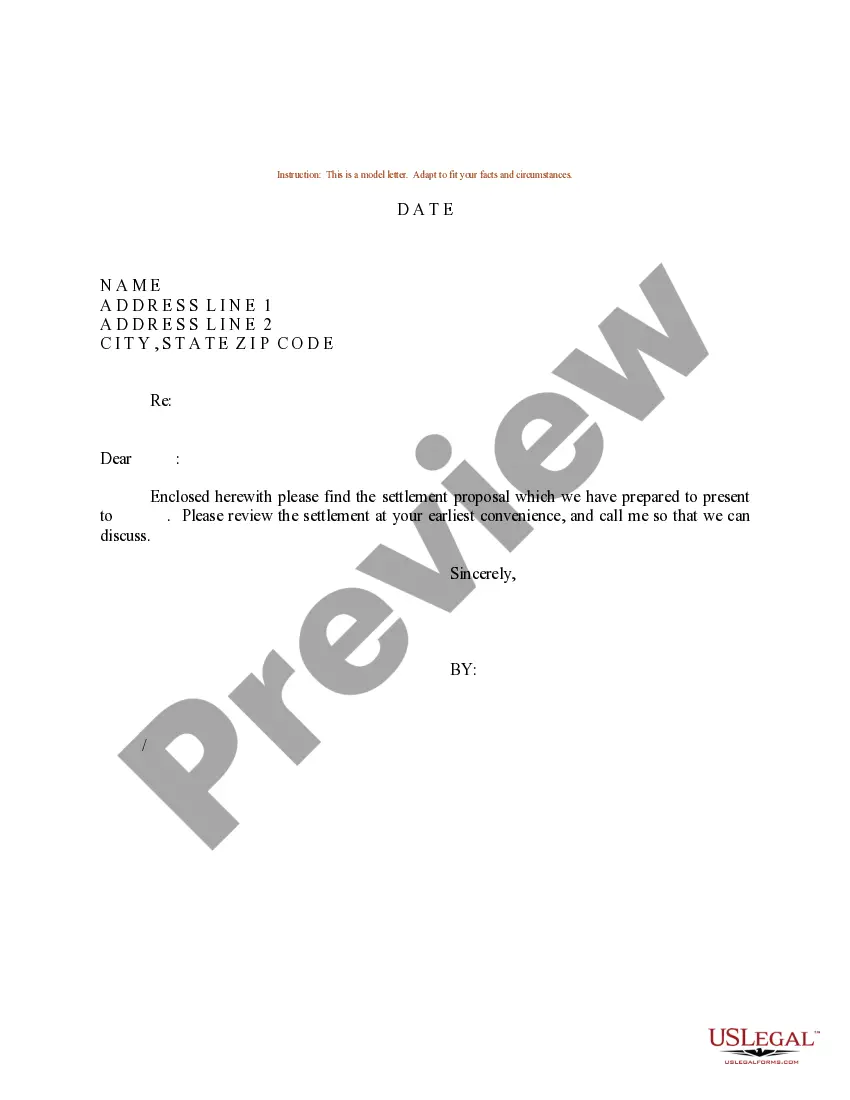
How to fill out Sample Letter For Settlement Agreement And Release?
- If you are a returning user, simply log in to your account and select the settlement agreement form to download it immediately. Ensure your subscription is active; renew if necessary.
- For new users, start by reviewing the form's Preview mode and description. Confirm it meets your needs and complies with your local regulations.
- If you need to find a different template, use the Search function to explore other options that fit your requirements.
- Select the appropriate document by clicking the Buy Now button. Choose a subscription plan that best suits your needs and create an account for access.
- Complete your purchase by entering your payment details through credit card or PayPal to finalize your subscription.
- Once payment is processed, download the form. It will be saved to your device and accessible anytime through the My Forms section.
US Legal Forms stands out with its extensive library featuring over 85,000 customizable legal documents, ensuring quick access to a variety of forms far exceeding competitor offerings.
For those seeking precision in legal documentation, US Legal Forms not only provides templates but also connects users with premium experts for guidance. Start your hassle-free experience today by visiting US Legal Forms!
Form popularity
FAQ
Estimating your settlement amount involves calculating all your damages, both economic and non-economic. Start with direct costs like medical bills and repair expenses, then factor in emotional distress and loss of enjoyment of life. Using a settlement agreement for a car accident template from US Legal Forms can help you outline all these costs accurately.
A reasonable settlement offer in a car accident case usually takes into account all economic and non-economic damages. This includes immediate costs like repair bills and longer-term issues such as ongoing medical treatment. Aim for a settlement agreement for a car accident that reflects your true losses and is backed by solid documentation.
A good settlement for a car accident typically falls between 50% to 75% of the total damages incurred. This percentage can vary depending on the severity of the accident and the insurance policy involved. Setting realistic expectations based on your situation and consulting with legal experts can guide you toward a suitable percentage.
Determining the amount to ask for your settlement agreement for a car accident starts with evaluating your medical expenses, lost wages, and property damage. You should also consider pain and suffering, which can greatly affect the final amount. It's helpful to gather supporting documents and use online calculators to estimate reasonable figures.
To write a settlement agreement for a car accident, start by gathering all relevant details about the accident, including the date, time, and parties involved. Clearly outline the terms of the settlement, specifying any compensation for damages and injuries. It’s essential to include a release clause, indicating that both parties agree to resolve the matter without further claims. Using a reliable platform like USLegalForms can streamline this process, providing templates that ensure you cover all crucial elements.
Injuries such as traumatic brain injuries, spinal cord injuries, and severe fractures often result in higher settlements due to their long-term impact. These types of injuries typically lead to significant medical expenses and rehabilitation costs. Therefore, when negotiating a settlement agreement for car accident, it's important to emphasize the severity and implications of your injuries to maximize your compensation.
When determining how much to ask for a settlement, it's vital to consider all your medical bills, lost wages, and other damages. Generally, you should aim for an amount that covers both your current expenses and future needs. A comprehensive settlement agreement for car accident can help you outline these factors accurately, ensuring that you ask for a fair resolution.
Pain and suffering compensation varies significantly, typically calculated based on the severity and duration of your injuries. Many settlements include this component, and the amount can range from a couple of thousand dollars to a much larger figure. Crafting a thorough settlement agreement for car accident matters because it can address both tangible losses and intangibles like emotional distress.
Most car accident settlements vary widely based on the circumstances of the accident, the severity of injuries, and other factors. Typically, settlements range from a few thousand to several hundred thousand dollars. A clear and effective settlement agreement for car accident is essential in determining the right amount based on your specific situation.
When asking for a car accident settlement, start by gathering all relevant documentation, including medical records and accident reports. You can then create a detailed settlement agreement for a car accident that outlines your damages and compensations sought. Clearly communicate your needs to the insurance company or the party at fault. Remember, presenting a well-organized claim enhances your chances of a favorable outcome.