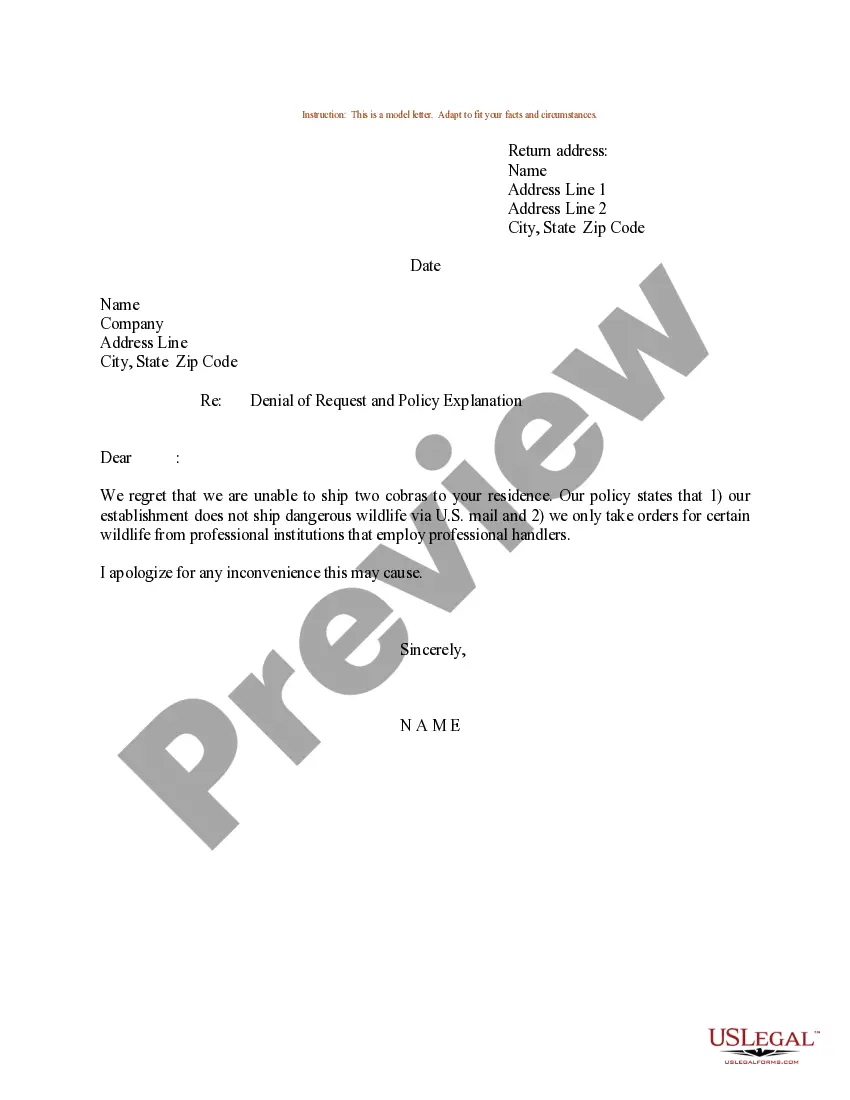
Denial Letter In Spanish
Description
Get your form ready online
Our built-in tools help you complete, sign, share, and store your documents in one place.
Make edits, fill in missing information, and update formatting in US Legal Forms—just like you would in MS Word.
Download a copy, print it, send it by email, or mail it via USPS—whatever works best for your next step.
Sign and collect signatures with our SignNow integration. Send to multiple recipients, set reminders, and more. Go Premium to unlock E-Sign.
If this form requires notarization, complete it online through a secure video call—no need to meet a notary in person or wait for an appointment.
We protect your documents and personal data by following strict security and privacy standards.

Make edits, fill in missing information, and update formatting in US Legal Forms—just like you would in MS Word.

Download a copy, print it, send it by email, or mail it via USPS—whatever works best for your next step.

Sign and collect signatures with our SignNow integration. Send to multiple recipients, set reminders, and more. Go Premium to unlock E-Sign.

If this form requires notarization, complete it online through a secure video call—no need to meet a notary in person or wait for an appointment.

We protect your documents and personal data by following strict security and privacy standards.
Looking for another form?
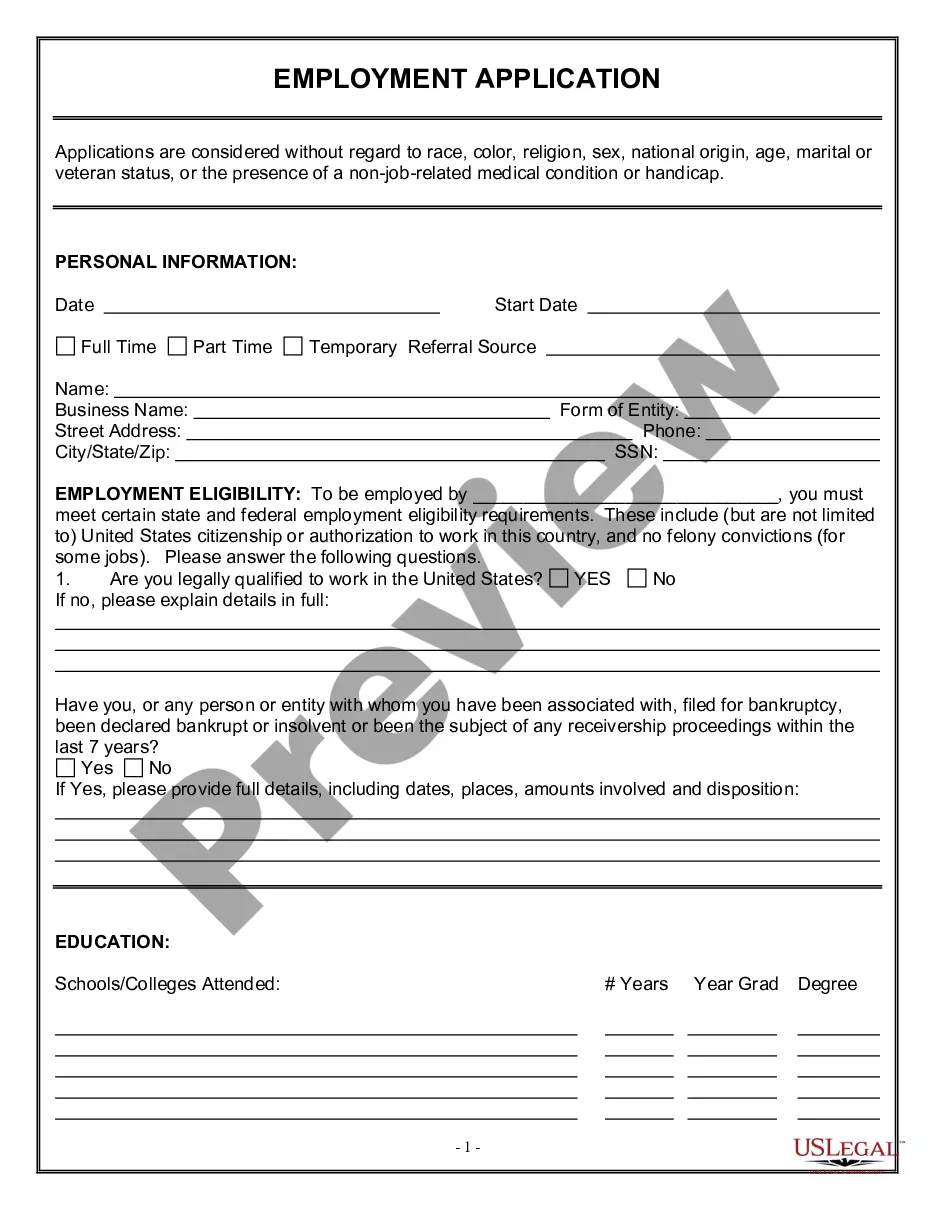
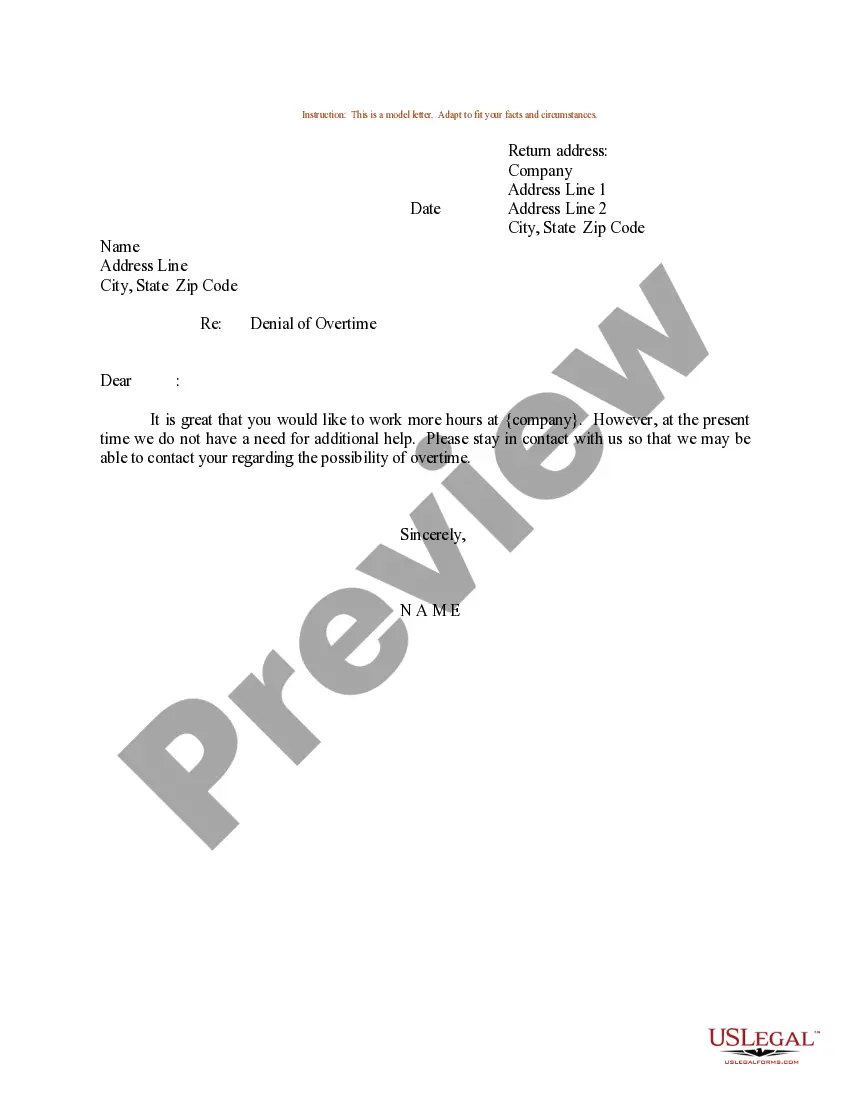
How to fill out Sample Letter For Denial Of Request And Policy Explanation?
Managing legal documentation can be perplexing, even for seasoned professionals.
If you're seeking a Denial Letter In Spanish and lack the time to find the correct and current version, the process can be daunting.
US Legal Forms covers any needs you may have, ranging from personal to business documentation, all aggregated in one location.
Utilize advanced tools to complete and manage your Denial Letter In Spanish.
Here are the steps to follow after obtaining the form you need: Validate that this is the appropriate form by reviewing it and examining its details.
- Explore a database of articles, guides, and materials pertinent to your circumstances and needs.
- Conserve time and energy in your document search, and leverage US Legal Forms’ sophisticated search and Preview feature to find and download your Denial Letter In Spanish.
- If you hold a subscription, Log In to your US Legal Forms account, search for your form, and download it.
- Check your My documents tab to review the documents you have downloaded and manage your folders as per your requirement.
- If it’s your inaugural experience with US Legal Forms, create an account to gain unlimited access to all benefits of the platform.
- A robust web form library can significantly improve efficiency for anyone looking to navigate these dilemmas.
- US Legal Forms is a pioneer in the realm of online legal documentation, offering over 85,000 state-specific legal forms at your convenience.
- With US Legal Forms, you can access legal and business forms tailored to your state or county.
Form popularity
FAQ
In Spanish, a letter is referred to as 'carta'. This term encompasses all forms of letters, including formal and informal types. Hence, if you are dealing with a denial letter in Spanish, knowing that it is labeled as a 'carta' can help you better understand relevant legal documents and formats.
Initiate your formal letter in Spanish with 'Estimado/a Name'. This greeting shows respect towards the recipient. In context, if you’re writing a denial letter in Spanish, starting formally can help manage the tone of the discussion that follows.
To end a letter in Spanish sincerely, use phrases such as 'Atentamente' or 'Cordialmente'. These phrases express professionalism and kindness, which is important in conveying sensitive messages, like a denial letter in Spanish. Always include your name after your closing statement.
Pronouncing Spanish letters involves understanding the phonetic sounds of the language. For example, the letter 'a' is pronounced like 'ah'. When referring to a denial letter in Spanish, clear pronunciation ensures that your communication remains effective and comprehensible.
When starting a cover letter in Spanish, you should address the hiring manager directly. Use 'Estimado/a Name' and briefly introduce yourself. This approach helps convey your interest and professionalism, which is essential if you later mention any denial letters necessitating an explanation of circumstances.
Begin your formal letter with a clear intent. Start with 'Estimado/a Recipient’s Name' to convey respect. For a denial letter in Spanish, establish a clear purpose early on to ensure the recipient comprehends your message without confusion.
In formal letters, greetings are crucial. You can use 'Estimado/a' followed by the person's title and last name. If addressed to multiple recipients, use 'Estimados/as'. If you are crafting a denial letter in Spanish, the greeting maintains professionalism and respect for the audience.
To start a formal letter in Spanish, you should use a respectful greeting such as 'Estimado/a Name'. This sets a polite and professional tone for your communication. If you do not know the recipient, you can say 'A quien corresponda'. When writing a denial letter in Spanish, clarity in the opening will contribute to a better understanding of your message.
To end a letter politely in Spanish, you might use phrases like 'Atentamente' or 'Saludos cordiales.' These closing statements help convey respect and professionalism. When finalizing a denial letter in Spanish, a courteous conclusion can reinforce your message positively. This small detail shows your consideration for the recipient's feelings, making the communication more effective.
The word for rejection in Spanish is 'rechazo.' It encapsulates the concept of refusing or dismissing something or someone. This term is prevalent in various contexts, including applications, proposals, and personal interactions. Knowing the term 'rechazo' is vital when discussing denial letters in Spanish, as it clearly conveys the essence of the communication.