Trust And Will
Description
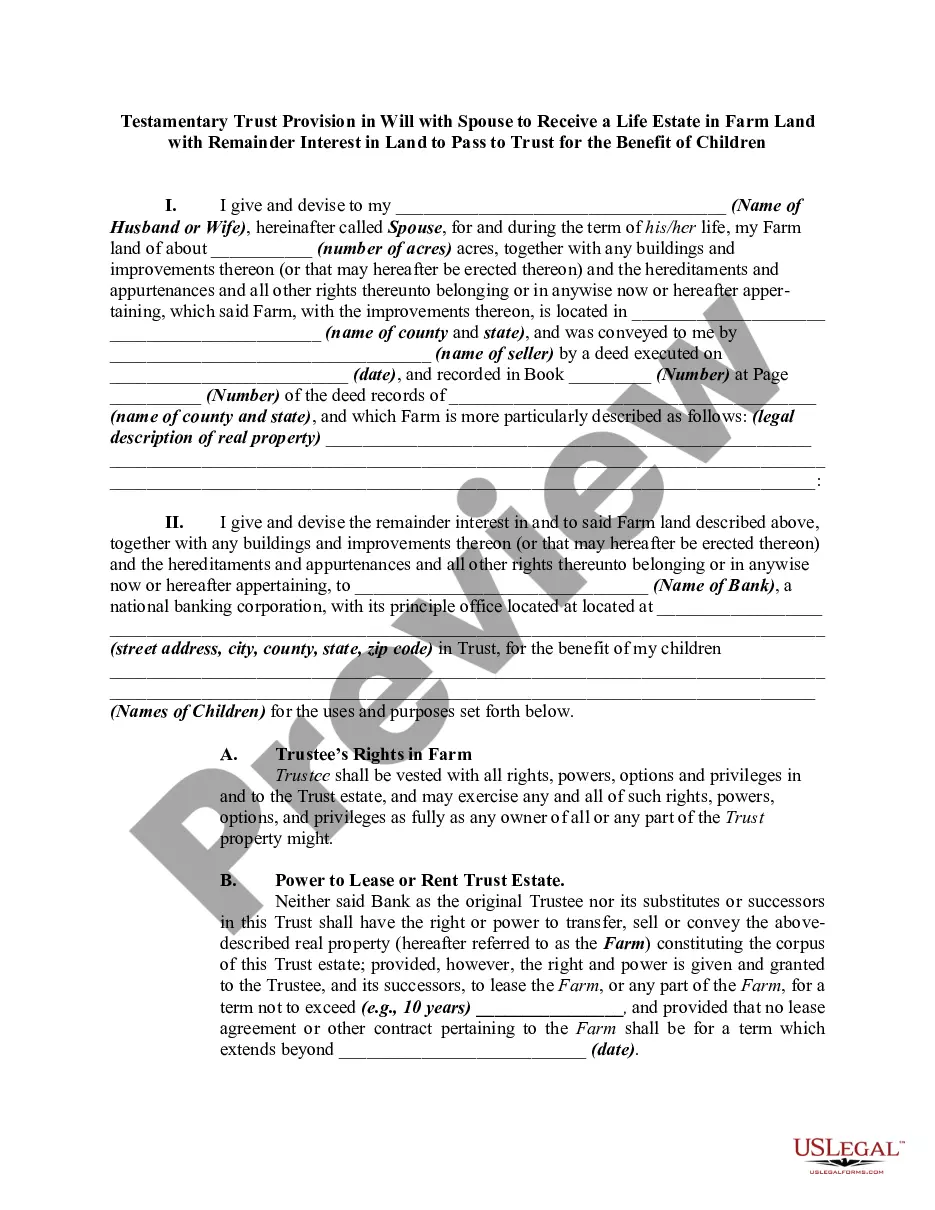
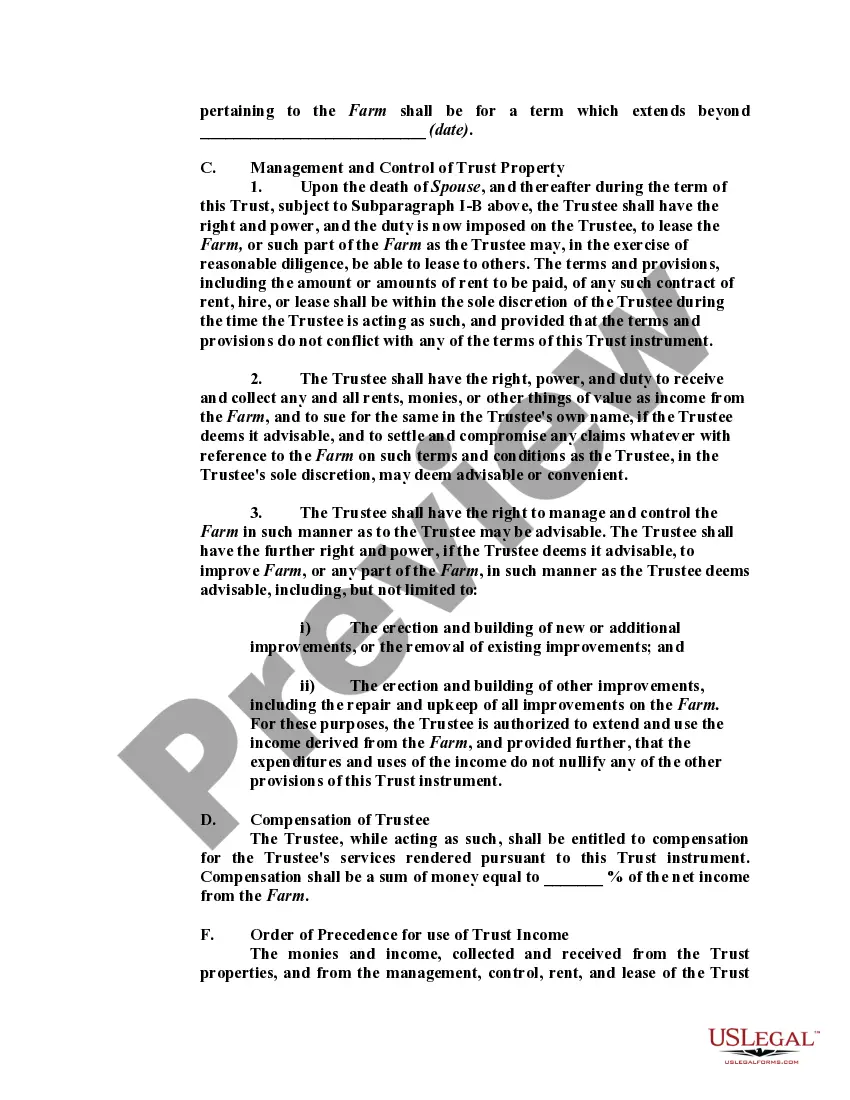
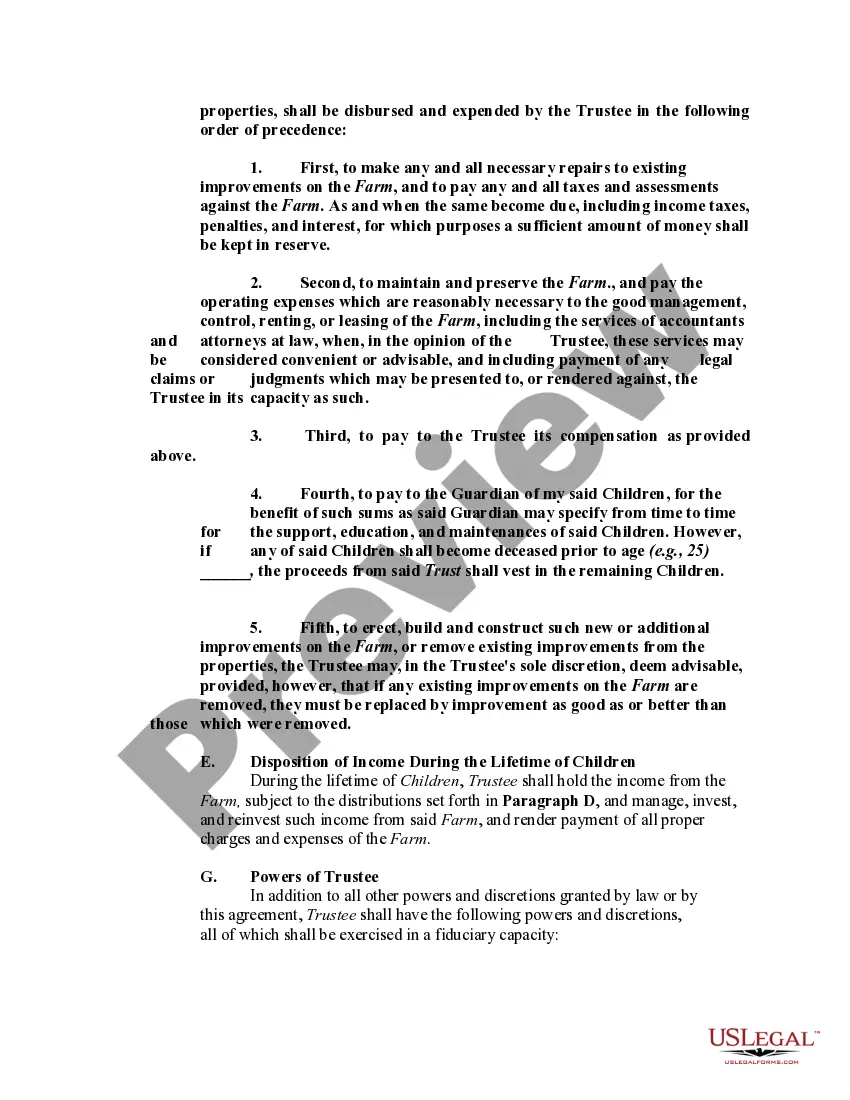
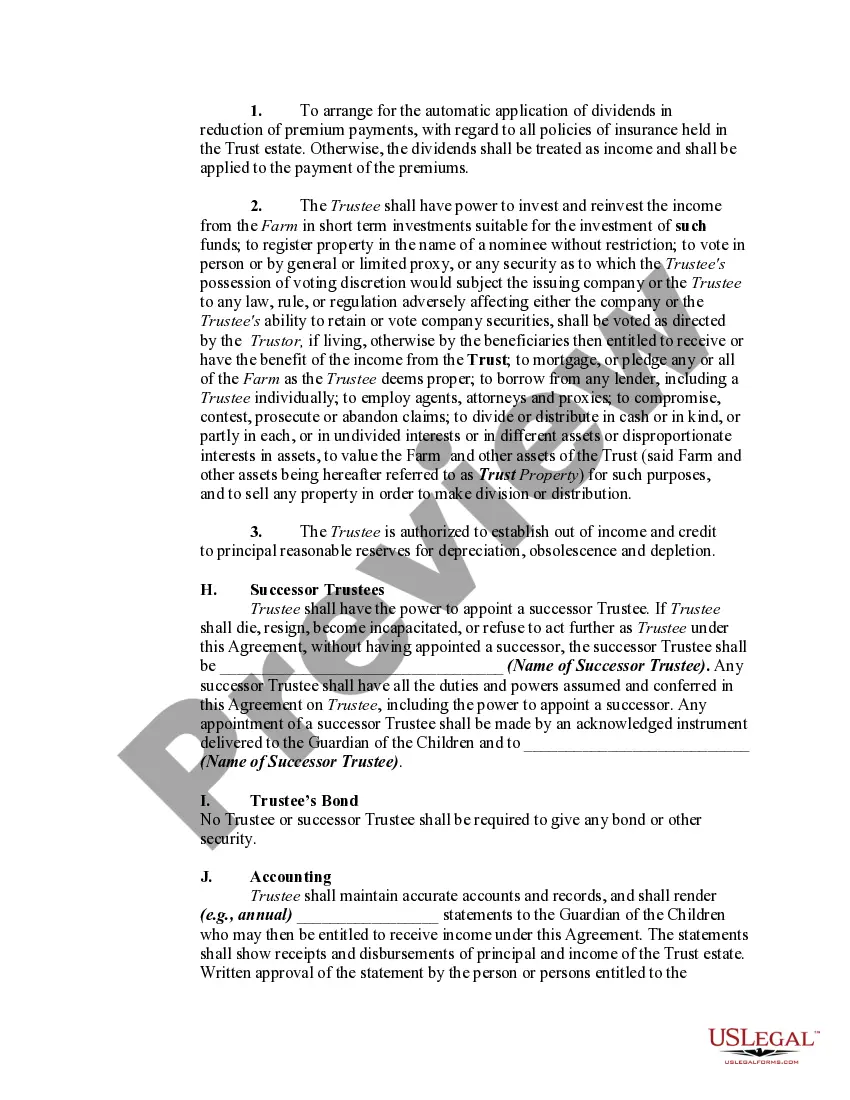

Get your form ready online
Our built-in tools help you complete, sign, share, and store your documents in one place.
Make edits, fill in missing information, and update formatting in US Legal Forms—just like you would in MS Word.
Download a copy, print it, send it by email, or mail it via USPS—whatever works best for your next step.
Sign and collect signatures with our SignNow integration. Send to multiple recipients, set reminders, and more. Go Premium to unlock E-Sign.
If this form requires notarization, complete it online through a secure video call—no need to meet a notary in person or wait for an appointment.
We protect your documents and personal data by following strict security and privacy standards.

Make edits, fill in missing information, and update formatting in US Legal Forms—just like you would in MS Word.

Download a copy, print it, send it by email, or mail it via USPS—whatever works best for your next step.

Sign and collect signatures with our SignNow integration. Send to multiple recipients, set reminders, and more. Go Premium to unlock E-Sign.

If this form requires notarization, complete it online through a secure video call—no need to meet a notary in person or wait for an appointment.

We protect your documents and personal data by following strict security and privacy standards.
Looking for another form?

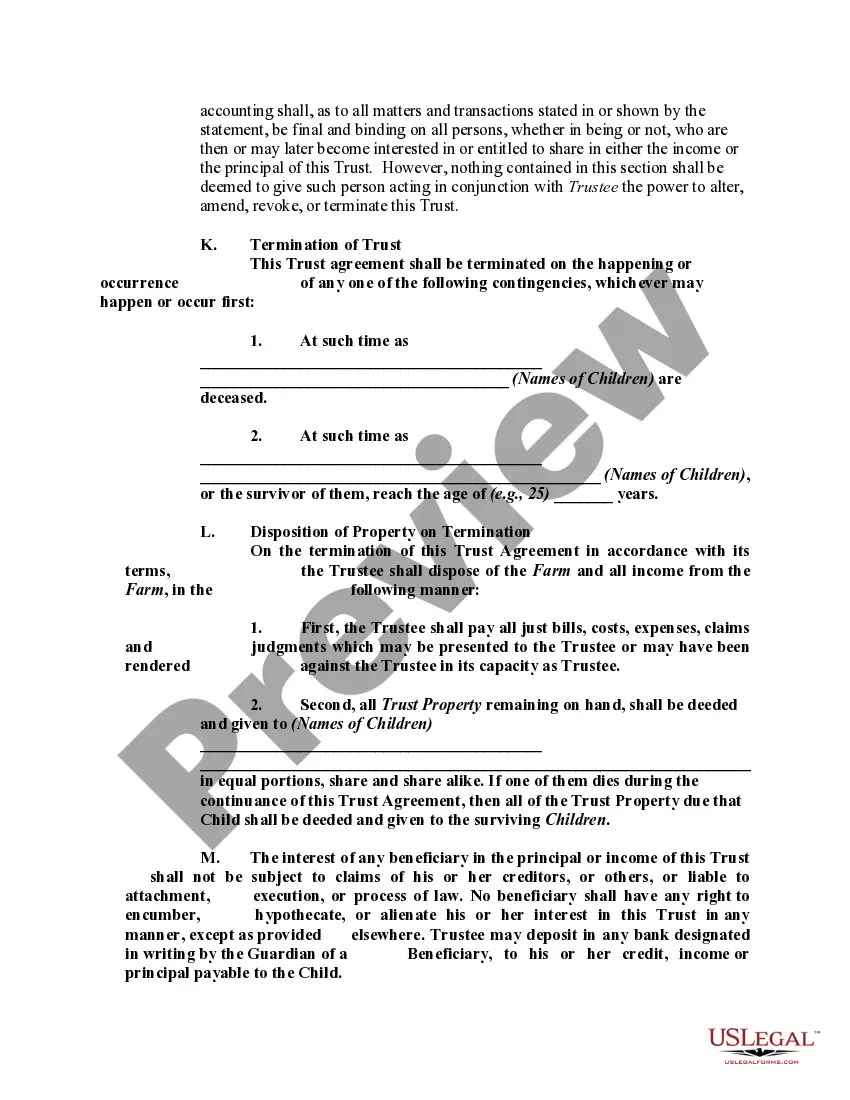
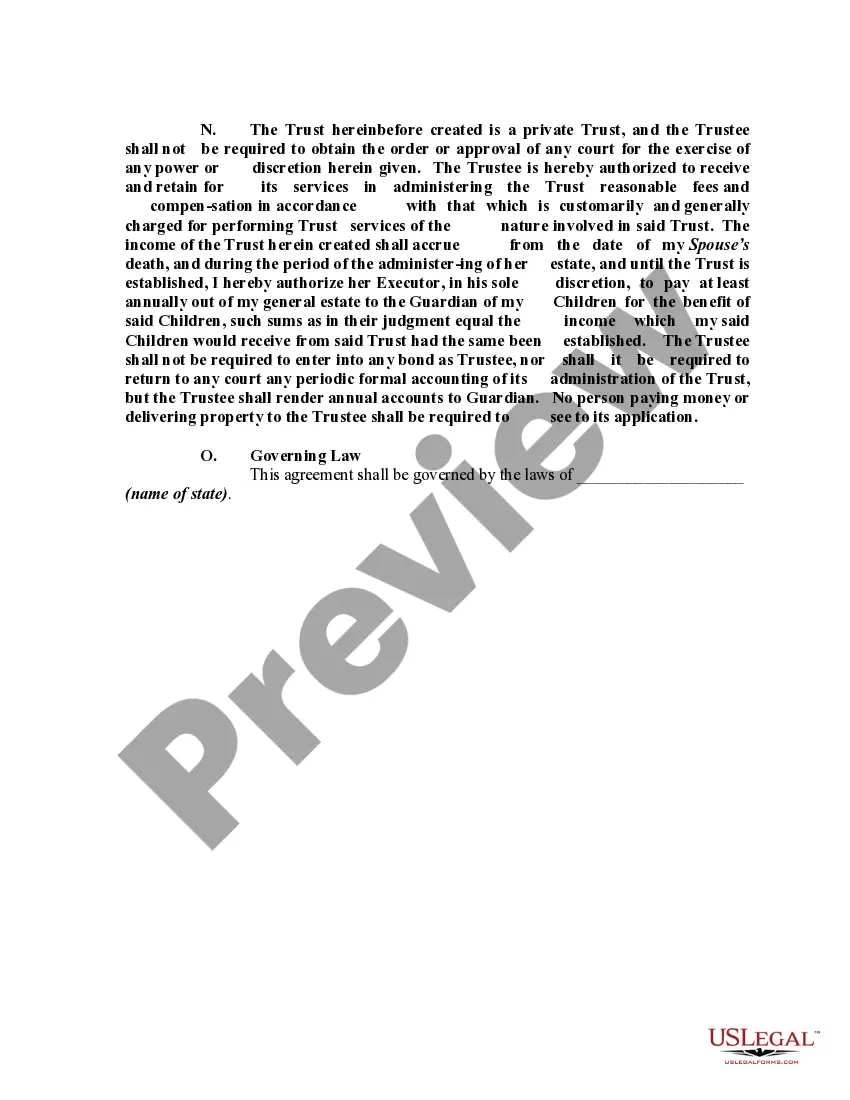
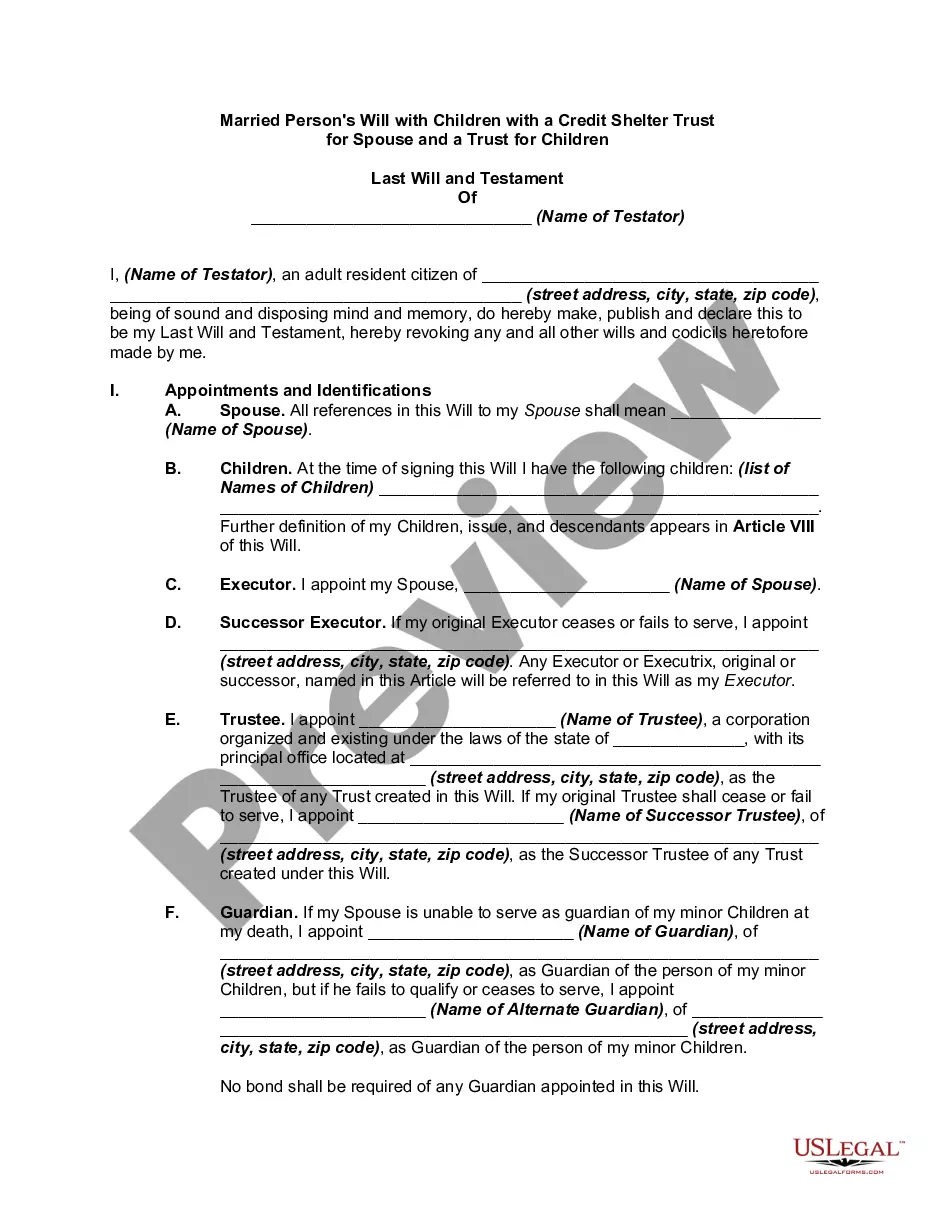
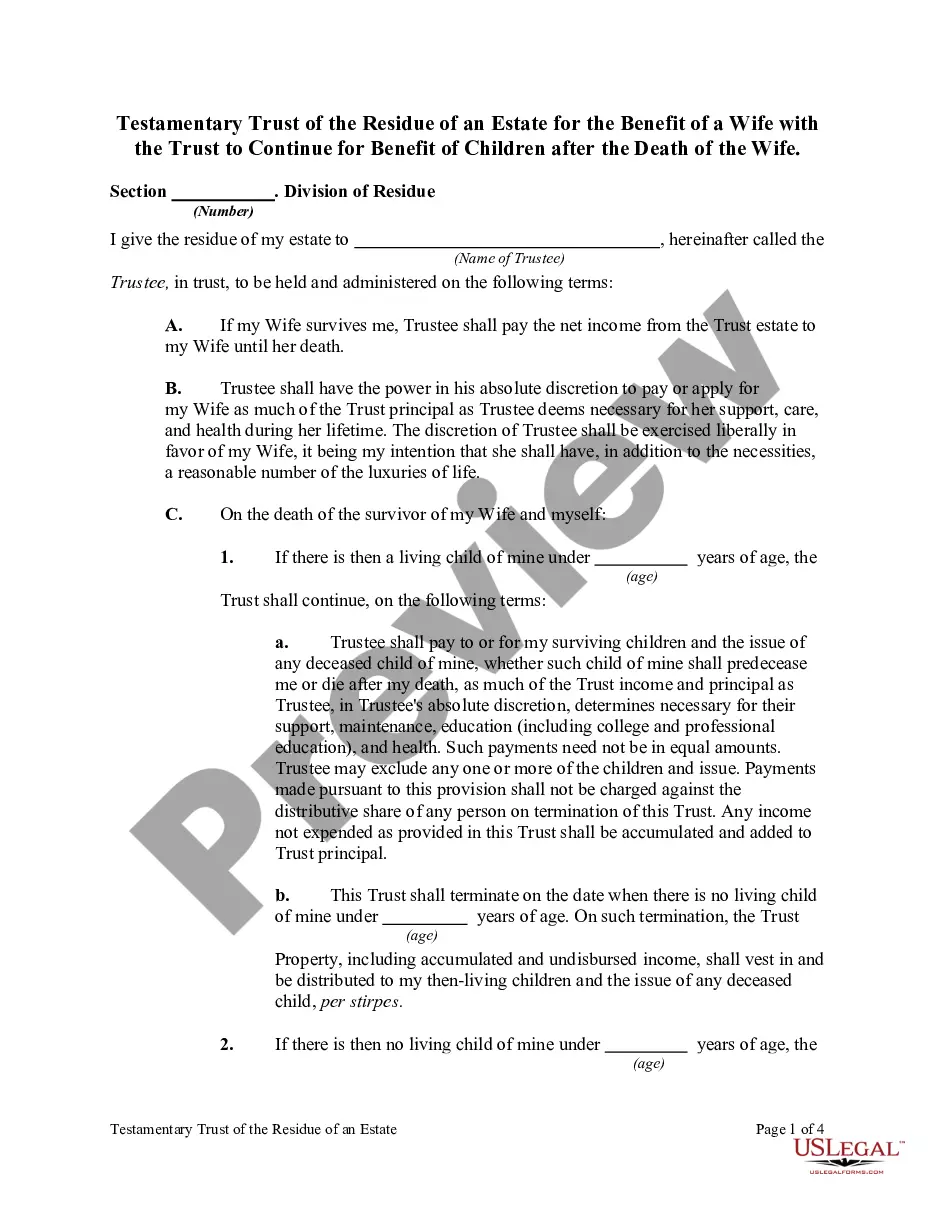
How to fill out Testamentary Trust Provision In Will With Spouse To Receive A Life Estate In Farm Land With Remainder Interest In Land To Pass To Trust For The Benefit Of Children?
- If you are a returning user, log into your account to access previously downloaded forms. Ensure your subscription is active; otherwise, renew it according to your current plan.
- For first-time users, review the form preview and description to ensure it meets your needs and aligns with your local jurisdiction regulations.
- If you need a different document, utilize the Search feature to find the correct template. Once you've identified the right form, proceed to the next step.
- Select the document by clicking the Buy Now button and choose a subscription plan that fits you. You'll need to create an account to unlock the complete library.
- Complete your purchase by entering your payment details, either with a credit card or through your PayPal account.
- Download the form to your device for completion. You can also access it later in the My Forms section of your account.
US Legal Forms empowers users by providing a rich library of over 85,000 fillable legal documents and packages, more than any other competitor at a similar cost.
With the support of premium experts available for assistance, you can ensure your trust and will are accurately completed. Start today and secure your future with confidence!
Form popularity
FAQ
A trust generally provides more control and flexibility than a will, offering significant advantages in asset management during and after your lifetime. Trusts allow you to specify how and when assets are distributed to beneficiaries, while wills typically come into effect only after death. This can make trusts a more powerful tool for estate planning. Exploring resources on uslegalforms can help you understand how to use both trusts and wills effectively.
Placing your home in a trust can complicate property taxes and insurance claims. Some homeowners might fear losing control over their home since the trust technically owns it. Moreover, there may be legal fees involved in establishing and maintaining the trust. Using a service like uslegalforms can provide you clarity on handling such issues related to trusts and wills.
While trusts offer many benefits, they may not suit everyone. Some individuals might find that the initial setup costs and ongoing maintenance can be burdensome. Additionally, if your estate is small and straightforward, a will might suffice to handle your wishes efficiently. Evaluating your specific situation through uslegalforms can help you decide whether a trust or a will is the best option.
In most cases, a will does not override a trust. However, it’s important to consider that any assets transferred to a trust typically pass outside of probate and therefore may not be affected by the terms of a will. If you have both a trust and a will, the trust generally governs how your estate should be managed upon your death. When using platforms like uslegalforms, you can easily clarify how these two documents interact.
You might prefer a trust because it offers greater flexibility and protection for your assets. With a trust, you can dictate not only when and how your assets are distributed, but also set conditions to ensure responsible handling of inheritance. Furthermore, trusts can provide ongoing management for assets, which is a significant advantage if your beneficiaries are minors or unable to manage funds independently. If you have questions about setting up a trust, US Legal Forms can assist you in navigating the process smoothly.
Choosing between a trust and a will depends on your specific circumstances and goals. A trust generally provides more privacy, as it does not go through the public probate process, which can be appealing for many. Additionally, a trust can streamline asset management and distribution, especially if you have dependents or complex assets. Therefore, while a will is simpler, a trust often proves beneficial in ensuring that your wishes are followed efficiently.
When comparing the power of a trust and a will, it is essential to consider their purposes. A trust often offers more control over your assets after your passing, as it can manage distribution and avoid probate. In contrast, a will serves to dictate how your assets should be distributed, but it typically goes through probate. Therefore, while both can be strong tools in estate planning, a trust may provide broader advantages when aiming for efficiency and control.
To set up a trust within a will, you need to clearly define your intent in the will document. Specify the trustee, beneficiaries, and any conditions for how the trust should operate after your passing. It's advisable to work with a legal professional to ensure all details are accurately captured. US Legal Forms offers resources and templates that can assist you in properly drafting and establishing a trust and will.
The best person to set up a trust is typically an estate planning attorney who specializes in trusts and wills. They can provide tailored advice, ensuring your trust aligns with your unique financial situation and goals. Additionally, consulting with a trusted financial advisor can augment the process. Together, they can help you navigate the complexities of creating a trust and will.
A trust is created in a will by explicitly stating the intention to form a trust and outlining its terms. You can designate a trustee, specify beneficiaries, and detail how assets will be managed. This process ensures that your wishes are carried out after your passing. Using a platform like US Legal Forms can simplify this process and guide you through the necessary documentation.