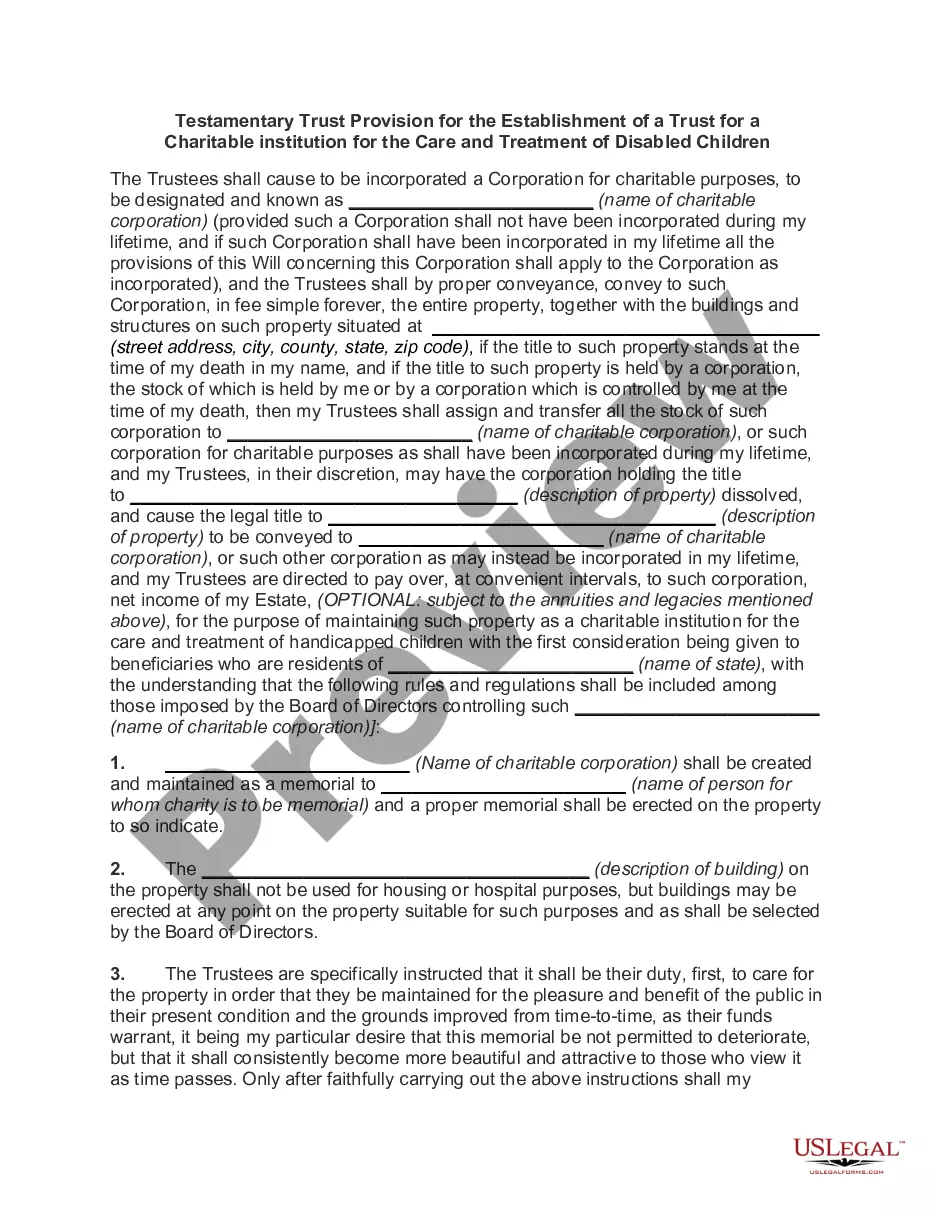
Testamentary Trust Document Without A Will
Description

Get your form ready online
Our built-in tools help you complete, sign, share, and store your documents in one place.
Make edits, fill in missing information, and update formatting in US Legal Forms—just like you would in MS Word.
Download a copy, print it, send it by email, or mail it via USPS—whatever works best for your next step.
Sign and collect signatures with our SignNow integration. Send to multiple recipients, set reminders, and more. Go Premium to unlock E-Sign.
If this form requires notarization, complete it online through a secure video call—no need to meet a notary in person or wait for an appointment.
We protect your documents and personal data by following strict security and privacy standards.

Make edits, fill in missing information, and update formatting in US Legal Forms—just like you would in MS Word.

Download a copy, print it, send it by email, or mail it via USPS—whatever works best for your next step.

Sign and collect signatures with our SignNow integration. Send to multiple recipients, set reminders, and more. Go Premium to unlock E-Sign.

If this form requires notarization, complete it online through a secure video call—no need to meet a notary in person or wait for an appointment.

We protect your documents and personal data by following strict security and privacy standards.
Looking for another form?





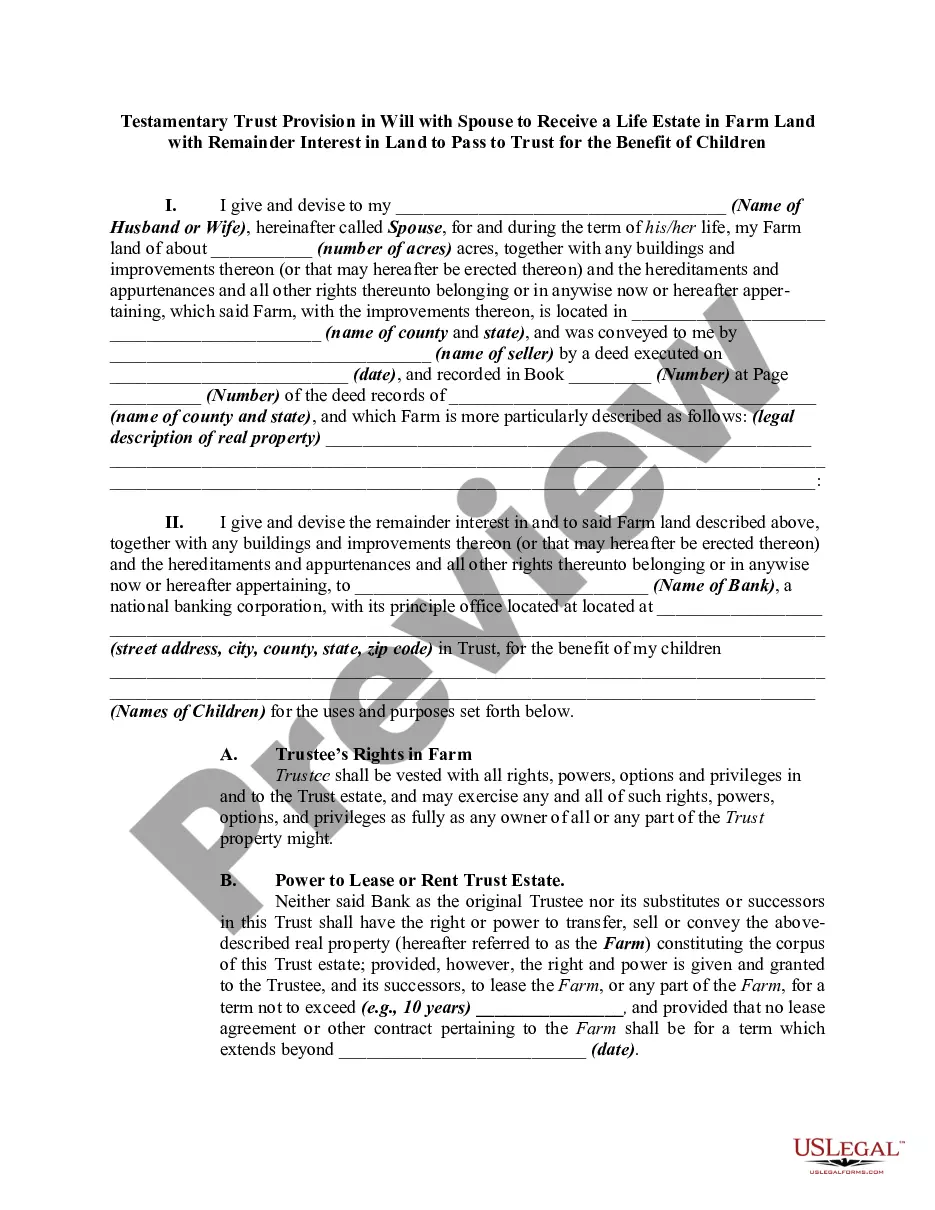
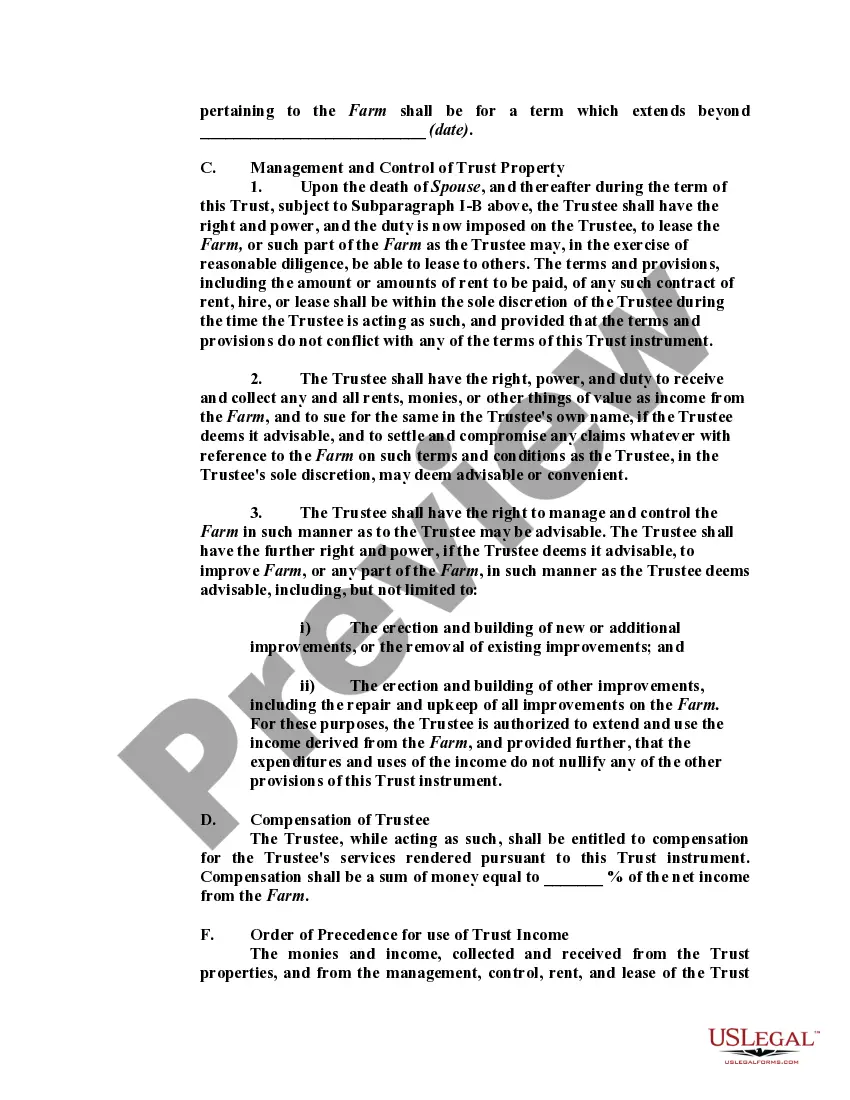
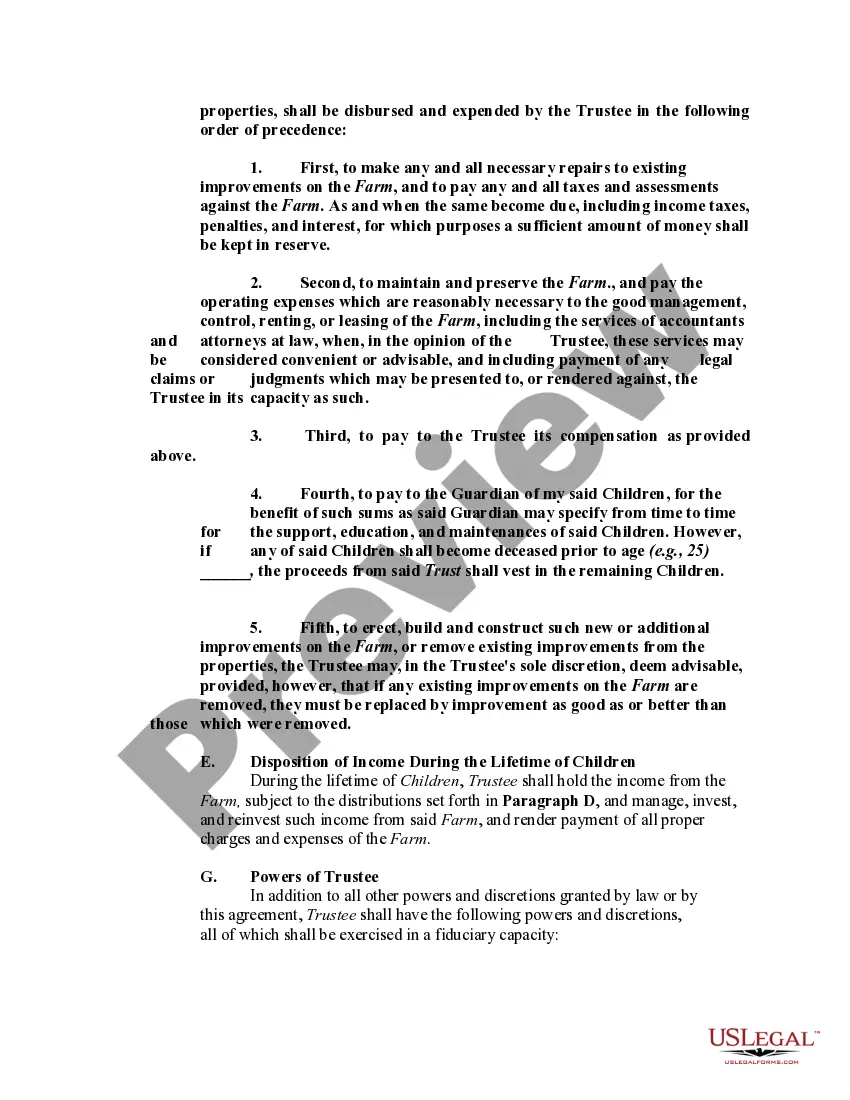
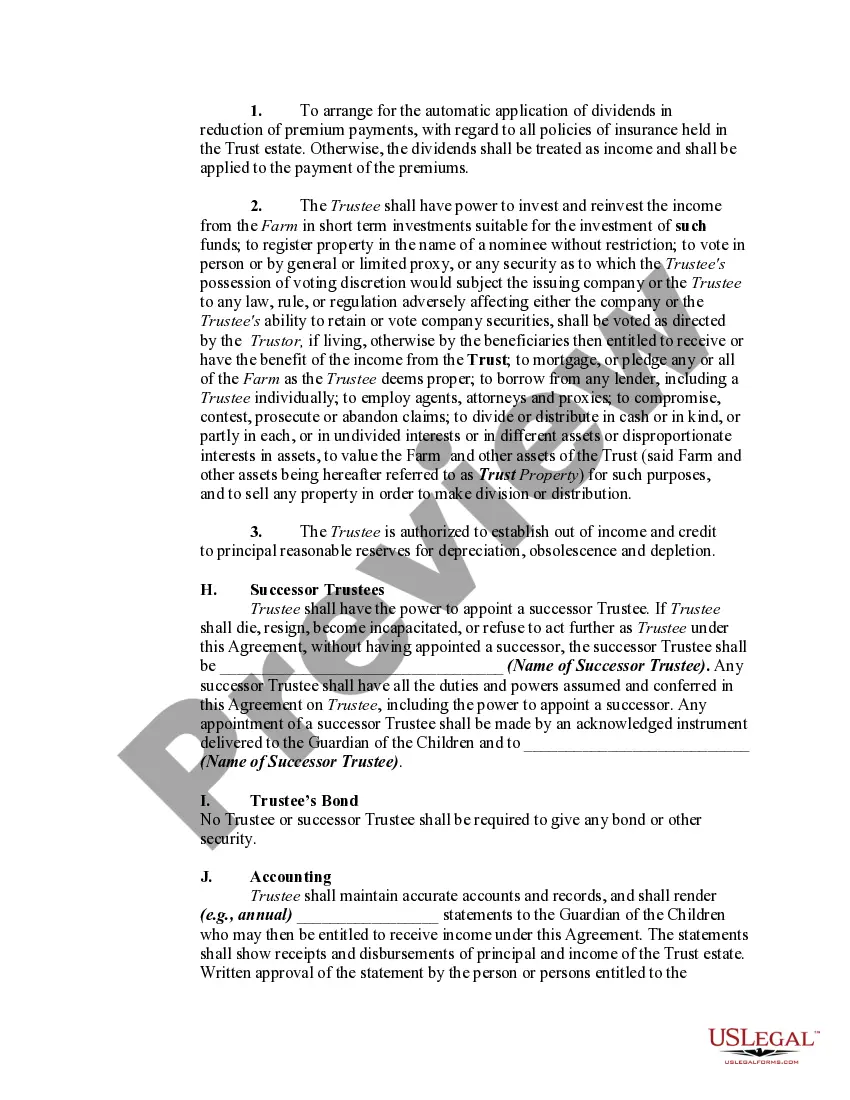
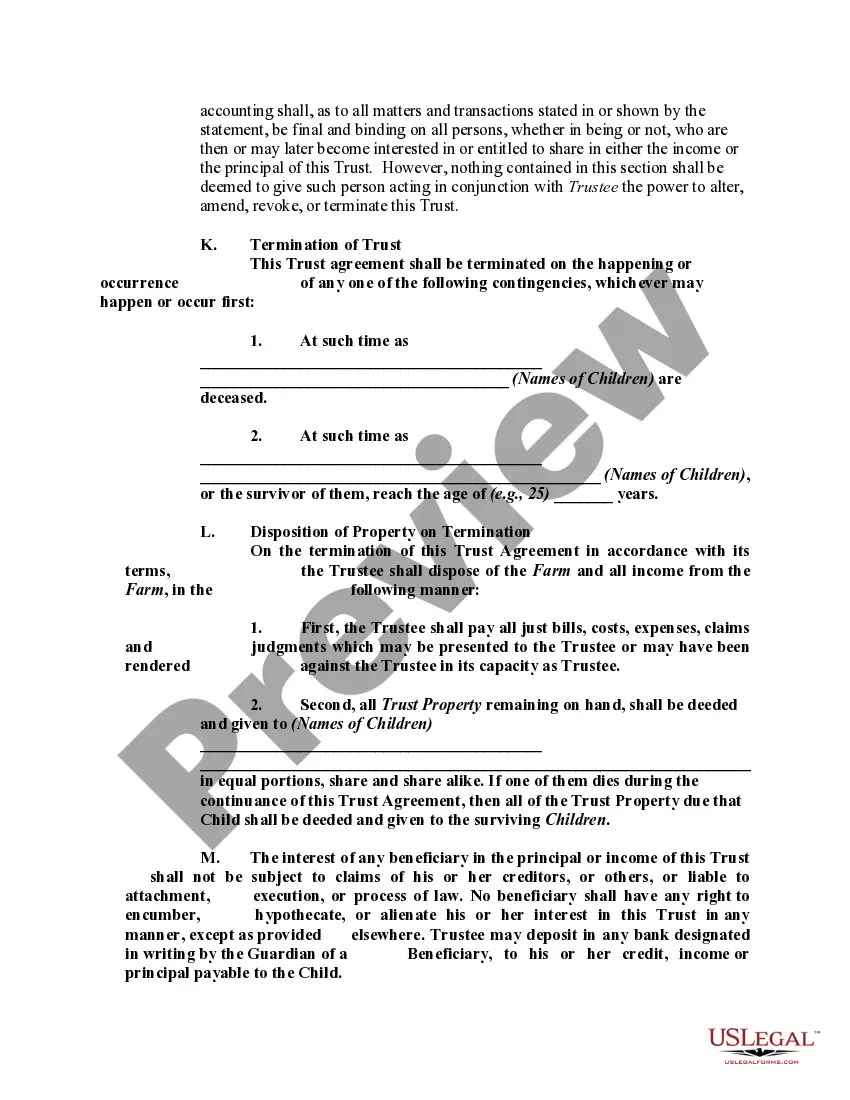
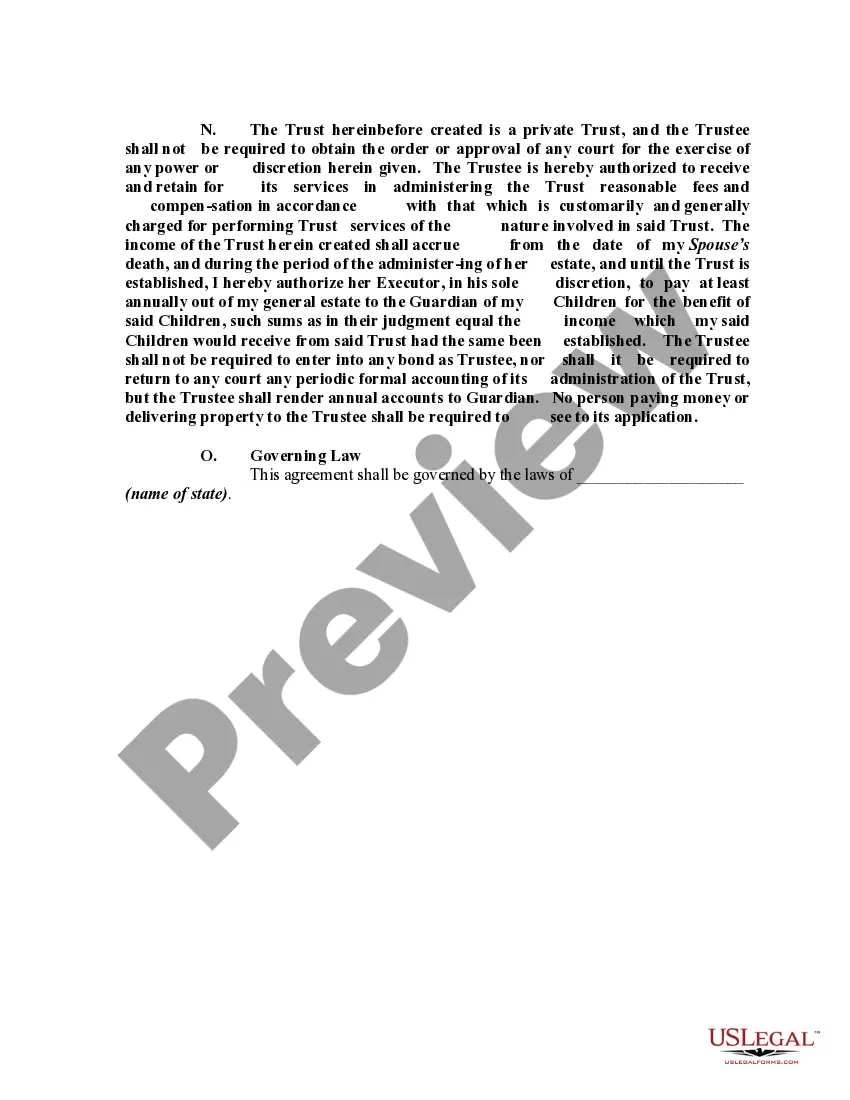
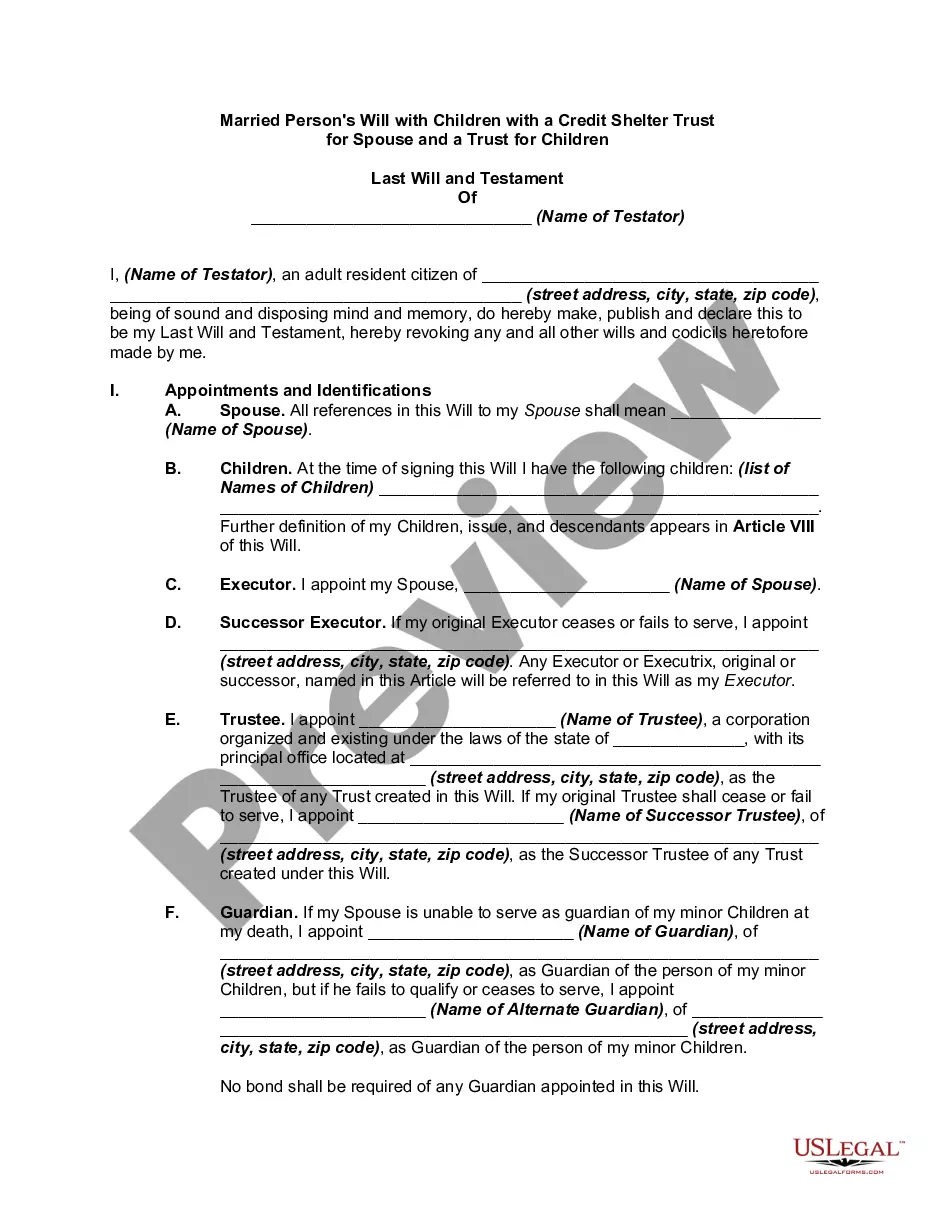
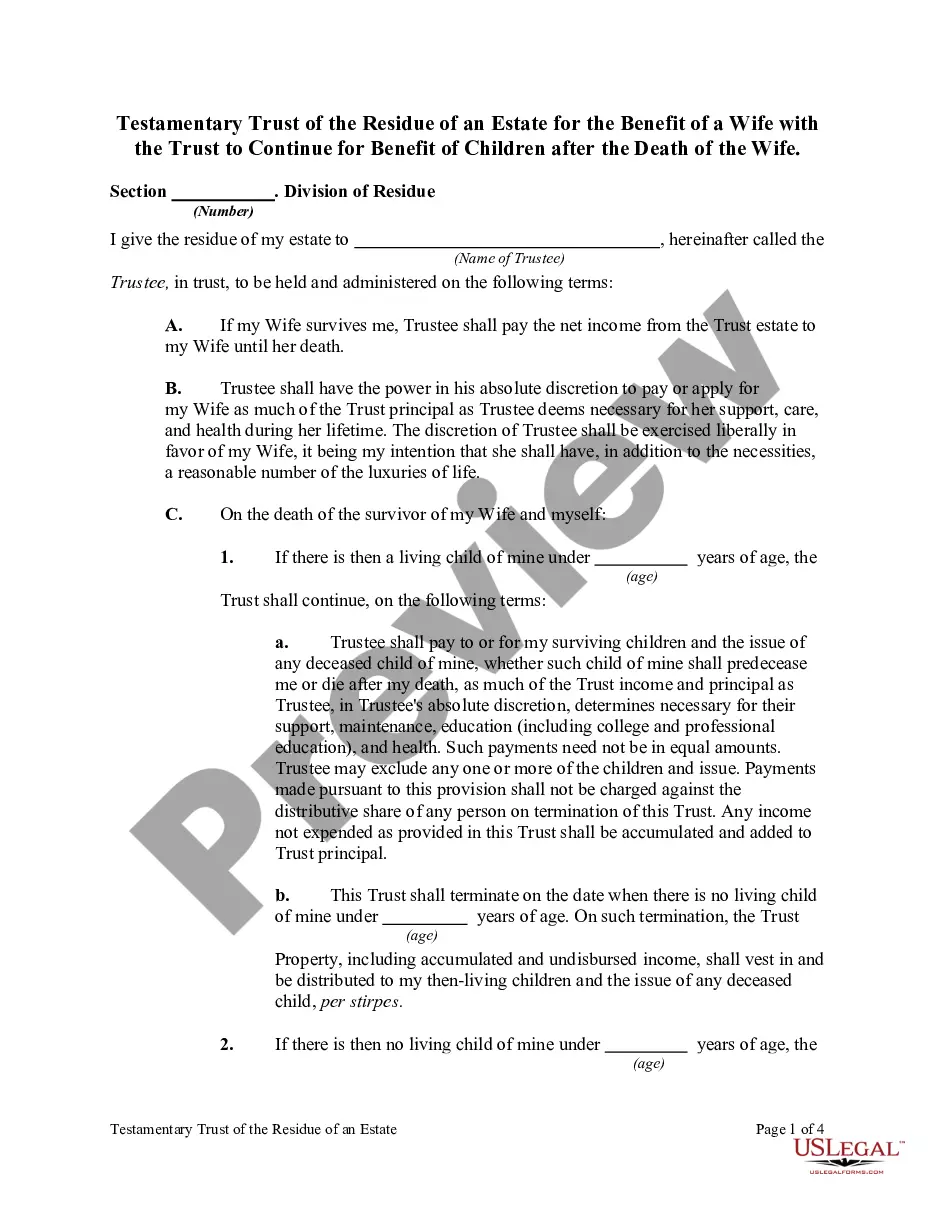
How to fill out Testamentary Trust Provision In Will With Spouse To Receive A Life Estate In Farm Land With Remainder Interest In Land To Pass To Trust For The Benefit Of Children?
Securing a reliable source for obtaining the most up-to-date and suitable legal templates is a significant part of navigating bureaucracy. Selecting the appropriate legal documents requires accuracy and meticulousness, which is why it’s crucial to obtain samples of Testamentary Trust Document Without A Will solely from reputable sources, such as US Legal Forms. An incorrect template can squander your time and prolong your situation. With US Legal Forms, you have minimal concerns. You can access and verify all the details regarding the document’s application and relevance to your situation and within your state or area.
Consider the following steps to complete your Testamentary Trust Document Without A Will.
Eliminate the hassle associated with your legal paperwork. Explore the comprehensive US Legal Forms library where you can find legal templates, verify their applicability to your situation, and download them instantly.
- Use the library navigation or search feature to locate your sample.
- Review the form’s description to determine if it meets the standards of your state and county.
- Open the form preview, if available, to confirm that the template is indeed the one you need.
- Return to the search and find the correct document if the Testamentary Trust Document Without A Will does not suit your requirements.
- If you are confident about the form’s applicability, download it.
- As an authorized user, click Log in to verify and access your chosen forms in My documents.
- If you do not have an account yet, click Buy now to purchase the form.
- Select the pricing option that aligns with your needs.
- Proceed to the registration to complete your order.
- Conclude your purchase by choosing a payment method (credit card or PayPal).
- Choose the file format for downloading the Testamentary Trust Document Without A Will.
- Once you have the form on your device, you can edit it using the editor or print it and complete it manually.
Form popularity
FAQ
Testamentary Trusts must be set up within a Last Will and Testament, so they can be created following one's death.
During the transition, the beneficiaries are not the legal owners of the estate's assets. They are known as the ?beneficial owners.? This is a trust relationship. Once an estate is administered (all the bills are paid) the trustee ?vests? or transfers legal ownership of the assets to the beneficiaries.
A testamentary trust is provided for in a last will by the ?settlor,? who appoints a ?trustee? to manage the funds in the trust until the ?beneficiary,? or person receiving the money, takes over.
Disadvantages of a Testamentary Trust Lack of Privacy: Testamentary trusts are part of a person's will, which becomes public record upon their death. This means that the details of the trust and its beneficiaries are accessible to the public.
Once a testamentary trust has been created, it becomes a taxable entity in its own right and is thus subject to income taxes. If it has $600 or more in annual income, it must file a U.S. Income Tax Return for Estates and Trusts (Form 1041) for that year.