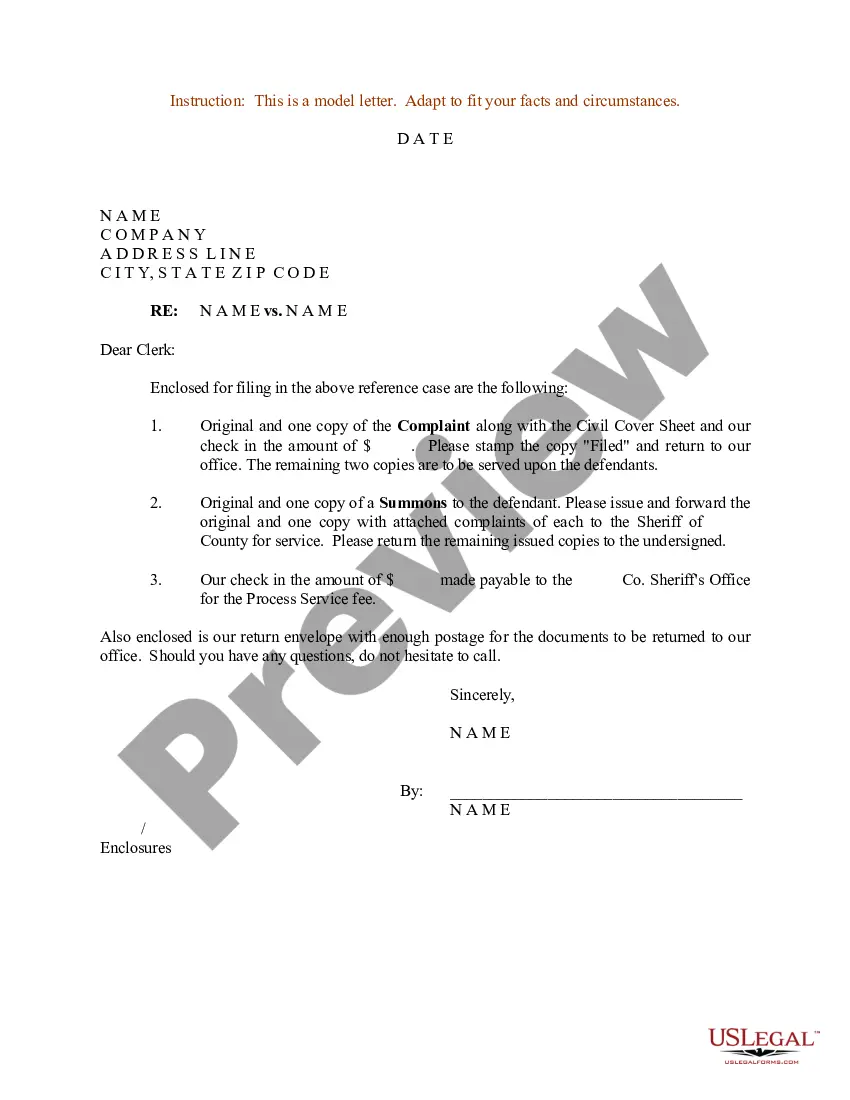
Summons For Directions
Description
Get your form ready online
Our built-in tools help you complete, sign, share, and store your documents in one place.
Make edits, fill in missing information, and update formatting in US Legal Forms—just like you would in MS Word.
Download a copy, print it, send it by email, or mail it via USPS—whatever works best for your next step.
Sign and collect signatures with our SignNow integration. Send to multiple recipients, set reminders, and more. Go Premium to unlock E-Sign.
If this form requires notarization, complete it online through a secure video call—no need to meet a notary in person or wait for an appointment.
We protect your documents and personal data by following strict security and privacy standards.

Make edits, fill in missing information, and update formatting in US Legal Forms—just like you would in MS Word.

Download a copy, print it, send it by email, or mail it via USPS—whatever works best for your next step.

Sign and collect signatures with our SignNow integration. Send to multiple recipients, set reminders, and more. Go Premium to unlock E-Sign.

If this form requires notarization, complete it online through a secure video call—no need to meet a notary in person or wait for an appointment.

We protect your documents and personal data by following strict security and privacy standards.
Looking for another form?

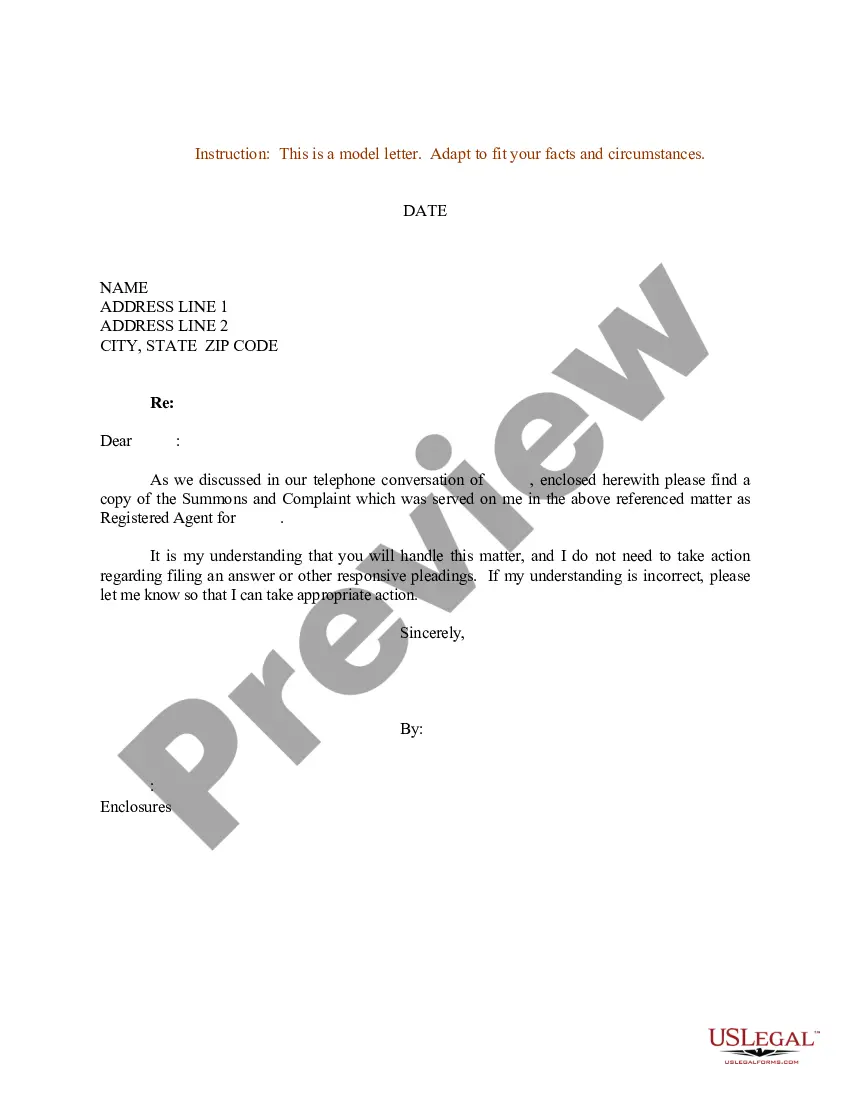
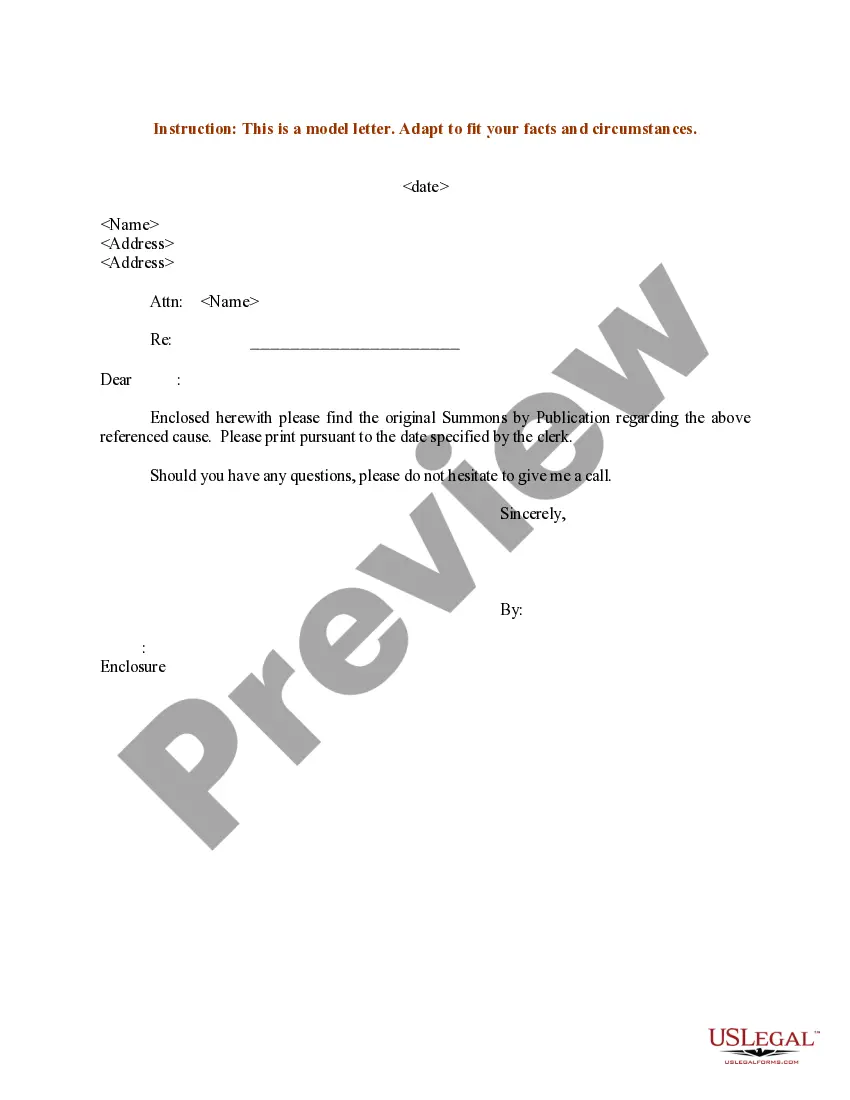
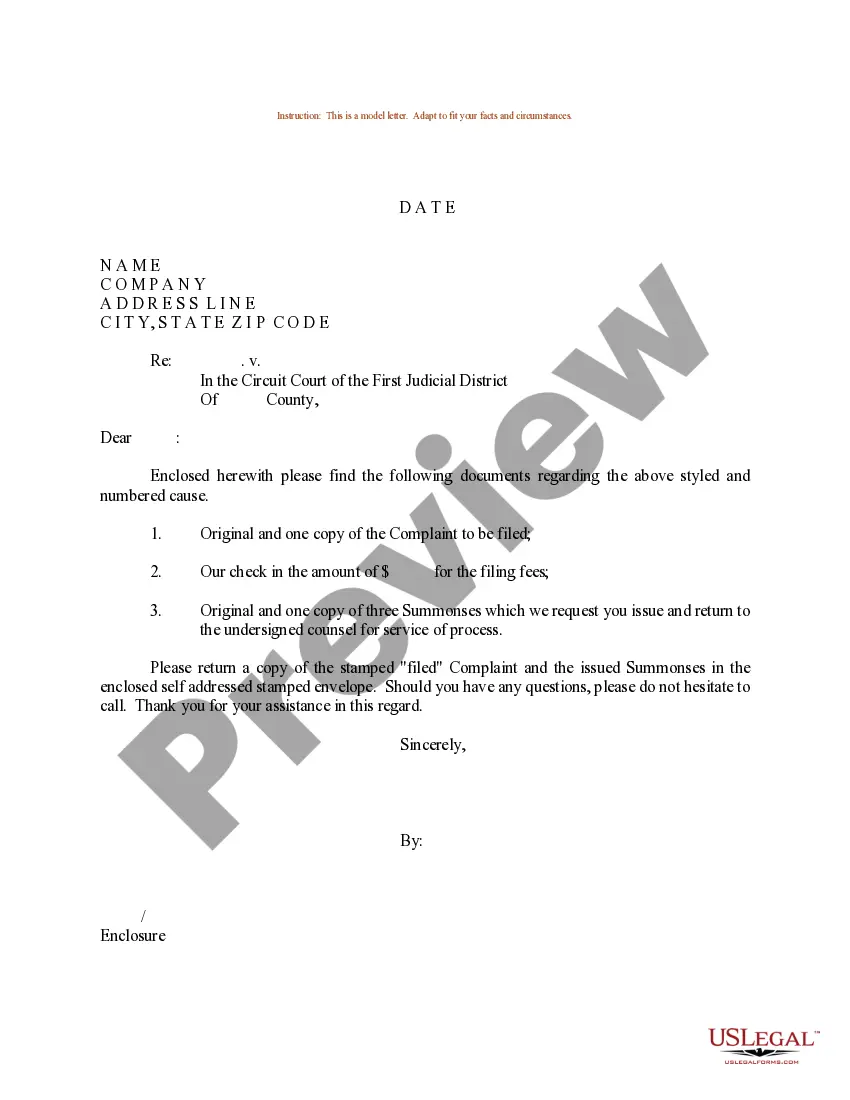
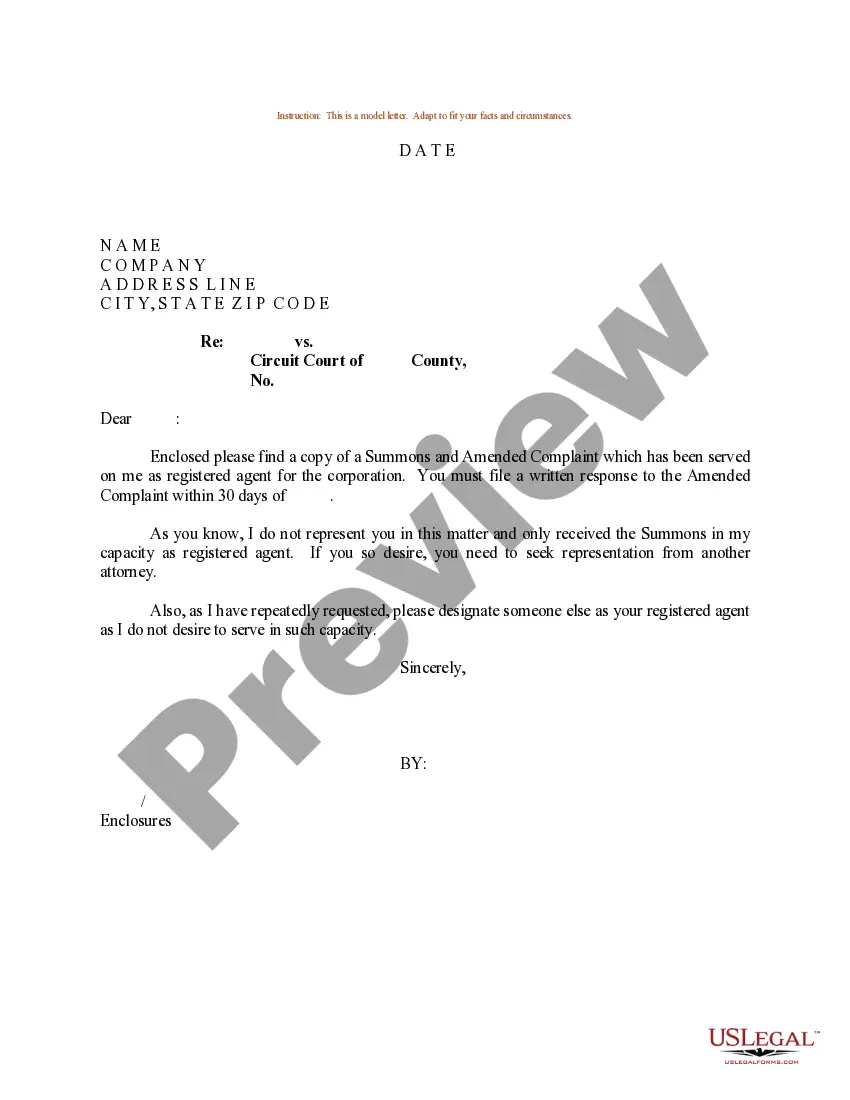
How to fill out Sample Letter For Summons And Complaint?
- Log into your US Legal Forms account and verify your subscription status. If you're an existing user and your subscription is valid, simply click the Download button to access your desired form.
- If you are new to the service, begin by previewing the form descriptions to ensure you select the correct summons for directions that fits your local requirements.
- If you encounter issues, utilize the Search bar to find the appropriate template that meets your needs.
- Once you’ve found the right form, click the Buy Now button, choose your subscription plan, and create an account to unlock additional resources.
- Proceed to complete your purchase using your credit card or PayPal account for subscription payment.
- Download the document to your device, allowing you to fill it out as needed. You can also access it anytime in the My Forms menu located in your profile.
In conclusion, US Legal Forms serves as an invaluable resource for anyone seeking legal documentation. The platform combines a robust selection of forms with expert support, ensuring you have the right tools for your legal needs.
Don't hesitate—get started today and experience the ease of accessing legal documents with US Legal Forms!
Form popularity
FAQ
When you receive a summons, it indicates that you are required to respond to a legal matter. You must carefully read the summons for directions to understand what actions you need to take. Not responding promptly can have serious consequences, such as a default judgment against you. It is advisable to seek help from platforms like US Legal Forms, which can offer resources to navigate the process effectively.
The process of summoning typically involves notifying a person that legal action has begun against them. A summons for directions will inform the individual about the case and direct them to respond within a specific timeframe. This ensures that all parties are aware and can prepare accordingly. Proper service is crucial, as it confirms that the person has received the legal notice.
Filing a motion in court without an attorney can seem daunting, but it's manageable. Begin by identifying the specific court where your case is pending. Next, prepare your motion using templates available on platforms like US Legal Forms, which can guide you through the necessary formats and requirements. Finally, file your motion with the court clerk and ensure you follow any additional steps, such as serving the other party.
Receiving a summons does not necessarily mean you have been charged with a crime. Instead, it indicates that there is a legal issue that requires your attention. In civil matters, a summons for directions might be issued to address a dispute without any criminal charges involved. It is essential to read the summons carefully to understand the nature of the case and what is expected from you.
A summons is issued to prompt a response from the individual regarding a legal matter. It serves as a formal invitation to appear in court or to participate in a legal process. In many cases, a summons for directions clarifies what action is needed from the recipient, ensuring they are aware of their rights and obligations. This clarity is vital for resolving disputes effectively.
The purpose of a summons is to formally notify a person of legal proceedings involving them. It ensures that the individual has the opportunity to defend themselves, present their side of the story, and respond appropriately. A summons for directions helps define the next steps in the legal process, guiding the person on how to proceed. It’s an important part of maintaining fairness in the judicial system.
People receive summons for various reasons, primarily related to legal disputes. Common reasons include civil cases like contract disputes, or family law cases where courts require individuals to respond. A summons for directions facilitates the legal process by ensuring all parties involved are informed and can actively participate. Understanding why you received one can help you navigate your situation more effectively.
Being served a summons means you have received a legal document that notifies you of a legal action against you. This document includes essential information about the case, such as the court date and location. It is crucial to understand that a summons for directions guides you on how to respond to the legal matter effectively. Ignoring a summons may lead to unfavorable outcomes.
The two main types of summons are civil and criminal summons. A civil summons pertains to lawsuits regarding disputes between individuals, such as contracts or family matters. In contrast, a criminal summons usually requires a person to answer to charges filed by the state. Knowing the distinctions between these summons for directions is vital for navigating your legal landscape.
To write a summons answer, start by addressing the court and identifying the case number. Clearly respond to each point in the summons, either agreeing or denying the claims made against you. It’s important to be truthful and precise in your response. Utilizing a structured template for a summons for directions can help ensure you cover all necessary points effectively.