Summons For Debt
Description
Get your form ready online
Our built-in tools help you complete, sign, share, and store your documents in one place.
Make edits, fill in missing information, and update formatting in US Legal Forms—just like you would in MS Word.
Download a copy, print it, send it by email, or mail it via USPS—whatever works best for your next step.
Sign and collect signatures with our SignNow integration. Send to multiple recipients, set reminders, and more. Go Premium to unlock E-Sign.
If this form requires notarization, complete it online through a secure video call—no need to meet a notary in person or wait for an appointment.
We protect your documents and personal data by following strict security and privacy standards.
Make edits, fill in missing information, and update formatting in US Legal Forms—just like you would in MS Word.
Download a copy, print it, send it by email, or mail it via USPS—whatever works best for your next step.
Sign and collect signatures with our SignNow integration. Send to multiple recipients, set reminders, and more. Go Premium to unlock E-Sign.
If this form requires notarization, complete it online through a secure video call—no need to meet a notary in person or wait for an appointment.
We protect your documents and personal data by following strict security and privacy standards.
Looking for another form?
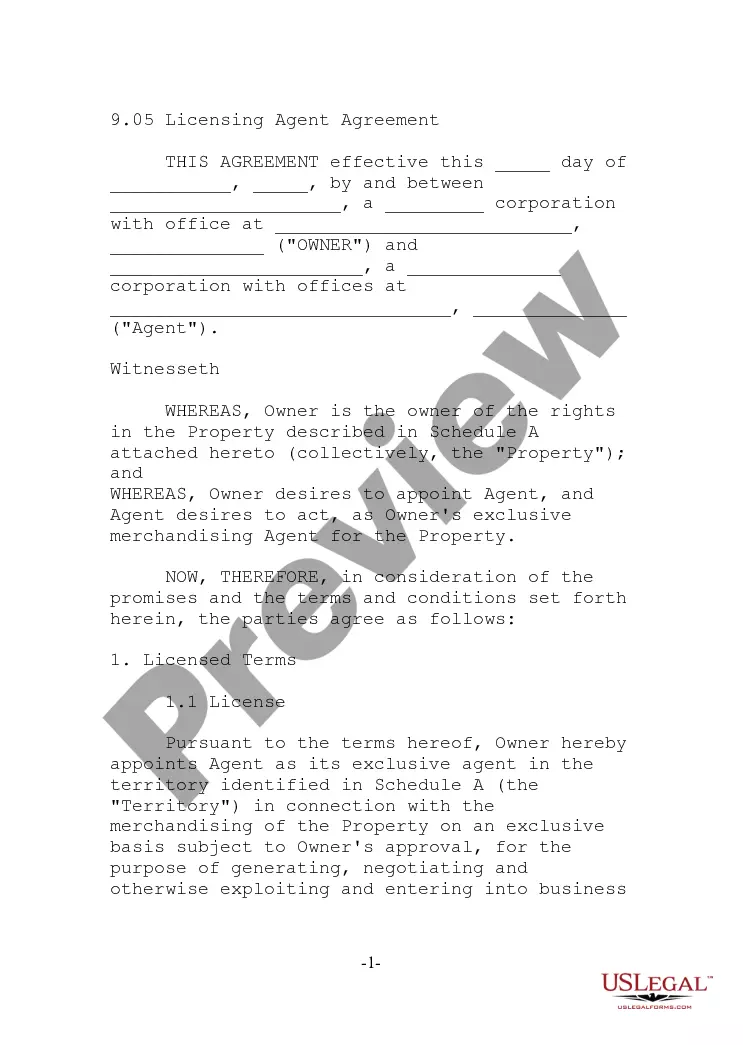




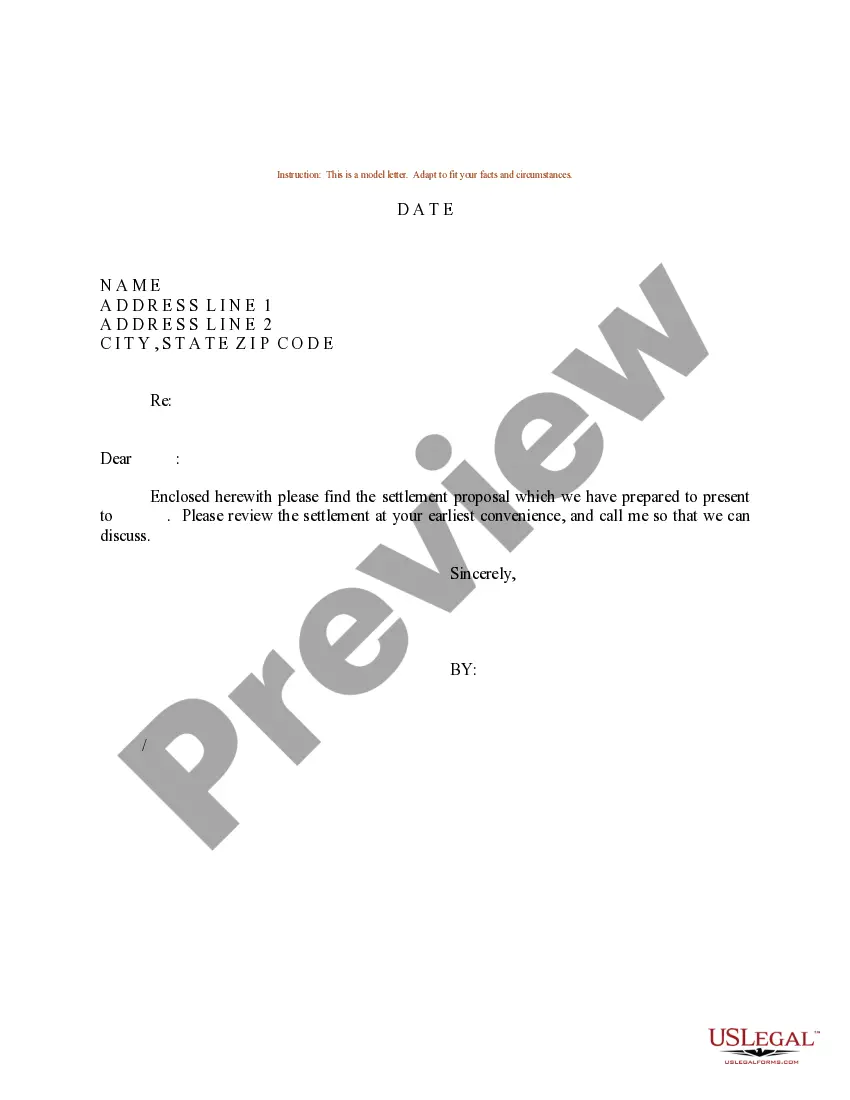
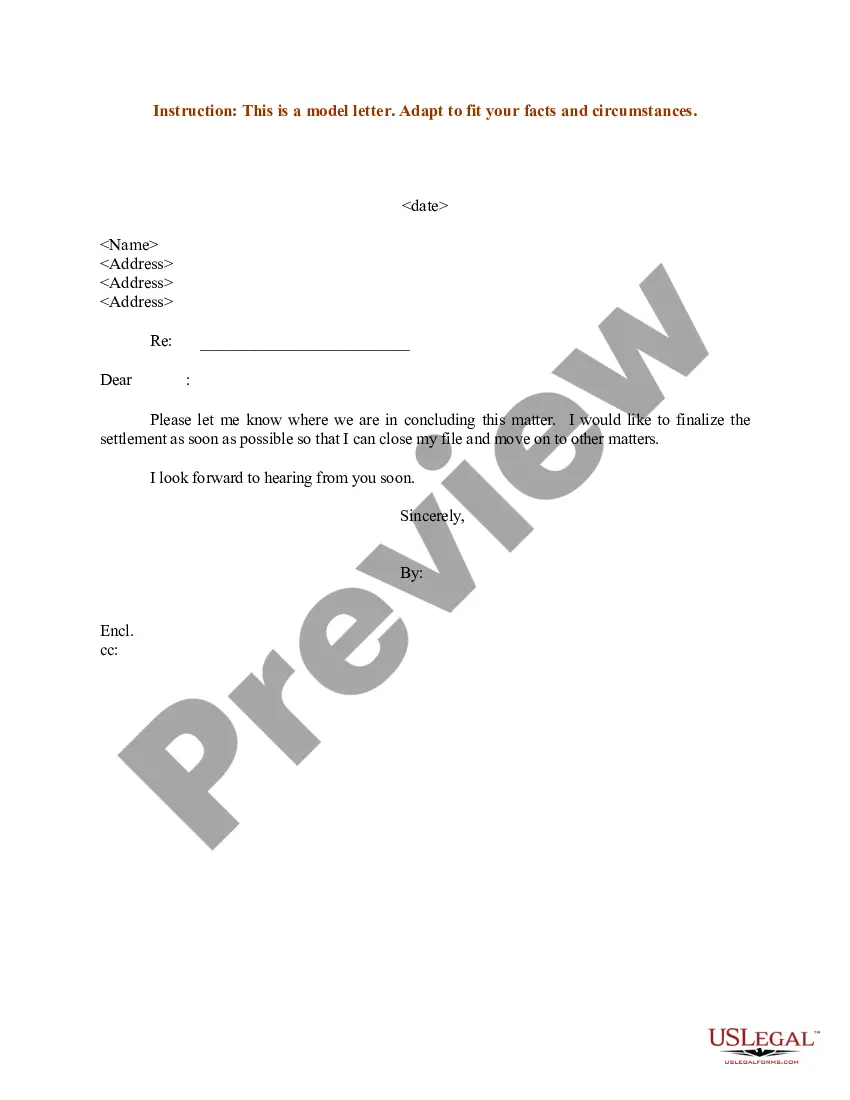

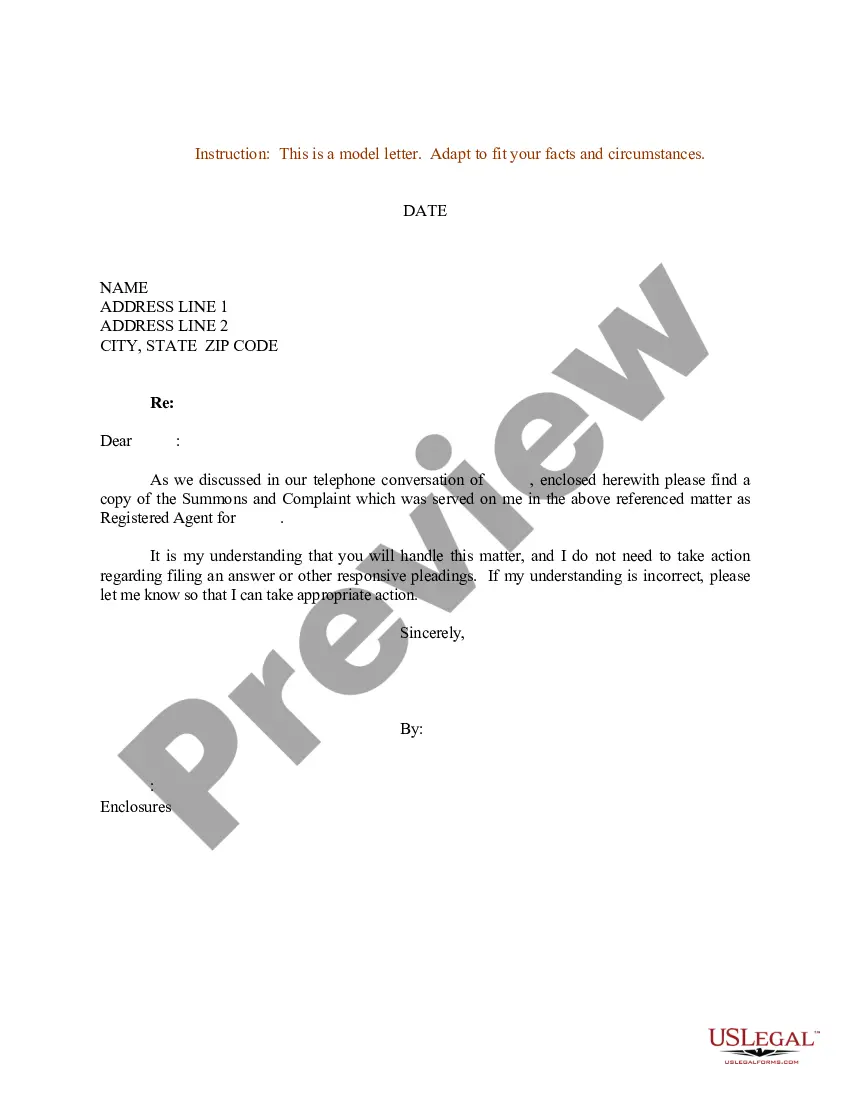
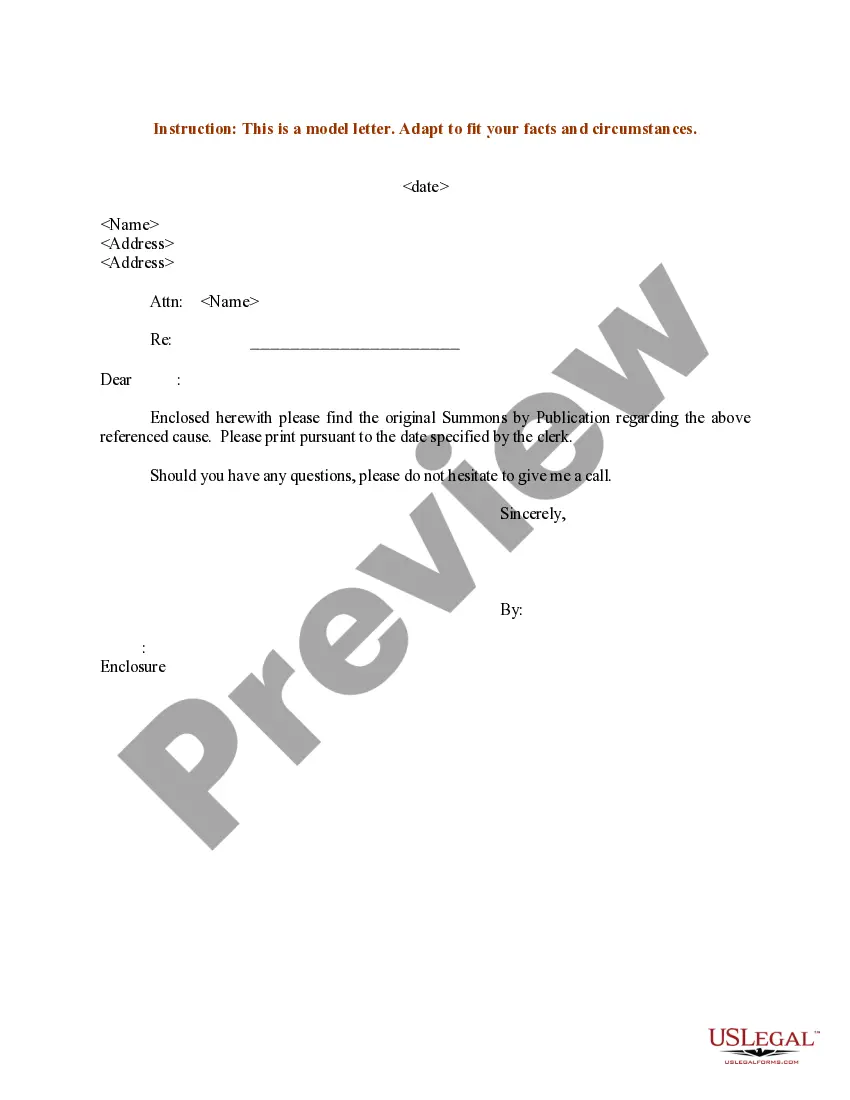
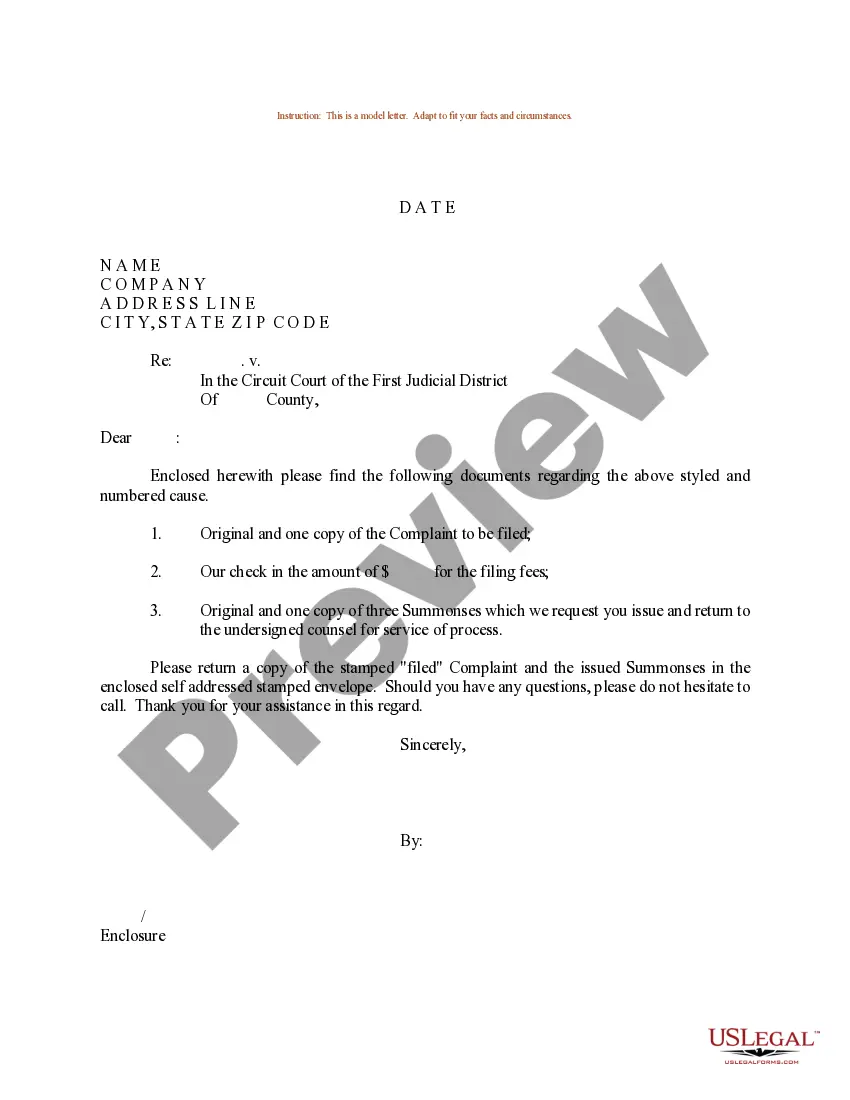
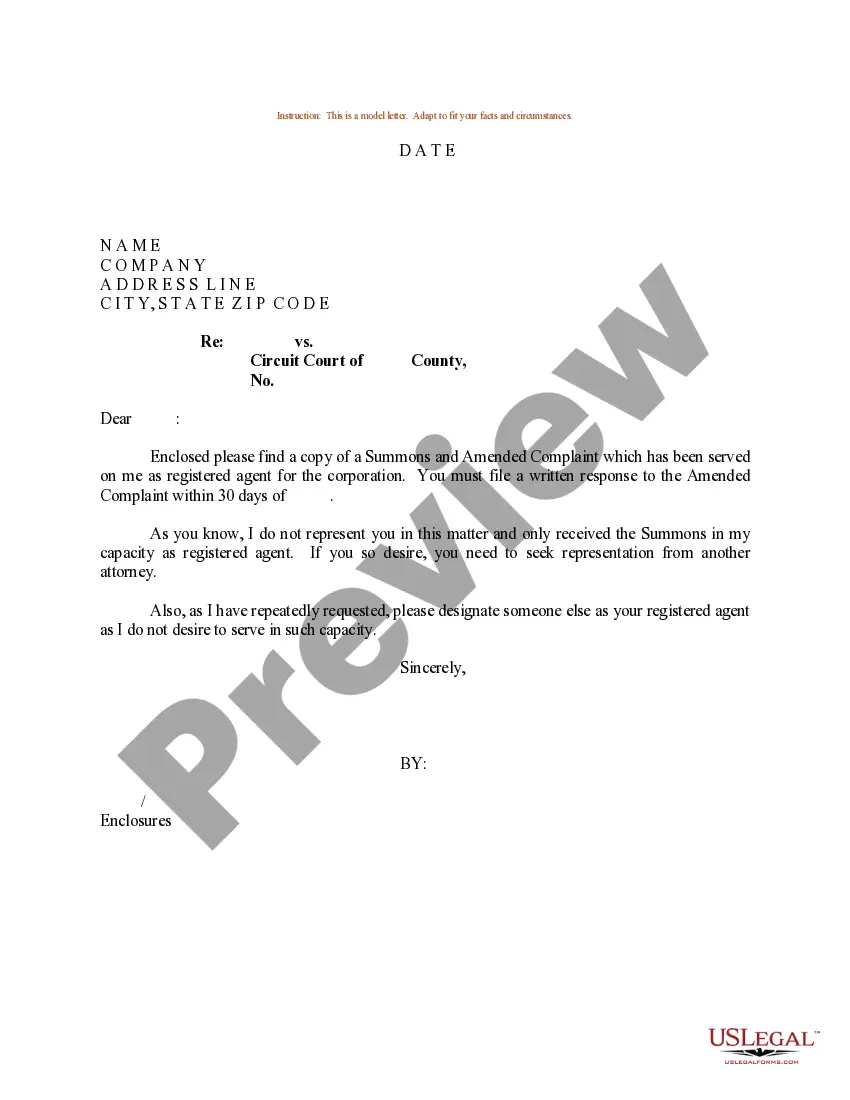
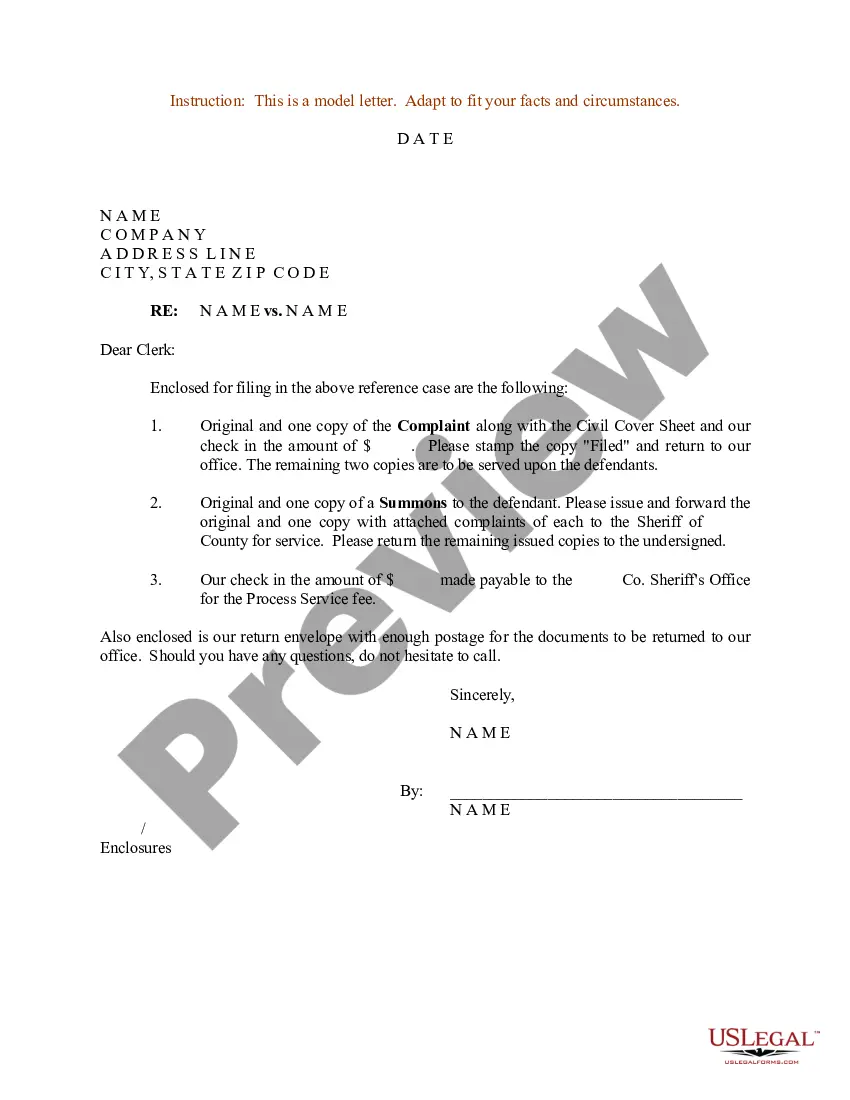
How to fill out Sample Letter For Summons And Complaint?
- If you are a returning user, log in to your account and click the Download button to retrieve your needed form template. Ensure your subscription remains active. If it has expired, renew it based on your payment plan.
- For first-time users, begin by reviewing the Preview mode and form description. Confirm that the selected template aligns with your needs and complies with your local jurisdiction's regulations.
- If necessary, use the Search feature to find the appropriate template if the chosen one doesn't meet your criteria.
- Purchase the document by clicking the Buy Now button and selecting a suitable subscription plan. You will need to create an account to access our extensive library of resources.
- Complete the payment by entering your credit card information or utilizing your PayPal account for the subscription.
- Download the form to your device so you can fill it out as needed. Access the downloaded document anytime from the My Forms section of your profile.
By leveraging US Legal Forms, you gain access to a comprehensive library of premium legal documents, empowering you to execute your legal needs effectively.
Don’t let legal documentation overwhelm you. Visit US Legal Forms today to simplify your paperwork process!
Form popularity
FAQ
Yes, ignoring debt collectors can lead to legal trouble. When you receive a summons for debt and do not respond, it may result in a judgment against you. To avoid these issues, consider utilizing platforms like US Legal Forms to understand your obligations and rights, helping you navigate the process responsibly.
Not answering debt collector calls can create further complications. If they cannot reach you, they might proceed to send a summons for debt, escalating the situation to a legal level. Staying informed and engaging with the collector can help you manage the situation effectively.
Ignoring a summons often results in a legal judgment against you. When you ignore a summons for debt, the court may assume that you agree with the claims made by the debt collector. This can lead to wage garnishments and affect your financial standing.
Failing to respond to a debt collector can escalate the situation quickly. The collector may file a summons for debt, which can lead to court actions that affect your credit score. It's vital to communicate and understand your rights in these situations.
Ignoring a summons for debt can lead to serious consequences. Typically, the court may issue a default judgment against you, which can result in wage garnishment, bank levies, or liens on your property. It is essential to respond to a summons to protect your rights and explore your options.
Settling a debt is often preferable to going to court, especially after receiving a summons for debt. Court proceedings can be lengthy, costly, and may result in judgments against you. By settling, you can achieve resolution quicker and avoid legal fees, while also potentially negotiating better terms. Always consider discussing options with a professional or using resources available, such as US Legal Forms, for assistance.
To settle debt without going to court, start by contacting your creditor directly to discuss payment options. Propose a reasonable settlement amount based on your financial situation. If you're uncomfortable negotiating, using a service like US Legal Forms can provide you with proper forms and guidance to navigate the settlement process efficiently.
Yes, you can negotiate even after being served with a summons for debt. It's often wise to engage in discussions about payment plans or settlement offers as soon as possible. Open communication may lead to more favorable terms and could prevent further legal action. Remember, showing a willingness to resolve the debt can positively influence the creditor’s response.
To write an answer to a summons for debt, start by clearly stating your name and the case number at the top. Next, address each claim made in the summons, either confirming or denying the allegations. Ensure your response is thoughtful and respectful; an effective answer can impact the outcome significantly. If you're unsure about the process, platforms like US Legal Forms can guide you with templates and resources.
A debt generally becomes uncollectible after a period of six to seven years, depending on your state’s laws. After this time, creditors may no longer pursue legal action, including issuing a summons for debt. However, it's crucial to note that the debt may still appear on your credit report. Staying aware of these timelines can aid you in managing your financial situation effectively.