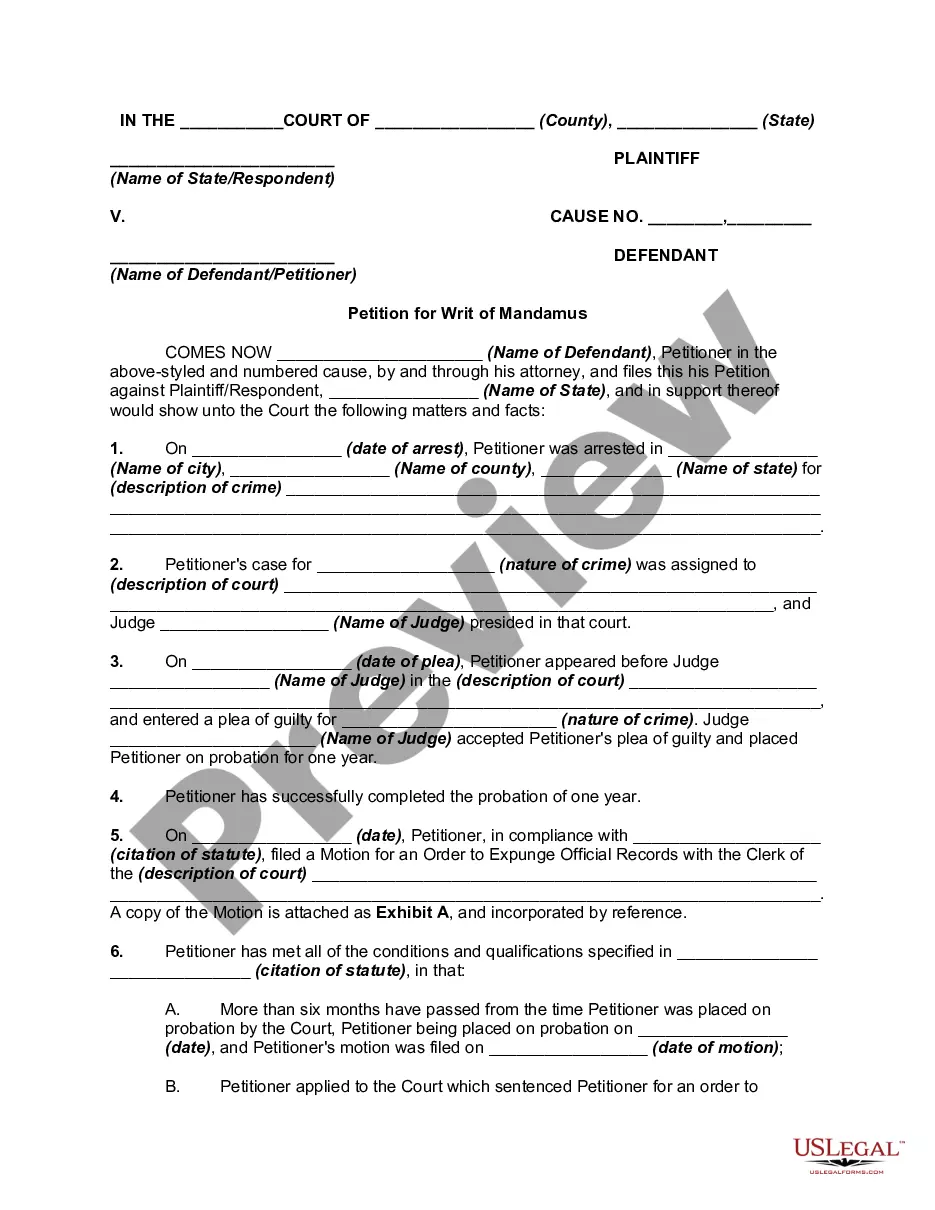
Writ Of Mandamus
Description
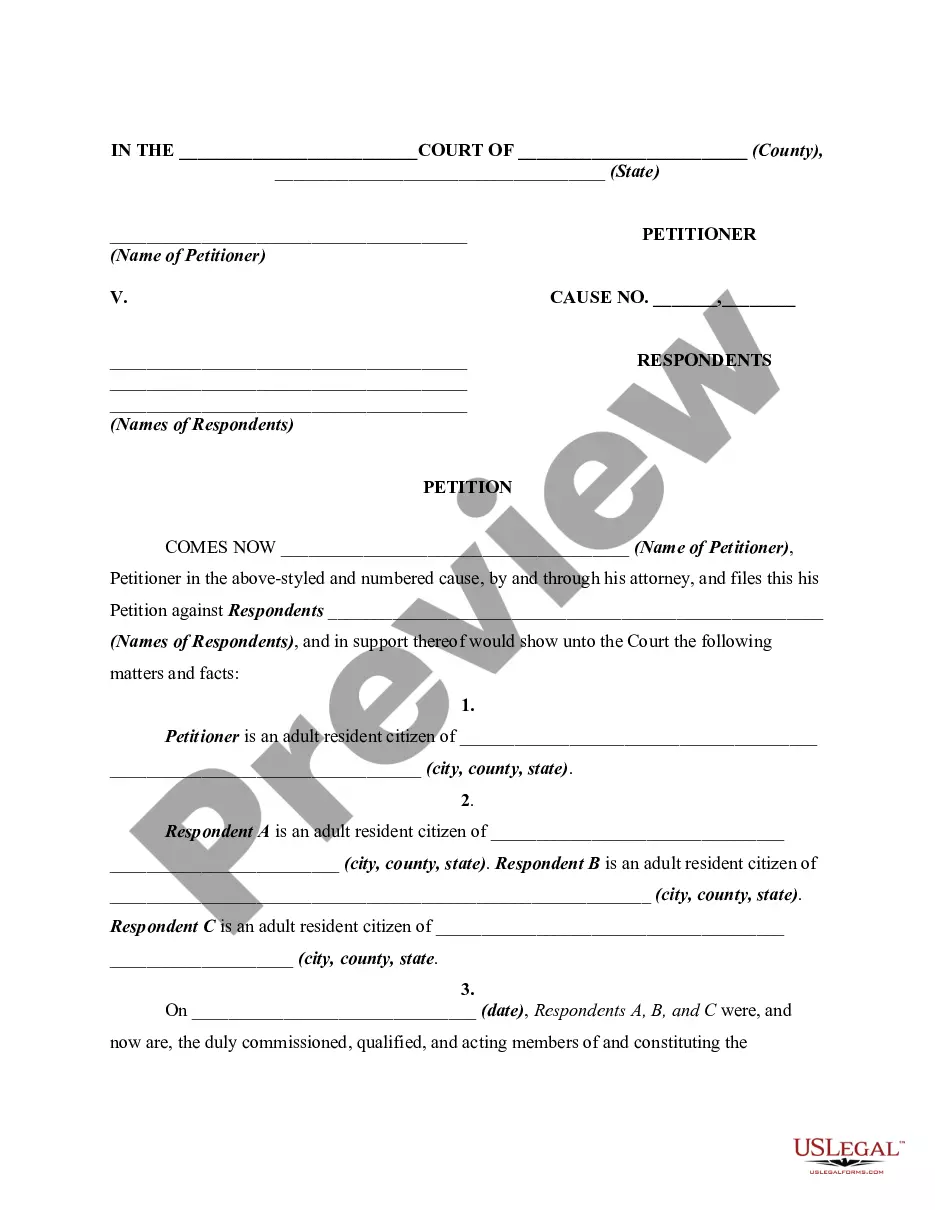
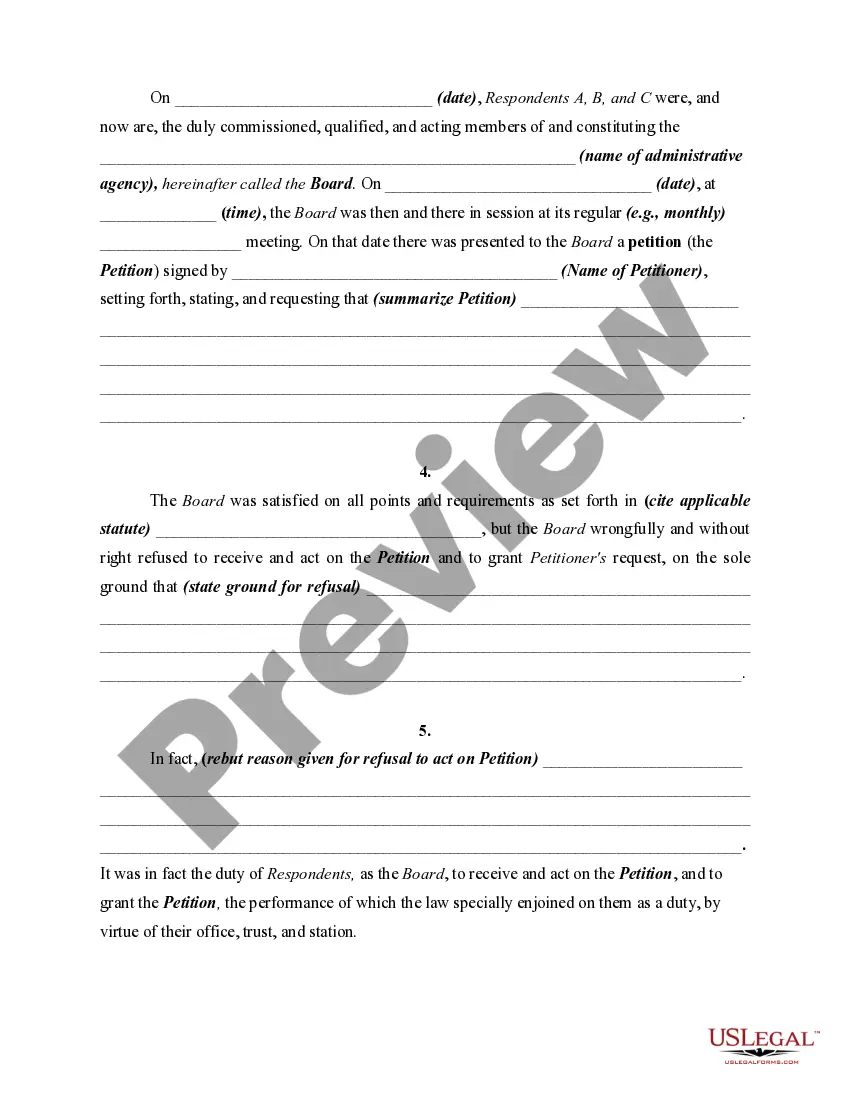
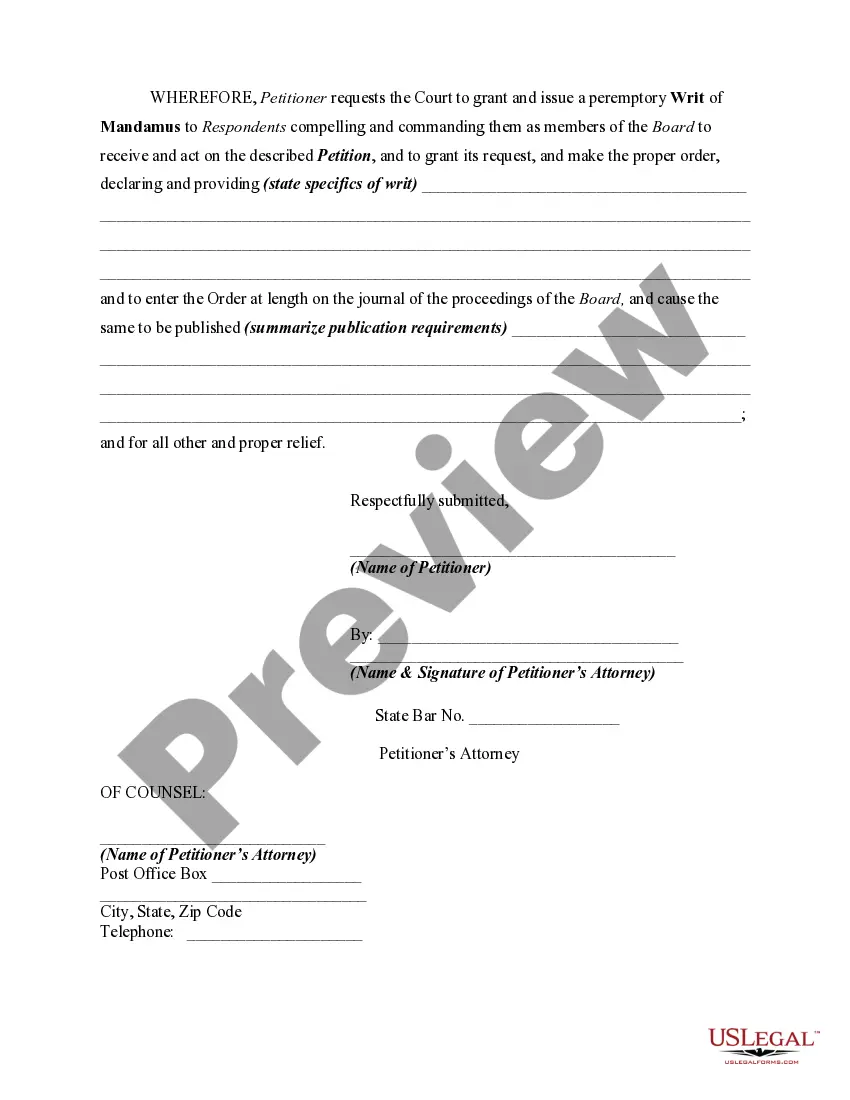
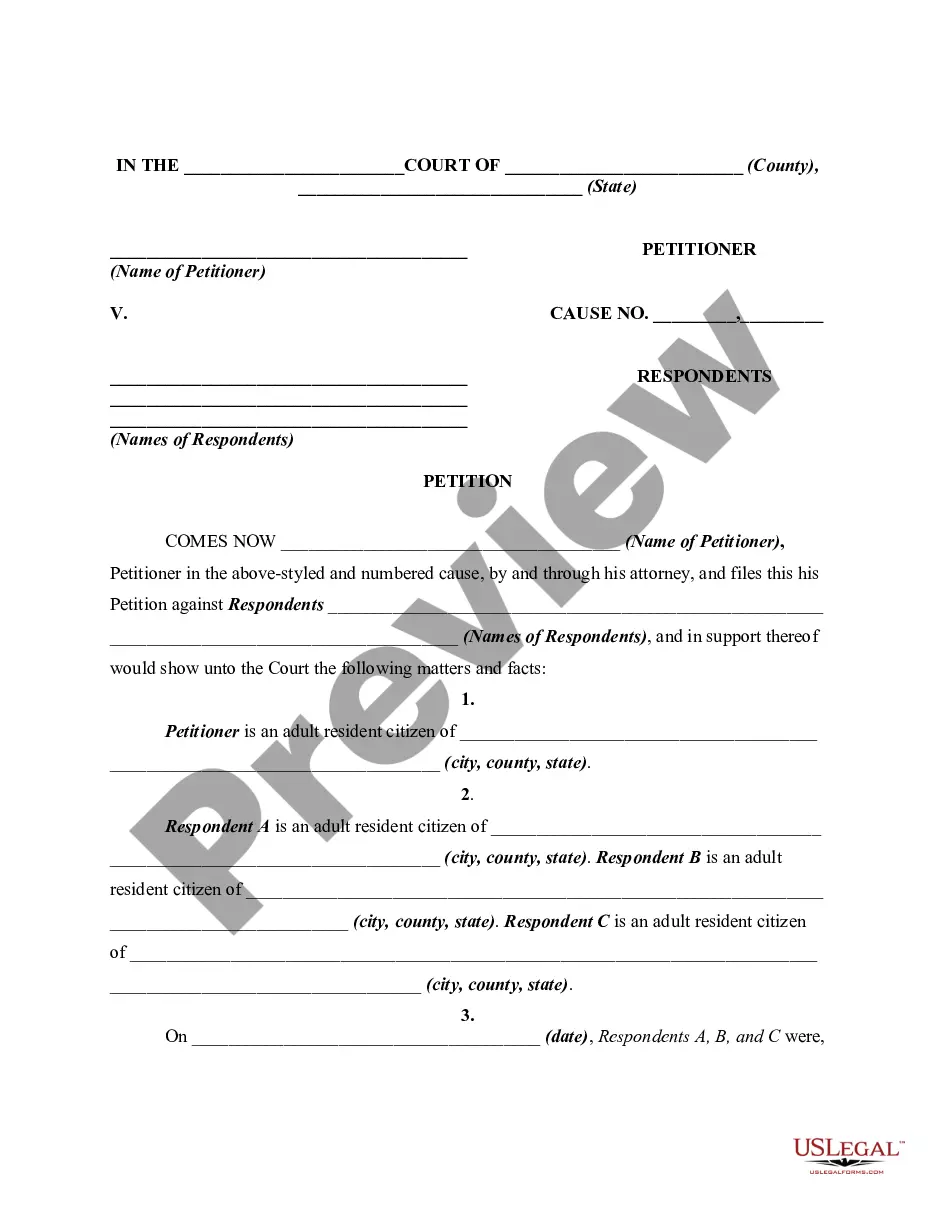
Get your form ready online
Our built-in tools help you complete, sign, share, and store your documents in one place.
Make edits, fill in missing information, and update formatting in US Legal Forms—just like you would in MS Word.
Download a copy, print it, send it by email, or mail it via USPS—whatever works best for your next step.
Sign and collect signatures with our SignNow integration. Send to multiple recipients, set reminders, and more. Go Premium to unlock E-Sign.
If this form requires notarization, complete it online through a secure video call—no need to meet a notary in person or wait for an appointment.
We protect your documents and personal data by following strict security and privacy standards.

Make edits, fill in missing information, and update formatting in US Legal Forms—just like you would in MS Word.

Download a copy, print it, send it by email, or mail it via USPS—whatever works best for your next step.

Sign and collect signatures with our SignNow integration. Send to multiple recipients, set reminders, and more. Go Premium to unlock E-Sign.

If this form requires notarization, complete it online through a secure video call—no need to meet a notary in person or wait for an appointment.

We protect your documents and personal data by following strict security and privacy standards.
Looking for another form?
How to fill out Petition Or Application For Writ Of Mandamus Or Mandate For Refusal Of Administrative Agency To Act On Petition?
- Access your US Legal Forms account. If you're a returning user, log in to download your needed form. Ensure your subscription is active; renew if necessary.
- Review the preview and description of the writ of mandamus form to confirm it meets your specific requirements.
- If you require a different document, utilize the Search feature at the top of the page to find the right form.
- Once you've identified your preferred document, click on the Buy Now button and select the subscription plan that suits you best.
- Complete your order by entering your payment information with a credit card or using PayPal.
- Download your form to your device, allowing access for completion anytime through the My Forms section of your profile.
With US Legal Forms, you gain access to a vast library of over 85,000 forms, far surpassing the competition. We empower both individuals and attorneys to easily create precise legal documents with the help of our premium experts.
Get started today to simplify your legal documentation process. Explore our offerings and secure your writ of mandamus form with ease!
Form popularity
FAQ
A motion to dismiss a writ of mandamus is a request to terminate the legal proceeding before it goes to trial. This motion can argue that the writ lacks legal grounds or that the petitioner does not have the standing to file it. If granted, it prevents the case from being heard in court. Understanding this concept is essential for navigating the complexities of legal challenges involving a writ of mandamus.
The term writ of mandamus refers to a court order directing a public agency or official to perform an act required by law. This legal instrument aims to ensure that justice is served when an authority neglects its duties. It stands as a crucial mechanism for enforcing legal obligations. Hence, a writ of mandamus is vital for maintaining the rule of law.
Three types of writs include the writ of habeas corpus, the writ of certiorari, and the writ of mandamus. Each writ serves a specific legal purpose, addressing various situations in court. The writ of mandamus specifically compels a party to take action. Understanding these types can clarify the options available in legal disputes.
The writ of mandamus serves to enforce the law and uphold justice. It allows parties to compel government officials or lower courts to perform their duties. This writ is important for maintaining accountability in public service. By using a writ of mandamus, individuals ensure their rights are protected and enforced.
If a writ of mandamus is ignored, the situation can escalate. The party to whom the writ is directed may face consequences, as the court expects compliance. This could lead to further legal action or financial penalties. It's crucial to understand that ignoring a writ of mandamus can undermine the legal system's integrity.
Yes, you can file a writ of mandamus yourself. However, doing so requires careful attention to detail and an understanding of legal procedures. While it's possible to navigate the process independently, using resources like US Legal Forms can provide valuable support. This resource simplifies the process and ensures you have the appropriate documentation prepared.
For a writ of mandamus to be granted, you must demonstrate several key conditions. First, there should be a clear duty for the official or agency to act. Secondly, you must show that you have a right to compel this action and that there is no other legal remedy available. Understanding these conditions can significantly improve your chances of a successful mandamus.
To get a writ of mandamus, you must first determine if you have the grounds for such a writ. This typically involves showing that there is a clear right to the relief you seek and that no other adequate remedy is available. After preparing and filing your petition, the court will review your case. If you meet the established criteria, the court may grant your request.
Yes, you can file a writ of mandamus yourself, commonly referred to as pro se representation. However, navigating the legal system without assistance can be challenging. If you’re unsure about the process, consider seeking help from a legal professional or using platforms like US Legal Forms, which can guide you through the necessary steps.
The timeframe for filing a writ of mandamus varies based on court schedules and local rules. Generally, you can file this writ relatively quickly, often within a few weeks. However, gathering the necessary documentation and evidence to support your claim may take longer. Therefore, it's best to prepare and understand your local filing guidelines.