Affordable Care Act Mandate For Employers
Description
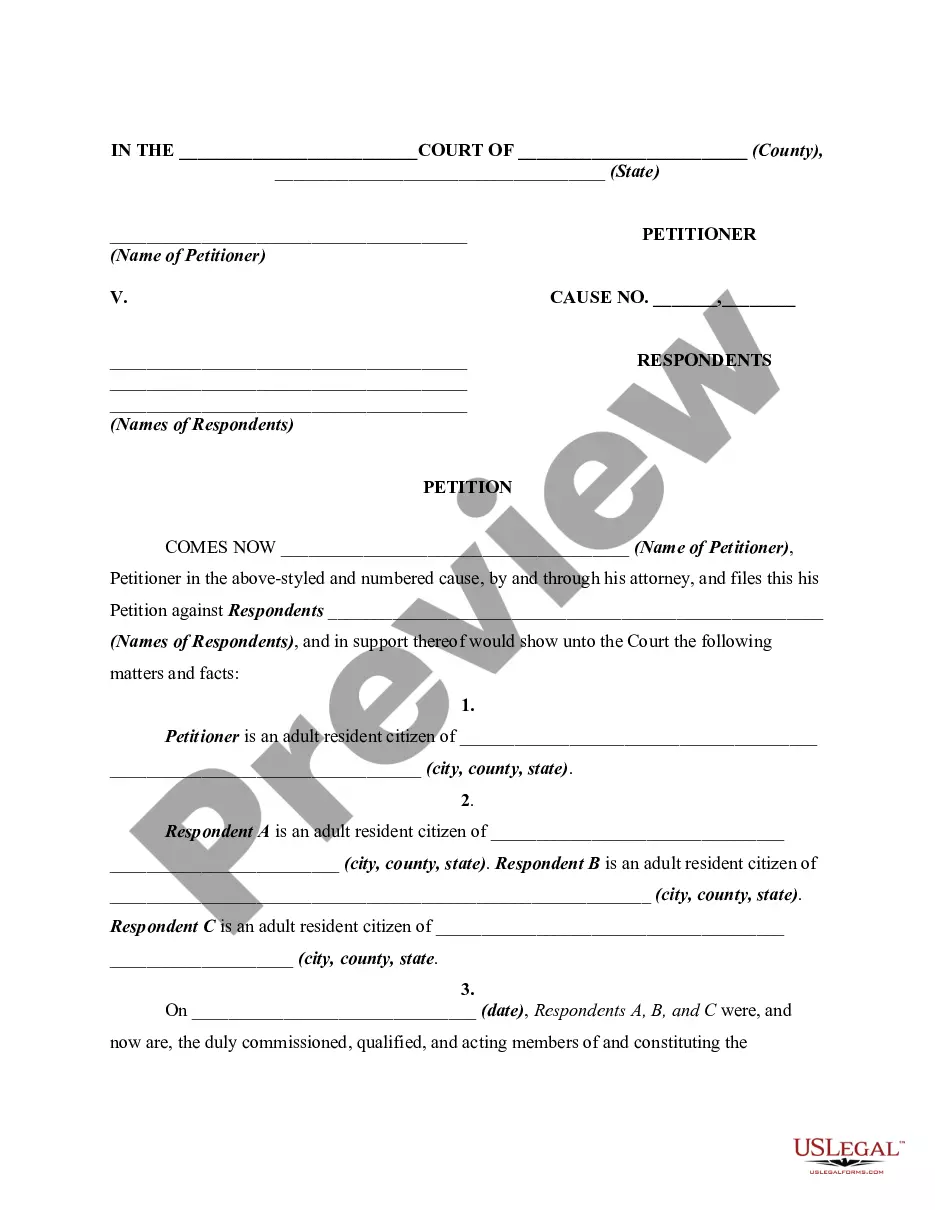
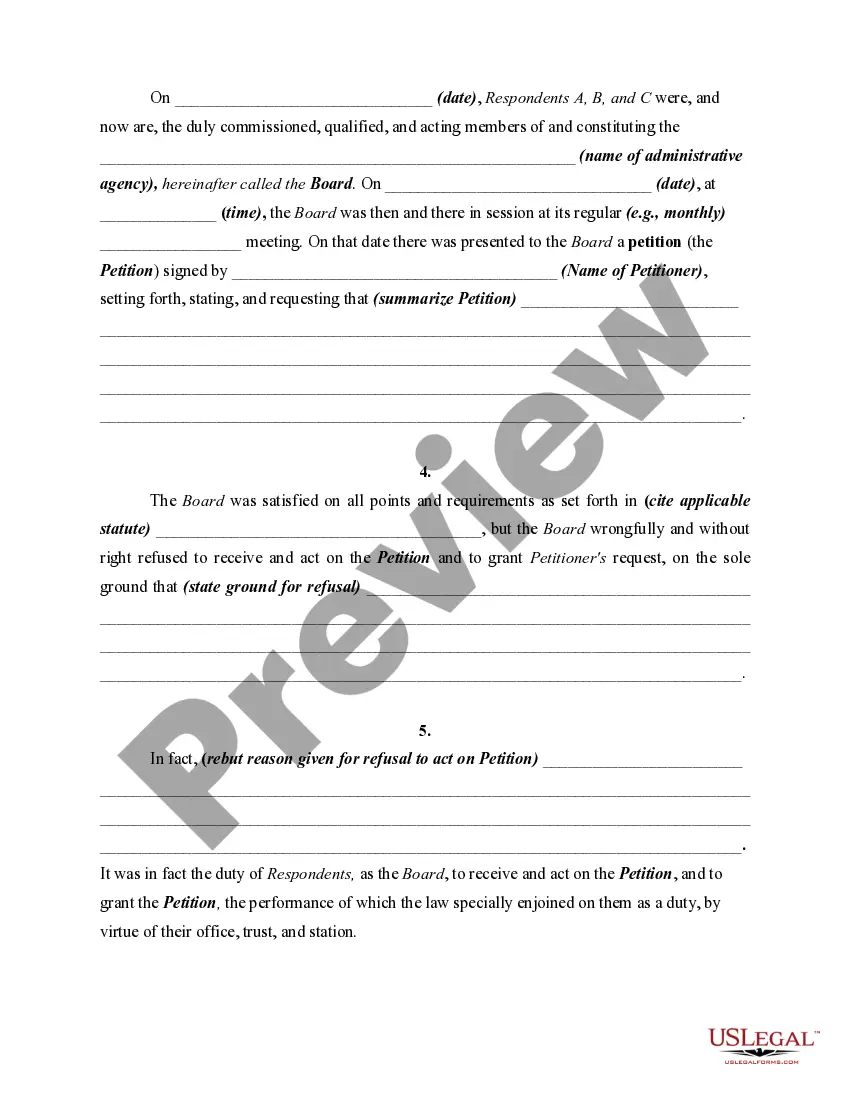
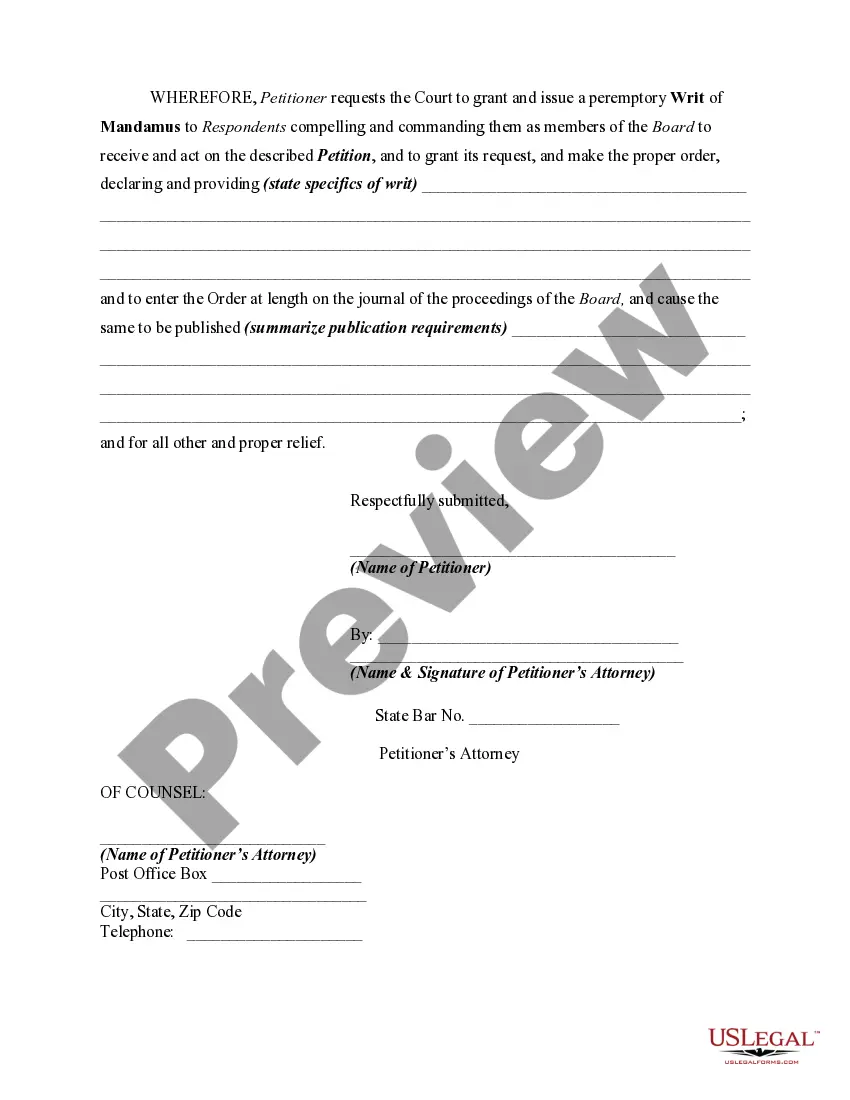
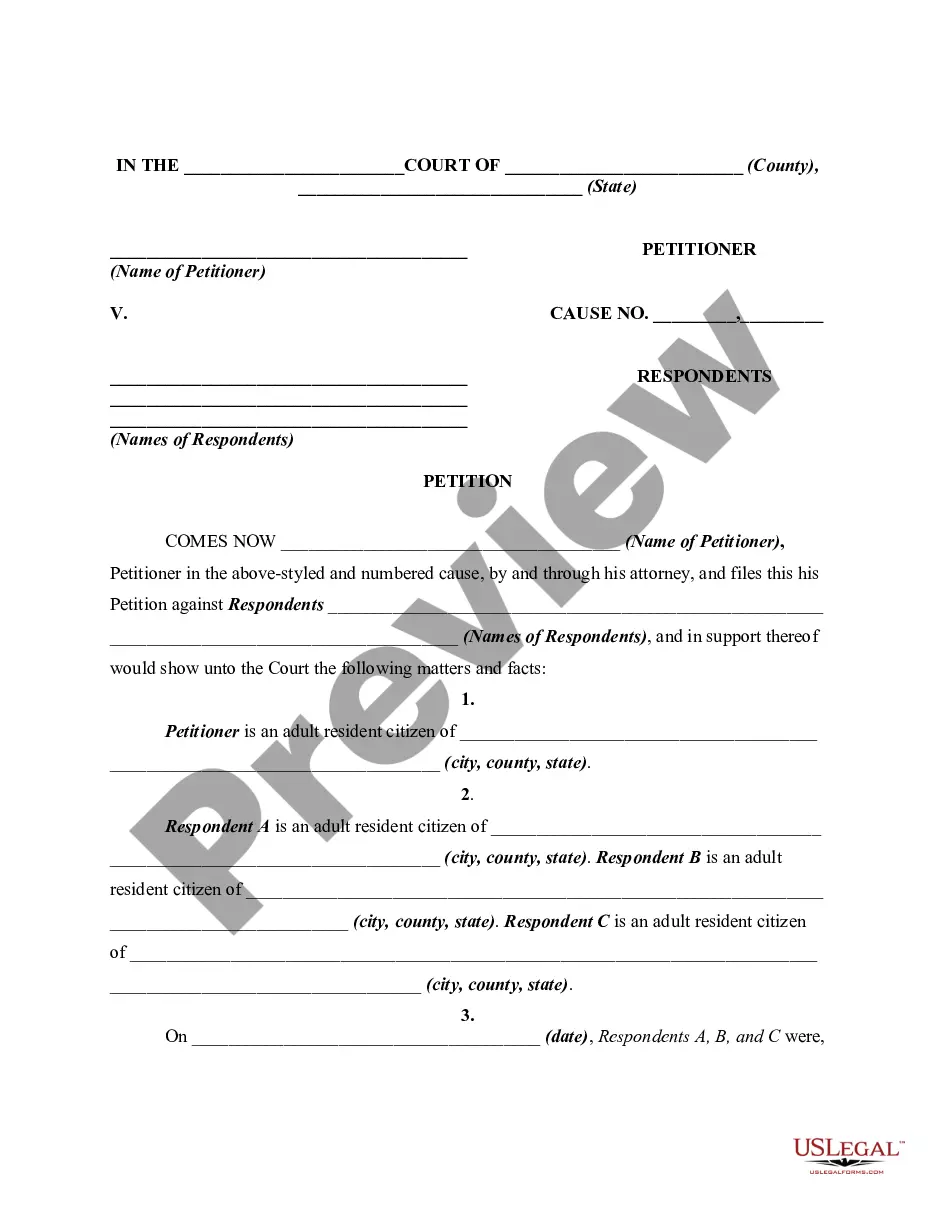



How to fill out Petition Or Application For Writ Of Mandamus Or Mandate For Refusal Of Administrative Agency To Act On Petition?
The Affordable Care Act Requirement For Employers you see on this page is a versatile legal template prepared by professional attorneys in compliance with federal and local regulations.
For over 25 years, US Legal Forms has supplied individuals, businesses, and lawyers with more than 85,000 verified, state-specific documents for any business and personal situation. It’s the quickest, easiest, and most dependable way to acquire the documentation you require, as the service ensures the highest level of data privacy and anti-malware safeguards.
Select the format you prefer for your Affordable Care Act Requirement For Employers (PDF, DOCX, RTF) and save the template on your device. Print the template to physically fill it out. Alternatively, employ an online versatile PDF editor to promptly and correctly fill in and sign your document with a legally-binding electronic signature.
- Search for the document you require and examine it.
- Browse through the file you looked for and preview it or read the form description to verify it meets your needs. If it does not, use the search feature to find the right one. Click 'Purchase Now' once you have found the template you need.
- Sign up and Log In.
- Choose the pricing plan that best fits you and set up an account. Utilize PayPal or a credit card for a quick transaction. If you already possess an account, Log In and check your subscription to proceed.
- Acquire the editable template.
Form popularity
FAQ
The Affordable Care Act mandate for employers outlines specific requirements that businesses must meet to provide health coverage to their employees. Generally, employers with 50 or more full-time employees must offer health insurance that meets certain standards, or they may face penalties. Additionally, these plans must cover essential health benefits and cannot impose lifetime limits on coverage. Staying compliant with the Affordable Care Act mandate for employers is crucial to fostering a healthy workforce and avoiding fines, so consider using USLegalForms for easy access to necessary documents and resources.
As we look ahead to 2025, the Affordable Care Act mandate for employers will still require coverage for full-time employees, with some updates in penalty amounts and thresholds. Employers must continuously evaluate their health plans to ensure they meet evolving ACA standards. Staying informed about these requirements can prevent fines and promote a supportive workplace. Consider using US Legal Forms to easily navigate the complexities of compliance as you prepare for the future.
The Affordable Care Act mandate for employers includes requirements to provide health insurance to eligible employees and their dependents. It seeks to improve health care accessibility and affordability, thereby reducing the number of uninsured individuals. Employers must comply with specific coverage standards to ensure they meet ACA requirements. By doing so, you not only fulfill legal obligations but also foster a healthier work environment.
The 95% rule for the Affordable Care Act mandate for employers is a guideline stipulating that large employers must offer health insurance to at least 95% of their full-time employees to avoid penalties. This rule ensures that employers provide coverage effectively, promoting access to health care. It is crucial for employers to understand this rule to remain compliant and avoid unnecessary financial burdens. By adhering to the 95% rule, you will contribute to a healthier workforce.
Yes, employers are still required to provide Form 1095-C to eligible employees and file it with the IRS. This requirement is part of the Affordable Care Act mandate for employers, ensuring that employees have essential documentation regarding their health coverage. Providing this form helps employees with their tax filings and ensures transparency regarding their benefits. To manage this process effectively, consider using US Legal Forms for guidance.
Employers must complete Form 1095-C to report health coverage offered to employees as part of the ACA reporting requirements. This form details which employees received coverage, the months they were covered, and if the coverage met affordability standards. It's vital for employers to accurately report this information to stay compliant with the Affordable Care Act mandate for employers. Utilizing resources from US Legal Forms can simplify the preparation of these forms.
ACA reporting requirements involve detailed documentation that employers must submit to the IRS and employees to demonstrate compliance with the Affordable Care Act mandate for employers. Employers must report information about the health insurance coverage they offer, including the period of coverage and employee details. Accurate reporting is crucial to avoid penalties and ensure transparency in healthcare provision. Using tools from US Legal Forms can streamline this reporting process.
Yes, you can opt for coverage through the Affordable Care Act marketplace instead of employer-sponsored insurance if you qualify. However, if your employer offers affordable coverage that meets ACA standards, you may not qualify for premium subsidies on the marketplace. It's important to assess both options to ensure you select the best plan for your needs. Consulting with a platform like US Legal Forms can help clarify your choices.
The employer mandate is a key component of the Affordable Care Act mandate for employers, which requires large employers to provide health insurance to their full-time employees or face penalties. This mandate aims to increase the number of insured workers and reduce healthcare costs. Employers must offer plans that meet the ACA's affordability and coverage standards. Understanding this mandate is crucial for businesses to remain compliant.
Under the Affordable Care Act mandate for employers, large businesses, defined as those with 50 or more full-time employees, must provide affordable health insurance to their workers. Coverage must meet minimum value and affordability standards. This requirement ensures that employees have access to necessary health services without excessive costs. Compliance with these requirements helps businesses avoid penalties.