Ejected
Description
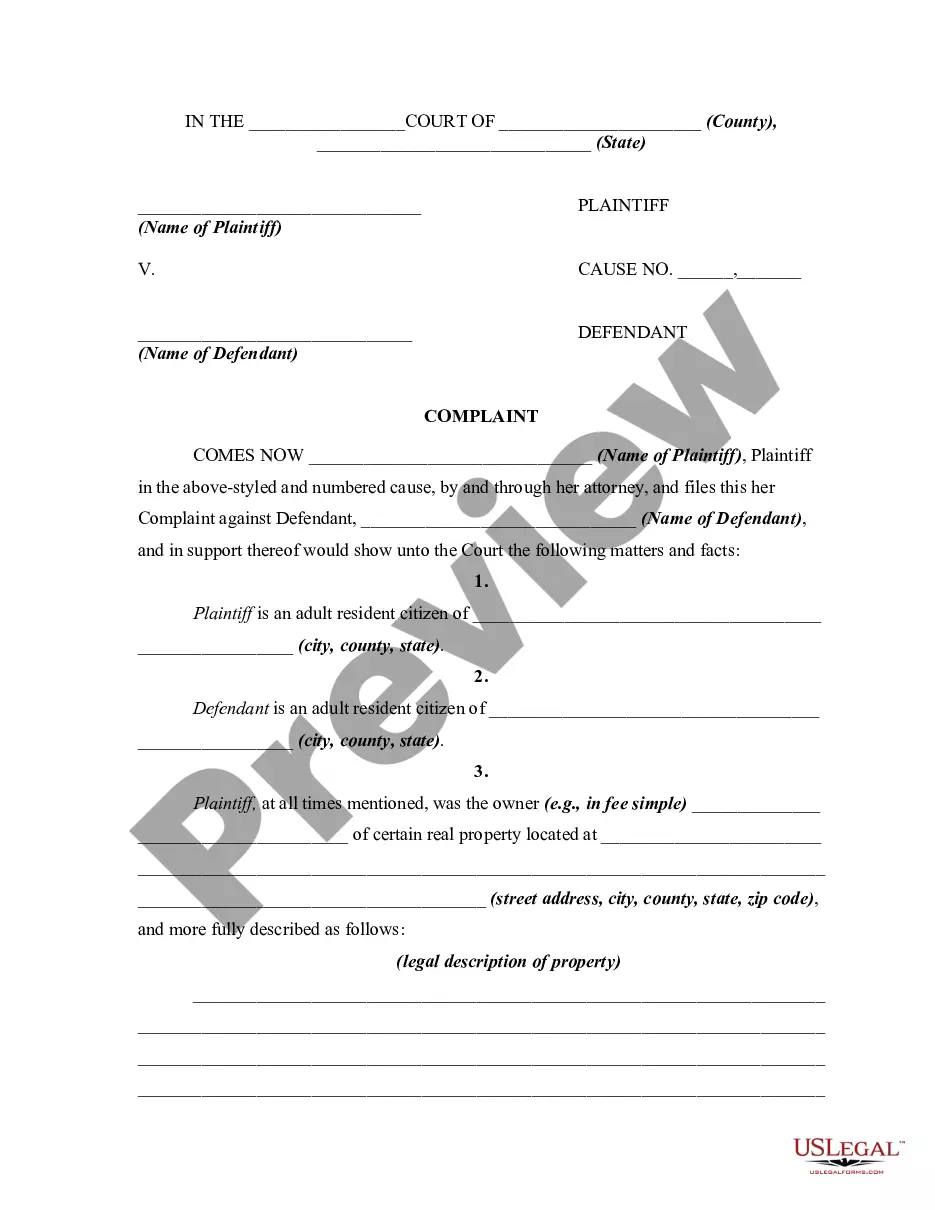
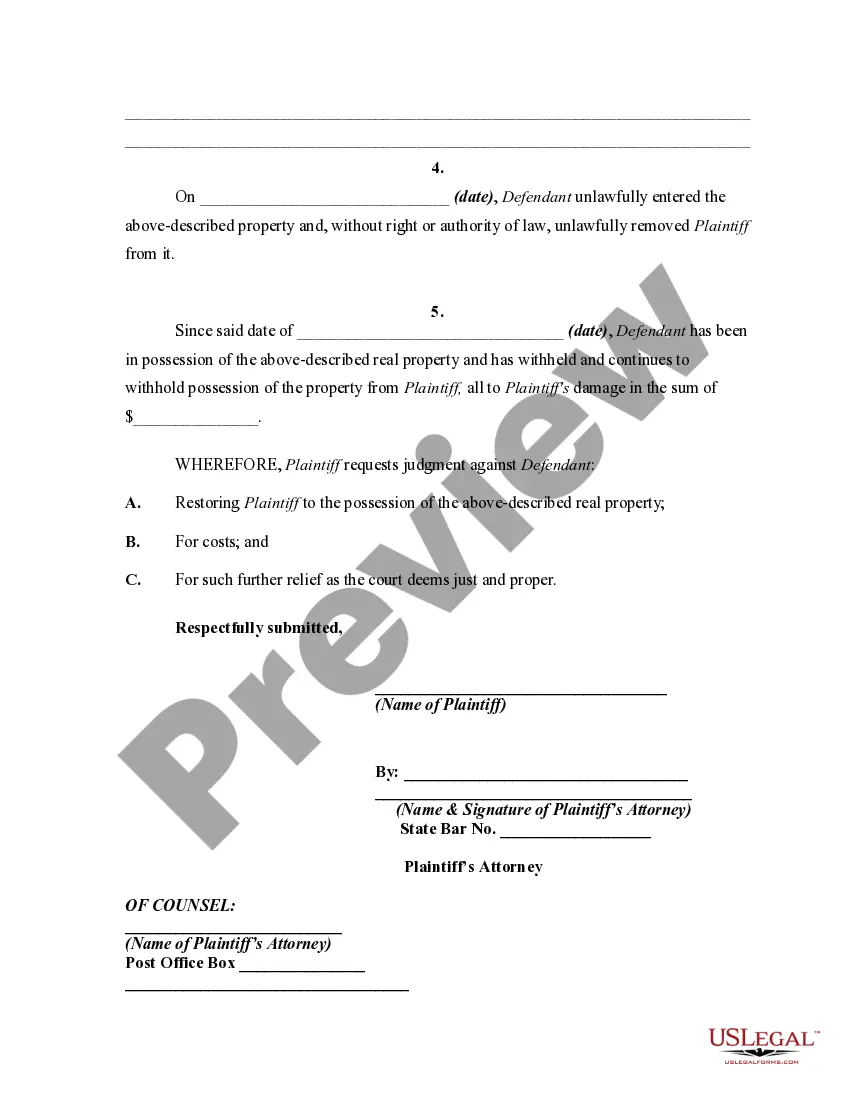
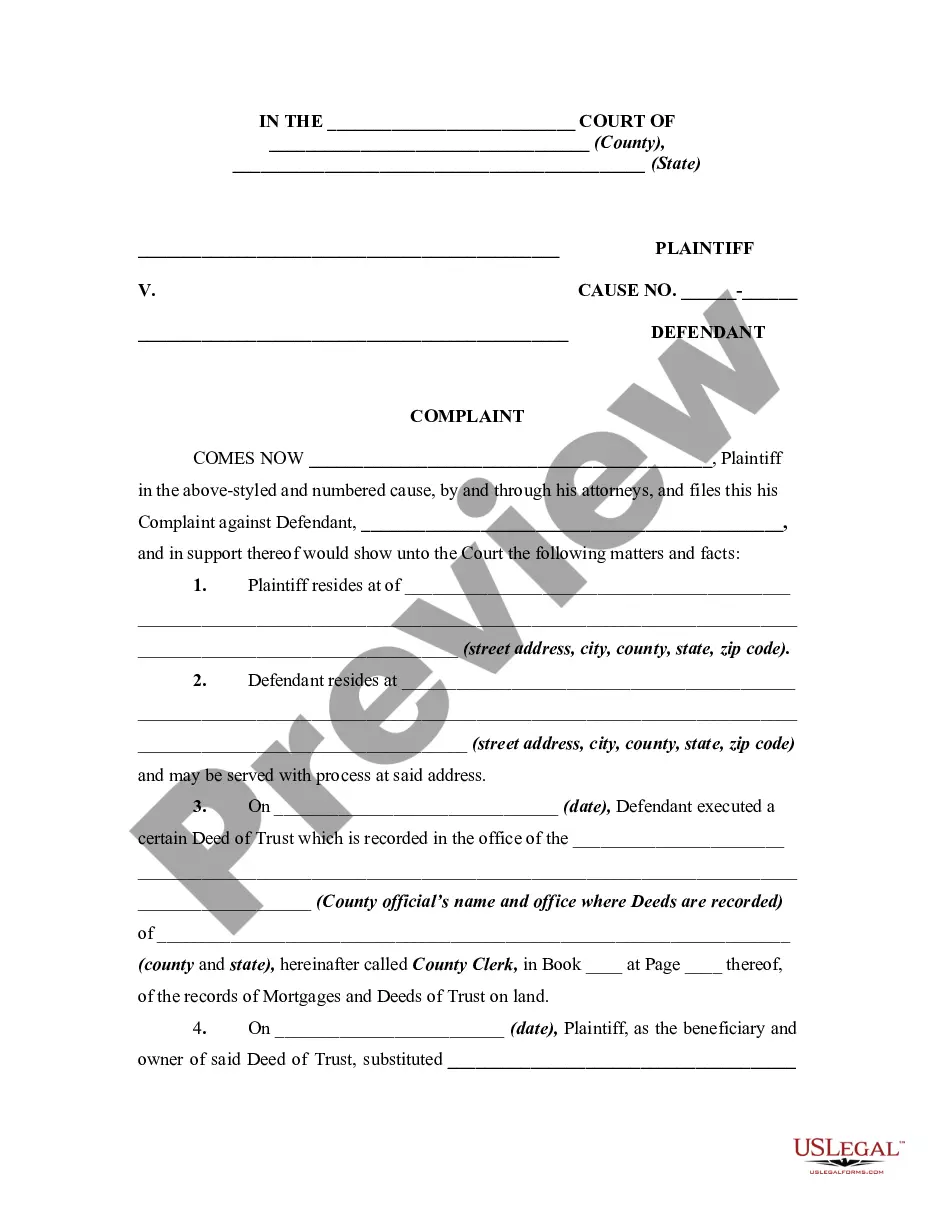
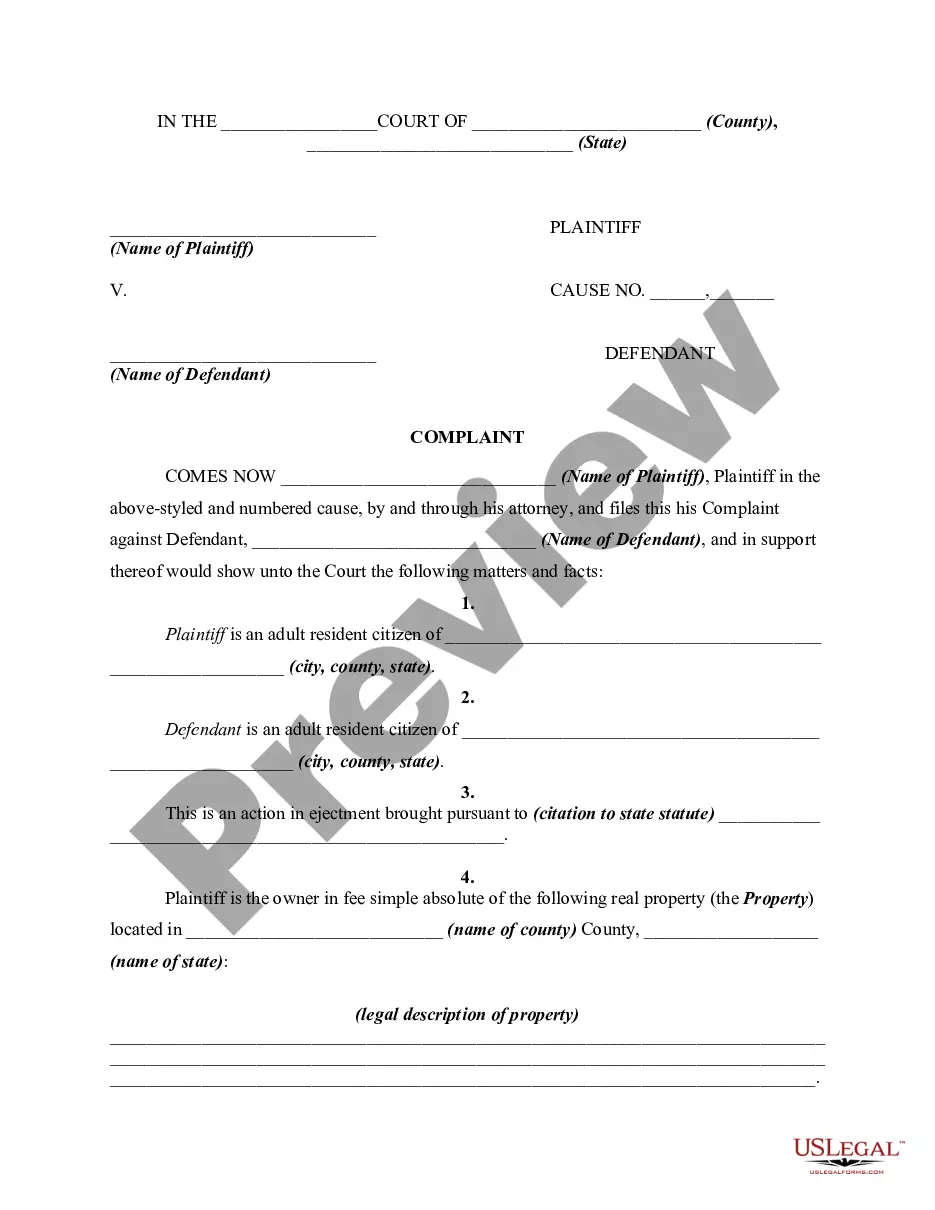
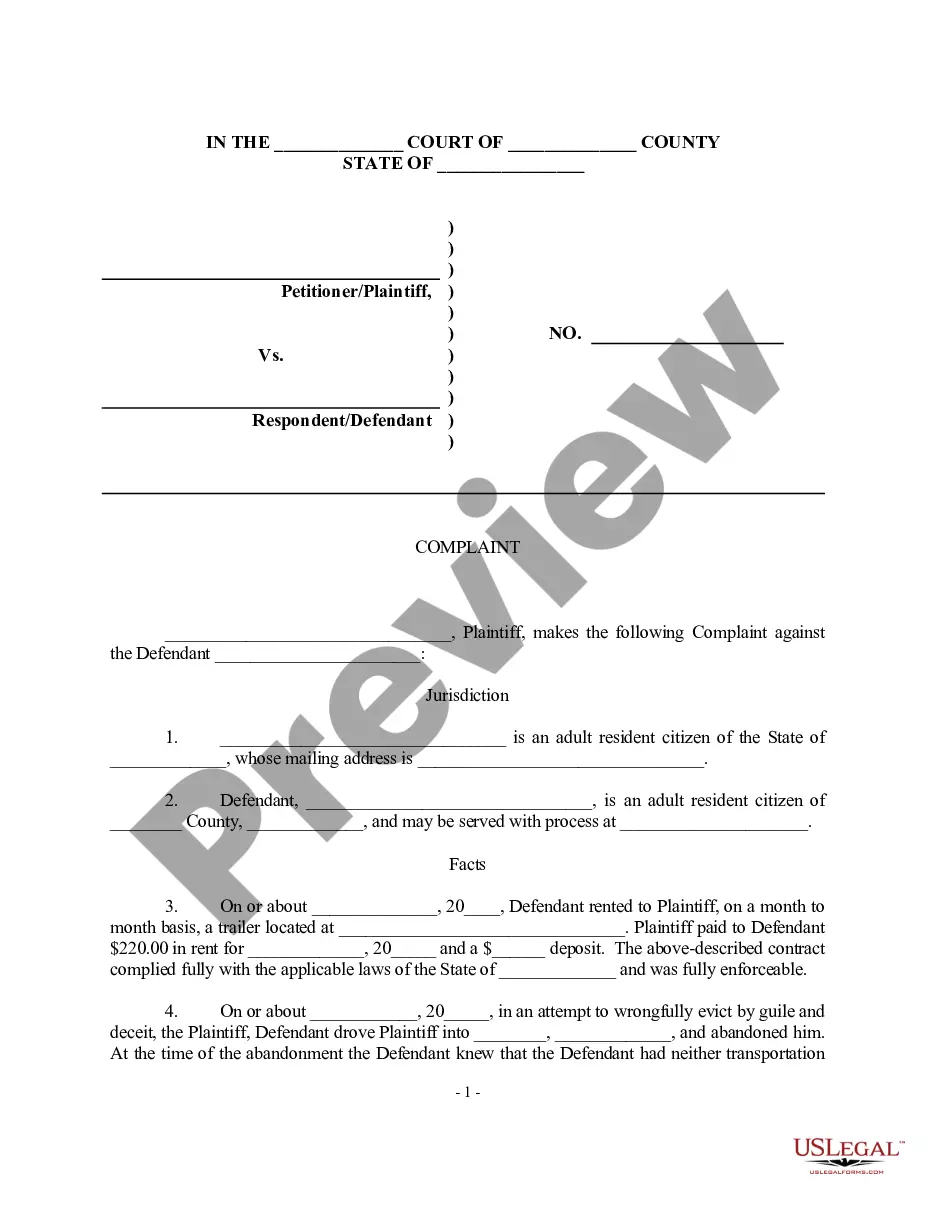
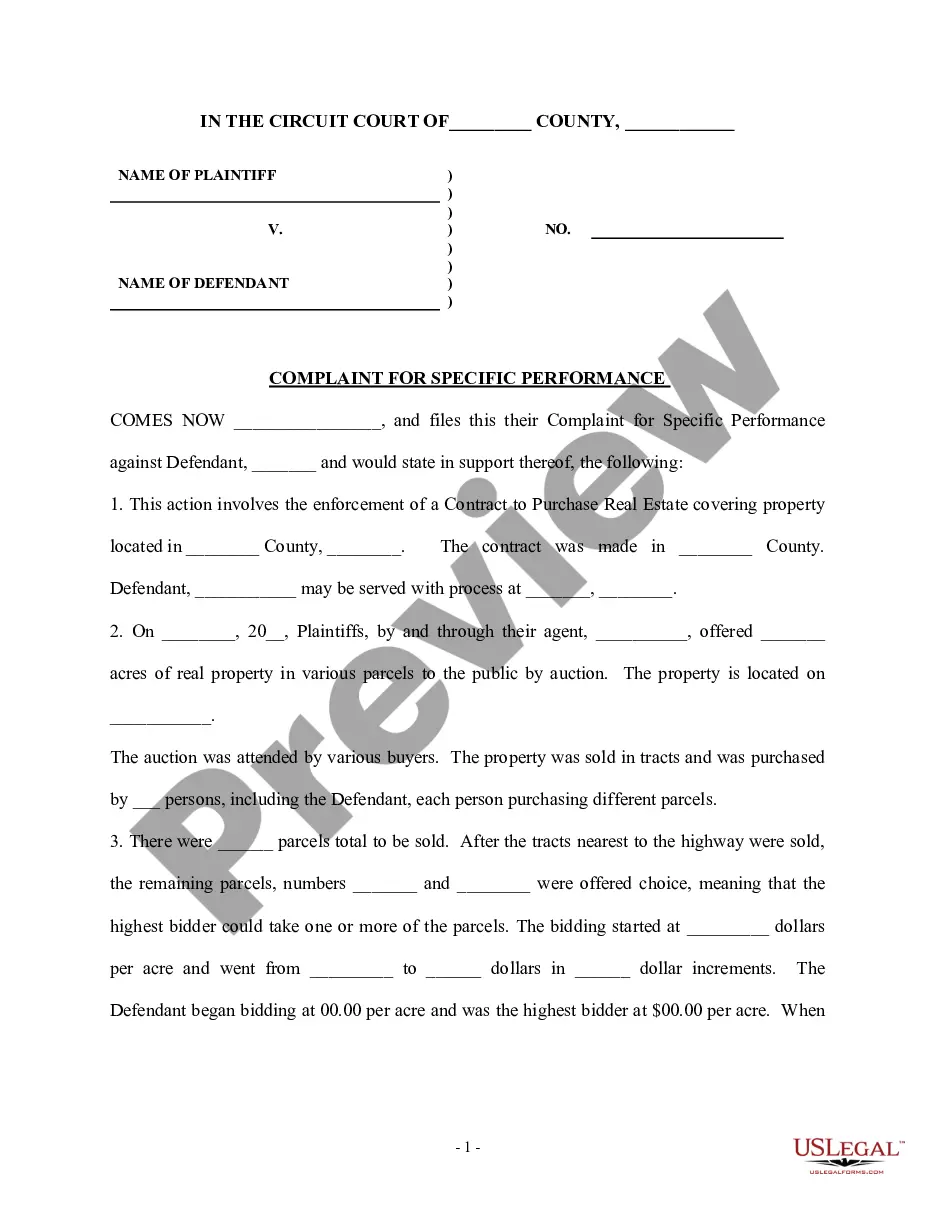
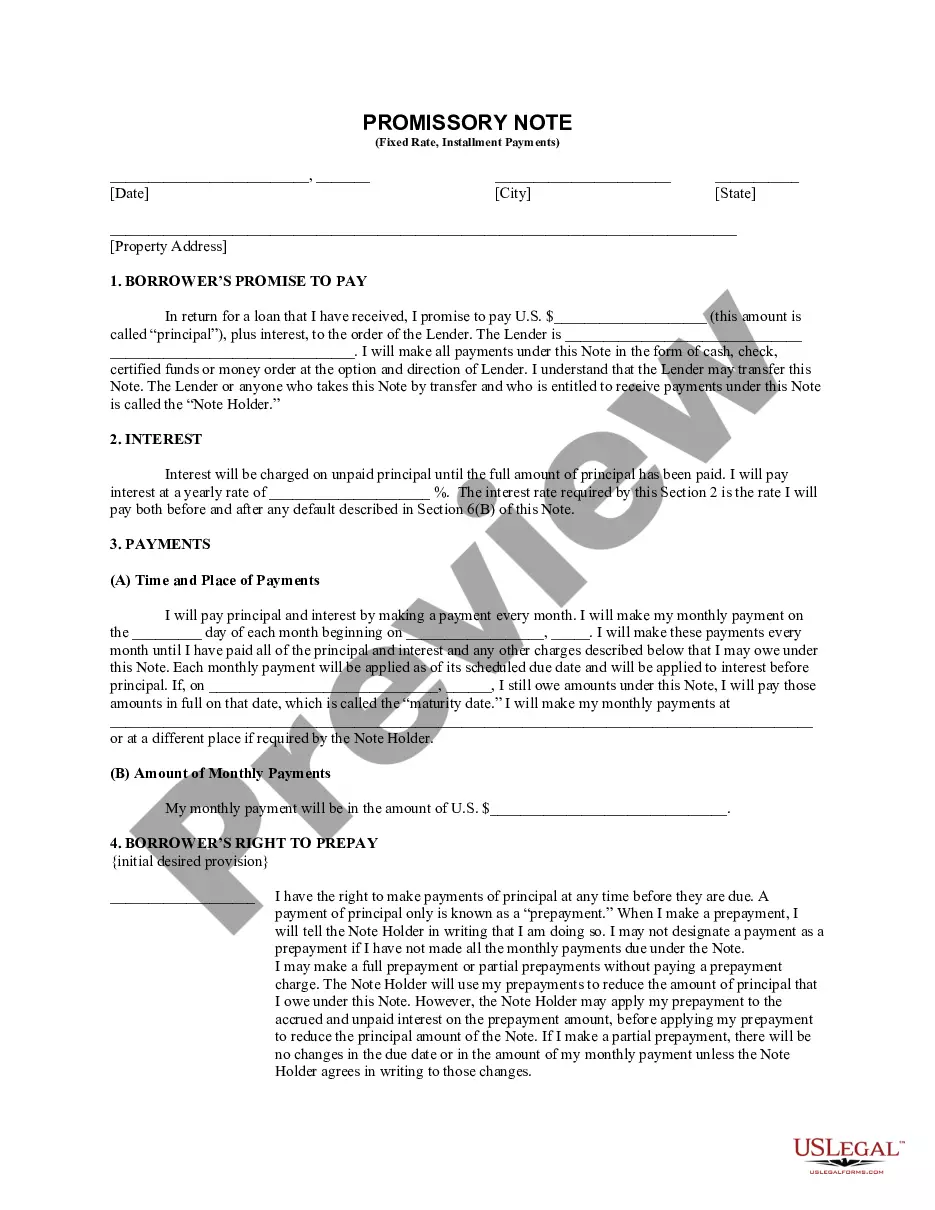
How to fill out General Form Of Complaint, Petition, Or Declaration For Ejectment?
- If you're a returning user, simply log in to your account. Ensure your subscription is active before proceeding. Click the Download button to acquire your preferred form template.
- For first-time users, start by checking the Preview mode and description of potential forms. Confirm that the selected form aligns with your requirements and jurisdiction.
- If you need a different form, use the Search tab above to find the correct one. Once you identify the right document, continue to the next step.
- Choose to buy your document by clicking on the Buy Now button and selecting a subscription plan that fits your needs. You will need to register for an account for full access.
- Finalize your purchase by entering your credit card information or signing in with your PayPal account for a secure payment.
- Download your form and save it directly to your device, allowing for easy access anytime through the My Forms section of your profile.
US Legal Forms empowers users by providing a comprehensive selection of over 85,000 reliable and editable legal forms, more than any competitor. Our platform also connects users with premium experts for guidance in completing forms accurately.
Take advantage of US Legal Forms today to simplify your legal document needs. Start your journey for seamless legal solutions now!
Form popularity
FAQ
To write an ejection report, begin by clearly stating the date, time, and location of the incident. Include a detailed account of what transpired, the individuals involved, and the reason for the ejection. It's crucial to remain objective and factual, avoiding emotional language. After completing the report, review it to ensure accuracy, as this document may serve as an important reference in the future.
An ejection report is a formal document that records the details of an ejection incident. This report typically includes information like the reason for the ejection, the circumstances surrounding it, and any witnesses or involved parties. Having an ejection report is essential for legal and administrative purposes, as it provides a clear account of incidents. This documentation helps organizations manage situations effectively.
If a coach is ejected, it means they have been removed from the coaching area due to misconduct, often related to behavior that goes against established game rules. Ejection in this context can impact the team, as it may result in disciplinary actions and affect team dynamics. Recognizing the implications of ejection helps coaches maintain professionalism. It also reinforces the importance of sportsmanship and respect in competition.
When someone gets ejected, it refers to their removal from a venue or an event due to inappropriate behavior or rule violations. This decision is often made to maintain order and ensure the safety of others present. Ejection serves as a way to uphold standards and promote a positive environment. Understanding the reasons behind ejection helps foster respect and compliance.
An official can fill out an ejection report directly in their DragonFly account. If they prefer a paper method, they should use the forms provided by their local association. Understanding where to submit this report is important, as it keeps records accurate and compliant with regulations. Ensure that you verify which method works best for your organization.
To eject someone, you typically start by following the protocols established by your organization or event. This often involves a verbal warning to the individual, followed by notifying a supervisor or an authority figure. After these steps, the ejection must be formally documented to maintain an official record. Choosing the right approach ensures that the situation is handled fairly and efficiently.
In many sports, players or coaches who get ejected may face fines or suspensions depending on the league rules. This can serve as a disciplinary measure to maintain sportsmanship and order. It’s beneficial to know these rules to avoid behaviors that may lead to getting ejected and facing financial penalties.
To remove an unwanted person from your home, begin by discussing the situation and requesting they leave. If they refuse, you may need to document incidents and serve them with an eviction notice if appropriate. If the situation escalates, filing for eviction in court is the next step. You can find helpful resources on US Legal Forms to navigate this procedure.
It is generally not legal to physically remove someone from your house without proper procedures in place. Taking such action can lead to serious legal consequences. Instead, consider issuing a formal notice to vacate, and if necessary, go through the legal eviction process to remove them properly. Resources from US Legal Forms can help guide you through this process.
You can get ejected from a game by committing actions deemed unacceptable by the game officials, such as arguing the calls or making threatening gestures. Each sport has its guidelines regarding ejections, so it's essential to understand the rules. Focusing more on the game and less on disputes can help avoid being ejected.