Suit For Litigation
Description
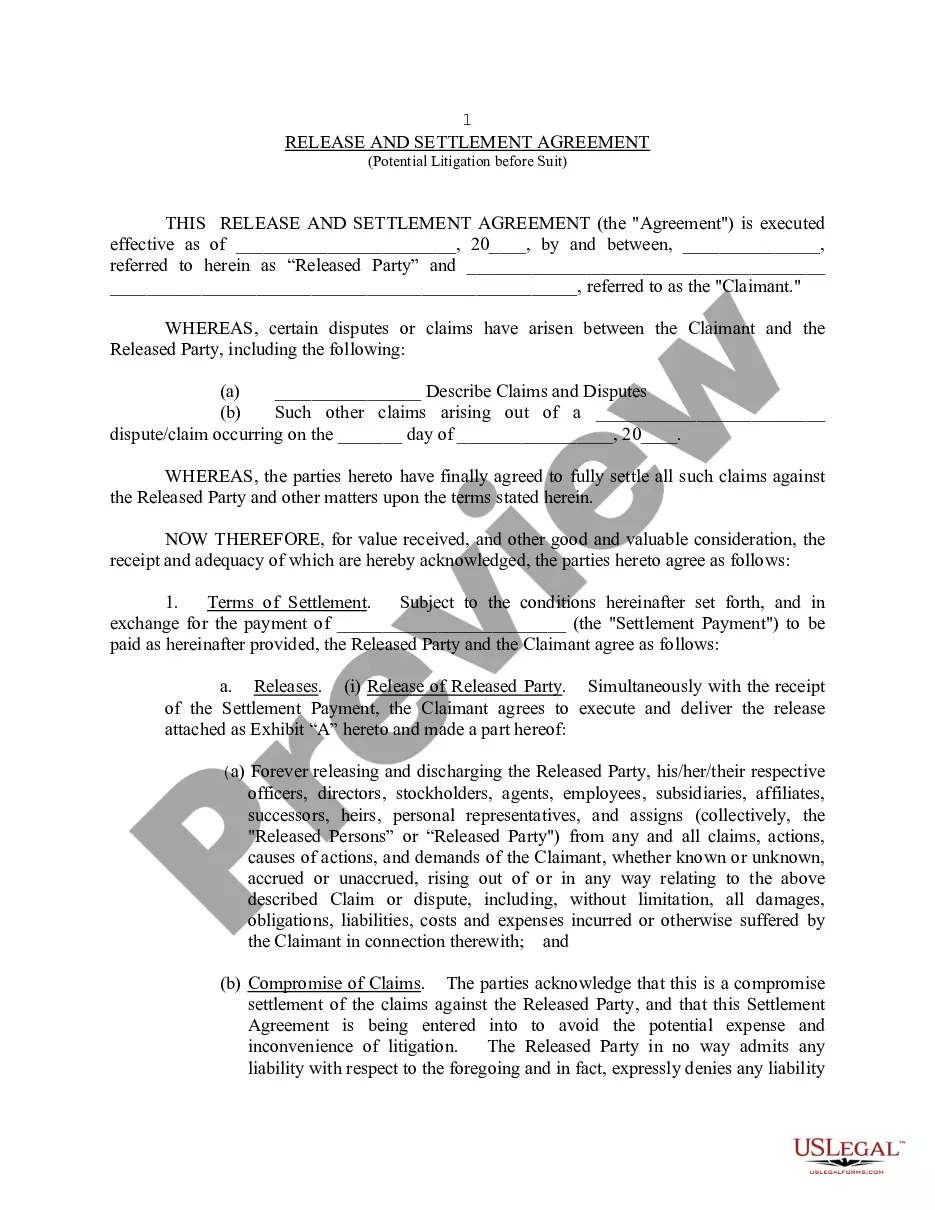
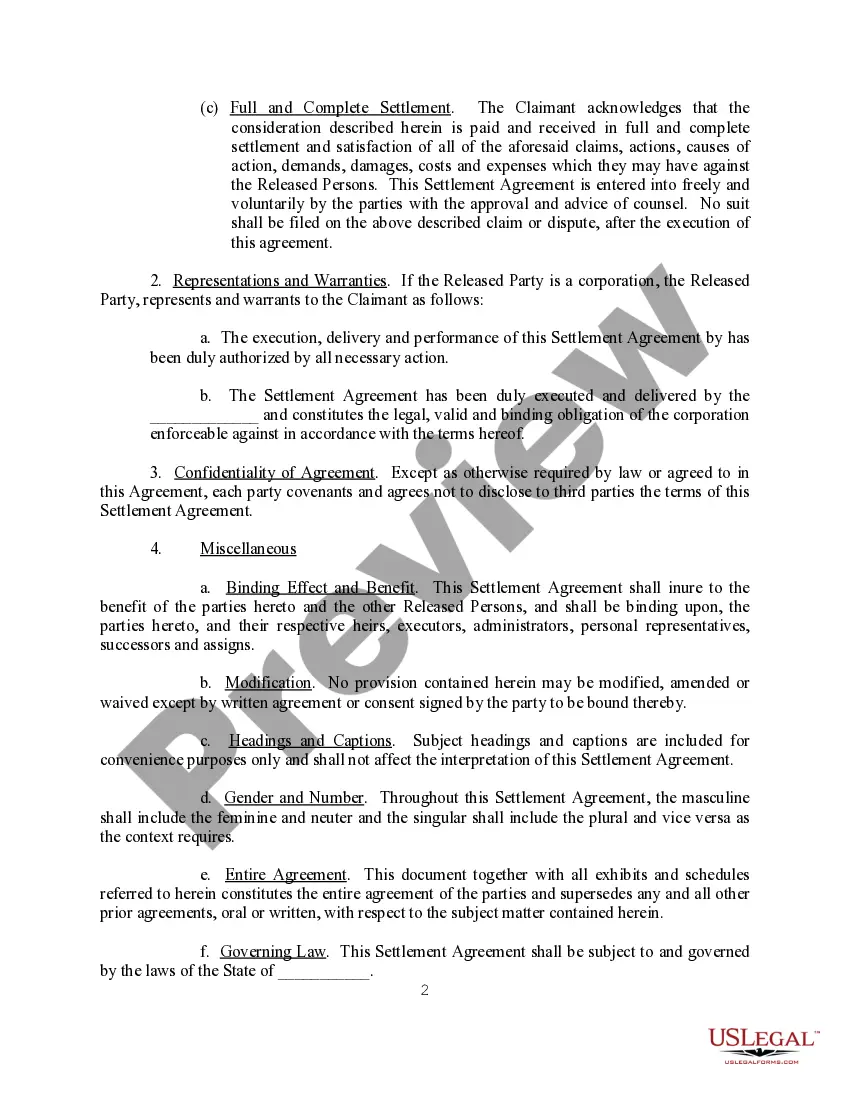
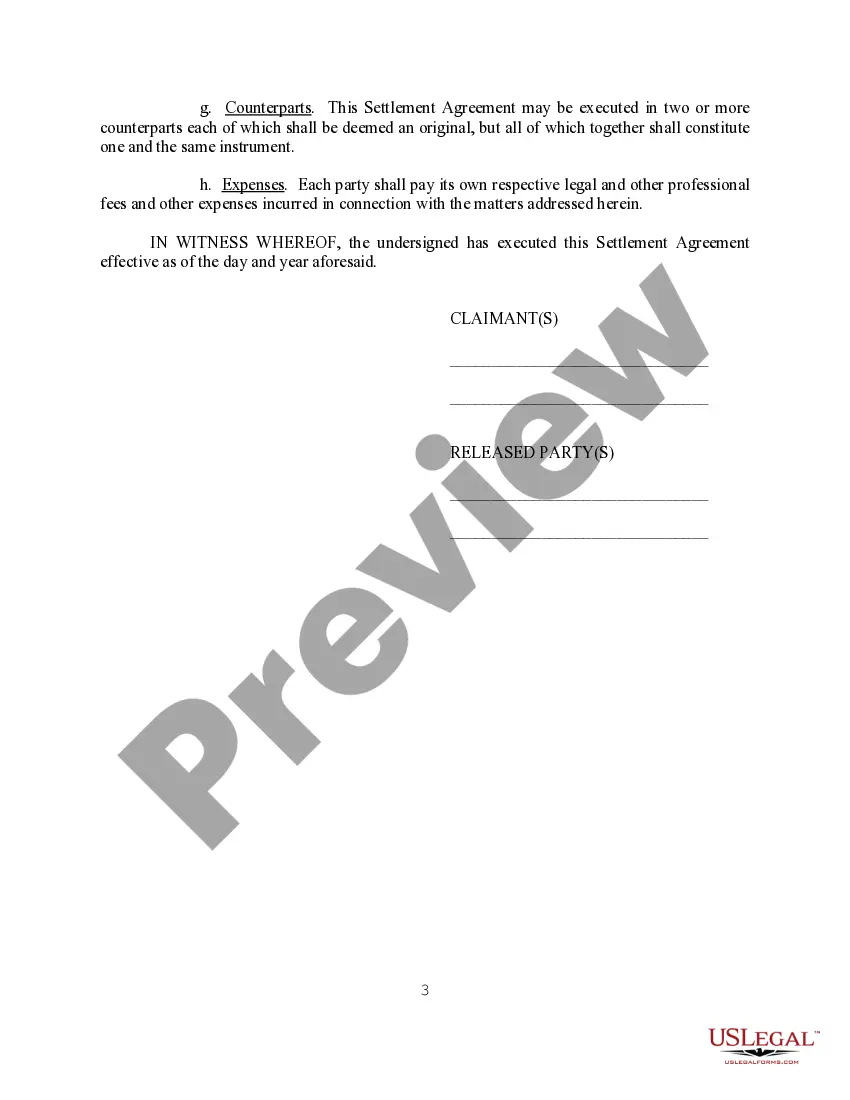
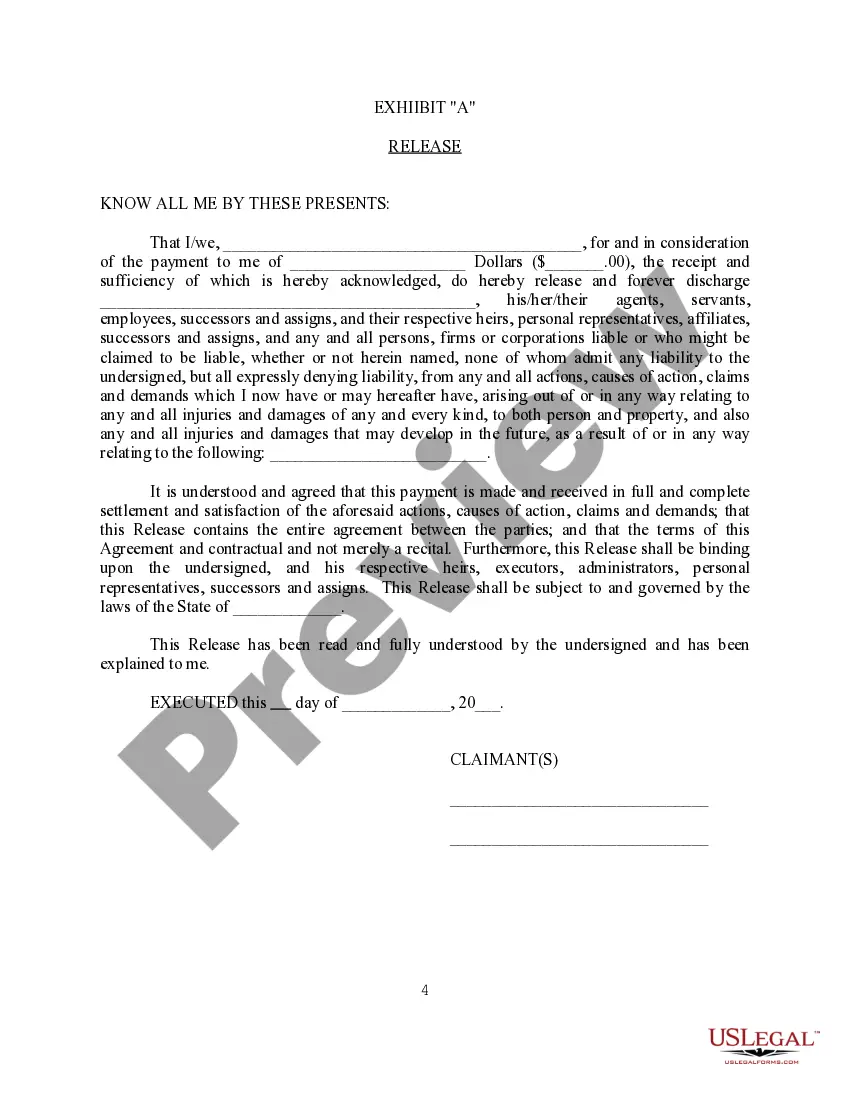
Get your form ready online
Our built-in tools help you complete, sign, share, and store your documents in one place.
Make edits, fill in missing information, and update formatting in US Legal Forms—just like you would in MS Word.
Download a copy, print it, send it by email, or mail it via USPS—whatever works best for your next step.
Sign and collect signatures with our SignNow integration. Send to multiple recipients, set reminders, and more. Go Premium to unlock E-Sign.
If this form requires notarization, complete it online through a secure video call—no need to meet a notary in person or wait for an appointment.
We protect your documents and personal data by following strict security and privacy standards.

Make edits, fill in missing information, and update formatting in US Legal Forms—just like you would in MS Word.

Download a copy, print it, send it by email, or mail it via USPS—whatever works best for your next step.

Sign and collect signatures with our SignNow integration. Send to multiple recipients, set reminders, and more. Go Premium to unlock E-Sign.

If this form requires notarization, complete it online through a secure video call—no need to meet a notary in person or wait for an appointment.

We protect your documents and personal data by following strict security and privacy standards.
Looking for another form?
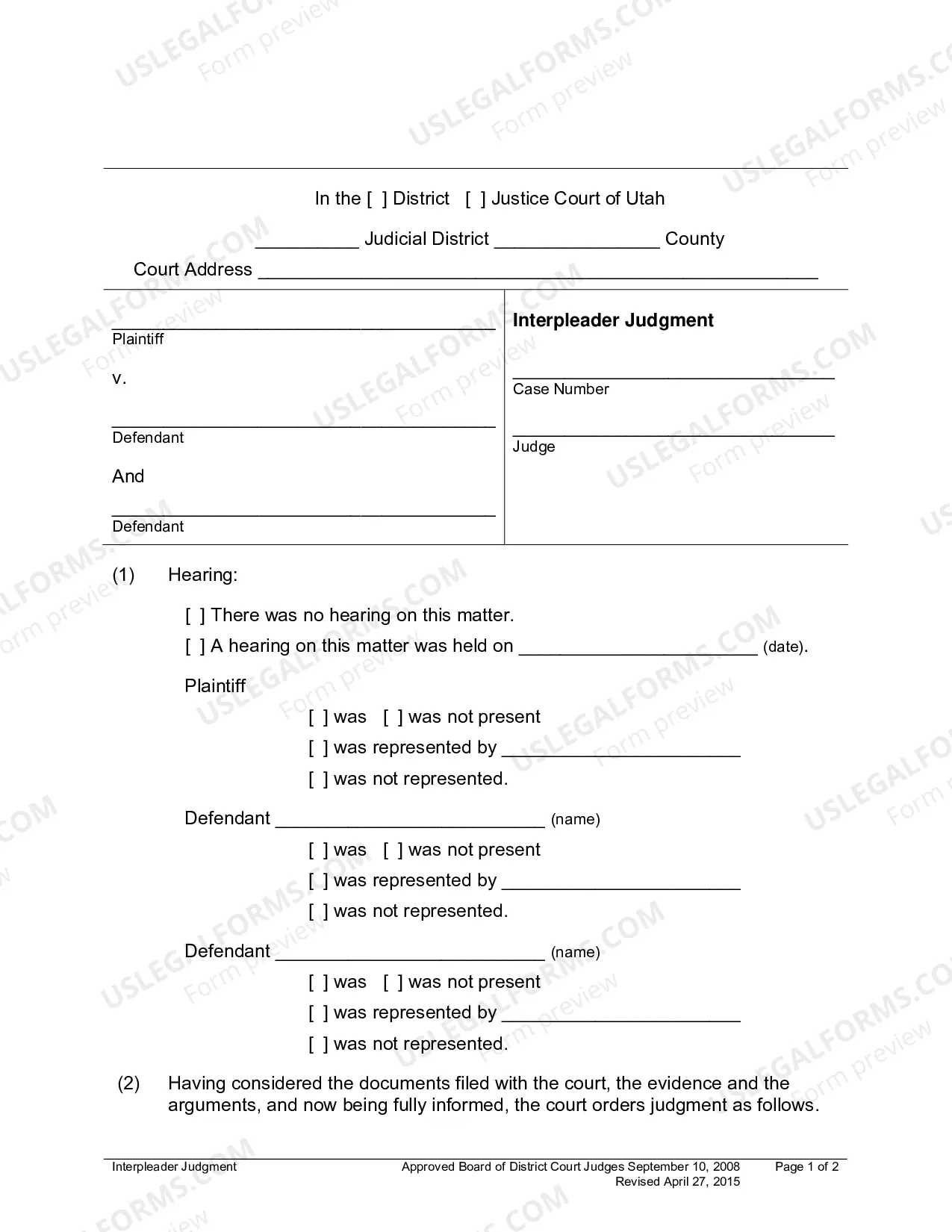


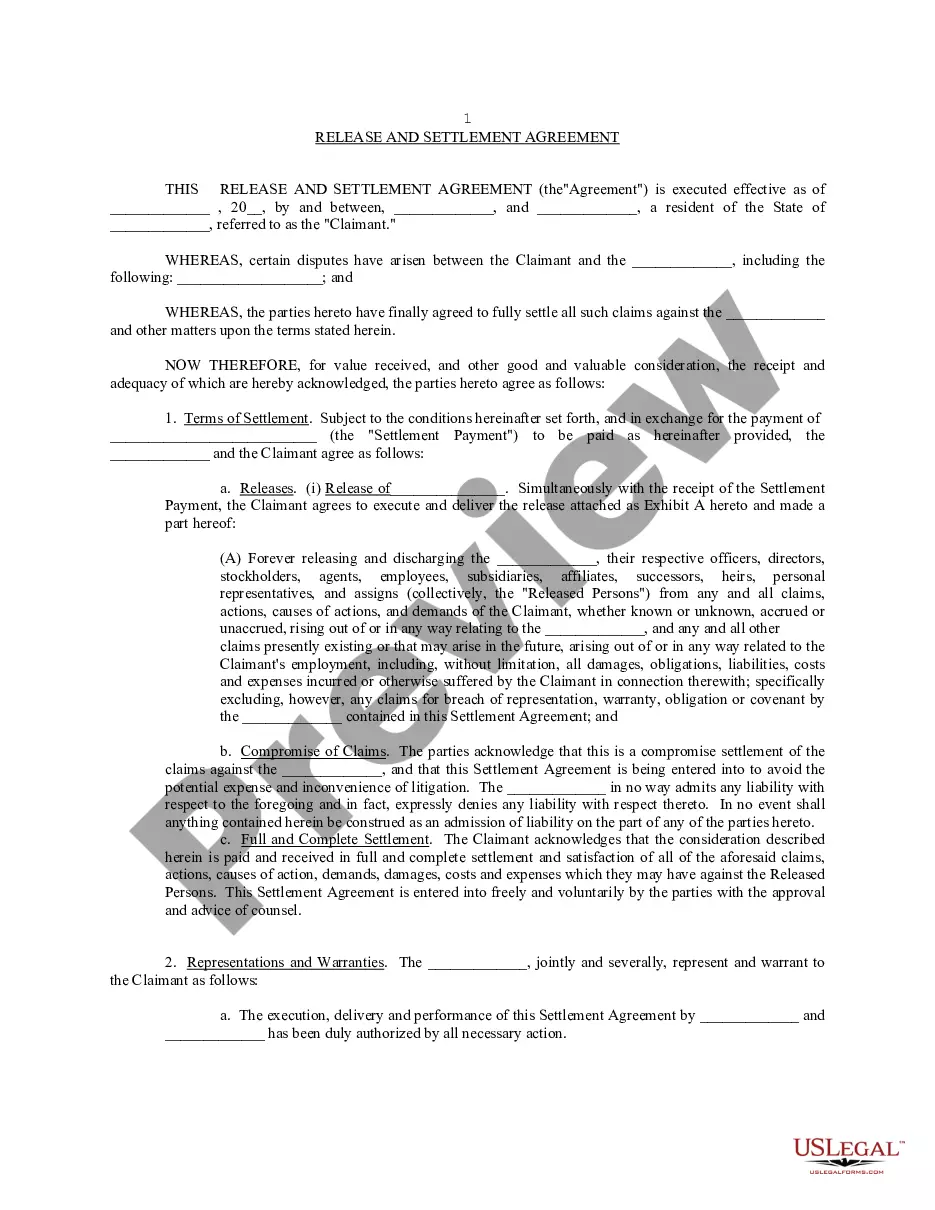
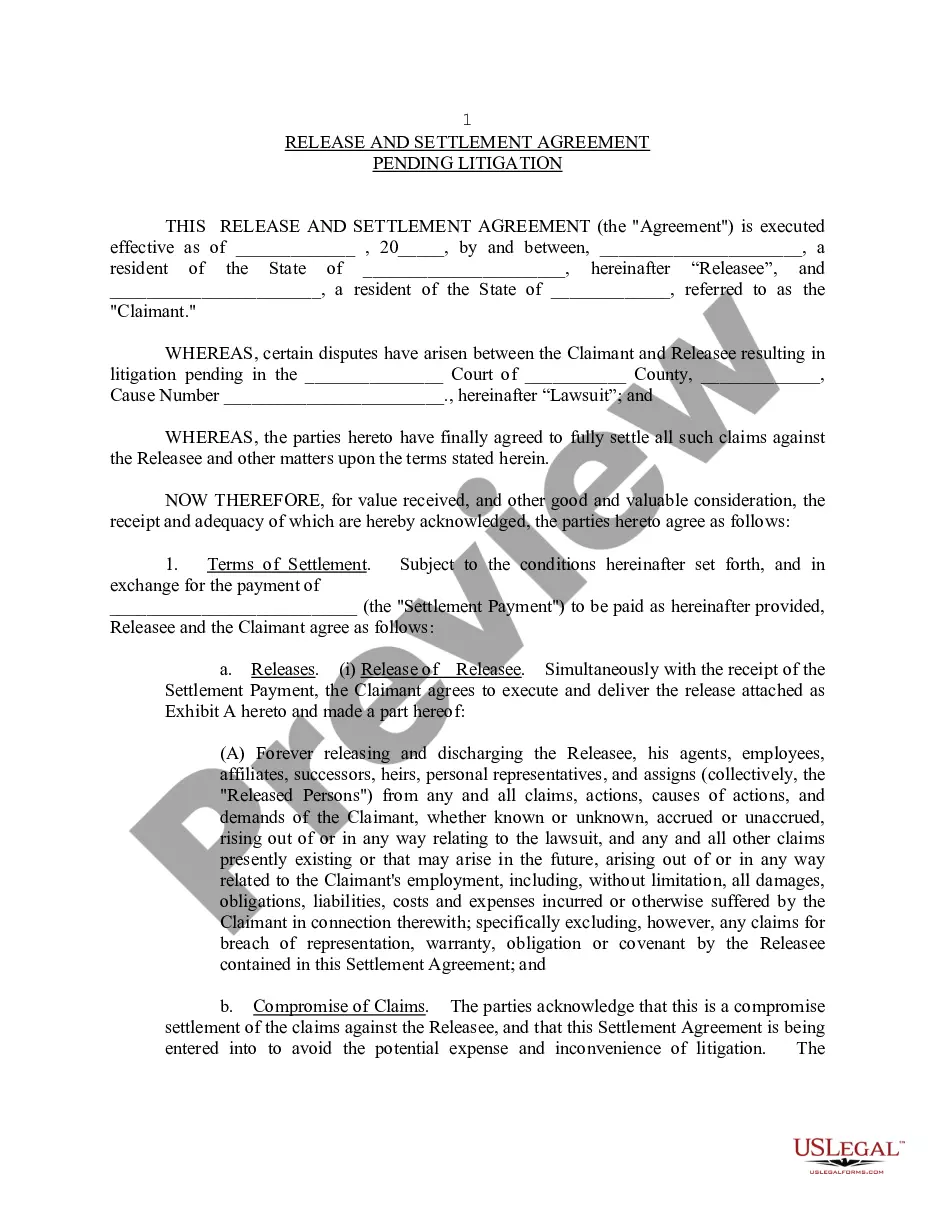
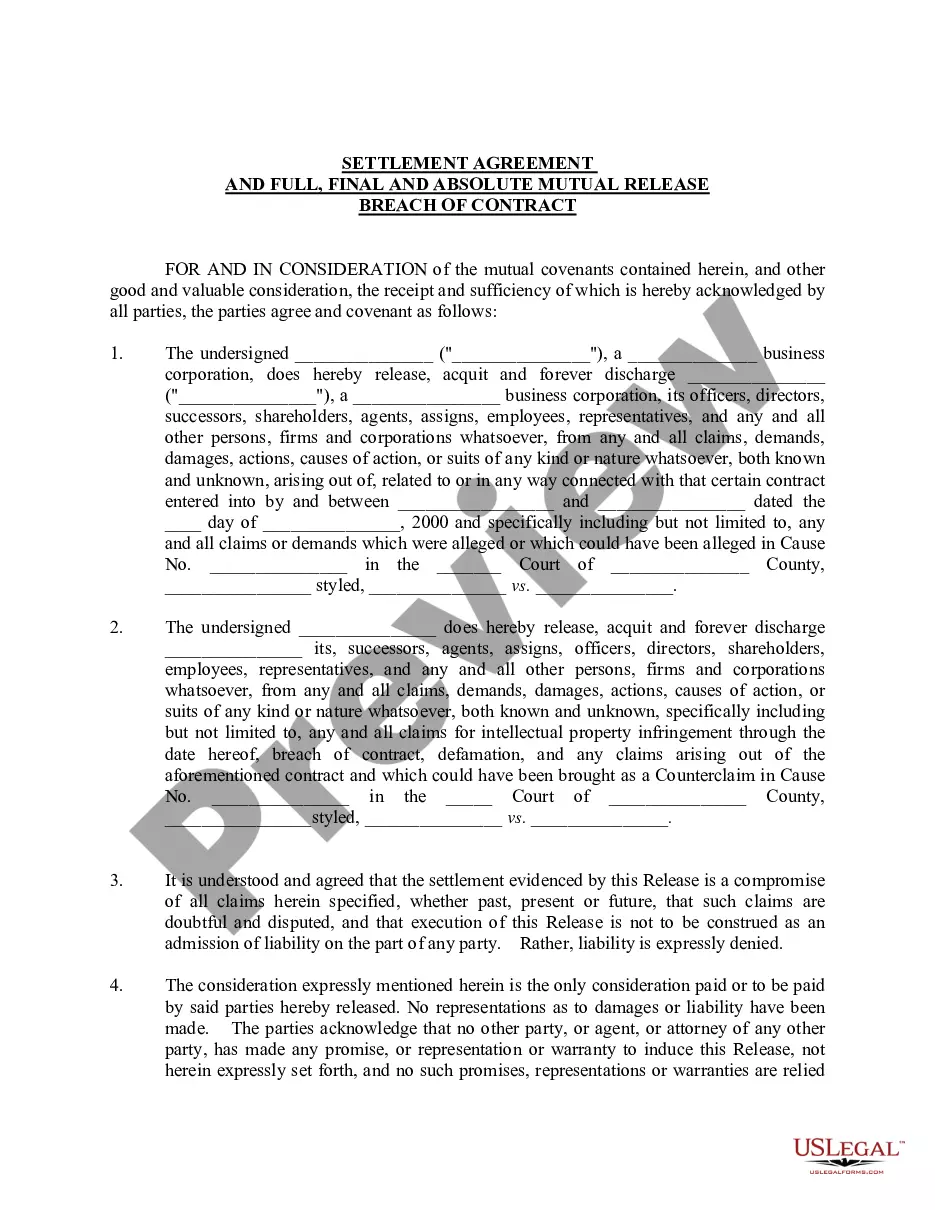
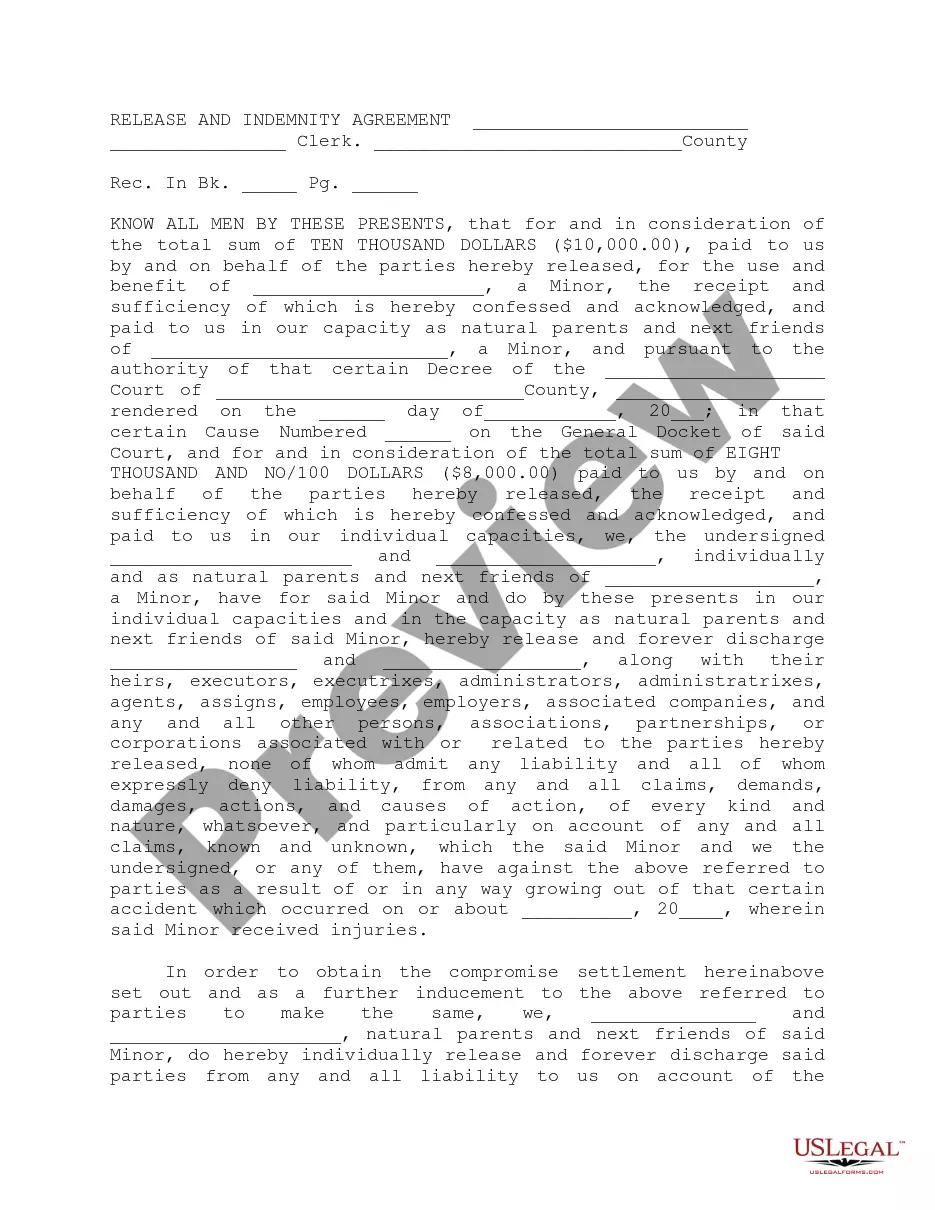
How to fill out Release And Settlement Agreement - Potential Litigation Before Suit?
It’s no secret that you can’t become a law expert immediately, nor can you figure out how to quickly prepare Suit For Litigation without the need of a specialized set of skills. Putting together legal forms is a long venture requiring a specific training and skills. So why not leave the creation of the Suit For Litigation to the pros?
With US Legal Forms, one of the most extensive legal template libraries, you can find anything from court papers to templates for internal corporate communication. We understand how crucial compliance and adherence to federal and local laws and regulations are. That’s why, on our website, all templates are location specific and up to date.
Here’s start off with our website and obtain the document you need in mere minutes:
- Discover the document you need by using the search bar at the top of the page.
- Preview it (if this option provided) and check the supporting description to figure out whether Suit For Litigation is what you’re looking for.
- Begin your search over if you need a different template.
- Set up a free account and select a subscription option to buy the template.
- Pick Buy now. As soon as the payment is through, you can get the Suit For Litigation, complete it, print it, and send or mail it to the necessary individuals or organizations.
You can re-gain access to your forms from the My Forms tab at any time. If you’re an existing client, you can simply log in, and locate and download the template from the same tab.
No matter the purpose of your forms-be it financial and legal, or personal-our website has you covered. Try US Legal Forms now!
Form popularity
FAQ
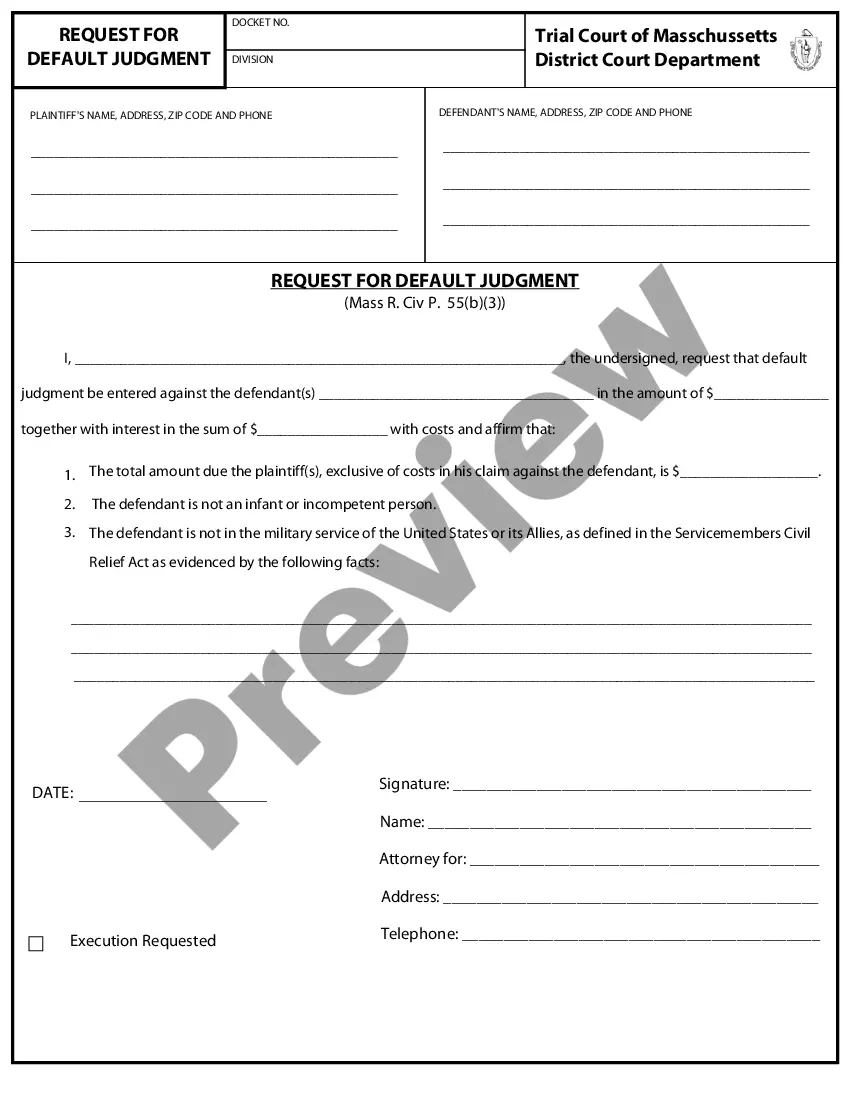
Timeline of How to File a Lawsuit Step 1: File a Complaint. Plaintiff files a complaint and summons with the local county court. ... Step 2: Answer Complaint. ... Step 3: Discovery. ... Step 4: Failing to Respond to Discovery. ... Step 5: Conclusion of Lawsuit.
In a civil lawsuit, the burden of proof rests on the plaintiff or the person filing the suit. The plaintiff should prove that the allegations are true and that the defendant, or the other party, caused damages. When it comes to establishing a civil case, the plaintiff must usually do so by a preponderance of evidence.
The first step in a lawsuit is filing the complaint and serving it on the defendant. The plaintiff will outline their version of events in the complaint and describe how the defendant's actions harmed them. They will ask for monetary compensation or another remedy, such as an injunction.
Question: What are the stages of civil litigation? Rustin: There are five general stages of a civil court case: pleadings, discovery, motions, trial and possibly appeals.
In order to properly write a cause of action, several things must be included. The names of the Plaintiff and Defendant. The legal means by which the Plaintiff is bringing the lawsuit. Be sure to only include the facts, not opinions. ... Offer expert opinions and lay out the evidence. ... Request of relief.