Declaratory Judgment Action In Missouri
Description


Get your form ready online
Our built-in tools help you complete, sign, share, and store your documents in one place.
Make edits, fill in missing information, and update formatting in US Legal Forms—just like you would in MS Word.
Download a copy, print it, send it by email, or mail it via USPS—whatever works best for your next step.
Sign and collect signatures with our SignNow integration. Send to multiple recipients, set reminders, and more. Go Premium to unlock E-Sign.
If this form requires notarization, complete it online through a secure video call—no need to meet a notary in person or wait for an appointment.
We protect your documents and personal data by following strict security and privacy standards.

Make edits, fill in missing information, and update formatting in US Legal Forms—just like you would in MS Word.

Download a copy, print it, send it by email, or mail it via USPS—whatever works best for your next step.

Sign and collect signatures with our SignNow integration. Send to multiple recipients, set reminders, and more. Go Premium to unlock E-Sign.

If this form requires notarization, complete it online through a secure video call—no need to meet a notary in person or wait for an appointment.

We protect your documents and personal data by following strict security and privacy standards.
Looking for another form?
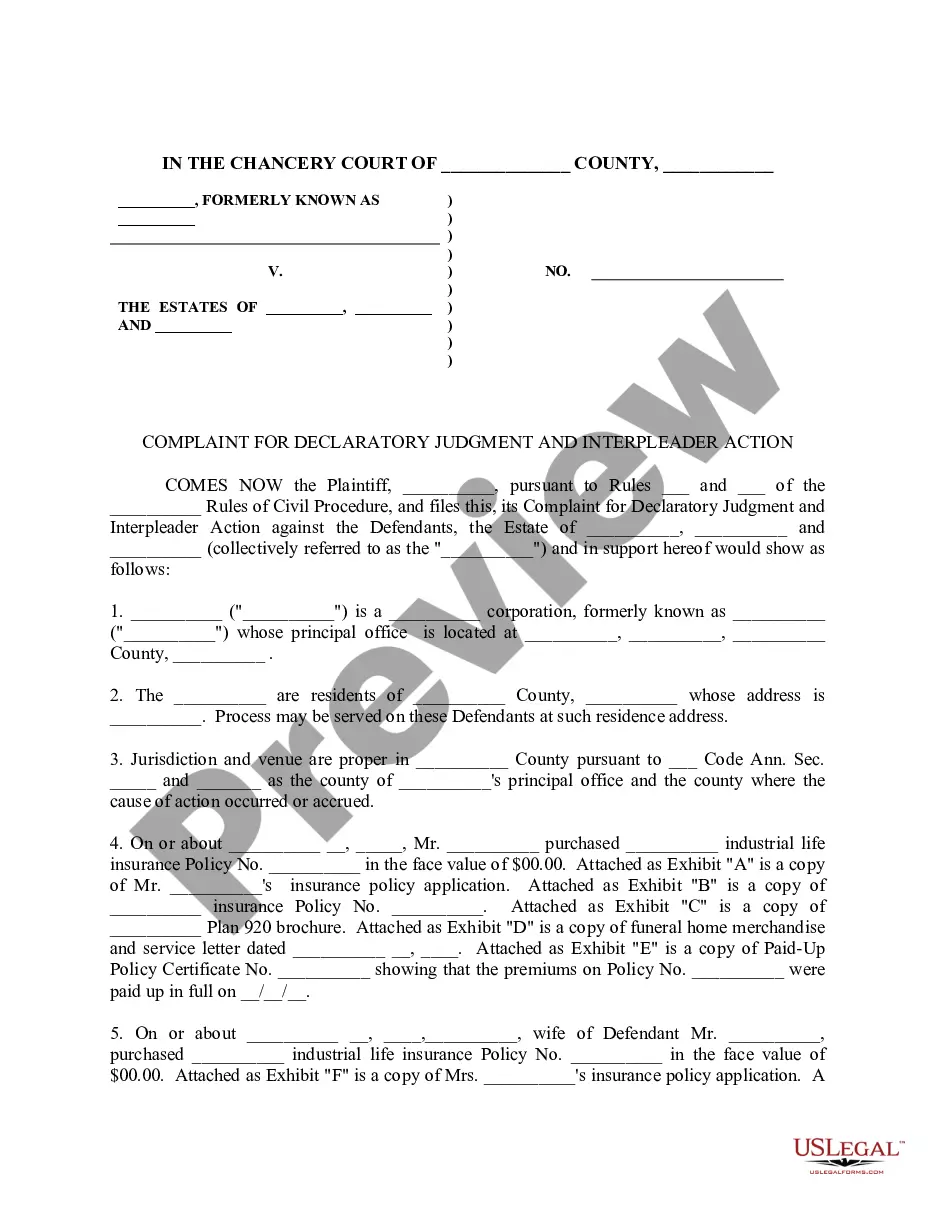
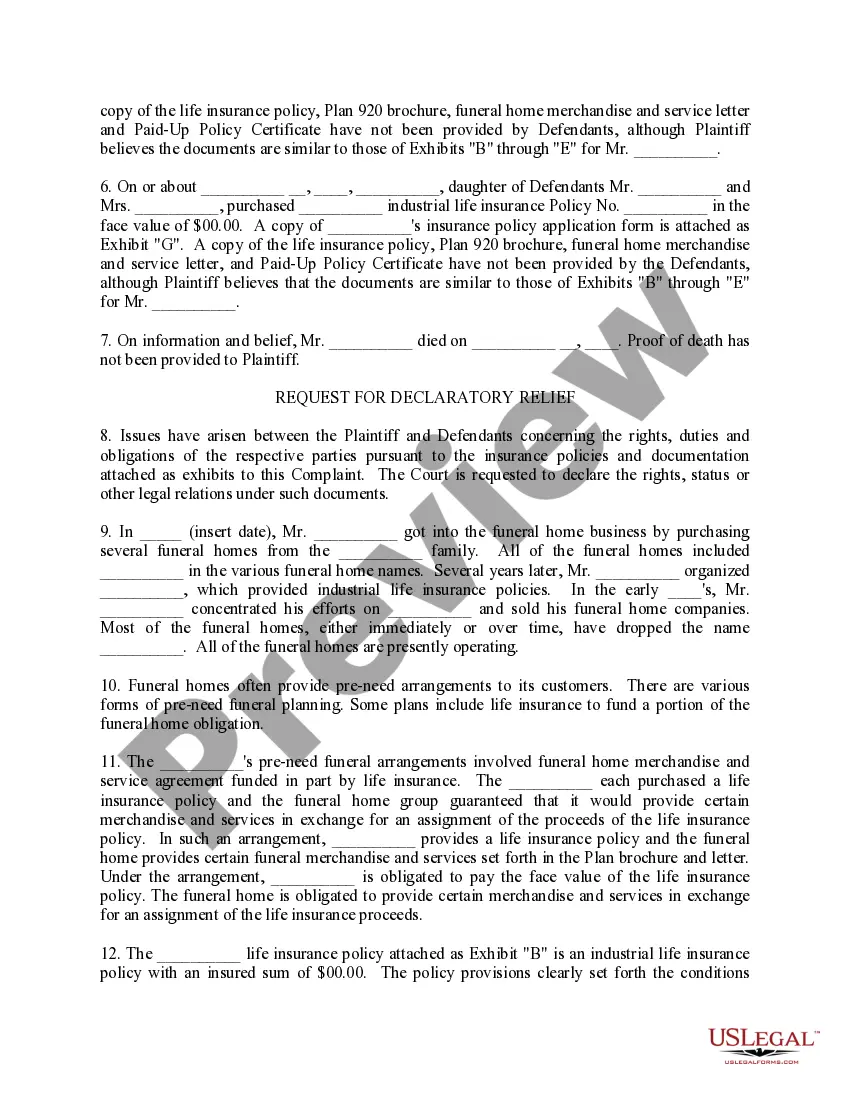
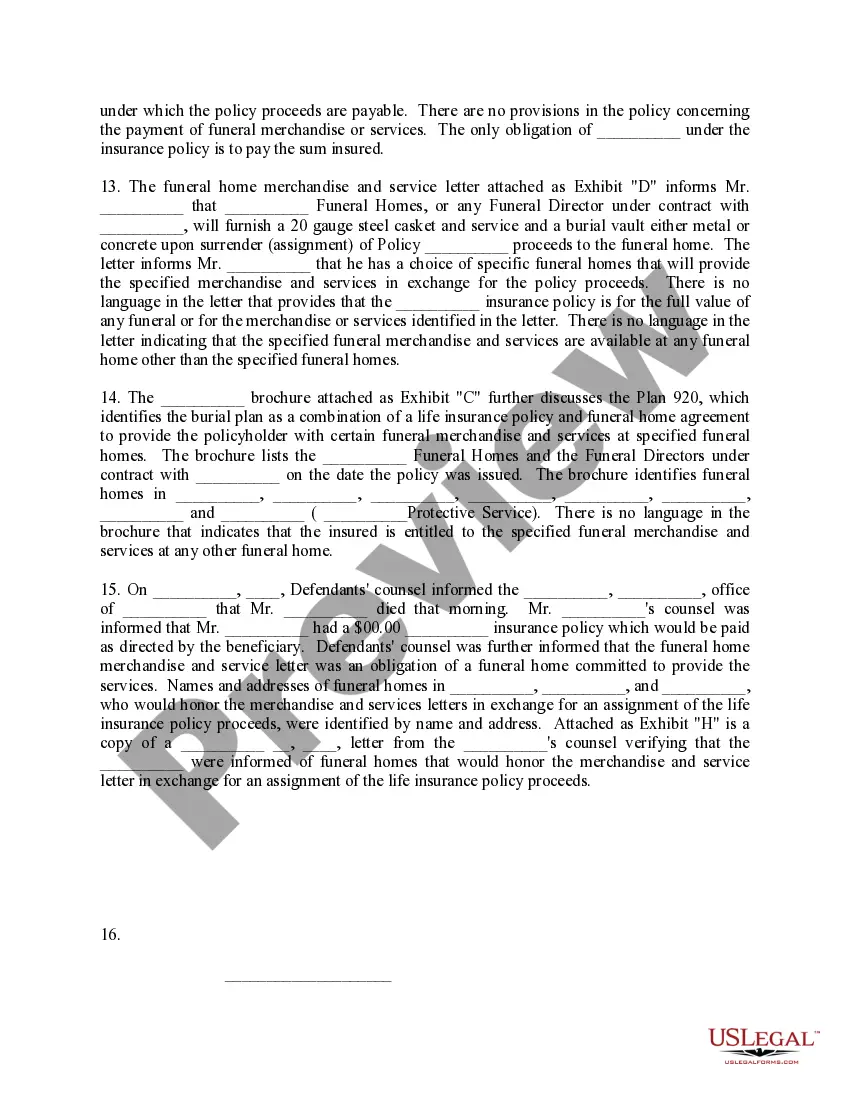
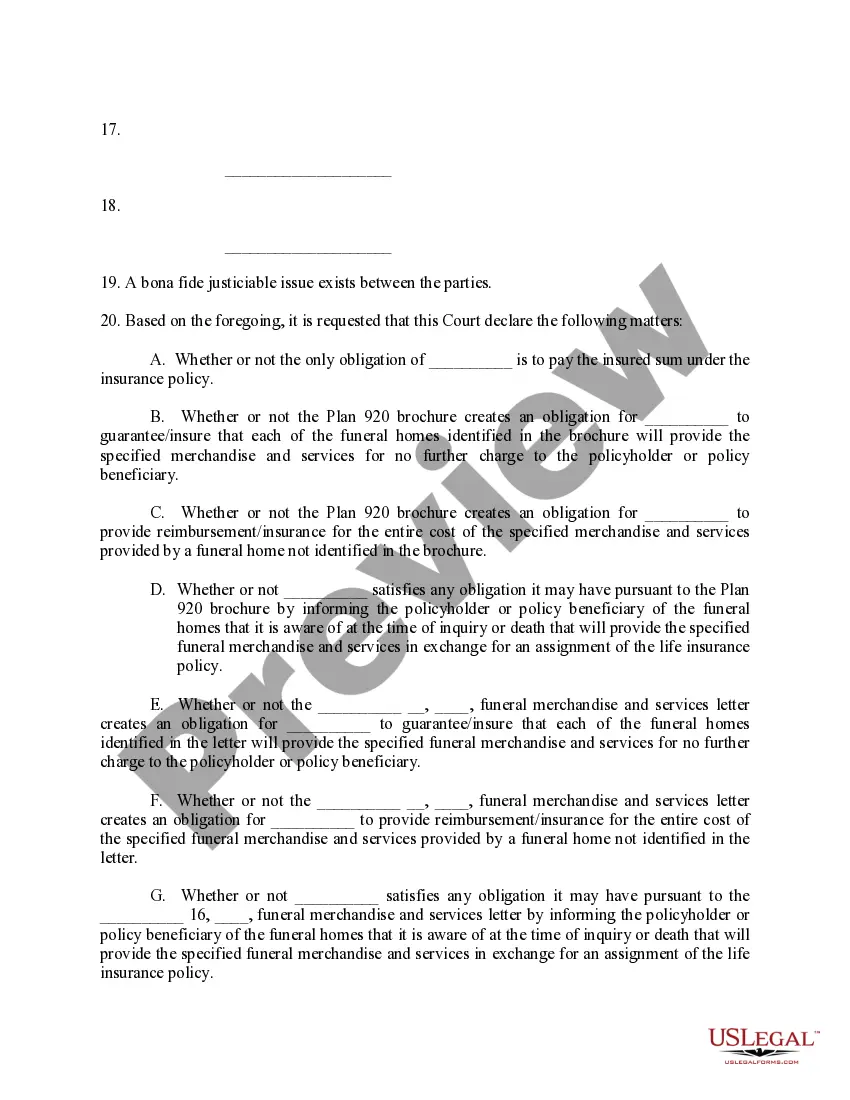
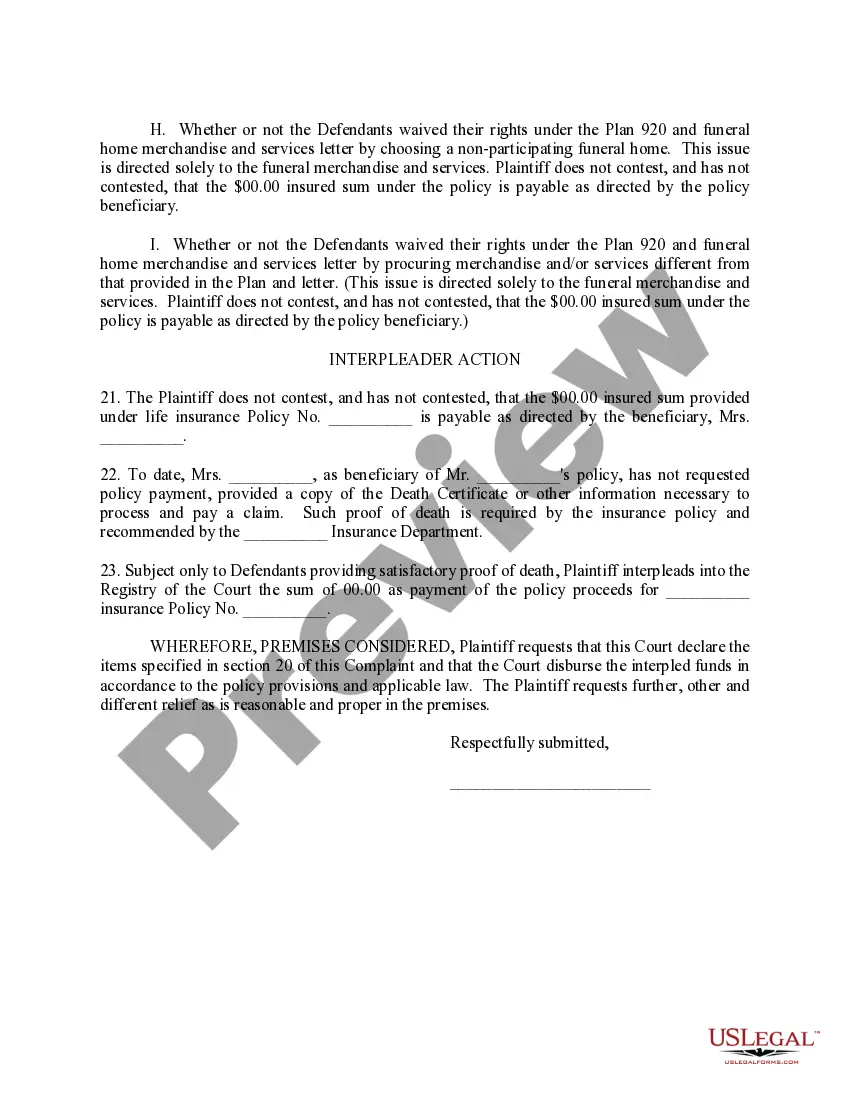
How to fill out Complaint For Declaratory Judgment And Interpleader Action Or Burial Policy?
Dealing with legal documentation and processes can be a lengthy addition to your entire day.
A Declaratory Judgment Action in Missouri and similar forms often necessitate that you search for them and comprehend the optimal way to fill them out accurately.
Consequently, whether you are managing financial, legal, or personal issues, possessing a comprehensive and user-friendly online collection of forms at your disposal will significantly help.
US Legal Forms is the leading online resource for legal templates, featuring over 85,000 state-specific forms and various resources to expedite your paperwork.
Simply Log In to your account, find the Declaratory Judgment Action in Missouri, and obtain it immediately from the My documents section. You can also access previously saved forms.
- Explore the collection of relevant documents accessible to you with just a single click.
- US Legal Forms provides state- and county-specific forms available at any time for download.
- Enhance your document management processes with a superior service that enables you to prepare any form in a matter of minutes without any additional fees or hidden charges.
Form popularity
FAQ
To collect a judgment in Missouri, start by obtaining a certified copy of the judgment from the court. Next, you can employ various collection methods, such as garnishment, bank levies, or seizing assets, if necessary. It’s important to understand the rules surrounding these actions, as they ensure your collection efforts remain legal and effective. If navigating this process seems challenging, consider using uslegalforms for guidance tailored to collecting judgments.
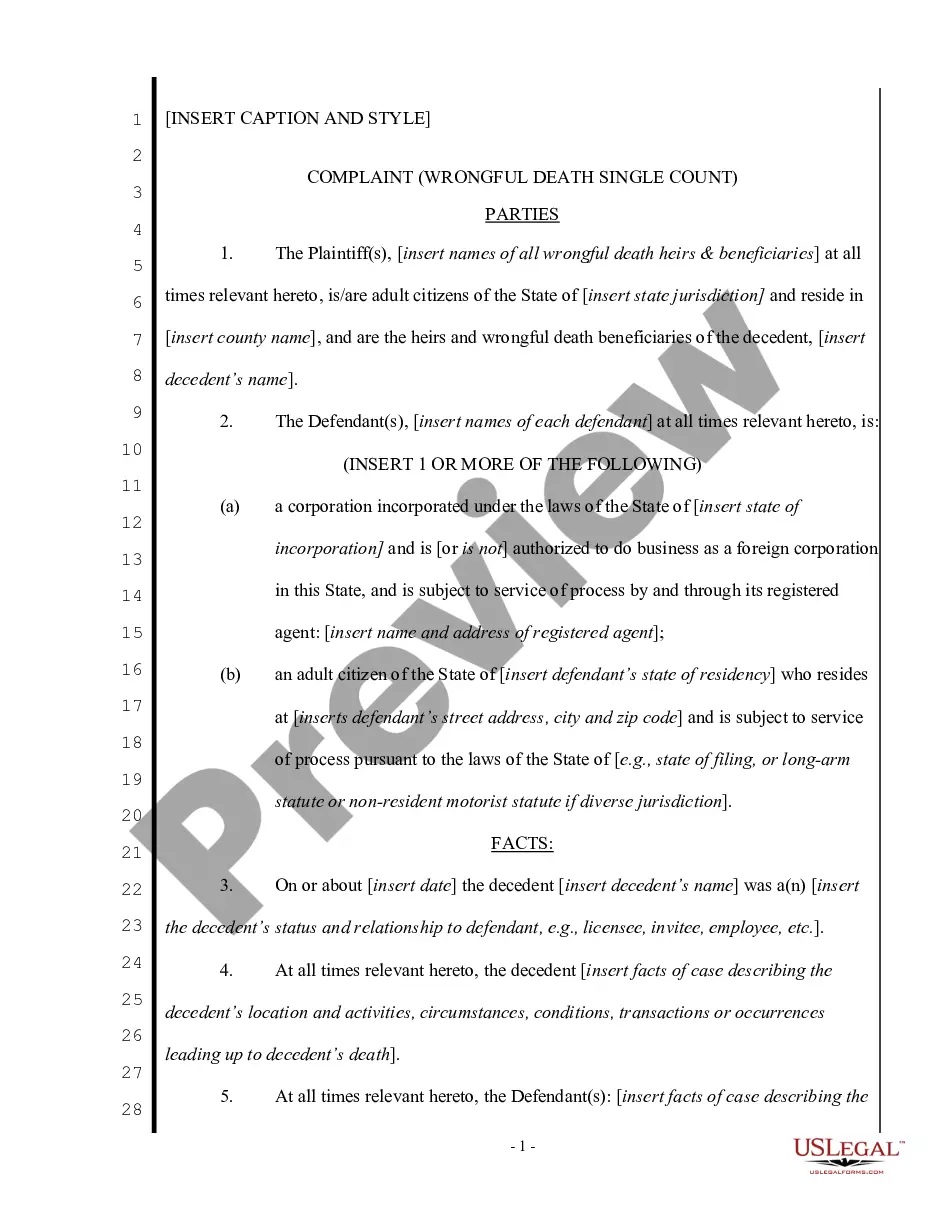
To obtain a declaratory judgment in Missouri, you must first file a petition in the appropriate court. This petition should clearly outline your request and the specific legal questions you need answered. Additionally, ensure you serve all involved parties with notice of the action, as this promotes fairness. A well-prepared petition can effectively facilitate a declaratory judgment action in Missouri.
Declaratory relief, also commonly known as declaratory judgment or declaration, is a form of discretionary remedy which parties may seek from the court. A declaration is essentially a statement made by the court at the request of a party.
In order for a Missouri Court to even entertain a declaratory judgment, it must be presented with: (1) a justiciable controversy that presents a real, substantial, presently-existing controversy admitting of specific relief, as distinguished from an advisory decree upon a purely hypothetical situation; (2) a plaintiff ...
The judgment in the declaratory suit has also become final and binding on the decree.
For example, a policyholder believes that their denied claim is unjust. As a result, they inform the insurer that they are considering a lawsuit to recover losses. The insurer seeks a declaratory judgment to clarify its rights and obligations with hopes of preventing the lawsuit.
Steps in Seeking a Declaratory Judgment Review the facts of the case. Research and obtain additional evidence and title information from the client or the Missouri Department of Revenue. File a petition asking the appropriate court for a declaratory judgment.