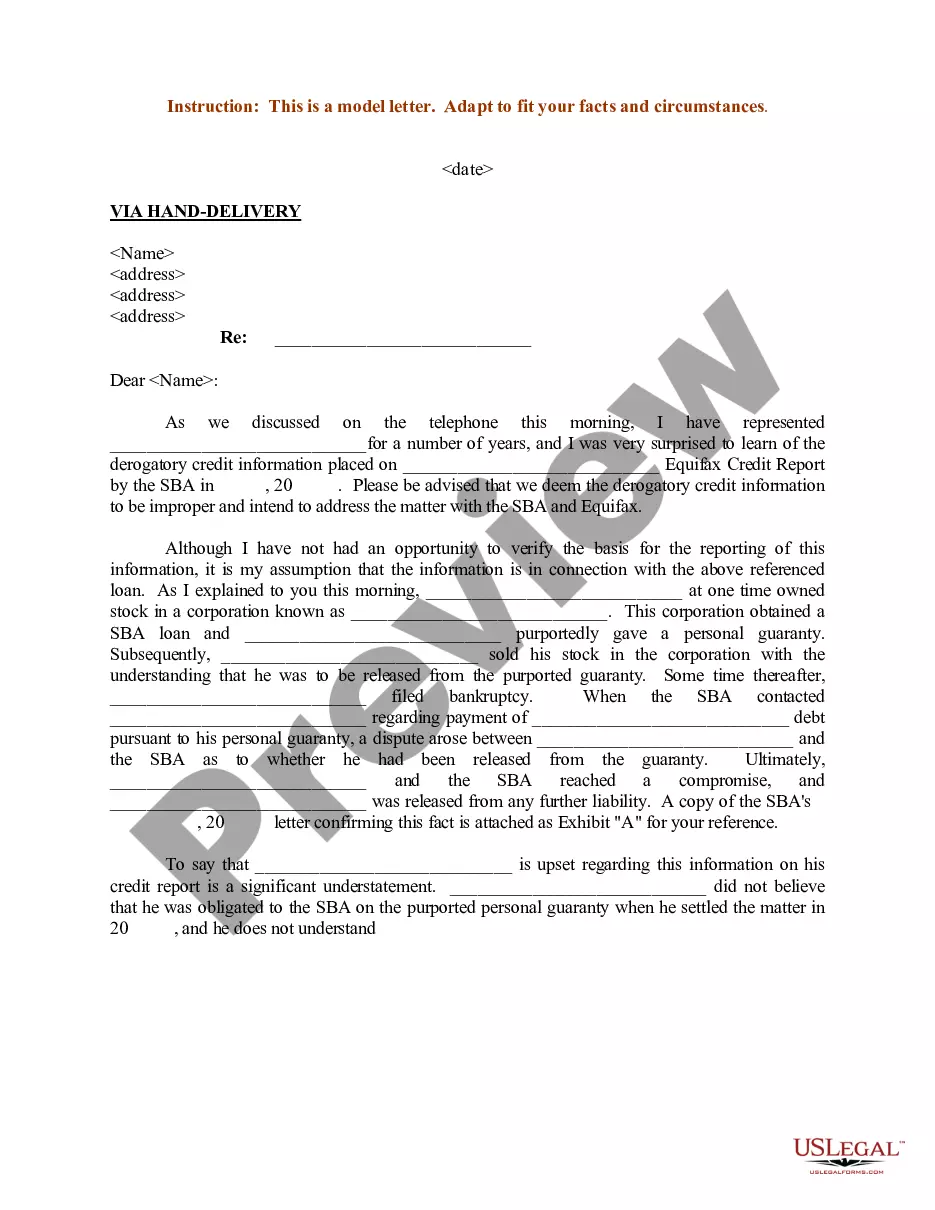
Credit Dispute Letter To Credit Bureau
Description
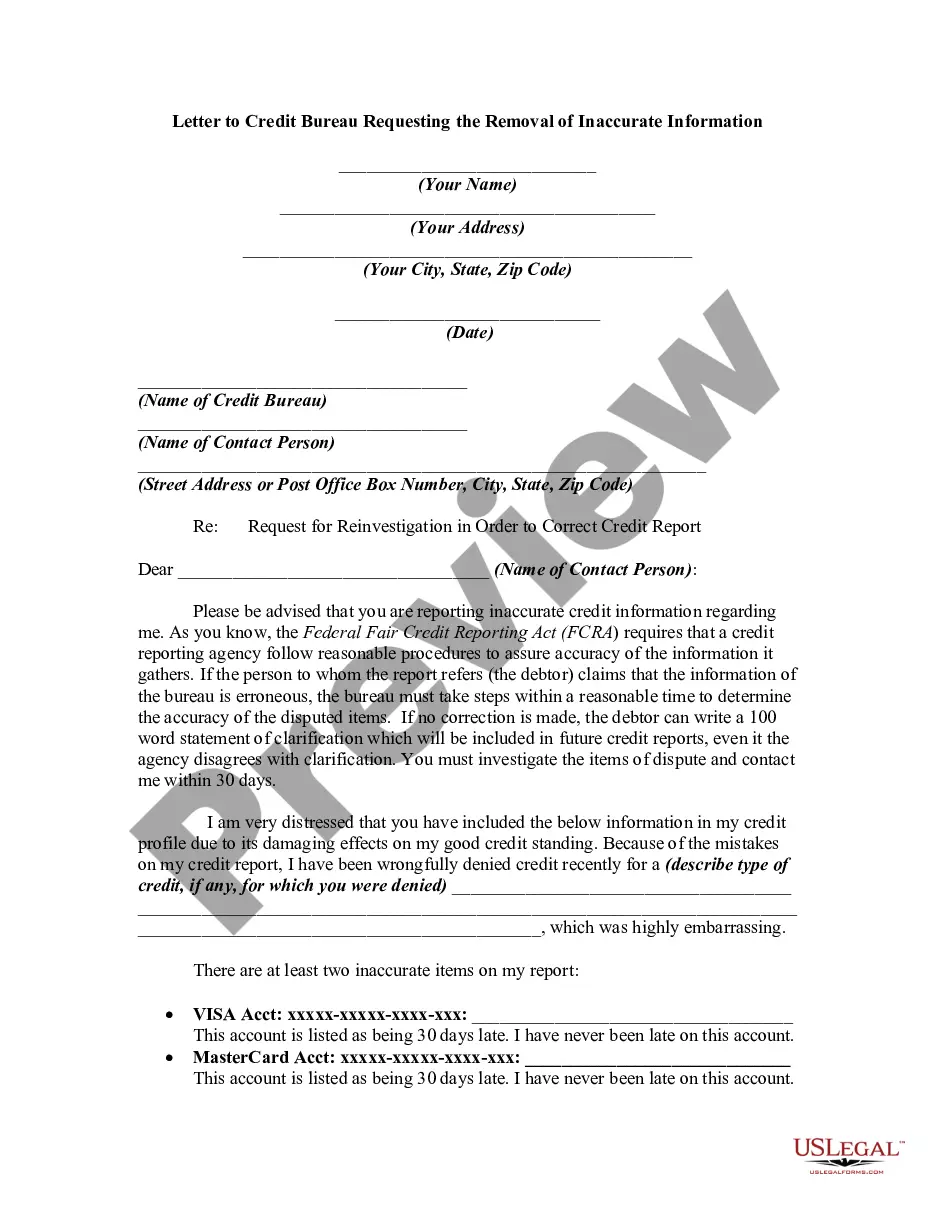
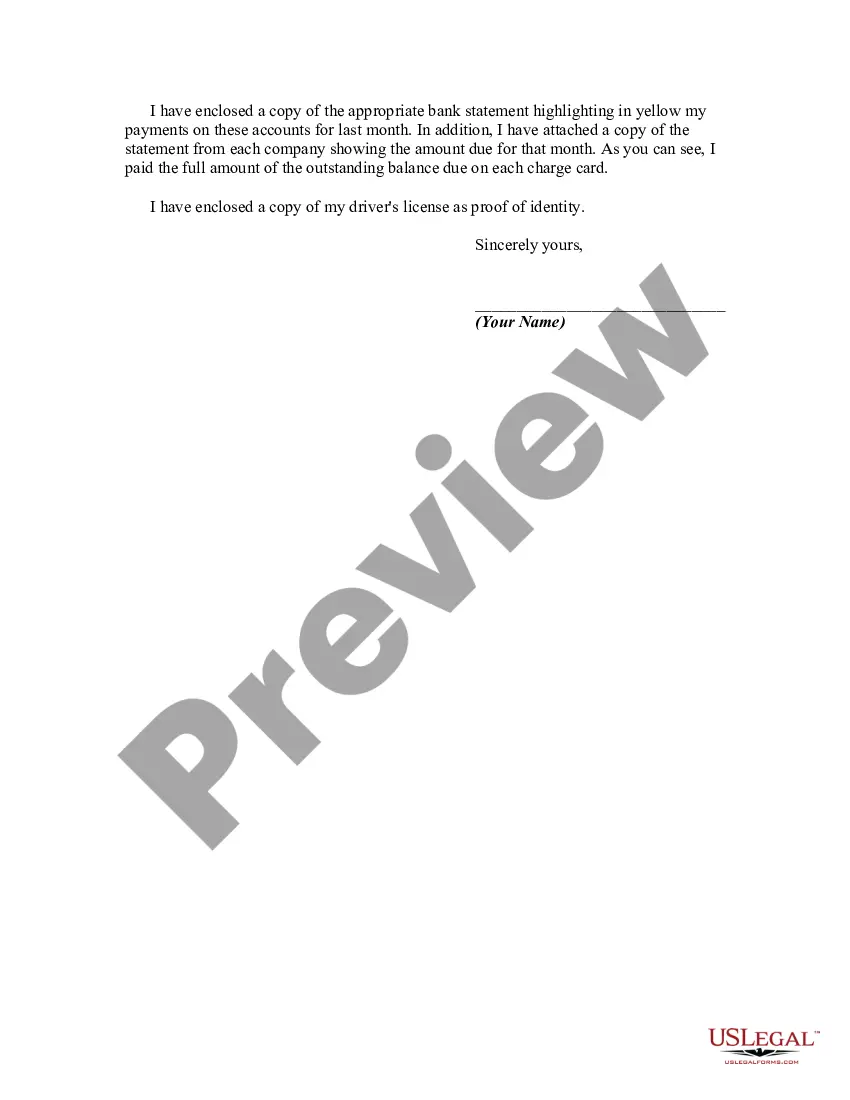
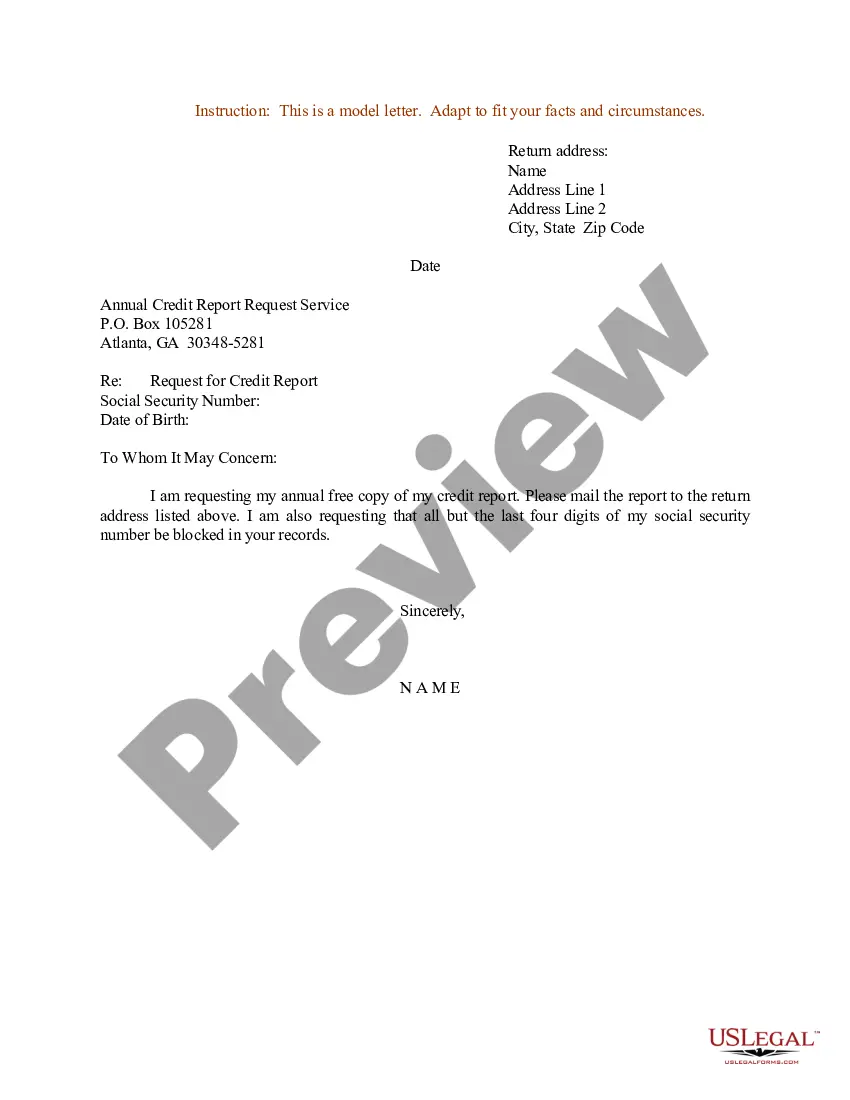
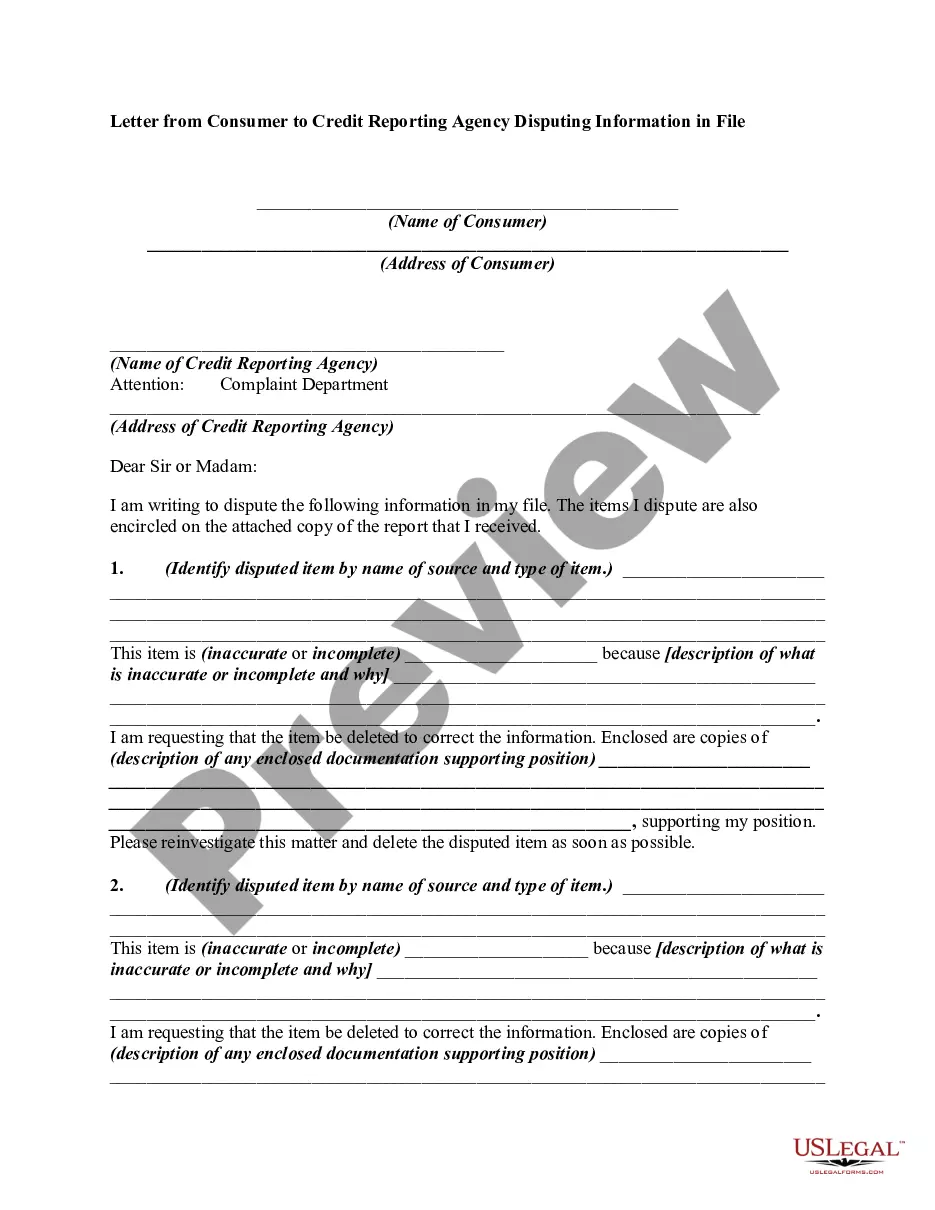
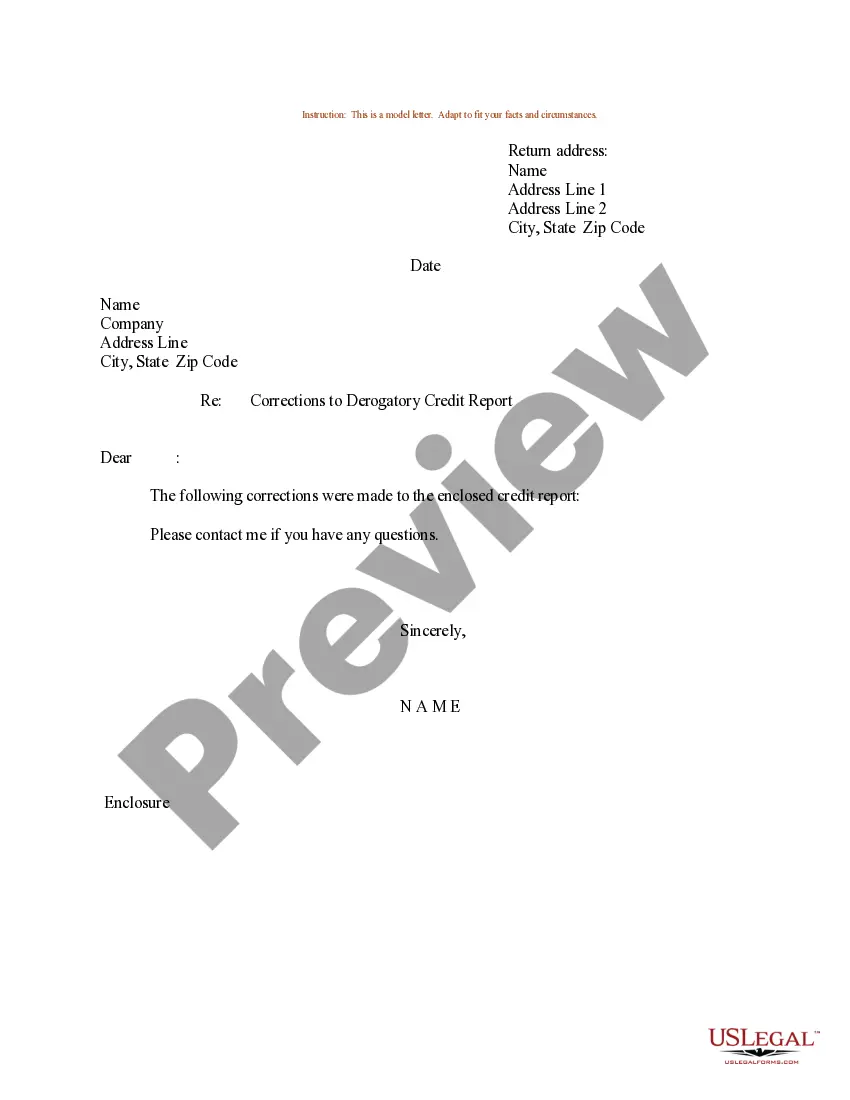
Get your form ready online
Our built-in tools help you complete, sign, share, and store your documents in one place.
Make edits, fill in missing information, and update formatting in US Legal Forms—just like you would in MS Word.
Download a copy, print it, send it by email, or mail it via USPS—whatever works best for your next step.
Sign and collect signatures with our SignNow integration. Send to multiple recipients, set reminders, and more. Go Premium to unlock E-Sign.
If this form requires notarization, complete it online through a secure video call—no need to meet a notary in person or wait for an appointment.
We protect your documents and personal data by following strict security and privacy standards.

Make edits, fill in missing information, and update formatting in US Legal Forms—just like you would in MS Word.

Download a copy, print it, send it by email, or mail it via USPS—whatever works best for your next step.

Sign and collect signatures with our SignNow integration. Send to multiple recipients, set reminders, and more. Go Premium to unlock E-Sign.

If this form requires notarization, complete it online through a secure video call—no need to meet a notary in person or wait for an appointment.

We protect your documents and personal data by following strict security and privacy standards.
Looking for another form?

How to fill out Letter To Credit Bureau Requesting The Removal Of Inaccurate Information?
Whether for corporate objectives or personal matters, everyone must confront legal issues at some stage in their existence.
Filling out legal forms necessitates meticulous focus, beginning with selecting the suitable template.
With an extensive US Legal Forms library available, you do not need to waste time searching for the suitable template online. Utilize the library’s straightforward navigation to locate the correct form for any scenario.
- Obtain the document you require using the search bar or through catalog browsing.
- Review the description of the form to confirm it aligns with your circumstances, state, and county.
- Click on the preview of the form to inspect it.
- If it is the wrong document, return to the search feature to locate the Credit Dispute Letter To Credit Bureau template you need.
- Download the template once it corresponds with your requirements.
- If you already possess a US Legal Forms account, simply click Log in to access previously stored documents in My documents.
- If you haven’t created an account yet, you can acquire the form by clicking Buy now.
- Choose the appropriate pricing option.
- Fill out the account registration form.
- Select your payment method: utilize a bank card or PayPal account.
- Choose the file format you prefer and download the Credit Dispute Letter To Credit Bureau.
- Once downloaded, you can complete the form using editing software or print it out and finish it manually.
Form popularity
FAQ
When you file a dispute with the credit bureau using a credit dispute letter to credit bureau, the bureau must investigate your claim, usually within 30 days. They will review your request alongside any documentation you provide to support your case. If the bureau finds the information is indeed inaccurate, they will remove or correct it from your credit report. Depending on the situation, using platforms like US Legal Forms can help you craft an effective letter, ensuring your dispute is clear and well-structured, which can lead to a more favorable outcome.
A 609 dispute letter is a formal request sent to the credit bureau that asks for the removal of inaccurate or unverifiable information on your credit report. This letter references Section 609 of the Fair Credit Reporting Act, which gives you the right to request the information that a credit bureau has on file about you. By using a credit dispute letter to credit bureau, you can challenge negative entries that may harm your credit score. Many users find that utilizing US Legal Forms simplifies this process by providing structured templates for effective communication with credit bureaus.
The best way to dispute a collection on credit includes documenting your claim and sending a clear and concise credit dispute letter to the credit bureau. Be sure to specify why the collection is inaccurate and include any supporting evidence. This approach can lead to a more effective review and resolution, especially when using resources like US Legal Forms for guidance.
To send a dispute letter to the credit bureau, first ensure that your letter is accurate and detailed. Follow up with certified mail to ensure delivery confirmation. This method not only provides you with a record but also prompts timely attention from the bureau, allowing you to resolve issues quicker.
A 623 dispute letter is a formal letter sent to a credit bureau that involves a specific section of the Fair Credit Reporting Act. This letter allows you to dispute inaccuracies reported by a creditor, requiring them to investigate the claim. Utilizing a clear credit dispute letter to the credit bureau can enhance your chances of resolving the matter effectively.
The best way to dispute a credit report is to gather your documentation, identify inaccuracies, and draft a clear credit dispute letter to the credit bureau. Make sure to include personal information, details of the error, and any supporting documents. Using a professional service like US Legal Forms can help you craft a strong letter and streamline the dispute process.
You can choose either method based on your preference and situation. Disputing online often allows for immediate processing, while a credit dispute letter to the credit bureau sent by mail can help you keep a detailed record for future reference. Consider using the method that suits your style of organization best.
Disputing credit online may offer quicker responses, but sending a credit dispute letter to the credit bureau by mail can provide you with a physical record of your communication. When using mail, ensure you send your letter via certified mail, so you have proof of delivery. Ultimately, the choice depends on your comfort with technology and documentation needs.
A 609 dispute letter to credit bureau can be effective in challenging inaccuracies on your credit report. This type of letter requests that the credit bureau provide evidence to support the information listed. If your credit report contains errors, using a credit dispute letter to credit bureau can help initiate the correction process. Always verify the details in your letter and follow up to ensure the bureau addresses your dispute.
When writing a letter to remove hard inquiries, format it as a formal credit dispute letter to the credit bureau. Explain why you believe the inquiry is inaccurate or unauthorized, and include any relevant details such as dates and lender information. Ensure to request the removal of the hard inquiry and attach supporting documents to bolster your case.