Credit Bureau Dispute Letter For Late Payment
Description
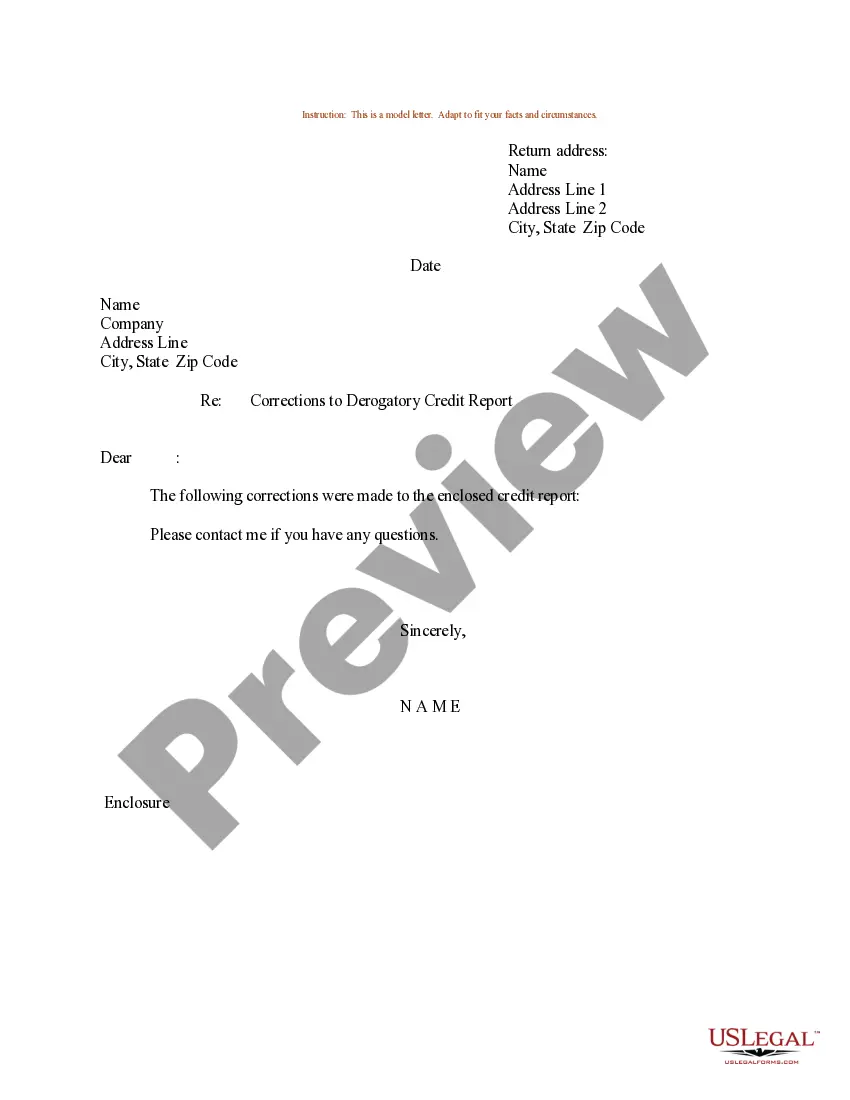
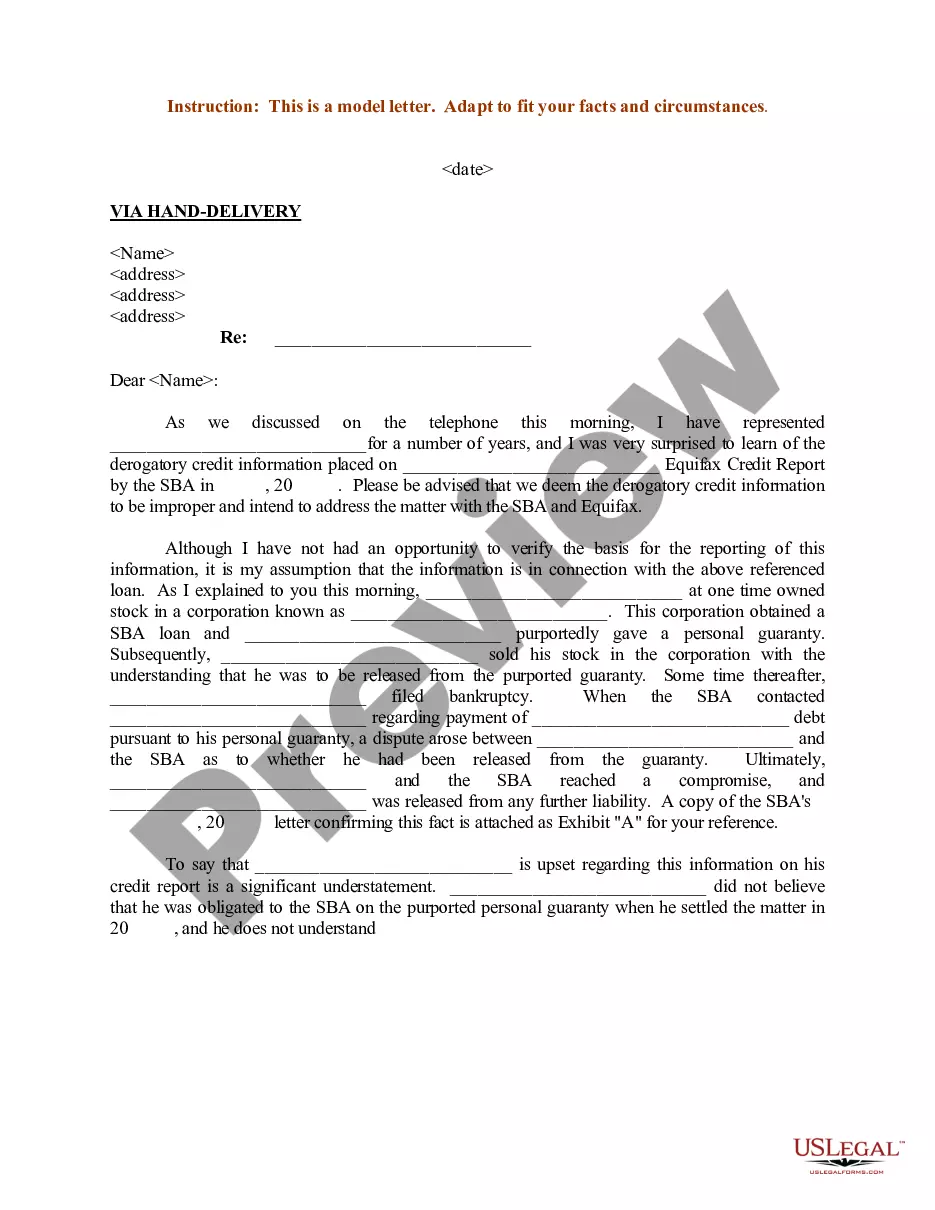
Get your form ready online
Our built-in tools help you complete, sign, share, and store your documents in one place.
Make edits, fill in missing information, and update formatting in US Legal Forms—just like you would in MS Word.
Download a copy, print it, send it by email, or mail it via USPS—whatever works best for your next step.
Sign and collect signatures with our SignNow integration. Send to multiple recipients, set reminders, and more. Go Premium to unlock E-Sign.
If this form requires notarization, complete it online through a secure video call—no need to meet a notary in person or wait for an appointment.
We protect your documents and personal data by following strict security and privacy standards.

Make edits, fill in missing information, and update formatting in US Legal Forms—just like you would in MS Word.

Download a copy, print it, send it by email, or mail it via USPS—whatever works best for your next step.

Sign and collect signatures with our SignNow integration. Send to multiple recipients, set reminders, and more. Go Premium to unlock E-Sign.

If this form requires notarization, complete it online through a secure video call—no need to meet a notary in person or wait for an appointment.

We protect your documents and personal data by following strict security and privacy standards.
Looking for another form?
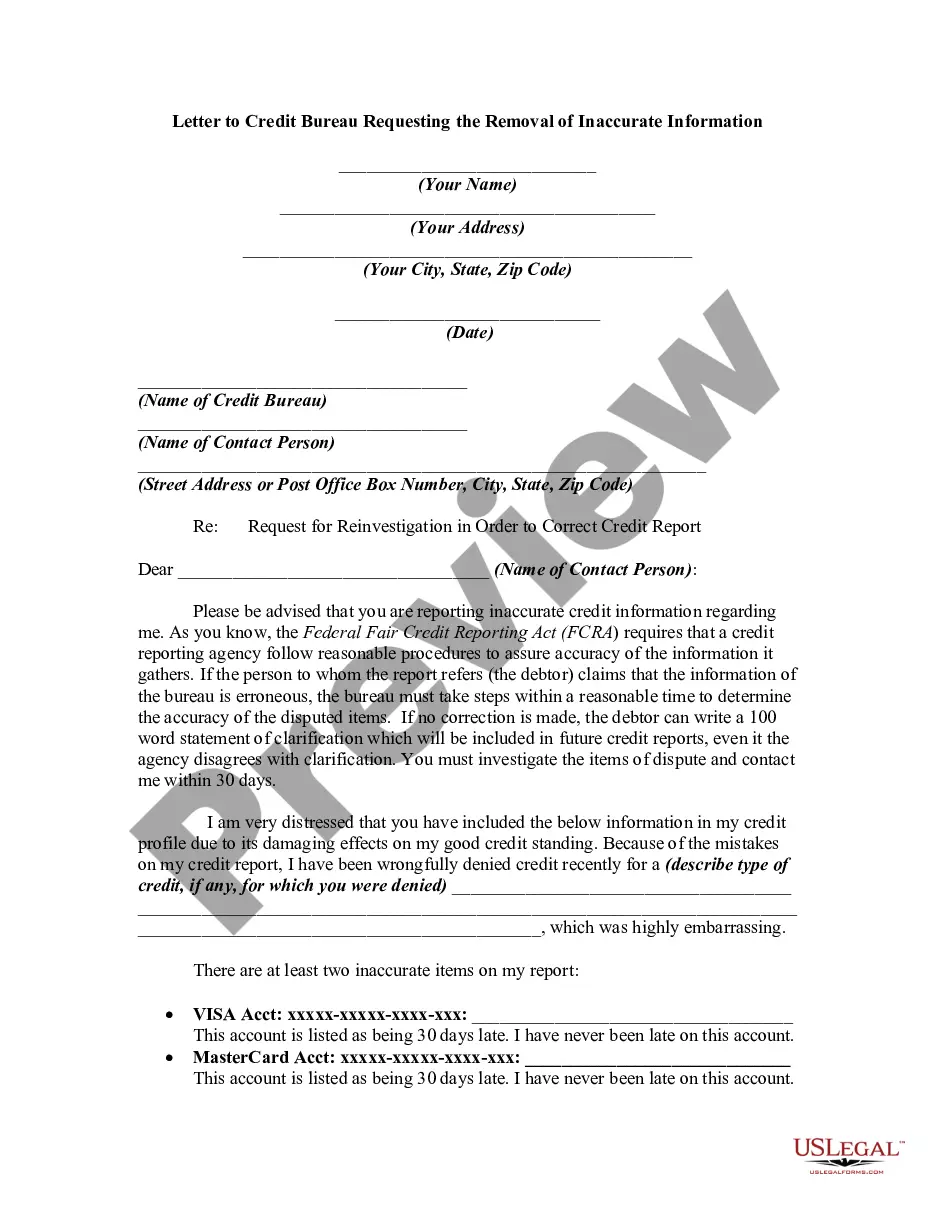
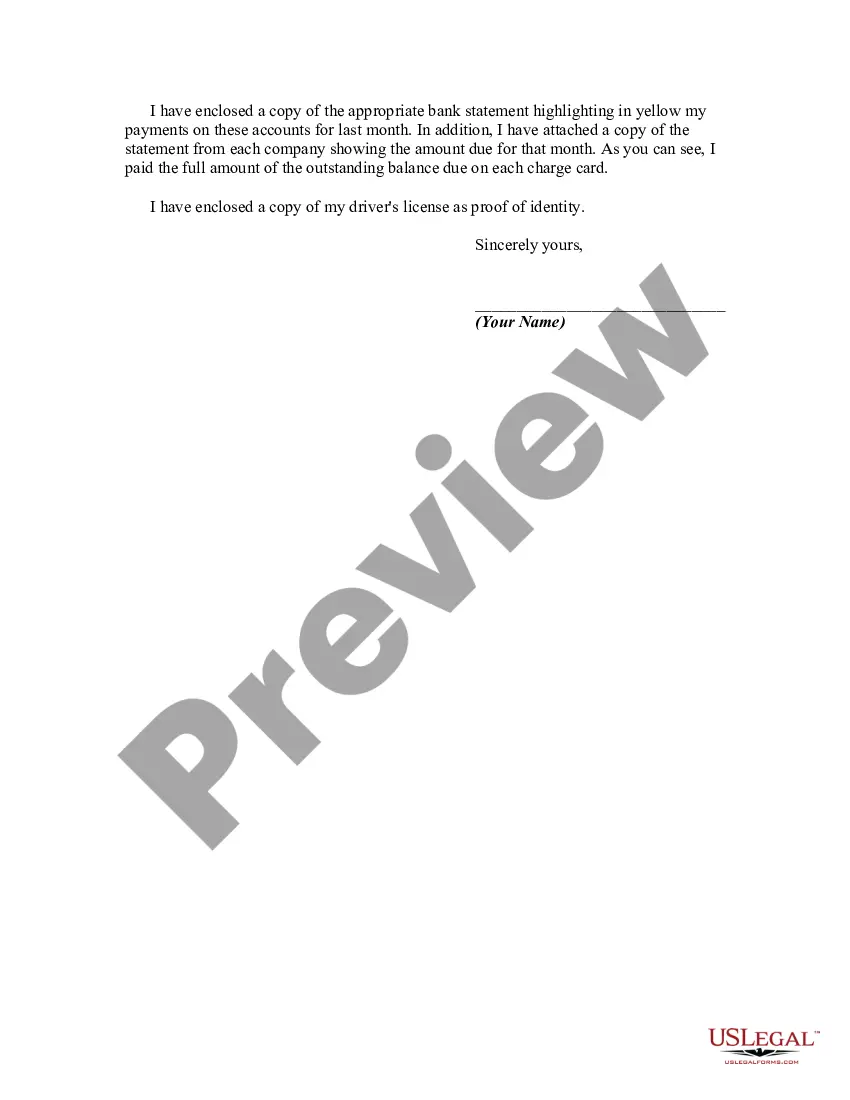
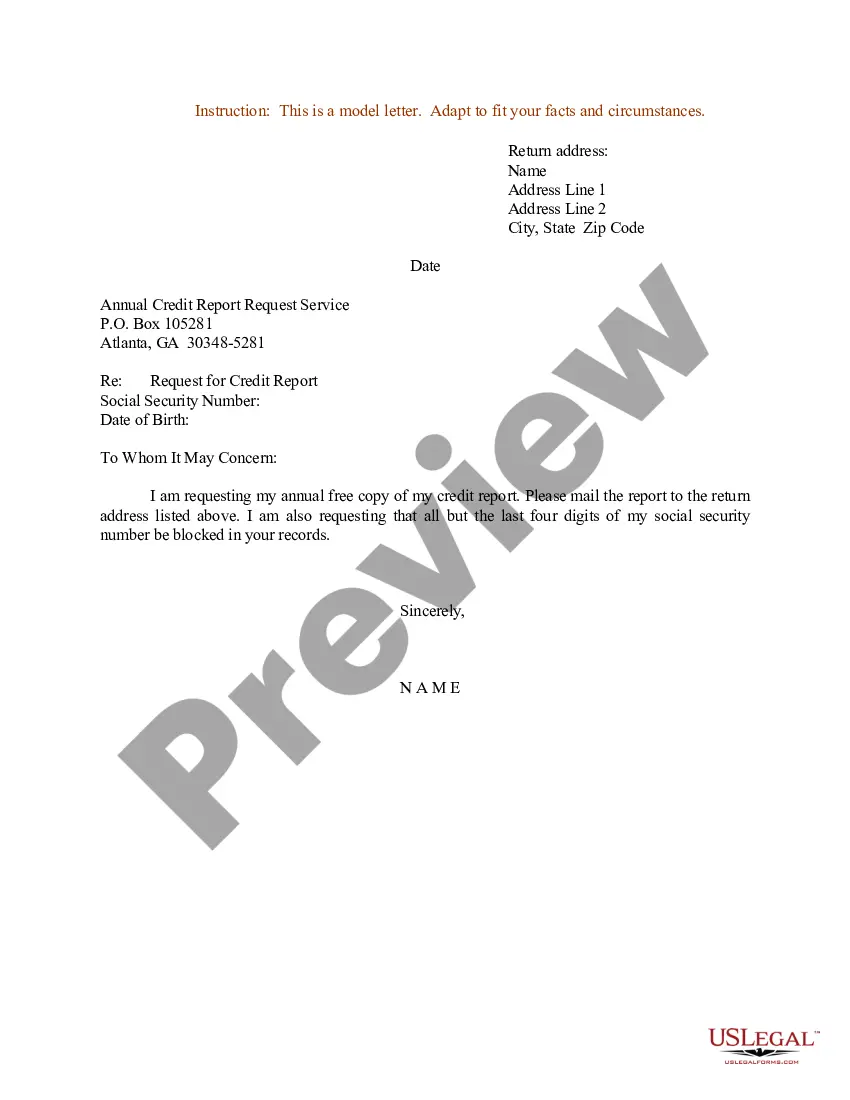
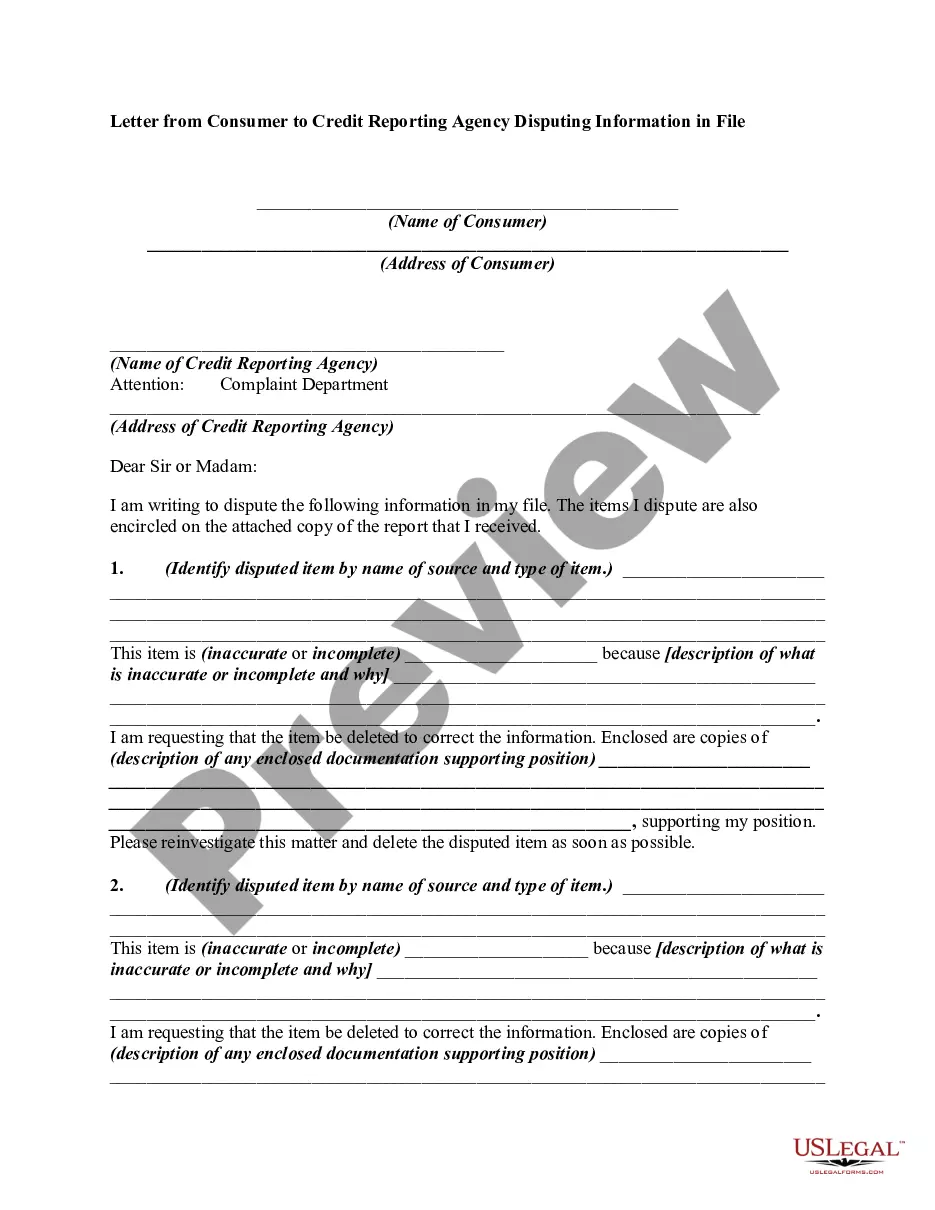
How to fill out Letter To Credit Bureau Requesting The Removal Of Inaccurate Information?
- Log in to your US Legal Forms account if you're a returning user, and download the form template for your dispute letter by clicking the Download button.
- For new users, start by previewing the available form templates. Confirm that you select the correct dispute letter that complies with your local jurisdiction.
- If you need a different template, utilize the Search tab to find any inconsistencies or specific forms that will better suit your situation.
- Once you find the appropriate document, click on the Buy Now button and select a subscription plan that fits your needs. Registration is required to access the legal library.
- Proceed with your purchase by entering your credit card information or using your PayPal account for payment.
- After completing the transaction, download your dispute letter template to your device and access it later through the My Forms section of your profile.
Using US Legal Forms allows you to leverage a vast library of over 85,000 legal documents designed for ease of use. With their service, you not only gain access to more forms than competitors but also to expert assistance when necessary.
Take control of your credit today by drafting your dispute letter using US Legal Forms. Start your journey now to ensure your credit report accurately reflects your payment history.
Form popularity
FAQ
To write a complaint letter about a late payment, start by clearly expressing your concern regarding the inaccurate entry. Provide details such as your account information and the nature of the late payment. Make your points firmly but politely, and include a credit bureau dispute letter for late payment to support your complaint, as this adds credibility to your claims.
To write a successful dispute letter, be concise and direct. Include essential information such as your dispute reasons, account numbers, and any supporting documents. A structured approach with a focus on clarity in your credit bureau dispute letter for late payment will help the bureau understand your position and may lead to a favorable outcome.
When disputing a late payment, write a letter that includes your full name, contact information, and account details. Clearly state which specific late payment you are disputing and why you believe it is incorrect. A well-crafted credit bureau dispute letter for late payment not only outlines your reasoning but also requests a correction based on the evidence you provide.
To get a credit bureau to remove late payments, you need to file a dispute. This involves sending a credit bureau dispute letter for late payment that clearly outlines the inaccuracies or errors in your report. Providing supporting documentation that backs up your claim will increase your chances of a successful resolution.
Winning a late payment dispute requires you to present a strong case. Start by gathering all evidence that supports your claim, such as payment receipts or bank statements. Then, use a well-structured credit bureau dispute letter for late payment, detailing why the late payment entry is inaccurate, making sure to highlight key points for clarity.
To write a dispute letter for late payment, start by clearly stating your intention to dispute the entry. Include your personal information, account details, and the specific late payment you are challenging. Remember to maintain a professional tone and attach any supporting documentation, as this will enhance your credit bureau dispute letter for late payment.
A 609 letter is a request for the credit bureau to validate the information related to late payments on your credit report. Under the Fair Credit Reporting Act, you can ask the credit bureau to prove the accuracy of the information they have. This type of letter can be an effective tool when combined with a credit bureau dispute letter for late payment, as it strengthens your case.
A 623 dispute letter is a formal document you send to a credit bureau when you believe your credit report contains inaccurate information. This letter refers to Section 623 of the Fair Credit Reporting Act, which outlines your rights. By using a credit bureau dispute letter for late payment, you challenge the validity of the late payment entry on your report, prompting the credit bureau to investigate.
A 609 letter is a specific type of Credit bureau dispute letter for late payment that requests the credit bureau to validate negative items on your credit report, including late payments. It leverages your rights under the Fair Credit Reporting Act to ensure all information is accurate. If the credit bureau cannot verify the late payment, they must remove it. Using a 609 letter can empower you to take control of your credit history.
To dispute a late payment, gather your supporting documentation and draft a Credit bureau dispute letter for late payment. In your letter, clearly state the inaccuracies and cite the reason for your dispute. Send the letter to the credit bureau and include a request for verification, ensuring you keep copies for your records. Follow up with the bureau to check the status of your dispute.