Rule Complaints Procedure With The Police
Description
Get your form ready online
Our built-in tools help you complete, sign, share, and store your documents in one place.
Make edits, fill in missing information, and update formatting in US Legal Forms—just like you would in MS Word.
Download a copy, print it, send it by email, or mail it via USPS—whatever works best for your next step.
Sign and collect signatures with our SignNow integration. Send to multiple recipients, set reminders, and more. Go Premium to unlock E-Sign.
If this form requires notarization, complete it online through a secure video call—no need to meet a notary in person or wait for an appointment.
We protect your documents and personal data by following strict security and privacy standards.

Make edits, fill in missing information, and update formatting in US Legal Forms—just like you would in MS Word.

Download a copy, print it, send it by email, or mail it via USPS—whatever works best for your next step.

Sign and collect signatures with our SignNow integration. Send to multiple recipients, set reminders, and more. Go Premium to unlock E-Sign.

If this form requires notarization, complete it online through a secure video call—no need to meet a notary in person or wait for an appointment.

We protect your documents and personal data by following strict security and privacy standards.
Looking for another form?










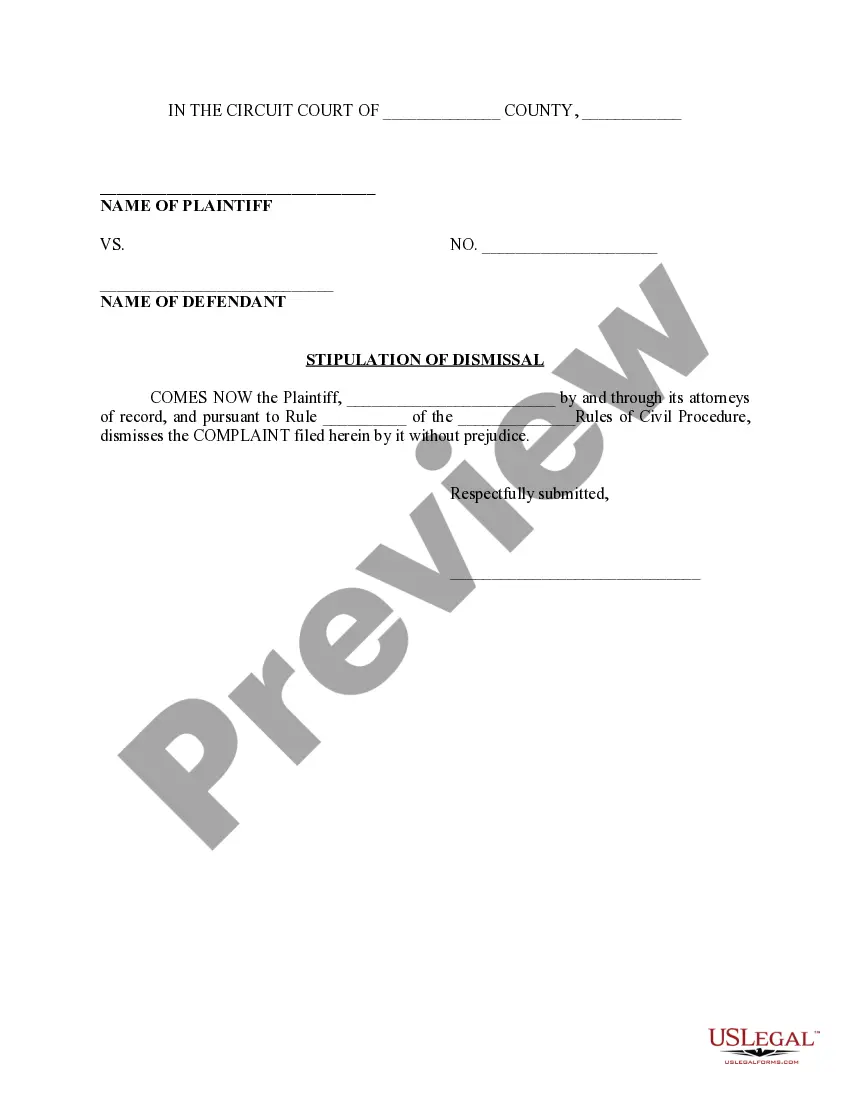
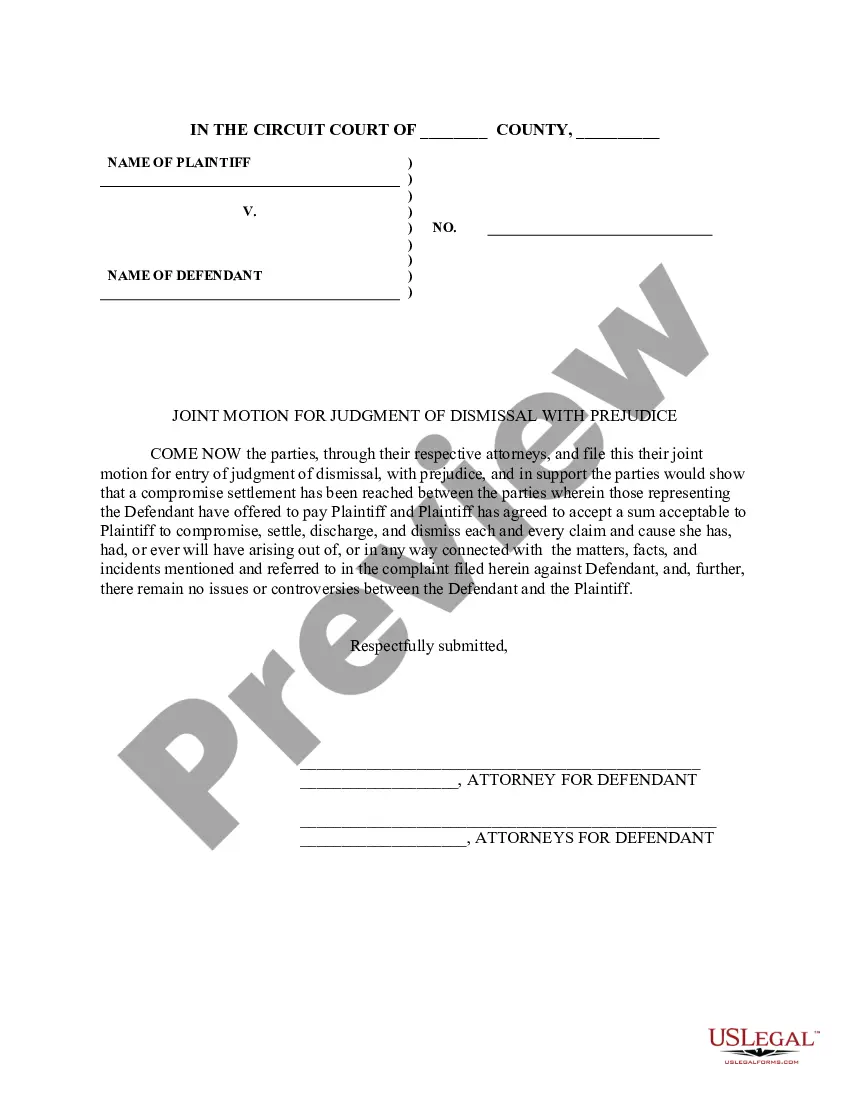
How to fill out Stipulation For Dismissal?
Acquiring legal documents that comply with federal and state laws is essential, and the web provides numerous alternatives to select from.
However, why spend time hunting for the right Rule Complaints Procedure With The Police example online when the US Legal Forms digital library already has such documents gathered in one location.
US Legal Forms is the largest virtual legal repository, featuring over 85,000 editable documents prepared by attorneys for any business or personal situation. They are easy to navigate with all files categorized by state and intended use. Our experts stay informed on legislative changes, ensuring that your documents are always current and compliant when obtaining a Rule Complaints Procedure With The Police from our platform.
Click Buy Now once you’ve found the correct form and select a subscription plan. Create an account or Log In and make a payment using PayPal or a credit card. Select the appropriate format for your Rule Complaints Procedure With The Police and download it. All documents accessed through US Legal Forms are reusable. To re-download and complete previously obtained forms, visit the My documents section in your account. Experience the most comprehensive and user-friendly legal documentation service!
- Obtaining a Rule Complaints Procedure With The Police is straightforward and quick for both existing and new users.
- If you have an account with an active subscription, Log In and download the document sample you require in the appropriate format.
- For first-time visitors, follow the instructions below.
- Examine the template using the Preview function or through the text outline to confirm it meets your requirements.
- Search for another example using the search tool at the top of the page if needed.
Form popularity
FAQ
The rules when dealing with complaints often focus on transparency, fairness, and timely responses. Police departments are typically required to follow specific guidelines that outline how to handle complaints effectively. Understanding these rules can empower you to advocate for your rights and ensure that your complaint is taken seriously. Utilizing resources like US Legal Forms can assist you in navigating the rule complaints procedure with the police more efficiently.
When you file a complaint against a police officer, the department initiates an investigation into your claims. This investigation seeks to gather evidence, interview witnesses, and review relevant documents. You will be notified of the outcome, which may lead to disciplinary action if your complaint is substantiated. Being aware of the rule complaints procedure with the police can make this process smoother and more transparent for you.
The steps in a complaint procedure typically include filing your complaint, receiving acknowledgment from the police department, and undergoing an investigation. Once the investigation is complete, you will be informed of the findings and any actions taken. Each step in this procedure aims to ensure your voice is heard and your concerns are addressed. Knowing the rule complaints procedure with the police helps you understand what to expect at each stage.
The process of a police complaint usually starts with submitting your concerns in writing or through an online form. After your complaint is filed, the police department will review it and may conduct an investigation. You will receive updates throughout this process, which can include outcomes or further actions taken. Familiarizing yourself with the rule complaints procedure with the police can empower you to navigate this process confidently.
The complaints procedure for the police involves several key steps that ensure your concerns are heard and addressed. Typically, you can file a complaint directly with the police department or through an independent oversight body. This process is designed to be transparent and fair, allowing you to express your grievances effectively. Understanding this rule complaints procedure with the police is essential for holding law enforcement accountable.
The most active citizen oversight boards investigate allegations of police misconduct and recommend actions to the chief or sheriff. Other citizen boards review the findings of internal police investigations and recommend that the chief or sheriff approve or reject the findings.
In Person: Complaints can be filed at any PSP installation, 24 hours a day, 7 days a week. Letters must be original (no copies) and contain an original signature.
Police Complaint Letter Samples Dear [Officer-in-Charge's Name], I am writing to bring a serious matter to your attention that occurred on [Date] at around [Time]. I am a resident of [Your Address], and the incident took place at/near [Exact Location]. [Here, give a detailed description of the incident.
A: The United States Department of Justice reports that the most common investigation for police misconduct comes from excessive force complaints. Others report that it is nearly 1/4 of all accusations against officers. Sexual misconduct, theft, and false arrest are the other most common types of police misconduct.
Types of misconduct include among others: sexual offences, coerced false confession, intimidation, false arrest, false imprisonment, falsification of evidence, spoliation of evidence, police perjury, witness tampering, police brutality, police corruption, racial profiling, unwarranted surveillance, unwarranted searches ...