Trust Survives Grantor With No Trust
Description




Get your form ready online
Our built-in tools help you complete, sign, share, and store your documents in one place.
Make edits, fill in missing information, and update formatting in US Legal Forms—just like you would in MS Word.
Download a copy, print it, send it by email, or mail it via USPS—whatever works best for your next step.
Sign and collect signatures with our SignNow integration. Send to multiple recipients, set reminders, and more. Go Premium to unlock E-Sign.
If this form requires notarization, complete it online through a secure video call—no need to meet a notary in person or wait for an appointment.
We protect your documents and personal data by following strict security and privacy standards.

Make edits, fill in missing information, and update formatting in US Legal Forms—just like you would in MS Word.

Download a copy, print it, send it by email, or mail it via USPS—whatever works best for your next step.

Sign and collect signatures with our SignNow integration. Send to multiple recipients, set reminders, and more. Go Premium to unlock E-Sign.

If this form requires notarization, complete it online through a secure video call—no need to meet a notary in person or wait for an appointment.

We protect your documents and personal data by following strict security and privacy standards.
Looking for another form?









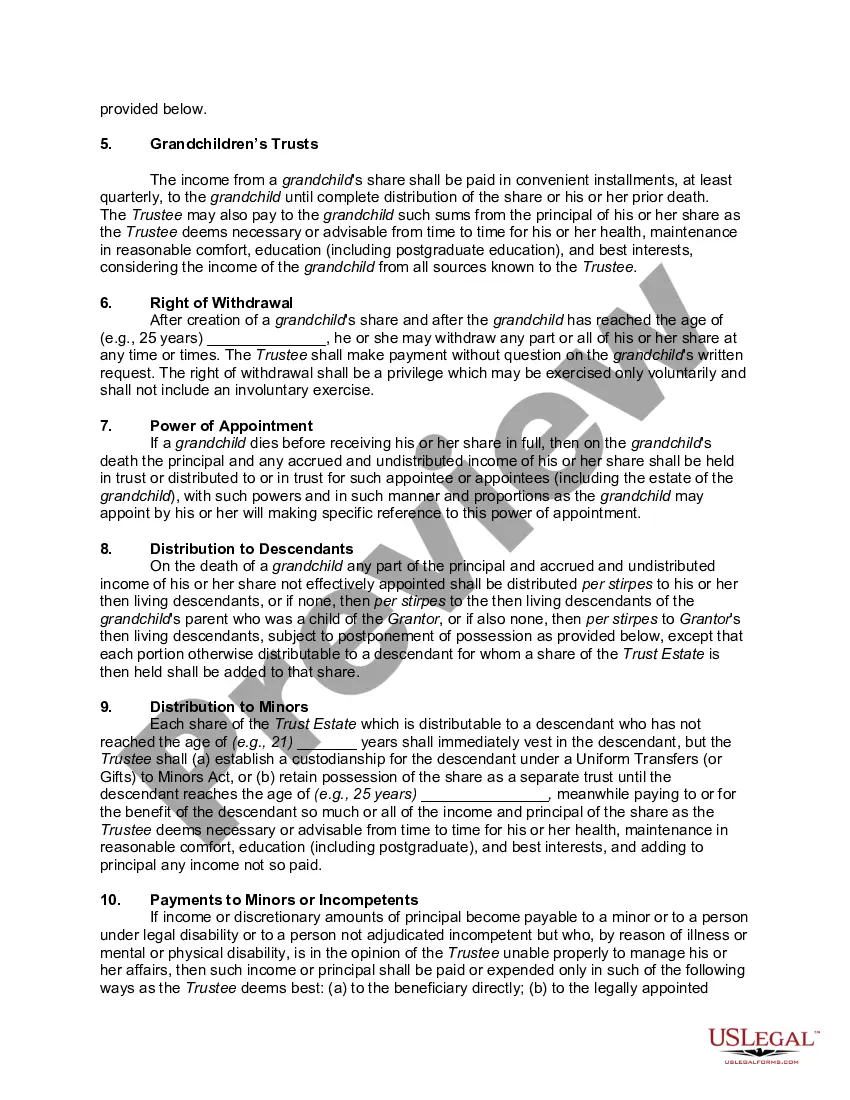
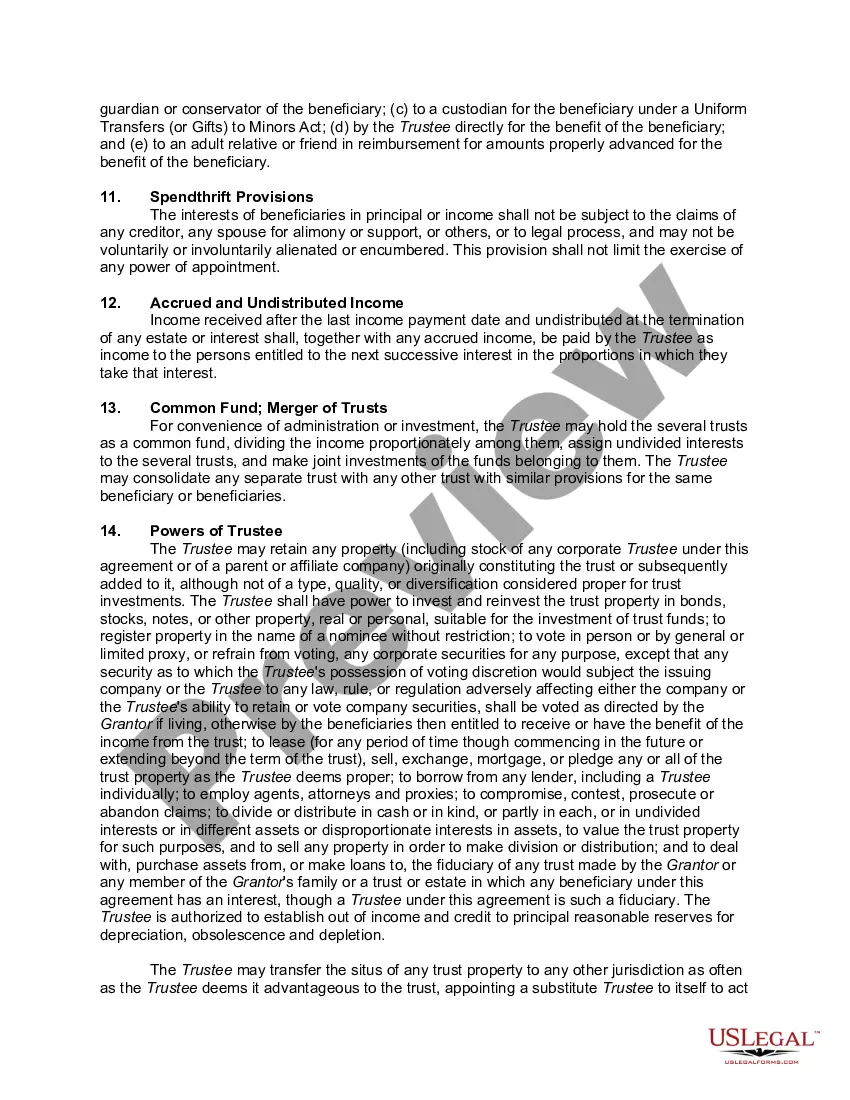
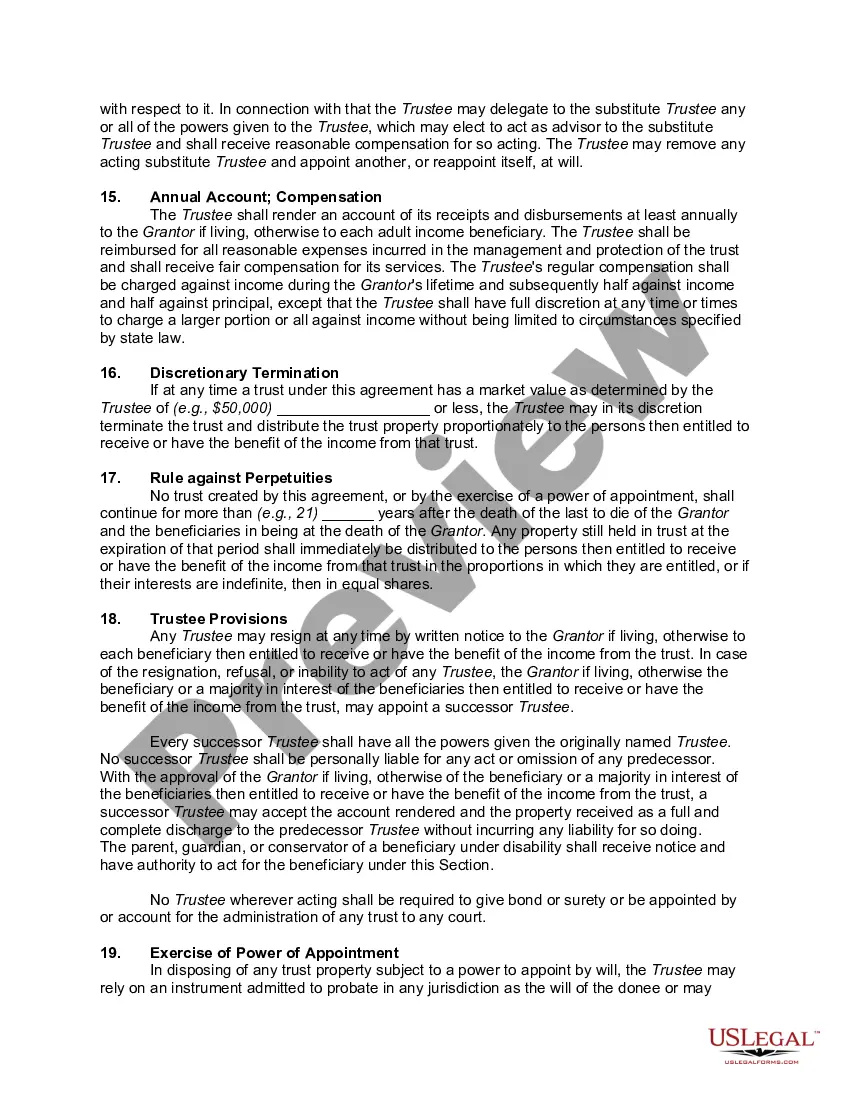
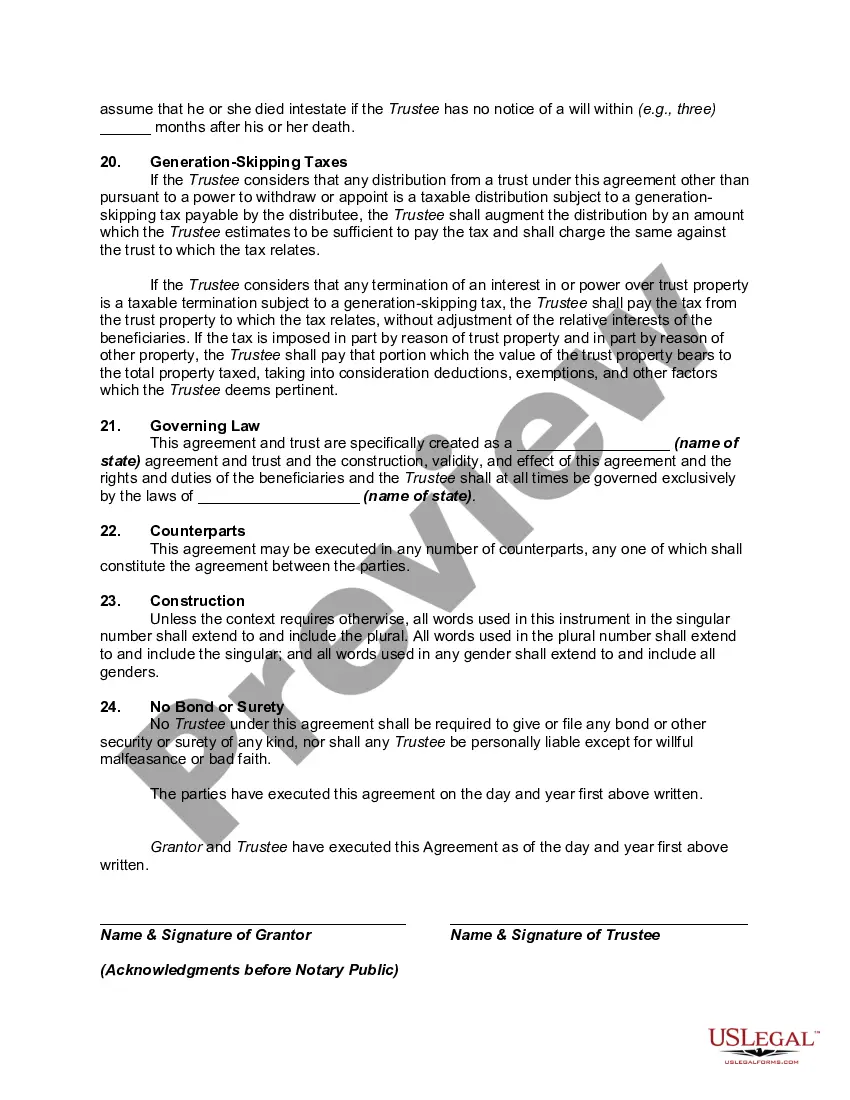
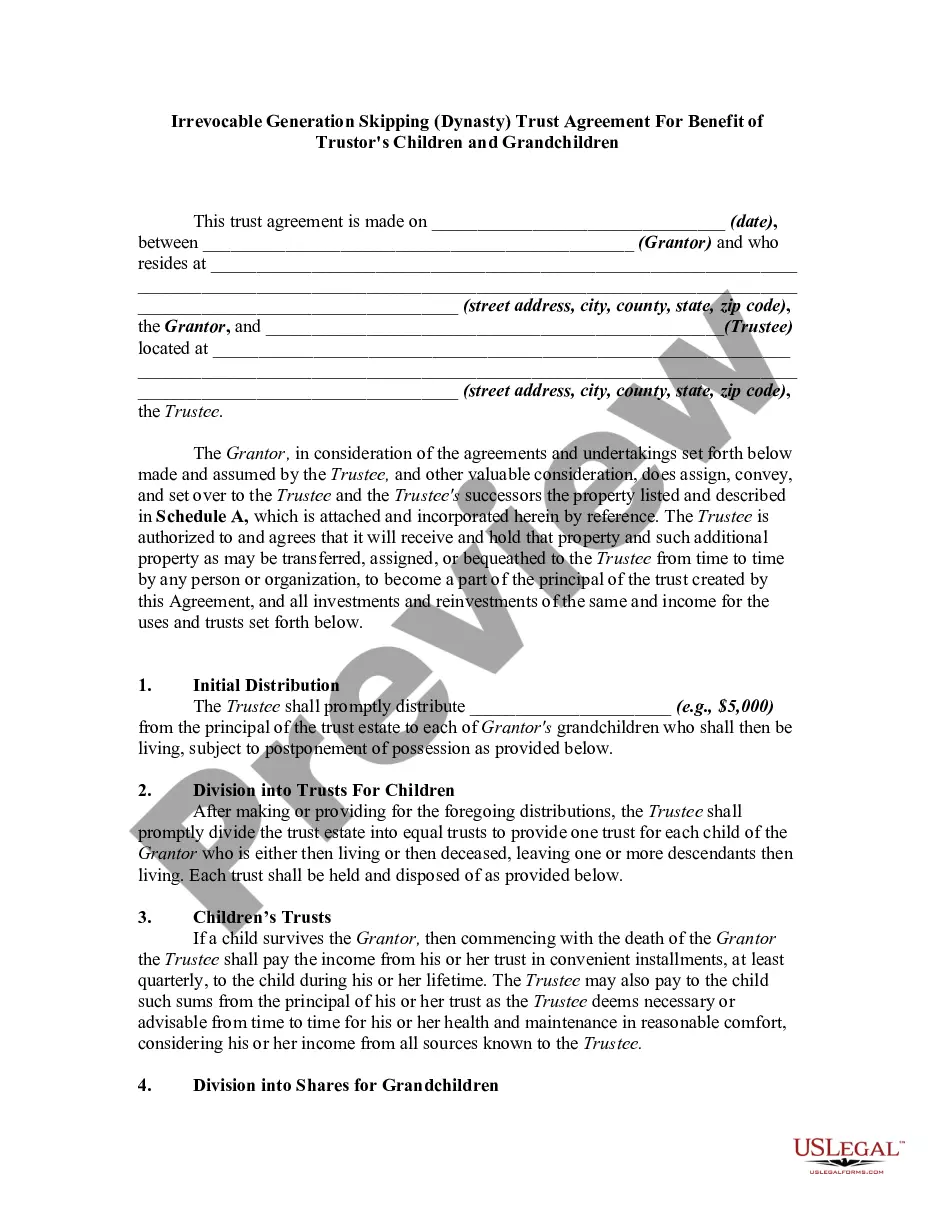
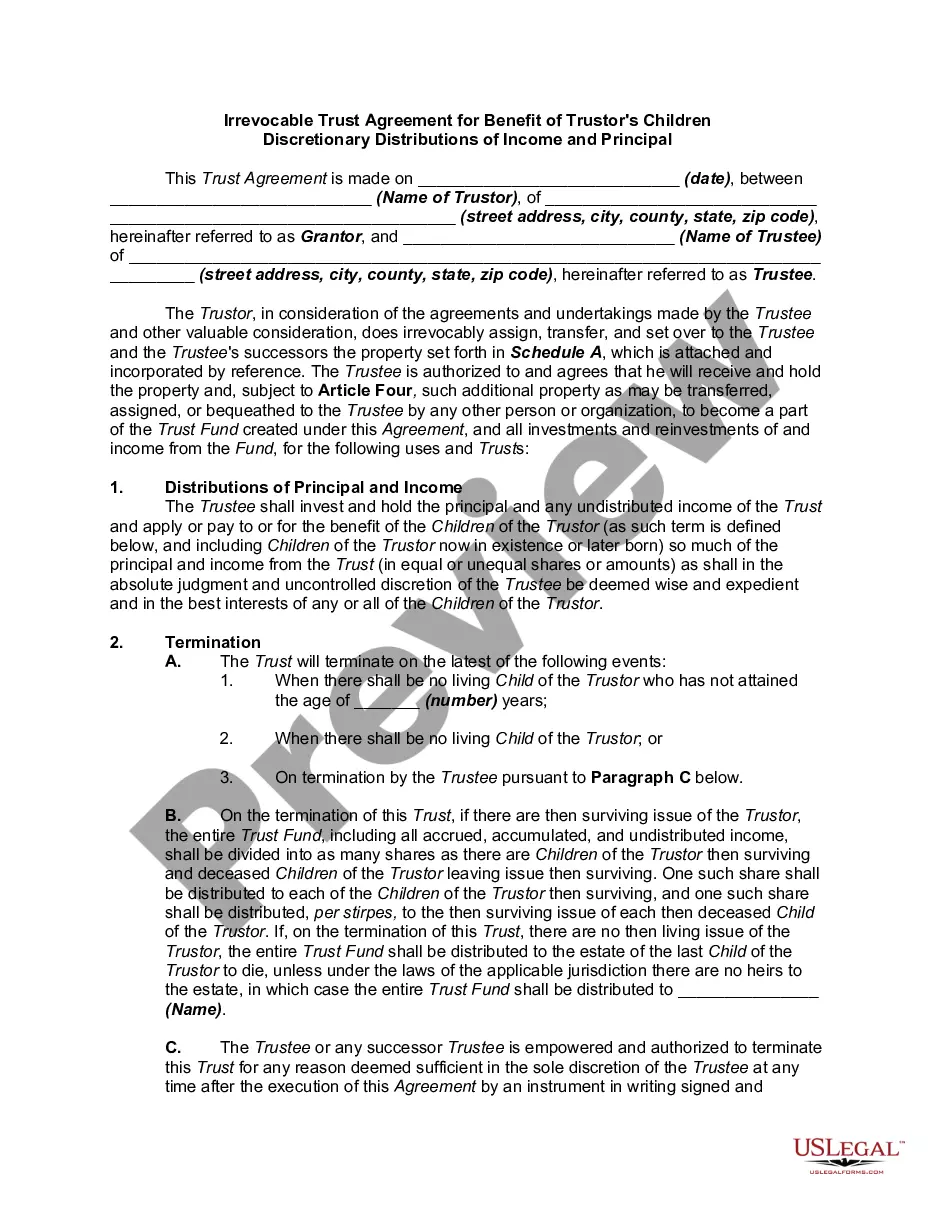
How to fill out Irrevocable Trust Agreement For Benefit Of Trustor's Children And Grandchildren?
- If you are a returning user, log into your account and select the desired template to download. Confirm your subscription is active; if it's not, renew it based on your payment plan.
- For first-time users, start by reviewing the Preview mode and the form description to ensure you select the legal form that meets your requirements.
- If inconsistencies arise, utilize the Search feature to find the correct template that aligns with your local jurisdiction.
- After finding the right document, proceed to purchase by clicking the Buy Now button and selecting your preferred subscription plan while registering for an account.
- Lastly, complete your purchase by entering your credit card details or PayPal information, then download the form for completion, accessible anytime through your My Forms section.
US Legal Forms offers an extensive array of over 85,000 legally sound templates that are customizable to your needs. By following these steps, you can ensure precise and compliant legal documents to safeguard your interests.
Don't hesitate to take control of your legal needs—visit US Legal Forms today and explore the robust library at your fingertips!
Form popularity
FAQ
Generally, a grantor trust does not require a new Employer Identification Number (EIN) when the grantor dies, as long as the trust remains revocable. However, once it becomes irrevocable, you might need to obtain a new EIN for the trust. This ensures the trust survives grantor with no disruptions in tax reporting. Consulting with a tax professional is recommended to confirm your specific requirements.
A trust qualifies as a grantor trust if the grantor retains specific powers or benefits from the trust’s income or principal. Commonly, this includes the ability to change beneficiaries or revoke the trust. Understanding these qualifications ensures your trust survives grantor with no confusion or tax complications. Resources such as US Legal Forms can assist in easily structuring your trust.
If a trust has no trustee, it may face administrative challenges. A trustee is essential for managing the trust's assets and ensuring distributions occur as intended. However, it's important to note that the trust can potentially survive grantor with no trust issues if provisions for appointing a new trustee exist. Legal assistance can help appoint a new trustee or provide options for moving forward.
Several retention powers can classify a trust as a grantor trust, including the ability to revoke the trust, direct the income from trust assets, or change beneficiaries. These powers ensure the grantor retains significant control. This control is crucial because it allows the trust to survive grantor with no complications, securing the grantor's intentions. You may wish to explore the US Legal Forms platform for more guidance on setting this up.
Triggering grantor trust status can happen by retaining certain powers over the trust assets. For example, the grantor might control the income generated by the trust or maintain the right to revoke the trust. This status means the income is taxed to the grantor, ensuring that the trust survives grantor with no tax issues to handle posthumously. Seeking advice from professionals can help you navigate this process smoothly.
The 5 year rule pertains to the taxation of certain trust assets. It often applies if the grantor makes gifts to the trust that are considered incomplete. Under this rule, if the grantor dies within five years after gifting, the assets may be included in the grantor's estate. Therefore, understanding this rule helps in ensuring your trust survives grantor with no trust conflicts.
Yes, a limited power of appointment can contribute to grantor trust status. If the grantor retains certain powers, they may have control over the trust assets even after death. This situation ensures that the trust survives grantor with no trust complications for tax purposes. Consulting with a legal expert can clarify how this applies to your specific situation.
When the grantor of a trust dies, the trust typically becomes irrevocable. This means that the terms specified in the trust document take effect. Importantly, the assets within the trust might continue to be managed for the beneficiaries according to the grantor's wishes. In many cases, a trust survives the grantor with no trust issues, allowing for a smoother transition of assets.
In most cases, having no income does not exempt you from filing a return, especially if it involves a trust. If your trust survives the grantor with no trust left, the tax situation can become complex. Always consider seeking professional assistance to navigate these requirements and ensure you meet all necessary obligations.
Even with no income, filing an estate tax return may still be necessary depending on the estate's value. If your trust survives the grantor with no trust assets, you should consult an estate professional to determine your filing requirements. This step can prevent issues down the line and ensure proper compliance with the law.