Trust Fund Benefits For Tax
Description




Get your form ready online
Our built-in tools help you complete, sign, share, and store your documents in one place.
Make edits, fill in missing information, and update formatting in US Legal Forms—just like you would in MS Word.
Download a copy, print it, send it by email, or mail it via USPS—whatever works best for your next step.
Sign and collect signatures with our SignNow integration. Send to multiple recipients, set reminders, and more. Go Premium to unlock E-Sign.
If this form requires notarization, complete it online through a secure video call—no need to meet a notary in person or wait for an appointment.
We protect your documents and personal data by following strict security and privacy standards.

Make edits, fill in missing information, and update formatting in US Legal Forms—just like you would in MS Word.

Download a copy, print it, send it by email, or mail it via USPS—whatever works best for your next step.

Sign and collect signatures with our SignNow integration. Send to multiple recipients, set reminders, and more. Go Premium to unlock E-Sign.

If this form requires notarization, complete it online through a secure video call—no need to meet a notary in person or wait for an appointment.

We protect your documents and personal data by following strict security and privacy standards.
Looking for another form?





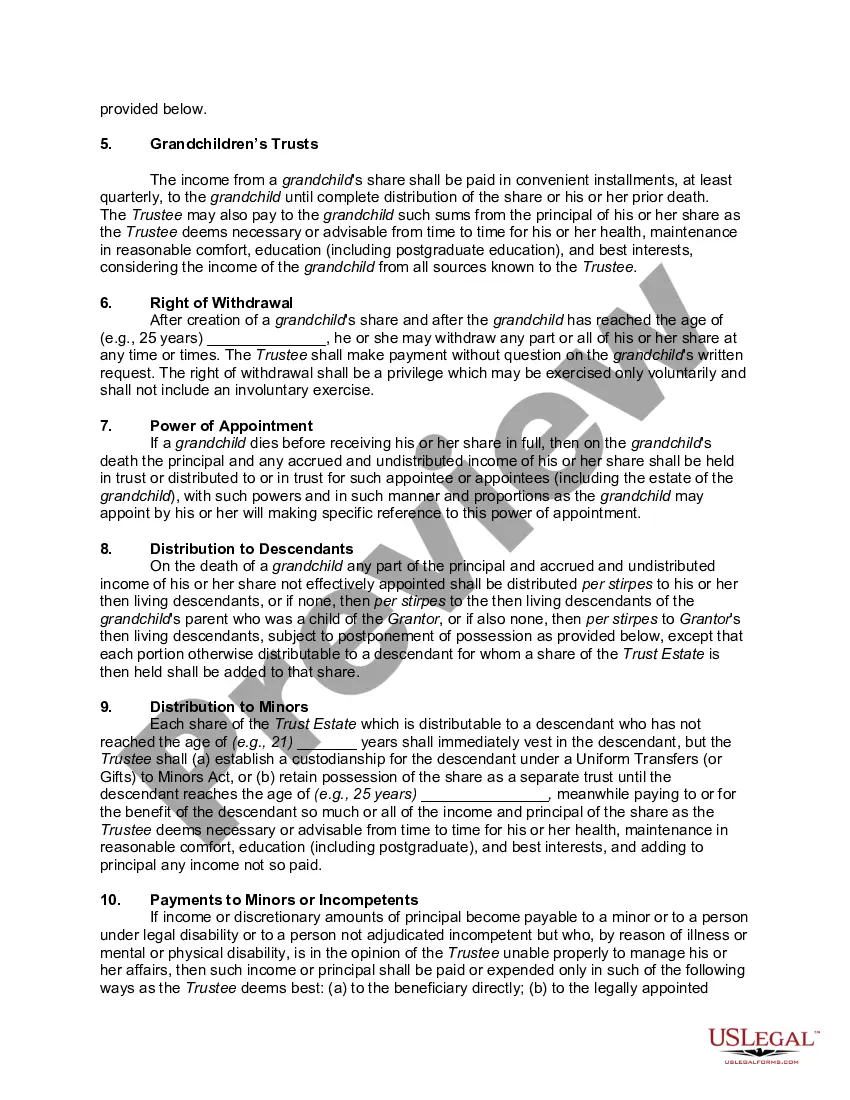
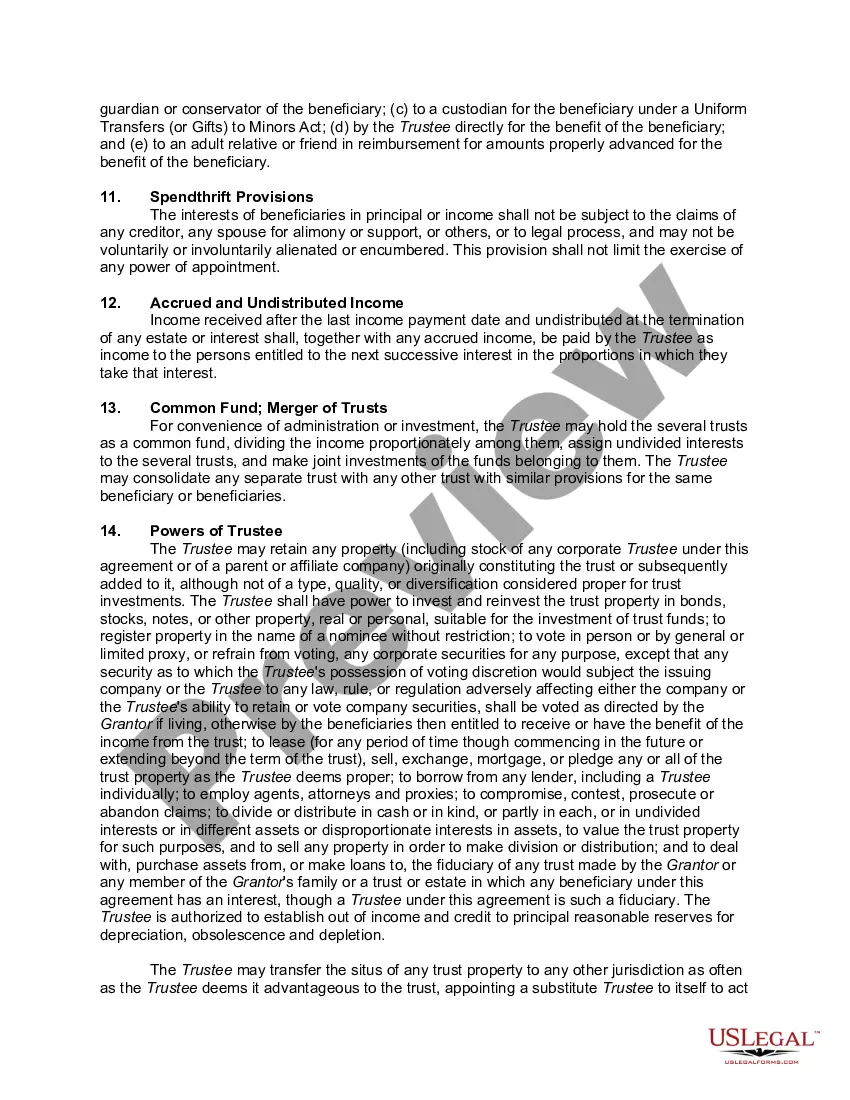
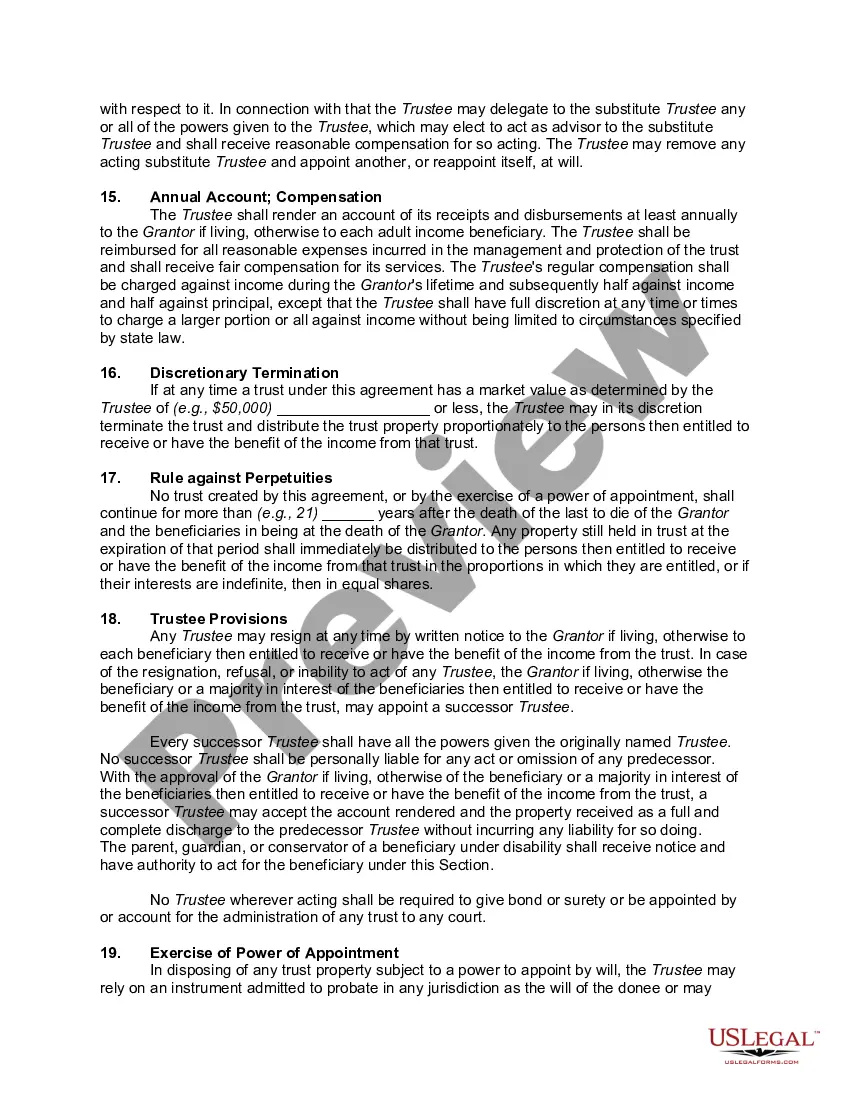
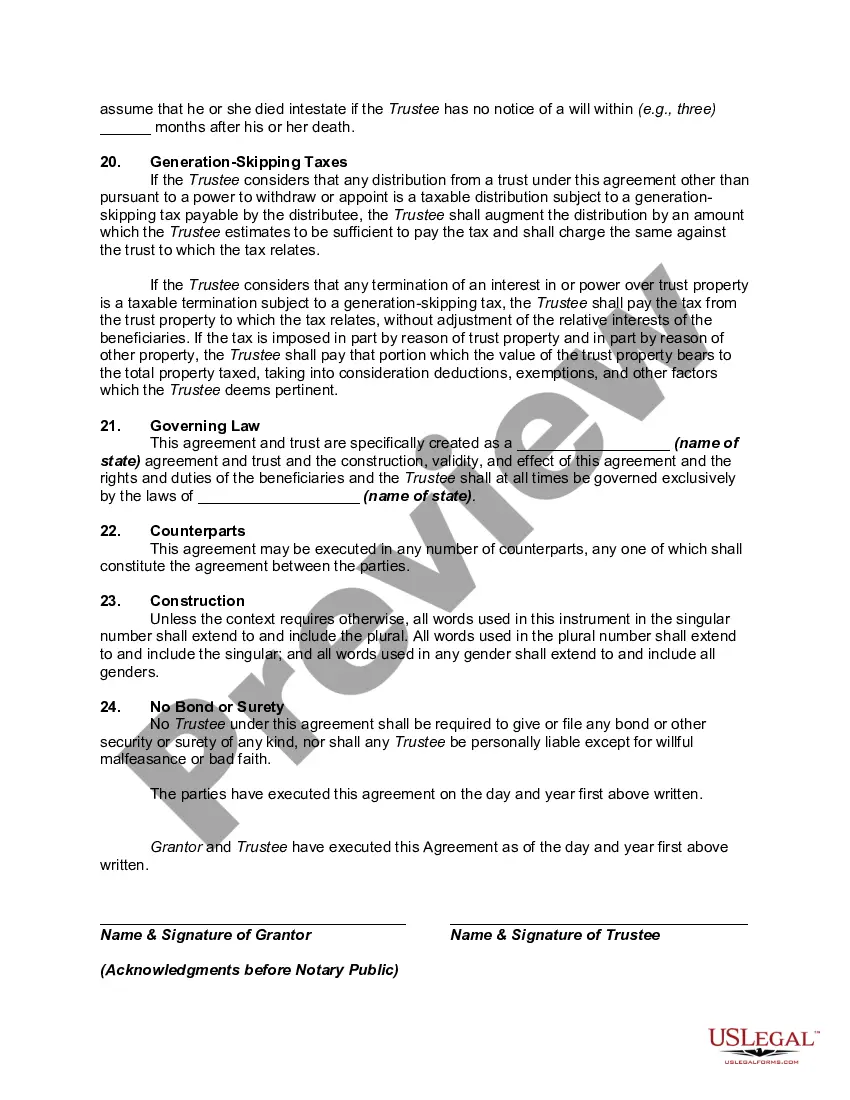
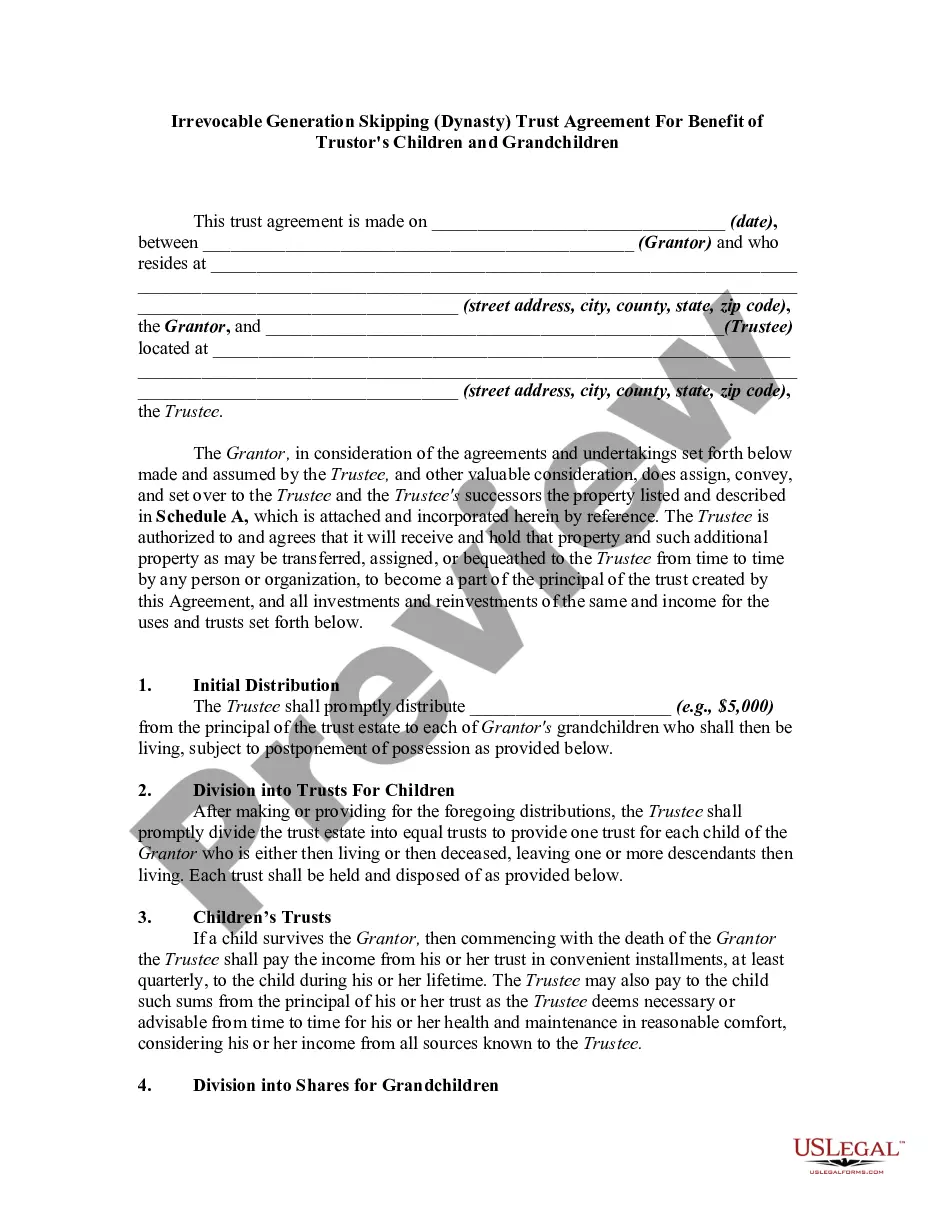
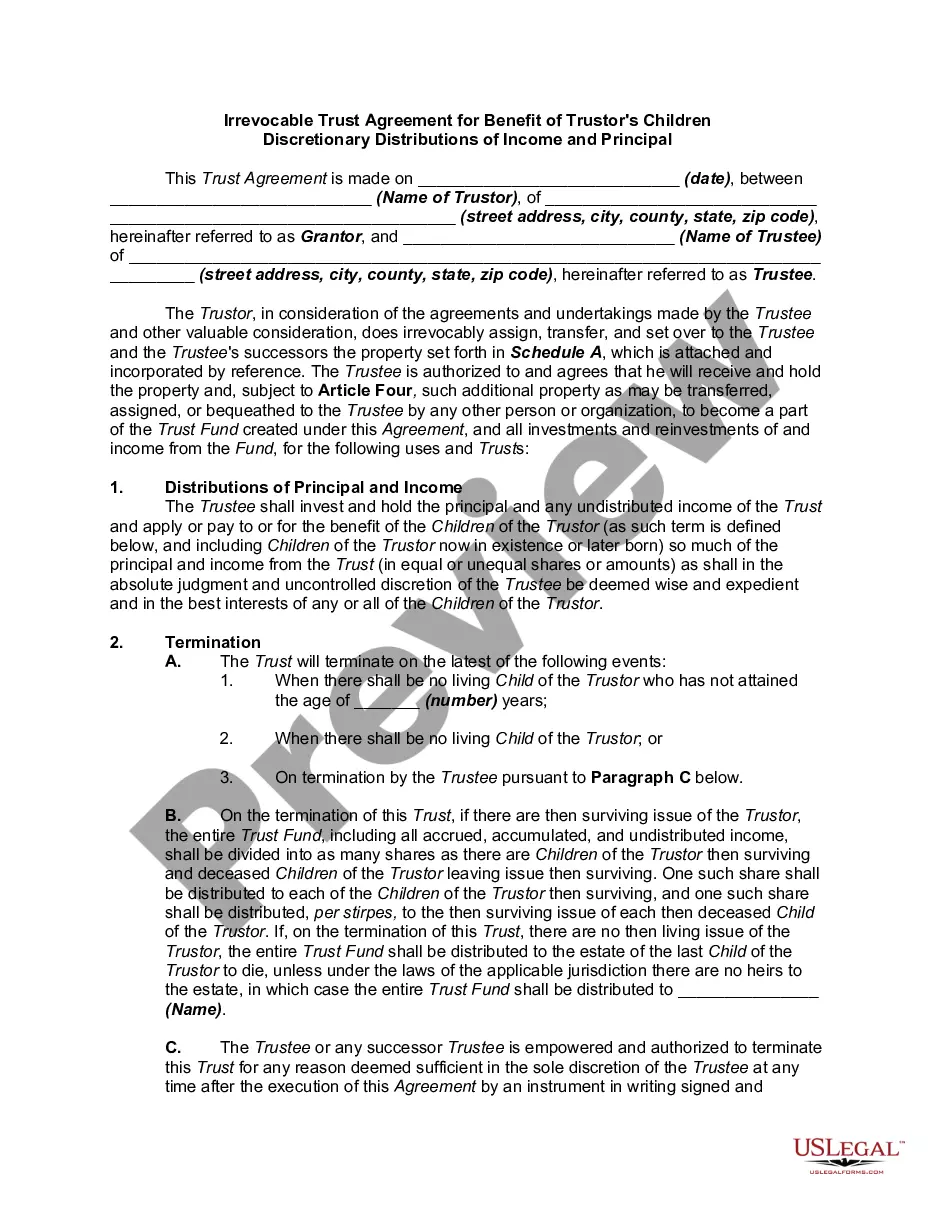
How to fill out Irrevocable Trust Agreement For Benefit Of Trustor's Children And Grandchildren?
It's clear that you cannot swiftly become a legal expert, nor can you easily learn how to prepare Trust Fund Benefits For Tax without possessing a specialized skill set.
Drafting legal documents is a lengthy process that demands specific training and expertise. So, why not entrust the preparation of the Trust Fund Benefits For Tax to the experts.
With US Legal Forms, one of the most extensive legal document repositories, you can locate anything from judicial papers to templates for inter-office correspondence. We recognize the significance of compliance and adherence to federal and local regulations.
You can access your documents again from the My documents section at any time. If you are an existing customer, you can simply Log In and find and download the template from the same section.
Regardless of the reason for your paperwork—whether financial, legal, or personal—our website has everything you need. Give US Legal Forms a try now!
- Find the form you need using the search bar at the top of the page.
- Preview it (if this option is available) and review the supporting description to determine if Trust Fund Benefits For Tax is what you're looking for.
- Start your search again if you require a different form.
- Sign up for a free account and select a subscription plan to acquire the template.
- Click Buy now. Once the payment is finalized, you can obtain the Trust Fund Benefits For Tax, complete it, print it, and deliver it or mail it to the relevant individuals or organizations.
Form popularity
FAQ
Any income/losses and capital gains/ losses earned in the in-trust account will be taxed in the trust unless the income or capital gains are paid or made payable to the beneficiaries. Income taxed in the trust is taxable at the highest marginal tax rate.
If all trustees are California residents, then the entirety of the trust's income is taxable in California.
Beneficiaries of a trust typically pay taxes on the distributions they receive from a trust's income rather than the trust paying the tax. However, beneficiaries aren't subject to taxes on distributions from the trust's principal, the original sum of money put into the trust.
For trusts, distributions are taxable to the beneficiary, and the trust must file a Schedule K-1 for each beneficiary. The beneficiary will then report the income on their tax return. The trust must also generate a Form 1041 to report the total amount of income the trust earned from the grantor's date of death.
Use Schedule K-1 to report a beneficiary's share of the estate's or trust's income, credits, deductions, etc., on your Form 1040 or 1040-SR. Keep it for your records.