Skipping Descendant Trust With The Device
Description

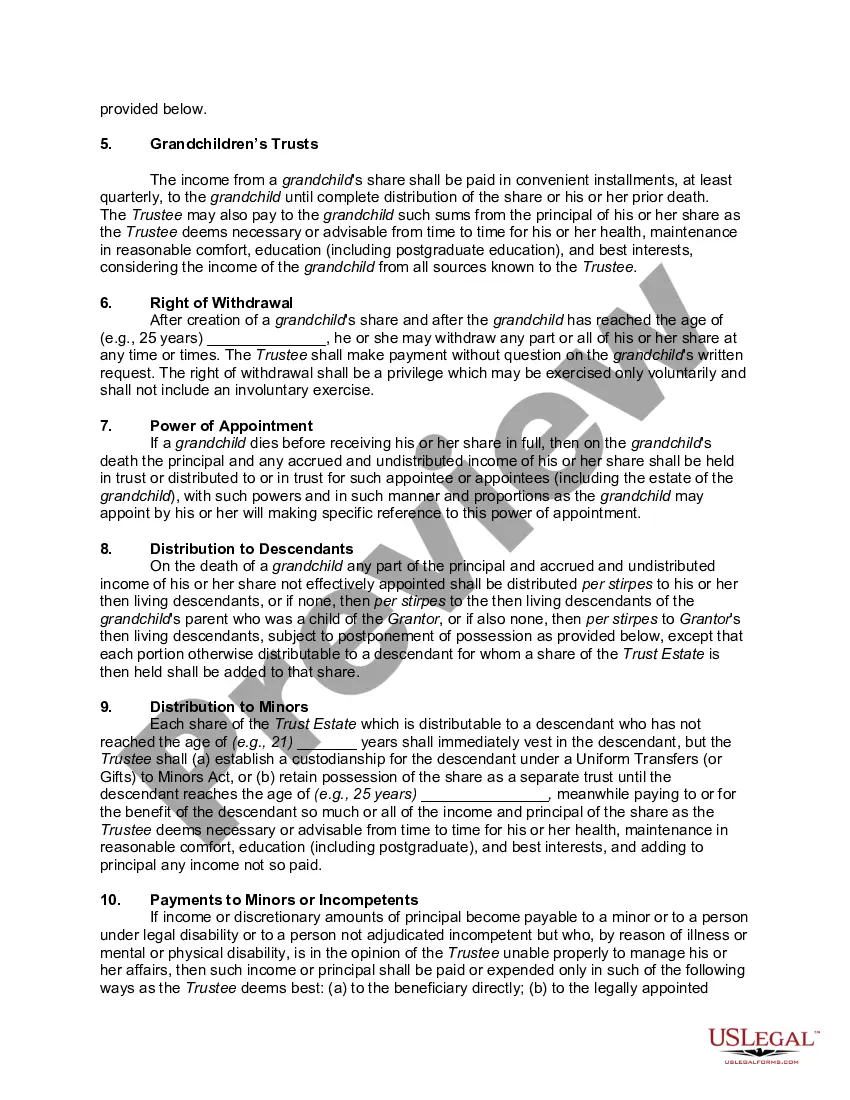







Get your form ready online
Our built-in tools help you complete, sign, share, and store your documents in one place.
Make edits, fill in missing information, and update formatting in US Legal Forms—just like you would in MS Word.
Download a copy, print it, send it by email, or mail it via USPS—whatever works best for your next step.
Sign and collect signatures with our SignNow integration. Send to multiple recipients, set reminders, and more. Go Premium to unlock E-Sign.
If this form requires notarization, complete it online through a secure video call—no need to meet a notary in person or wait for an appointment.
We protect your documents and personal data by following strict security and privacy standards.

Make edits, fill in missing information, and update formatting in US Legal Forms—just like you would in MS Word.

Download a copy, print it, send it by email, or mail it via USPS—whatever works best for your next step.

Sign and collect signatures with our SignNow integration. Send to multiple recipients, set reminders, and more. Go Premium to unlock E-Sign.

If this form requires notarization, complete it online through a secure video call—no need to meet a notary in person or wait for an appointment.

We protect your documents and personal data by following strict security and privacy standards.
Looking for another form?






How to fill out Irrevocable Trust Agreement For Benefit Of Trustor's Children And Grandchildren?
- If you're already a US Legal Forms user, log in to your account and locate your desired form template. Confirm your subscription is active; if it's not, renew it per your payment plan.
- For first-time users, begin by exploring the Preview mode to review form descriptions. Ensure the selected document aligns with your needs and local regulations.
- If necessary, use the Search tab to find an appropriate template if the first choice does not meet requirements.
- To proceed, click on the Buy Now button and select your preferred subscription plan. You'll need to create an account for access to the form library.
- Provide payment details using either credit card or PayPal to finalize your purchase.
- Once complete, download the form to your device, and access it anytime via the My Forms section of your profile.
Utilizing US Legal Forms not only offers you a vast selection of documents but also access to premium experts who can assist with form completion. This ensures that your legal documents are accurately prepared, saving you time and mitigating potential legal pitfalls.
Start simplifying your legal form experience today. Explore US Legal Forms and take advantage of our resources to confidently manage your legal documents!
Form popularity
FAQ
To set up a bypass trust, you'll first need to establish a revocable trust, which can be modified during your lifetime. Upon your passing, the bypass trust takes effect, enabling assets to bypass your estate and reduce estate taxes for your beneficiaries. Working with professionals well-versed in skipping descendant trust with the device ensures your trust is effectively structured to meet your estate planning goals.
In general, a trust is responsible for its own taxes. The trustee manages the financial obligations and ensures tax returns are filed if the trust generates income. When using a generation skipping trust with the device, it is vital to understand which party holds the tax responsibilities, as this can affect financial planning for your heirs.
Unfortunately, no trust can completely avoid all taxes, including income, gift, and estate taxes. However, certain types of trusts, such as irrevocable life insurance trusts, can help minimize tax liabilities effectively. By using a skipping descendant trust with the device, you can potentially reduce taxes for future generations while providing substantial benefits.
To avoid GSTT, you can utilize exemptions provided by tax laws, ensuring that you allocate your generation skipping exemptions wisely. Another strategy involves gifting assets directly to grandchildren or skipping generations without using a trust. Consulting a professional about skipping descendant trust with the device will help you explore efficient options tailored to your situation.
Typically, the income generated from a generation skipping trust with the device is taxed to the trust itself. However, if the trust allows for distributions, beneficiaries may also be responsible for paying taxes on the distributed income. Thus, understanding tax liabilities is crucial for effective estate planning.
While a generation skipping trust with the device offers tax benefits, it also has some disadvantages. Complexity is one major concern, as these trusts require careful administration and legal compliance. Additionally, the potential for Generation-Skipping Transfer Tax (GSTT) should not be overlooked, which could reduce the overall assets passed to beneficiaries.
A generation skipping trust can last for many years, even beyond the lifetime of the initial grantor. Typically, these trusts remain in effect until the passing of the last descendant, which can span multiple generations. However, states may have specific laws regarding the duration, so consulting an expert on skipping descendant trust with the device is advisable.
To avoid generation-skipping transfer tax, consider utilizing your GST exemption strategically during your lifetime. Engage in comprehensive estate planning that includes establishing a skipping descendant trust with the device to optimize tax outcomes. Understanding the nuances of these trusts will guide you effectively through the complexities of wealth transfer.
A generation-skipping trust can last for multiple generations, often determined by specific state laws, like the Rule Against Perpetuities. This longevity allows for continued benefit across family lines, making your estate strategy effective. Having a well-structured skipping descendant trust with the device can significantly enhance wealth preservation for your heirs.
Typically, the GSTT on a direct skip falls on the transferor or the person who makes the gift to a skip person. When establishing a skipping descendant trust with the device, it is crucial to clarify the responsibilities involved in tax liabilities. By planning thoroughly, you can better manage these obligations.